

The complete guide
The Practical Guide to Choosing a Kitchen Sink Strainer and Stopper
The slow drain nobody notices until it is a problem
Kitchen drains almost never fail all at once. They fail by a millimetre a month. A bit of rice slips past when you rinse the pot. Tea leaves go down because you were in a hurry. Coffee grounds, onion skin, a few strands of pasta, the fat that solidifies once it cools in the pipe. None of it feels like a big deal on the day. Then one evening the water sits in the bowl while you stand there with wet hands, and you realise it has been getting worse for ages.
The fix is boring and cheap. You put a filter in front of the drain so the scraps never get in. That is the whole job of a kitchen sink drain strainer, and it is one of those small purchases that quietly saves you a plumber's call-out later.
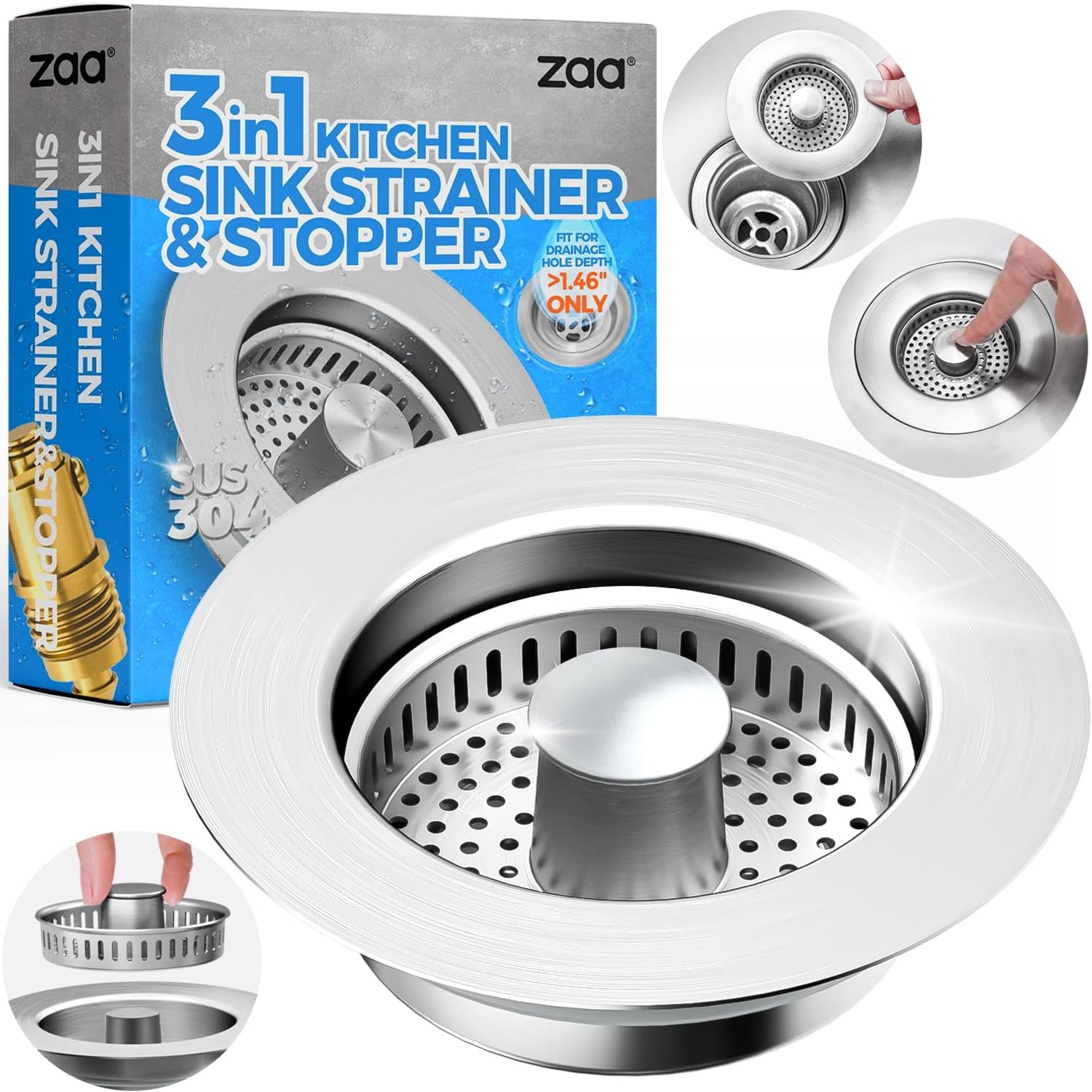
What makes this particular unit worth a look is that it does not stop at filtering. It is a 3 in 1 kitchen sink strainer and stopper, so it also seals the drain when you want to fill the bowl, and it covers the drain opening neatly when you are not using the sink at all.
How the three functions work together
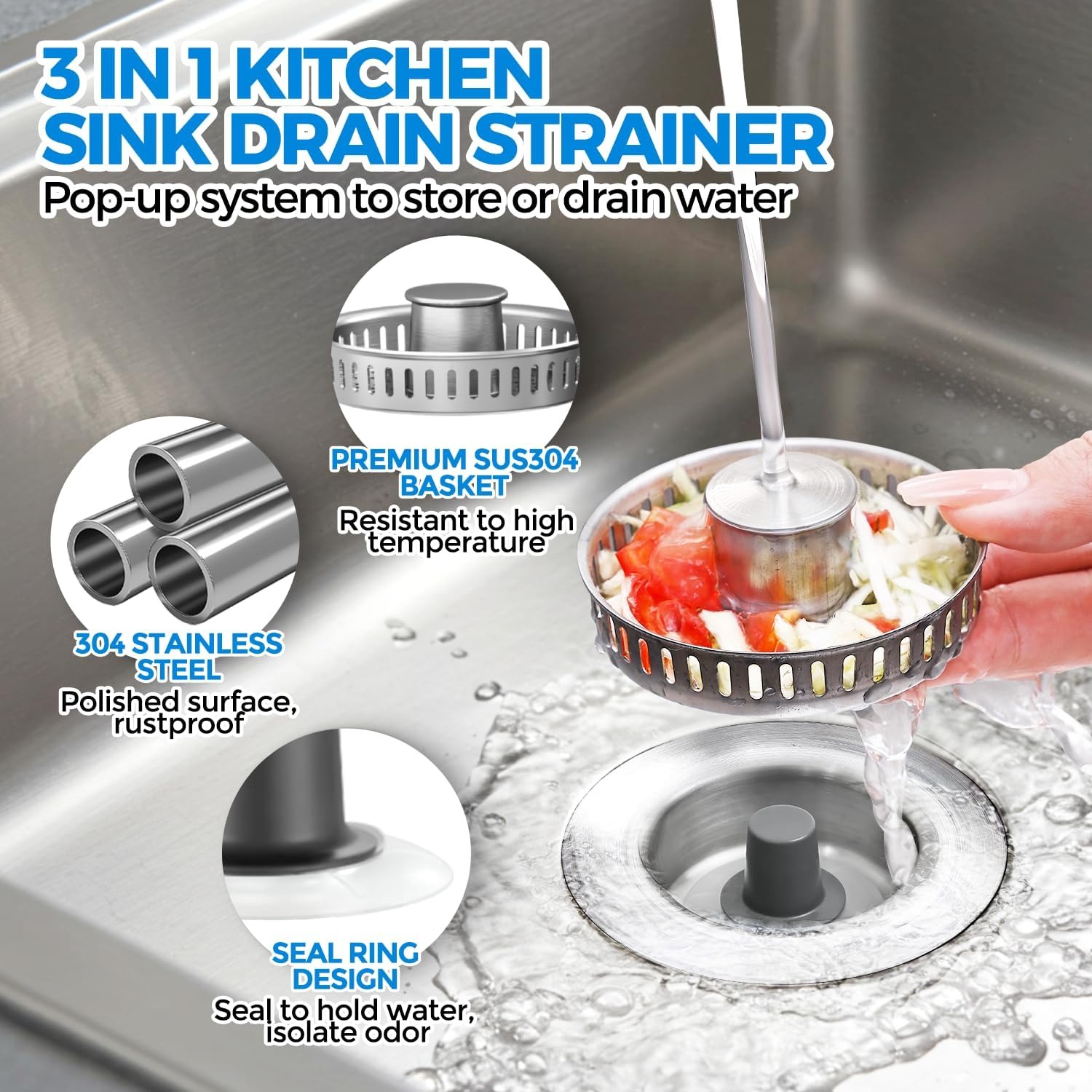
The filtering part is straightforward. A stainless steel basket sits in the drain opening and catches solids while the water passes through. When you are done, you lift the basket out, tip the contents into the bin and rinse it. Your hands never go near the drain itself, which is a bigger deal than it sounds if you have ever gone fishing for a lump of something unidentifiable.
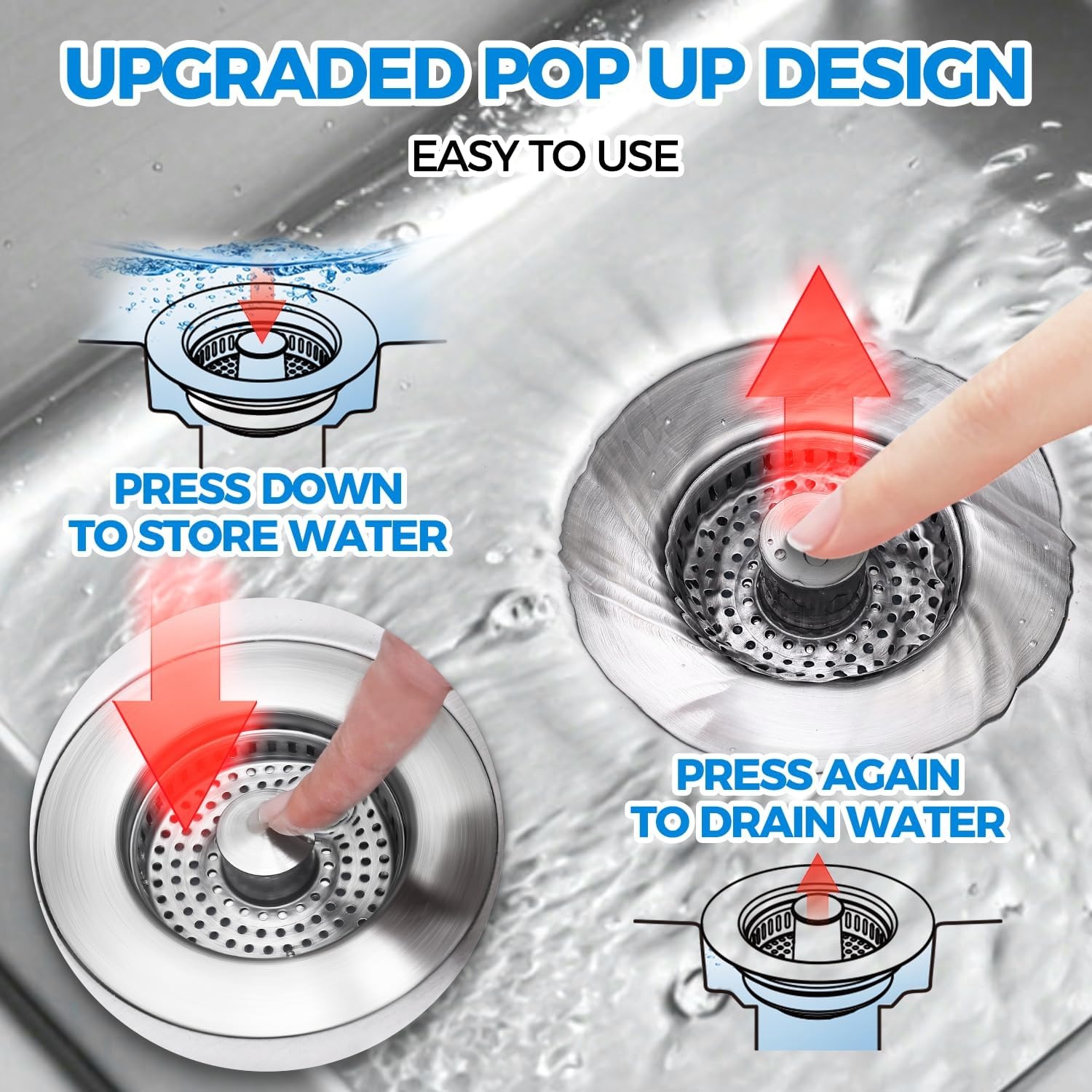
The stopper is the clever bit. Instead of a rubber plug on a chain, it uses a press-type pop-up core. Push the centre down and it seals. Push it again and it releases. That matters in daily use because you can switch between "holding water" and "draining" without lifting anything out, without twisting, and without feeling around under cloudy water for a plug you cannot see.
The third job happens by default. When the unit is sitting in the drain, it covers the opening with a flat steel disc. The sink looks finished rather than having a dark hole in the middle of it, and nothing drops down there by accident.
Materials, and why steel matters here
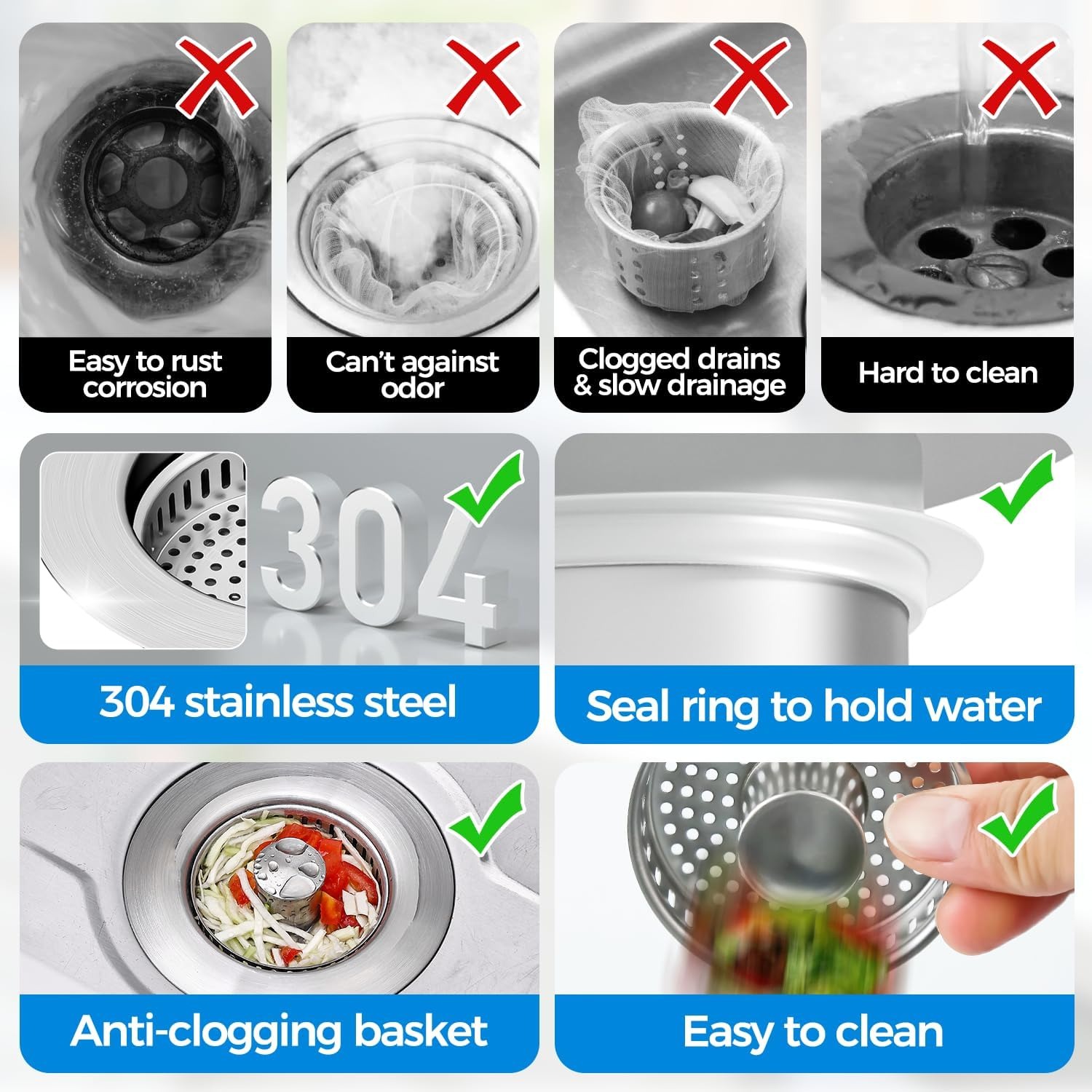
A kitchen sink is one of the harsher spots in a house. It is wet most of the day, it gets hit with hot water, detergent, oil and food acid, and it almost never fully dries out. Plastic parts in that environment stain, go cloudy and eventually warp.
This one is listed as stainless steel, in a steel colour. Steel handles the wet far better, keeps its look, and cleans with a cloth rather than a scrub. The listed special feature is anti-clogging, referring to the basket design that lets water through while holding the solids back.
One practical benefit people underestimate is how steel looks next to a steel or composite sink. A cheap plastic strainer always reads as an afterthought. A brushed steel drain strainer sitting flush in the bowl just looks like part of the sink.
Getting the size right, which is the only hard part
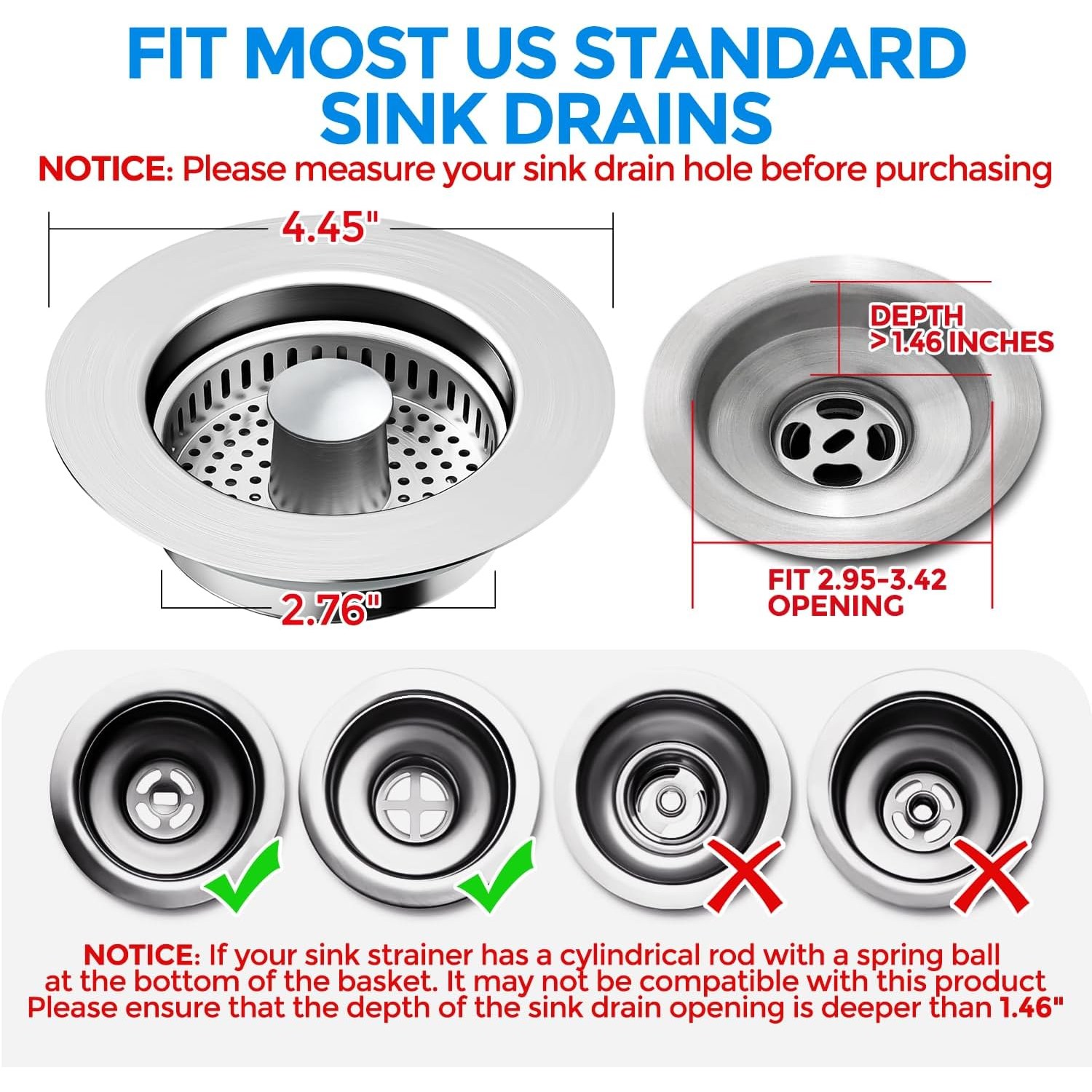
Here is the honest truth about buying any sink plug with basket strainer online. The product can be perfect and still be useless if it does not match your drain. So measure first, before anything else.
Take out whatever is currently in your drain. Measure straight across the circular opening at its widest point. Then measure how deep the recess or groove goes down from the sink surface. Write both numbers down.
For this unit, the listed compatible groove diameter is 7 cm and the compatible groove depth is 3.8 cm. The product itself measures 11.3 cm wide by 7 cm high, with an item depth of 1.46 inches. If your drain opening comes in close to those figures, you are in good shape. If it is noticeably smaller or larger, this is not the right one for you and no amount of pushing will change that.
A tip worth following. Measure twice, in two directions. Older sinks are not always perfectly round, and a few millimetres of ovality can be the difference between a snug fit and a loose one.
Who this suits
Households that cook properly. If you scrape plates into the sink, rinse rice, drain pasta or wash vegetables, you are putting solids down the drain every single day, and a sink drain filter basket pays for itself fast.
Renters. You are not replacing the waste fitting in a place you do not own, but you can drop in a strainer that protects the pipe and lift it back out when you move.
Anyone who hand-washes. The press-to-seal stopper makes filling the bowl genuinely quick, which matters if you soak pans or wash glassware by hand rather than running the dishwasher.
People who have already had a blockage. Once you have paid for one drain clearing, a strainer stops feeling optional.
Choosing between strainer types
There are broadly three styles on the market and they suit different habits.
A plain basket strainer only filters. It is cheap and it works, but you still need a separate plug if you ever want to fill the sink.
A plug-only stopper seals the bowl but does nothing about scraps, so the pipe keeps collecting waste.
A combined unit like this one does both from a single fitting, which means one thing to clean and one thing to store. For most kitchens, that is the sensible pick. The only reason to go a different way is if you have an unusual drain size that the combined units do not cover.
Keeping it working
Care is simple and takes seconds rather than minutes.
Empty the basket after each wash-up. Wet food scraps sitting in a warm sink overnight are the main cause of drain smell, and emptying straight away removes the problem entirely.
Rinse the basket under the tap and give the visible steel a wipe with warm soapy water. Dry it with a cloth if you care about water spots, which show up more on steel than on plastic.
Keep abrasives away from it. Steel wool, bleach and gritty cleaning powders will scratch the finish. A soft cloth does the job.
Every so often, rinse around the pop-up core. Grease and fine grit can build up around moving parts, and a quick flush under running water keeps the press action feeling crisp. Hand washing is better than the dishwasher for this reason.
Small habits that help more than the product does
A strainer is only half the system. The other half is what you stop putting down the drain in the first place.
Pour cooking fat into a jar or an old tin rather than the sink. Fat goes down as a liquid and sets as a solid, and no strainer can catch something that is liquid on the way through.
Scrape plates into the bin before rinsing. The strainer is there for what you miss, not as the primary bin.
Run hot water for a few seconds after a greasy wash-up. It helps move anything that made it past the basket before it has a chance to settle.
Do those three things along with using an anti clog sink strainer and you will likely never think about your kitchen drain again.
The short version
This is a small, cheap part that solves a problem most people put up with for years. It filters scraps so they never reach your pipes. It seals the bowl with a press when you want to soak something. It covers the drain opening and looks tidy doing it. The build is stainless steel, so it holds up in a wet sink and cleans with a wipe.
The one thing you must get right is the fit. Compatible groove diameter is 7 cm, groove depth is 3.8 cm, and the unit measures 11.3 cm wide by 7 cm high with an item depth of 1.46 inches. Measure your drain, compare the numbers, and if they match, the rest of it takes care of itself.