

The complete guide
Gutter Brush Guards Explained, A Practical Buyer's Guide
The problem with an open gutter
A gutter is just an open trough bolted to the edge of your roof. That design works perfectly until something other than water lands in it. Leaves drop, seed pods roll down the roof sheets, moss breaks loose, and the trough starts filling from the bottom up.
The trouble is that the damage happens quietly. A half-blocked gutter still drains, slowly, so nothing looks wrong from the ground. Then one heavy storm arrives, the water cannot get away fast enough, and it spills over the front edge or backs up under the roof line. That is when you get wet walls, soaked fascia boards, water in the eaves, and in bad cases water inside the house.
The traditional answer is to climb up twice a year with a scoop and a hose. Plenty of people do exactly that. But ladder work is the single most common way homeowners hurt themselves around the house, and the job is miserable in the cold months when leaf fall is at its worst. A gutter guard shifts the maintenance from a full clean-out to a quick look.
How a bristle guard works
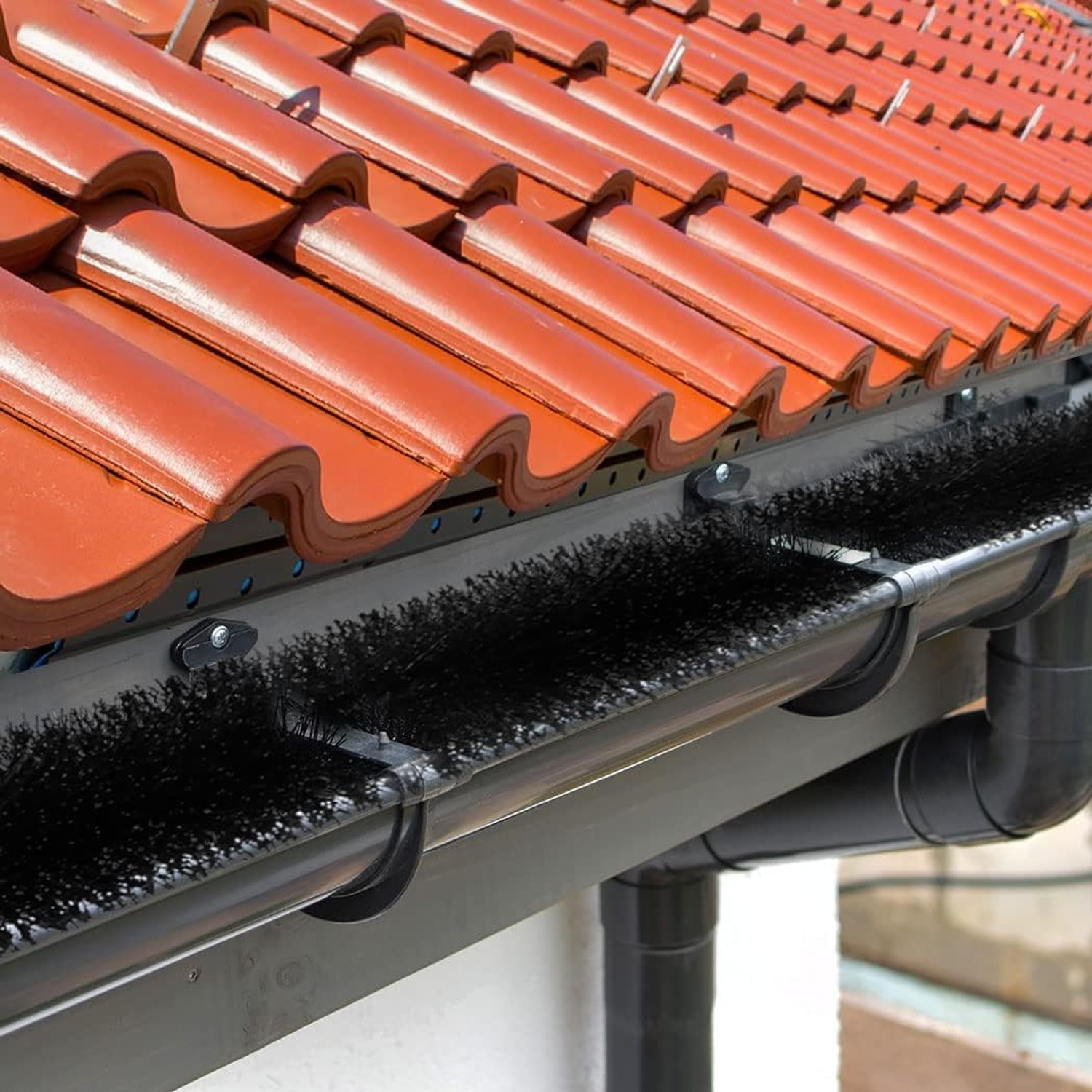
A bristle gutter guard is about as simple as home maintenance products get. It is a long cylinder of stiff bristles wound onto a central wire. You drop it into the gutter channel and it fills the space.
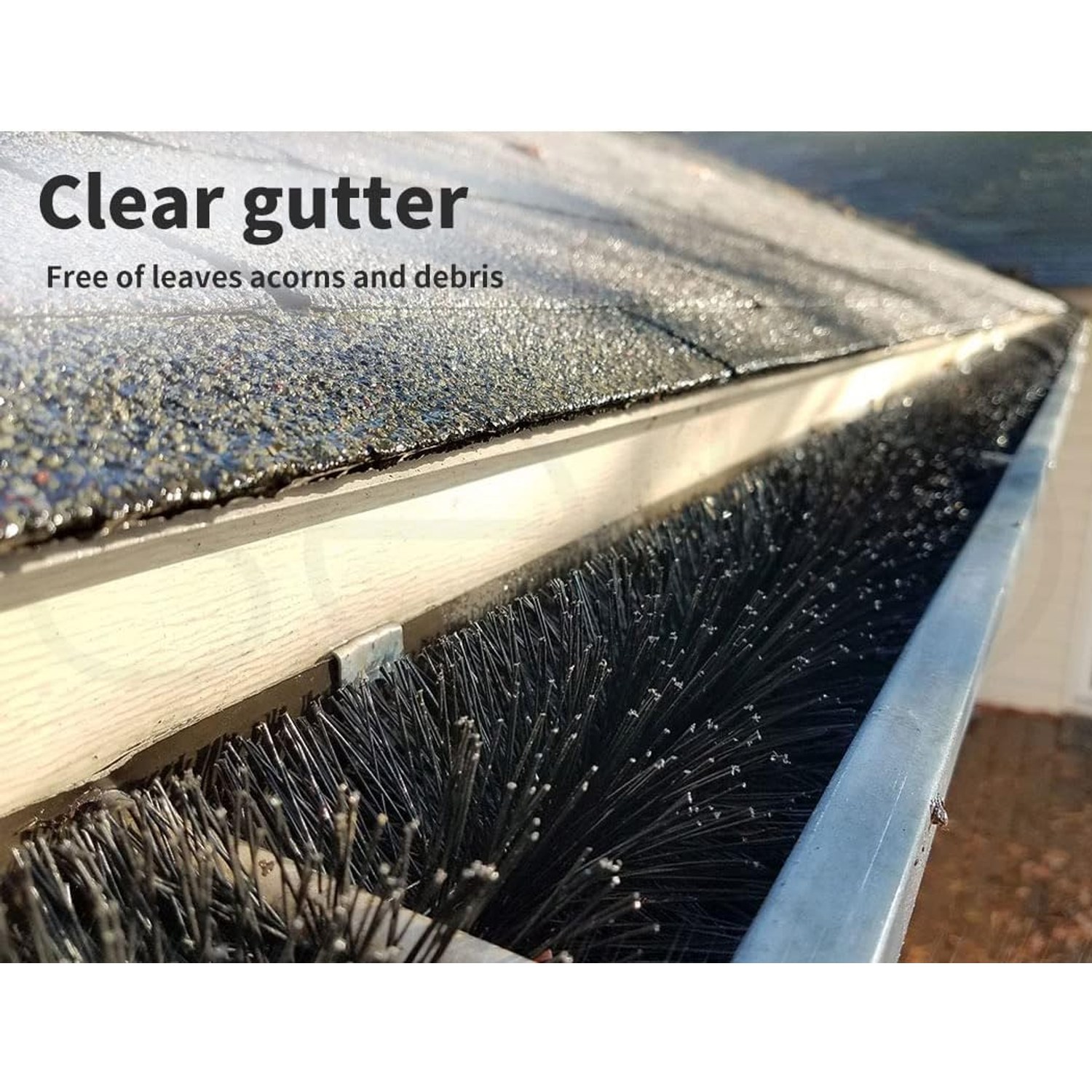
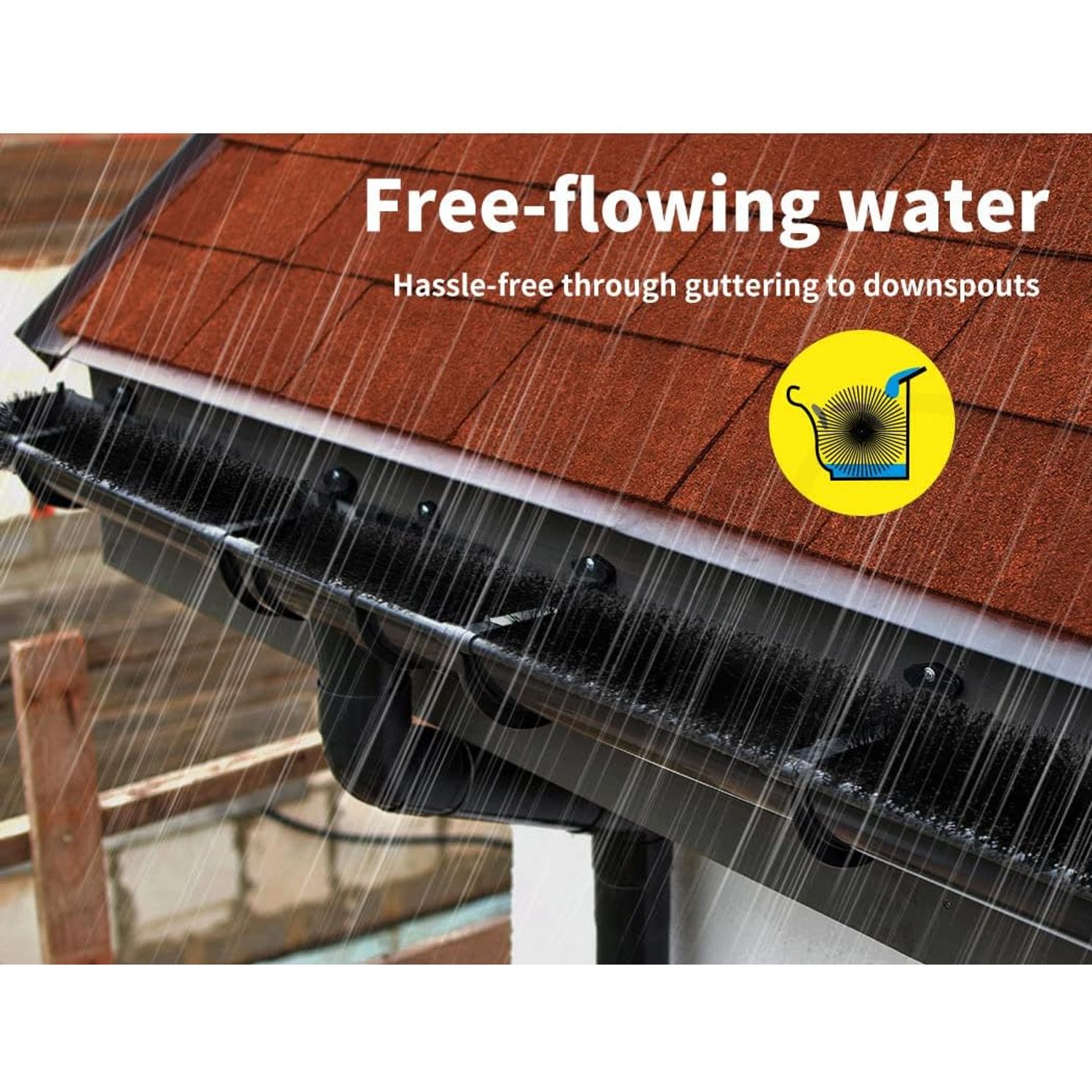
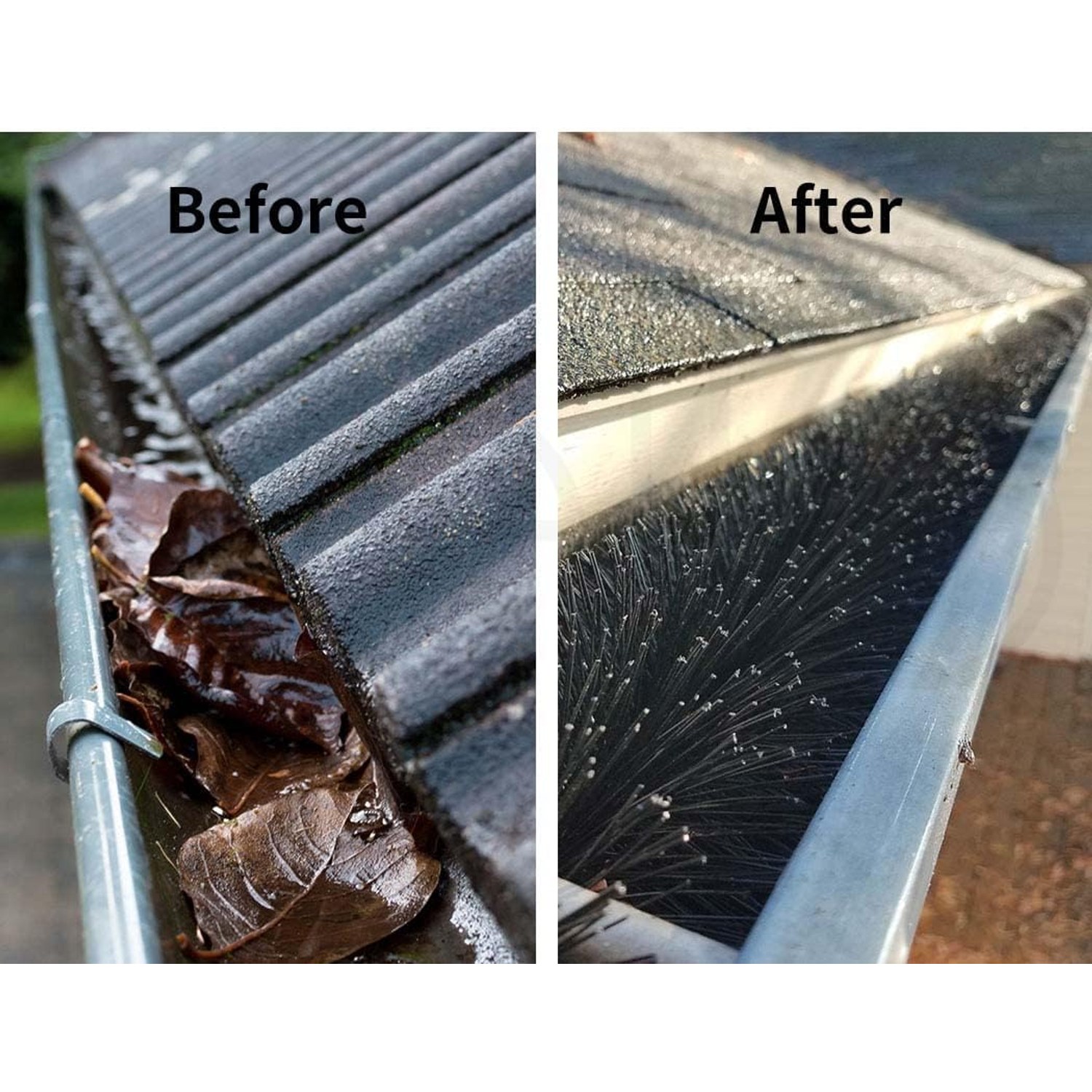
Once it is in, debris cannot reach the bottom of the gutter. A leaf lands on the bristle tips and stays there, held up where air can get around it. Rain runs down the roof, hits the top of the brush, filters through the gaps between bristles, and drains along the gutter floor underneath. The water path stays open because the brush holds everything bulky above it.
What happens next is the part people underestimate. Debris sitting on top of a brush dries out fast. Dry leaves are light, and the next decent gust usually takes them off the roof entirely. That is very different from a conventional gutter, where leaves sit in standing water, rot down into a sludge, and set like compost.
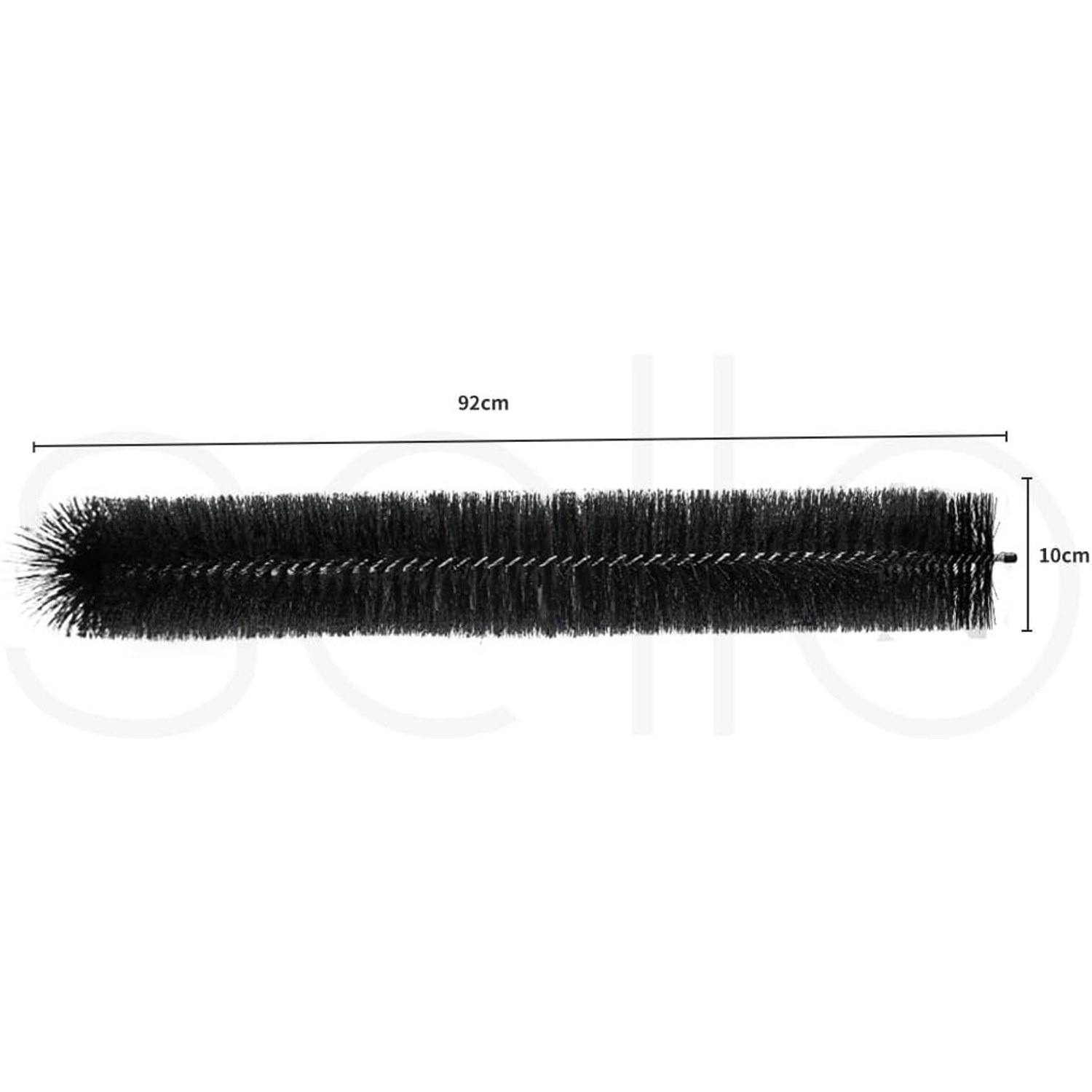
In this pack, each brush length is 92cm long with a 10cm by 10cm profile. The bristles are nylon and the core is galvanised steel wire. Nylon is chosen for outdoor brushes because it copes with repeated wetting and sun exposure. The galvanised coating on the steel is there to slow rust, which matters for something that lives in a wet channel.
Who this suits
The clearest case is a house with trees nearby. Deciduous trees give you a heavy autumn dump, eucalypts shed all year, and conifers drop needles constantly. If you are cleaning gutters more than once a year because of overhanging branches, a leaf filter for gutters pays for itself in saved time.
It also suits anyone who should not be on a ladder. That might be an age thing, a mobility thing, or just a two storey house where the climb is genuinely risky. Fitting brushes once, with help, beats climbing up every season.
Shed owners, carport owners and people with long patio roofs often find bulk packs like this useful simply because they have a lot of gutter and not much appetite for maintaining it. Thirty-six lengths is around 33 metres of brush before overlaps, which covers a lot of ground.
The one group this does not suit is anyone with box gutters, valley gutters, or unusually wide commercial profiles. A 10cm brush will not fill a wide box gutter, and a guard that only half fills the channel does not do its job.
How to choose and how much to buy
Start with a tape measure, not a shopping cart. Measure the internal width of your gutter at the top and the depth from the top edge to the floor of the channel. If both numbers are reasonably close to 10cm, a brush of this size will sit in snugly.
Then measure your total gutter run. Walk the perimeter of the house with a tape or use the plan dimensions if you have them. Add in any shed, garage or verandah you want covered. Divide the total metres by 0.92 to get your brush count, then add two or three lengths. You will use them at corners, on short offcuts, and as replacements down the track.
Think about which runs matter most. If budget or coverage is tight, prioritise the gutters under trees and the gutters that feed your main downpipes. A run that sits in the open with nothing above it rarely blocks.
Fitting it properly
Clean first. This is the step people skip and regret. Scoop out existing leaf matter, flush the gutter with a hose, and confirm each downpipe actually drains. A brush fitted over a blocked outlet just hides the blockage.
Then work along the run. Lift a length in, press it down so the bristles splay against the gutter walls, and butt the next length hard against the first so there is no gap at the join. A slight overlap of bristle tips at each join is ideal.
At internal corners you can often bend a length gently around rather than cutting. Where you do need a shorter piece, cut the wire core with heavy cutters, wear gloves, and trim the stray bristle ends. Try not to make more cuts than you need, since cut ends lose the galvanised coating.
Take ladder safety seriously. Firm level ground, correct ladder angle, someone at the base, and no stretching sideways. Move the ladder more often than feels necessary.
Keeping it working
Once a year, ideally after the main leaf fall, have a look along the gutter. Most of the time you will see a thin scatter of dry debris on the bristle tops and nothing else to do.
Where you find a section that has matted up, lift that length out, shake it over the garden, hose it if needed, and push it back. That is usually a few minutes per problem spot. Plain water is all you need, no detergents or solvents.
Check the joins too. If a length has shifted and left a gap, slide it back. If one has been crushed by a falling branch, swap it for a spare, which is exactly why you bought a couple extra.
It is also worth being honest about limits. Fine grit, dust and tiny seeds will wash through the bristles and settle in the gutter floor over years. That is normal. Every few years a proper flush out is still a good idea, but you are choosing when to do it rather than being forced up there by an overflowing gutter.
The short version
A gutter brush guard is a low-tech fix for an annoying problem. It fills the gutter channel so leaves sit high and dry while water flows underneath, and it goes in with no screws, clips or brackets.
This pack gives you thirty-six 92cm lengths with nylon bristles on a galvanised steel core, enough for a long house run or a house plus shed. Measure your gutter width and depth first, clean before you fit, and plan on a quick annual check rather than a full clean.
If your gutters are standard eaves profile and you have trees above them, this is one of the simplest upgrades you can make to a roof.