
The complete guide
How to Clear a Slow Drain Yourself, Without Chemicals
The slow drain problem nobody deals with early
Almost no sink blocks overnight. It gets slower over weeks. You notice the water sits around your toothbrush for a second longer than it used to. Then a few seconds. Then there is a puddle in the shower tray by the time you are finished. By that point the pipe has a solid plug of hair and soap in it, and clearing it is a bigger job than it would have been a month earlier.
What is actually down there is usually not very dramatic. Hair goes down the plughole, soap and conditioner coat it, and the whole thing catches on the inside of the pipe just below the drain. More hair catches on that. Add body oils, toothpaste and whatever else goes down a bathroom sink, and within a few months you have a mat sitting in the trap.
The thing about that mat is that it is fibrous. Pour a liquid cleaner on it and the liquid finds the path of least resistance, which is the hole still open in the middle. Some of the clog dissolves. Most of it stays. The drain runs better for a week and then goes back to how it was. That is why people end up buying the same bottle over and over.
Why a mechanical tool fixes what chemicals miss
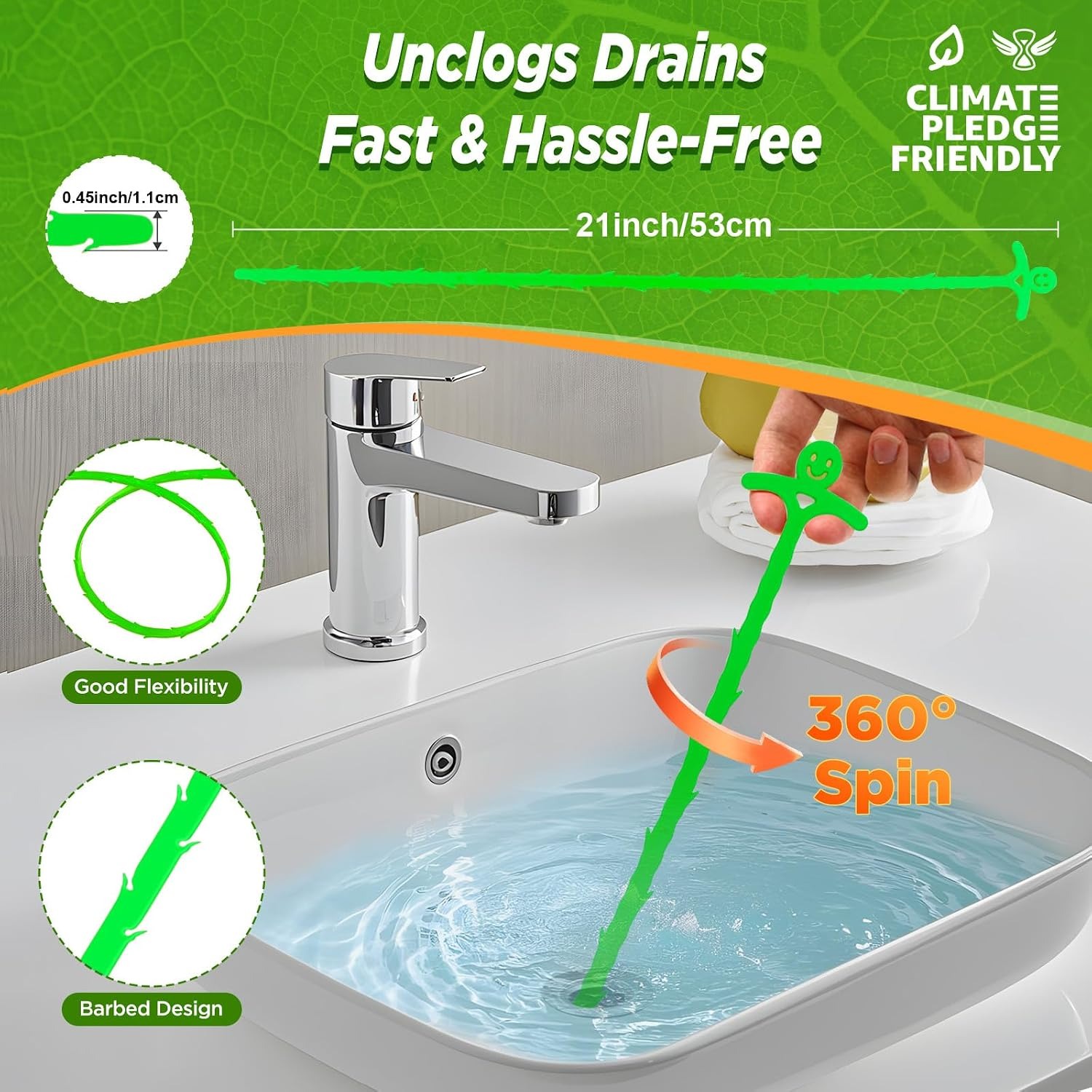
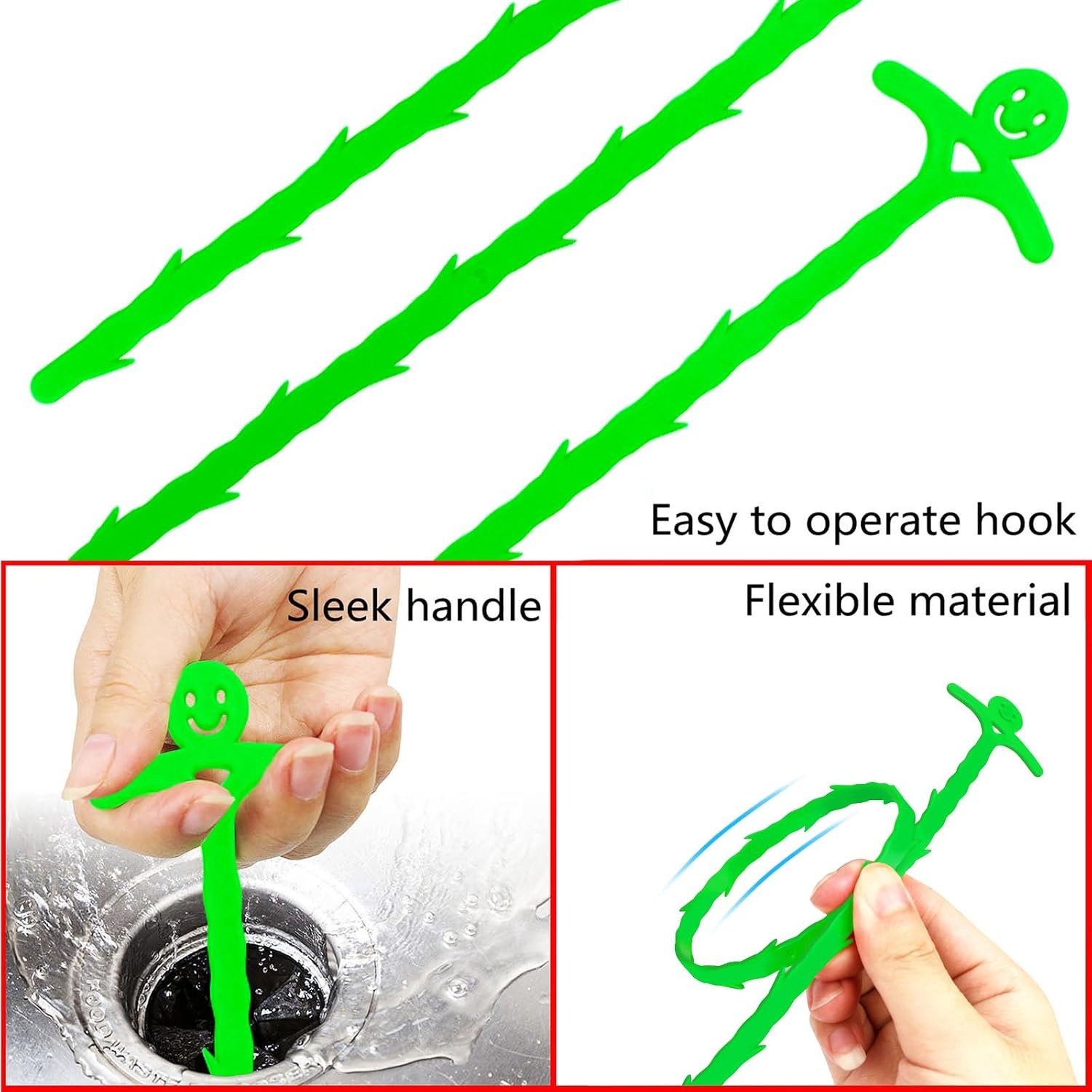
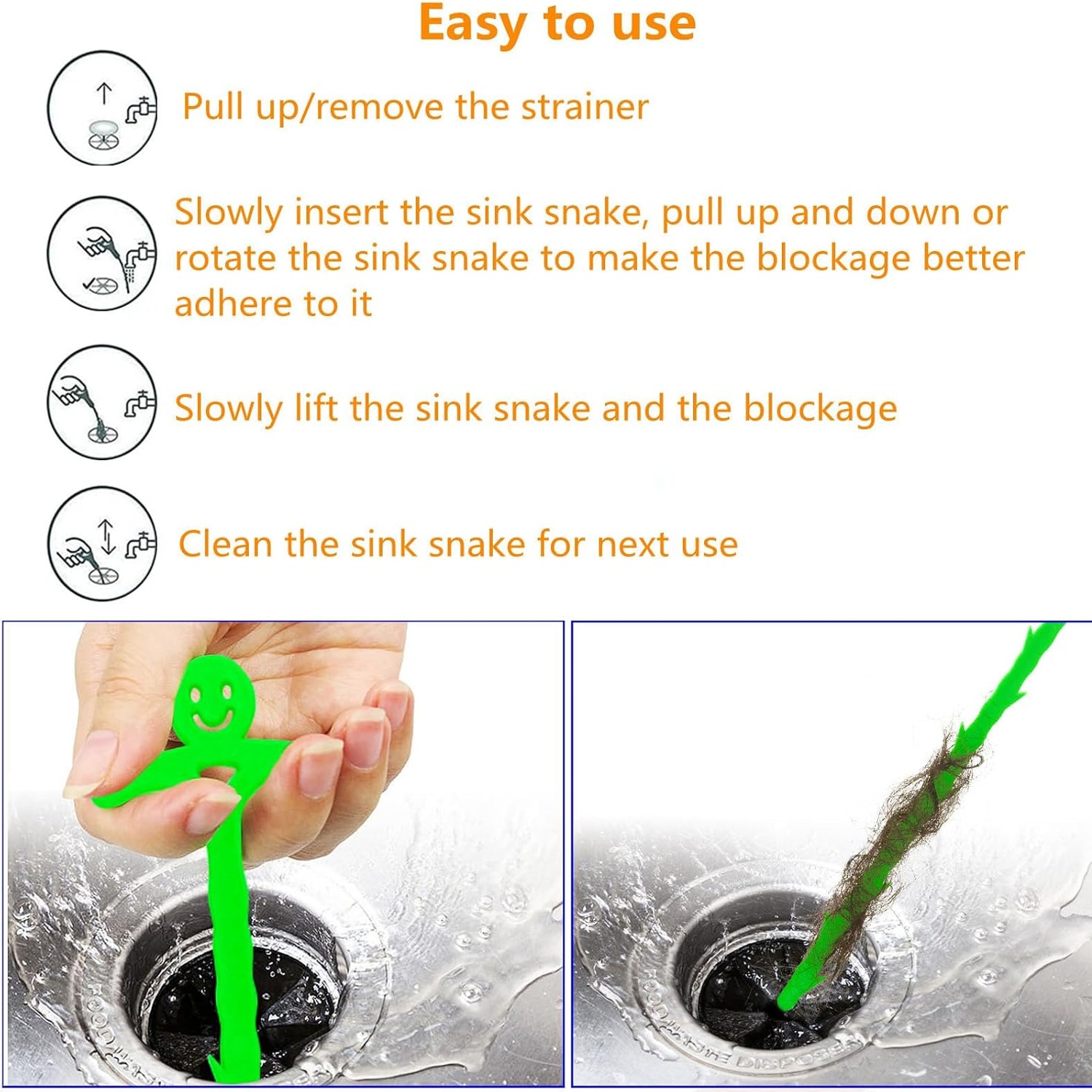
A barbed wand works on the one weakness a hair clog has, which is that hair can be hooked. Push the wand past the mat, pull it back slowly, and the barbs grab strands on the way up. What comes out is not pleasant, but it is the entire problem, in your hand, out of the pipe.
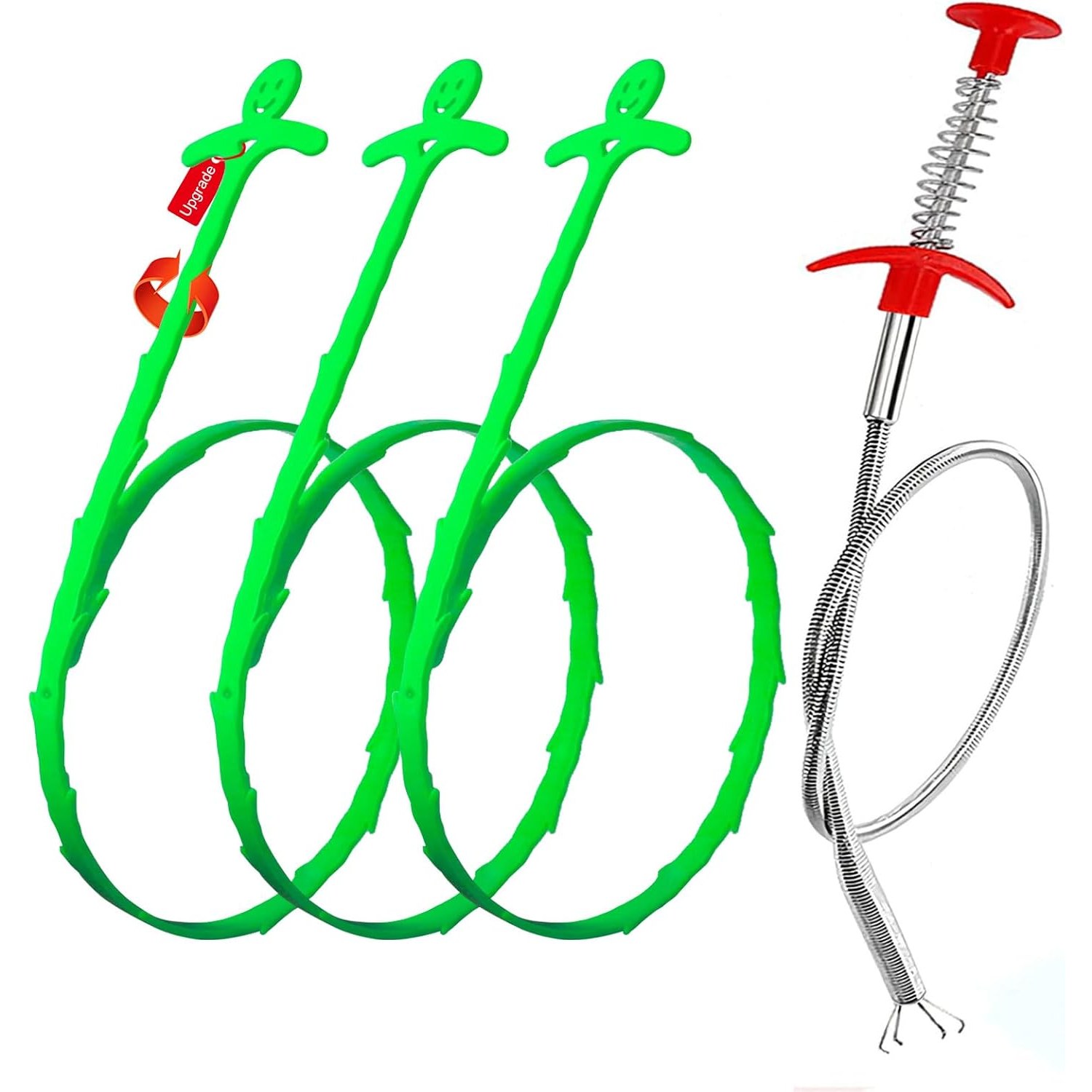
That is the whole mechanism. There is nothing clever about it, which is why it works so consistently. The three plastic wands in this set are 21 inches long and flexible along their length, so they curve through the trap instead of stopping at the bend. They are narrow too, which is why they suit thinner pipes and why you can usually get past a pop-up stopper without unscrewing anything.
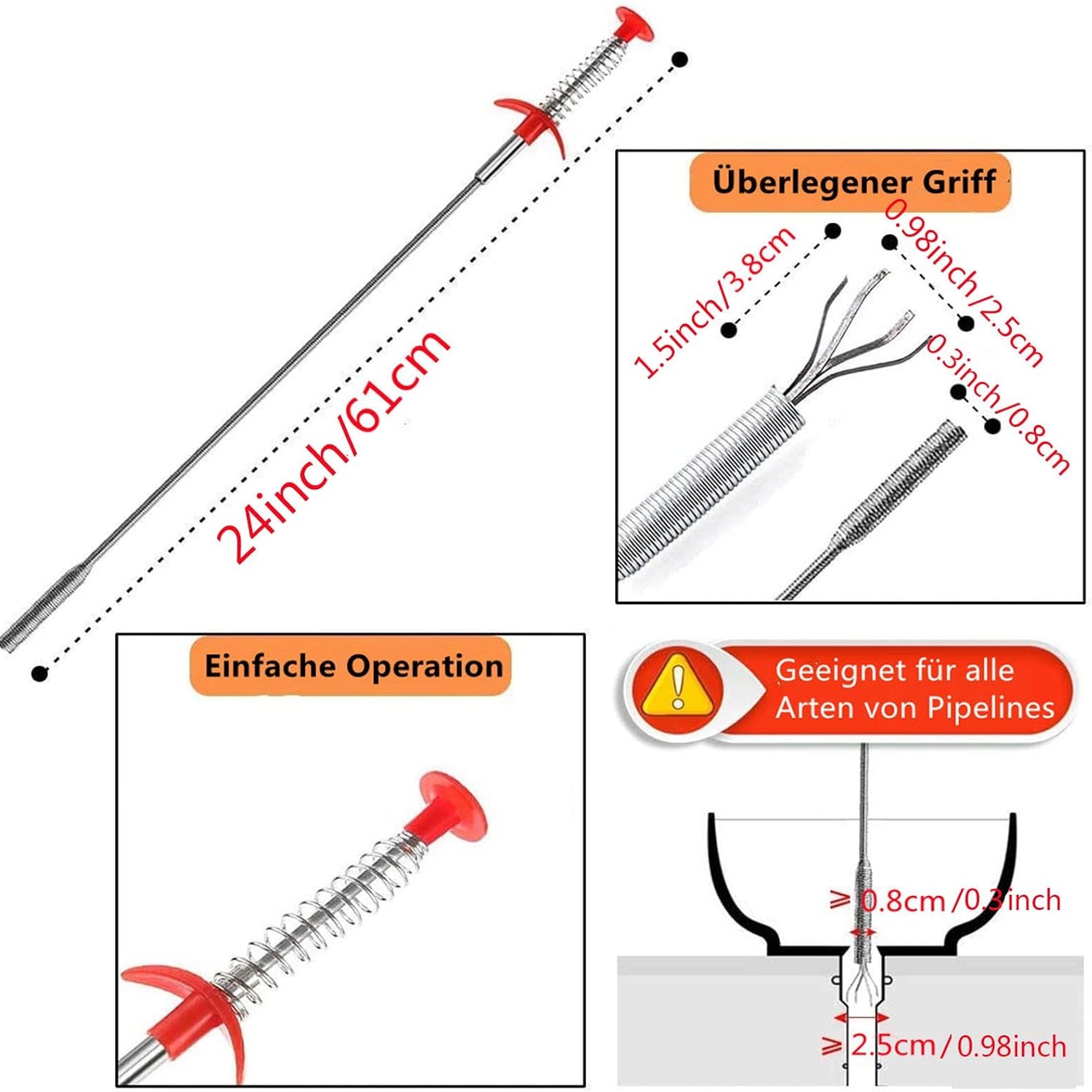
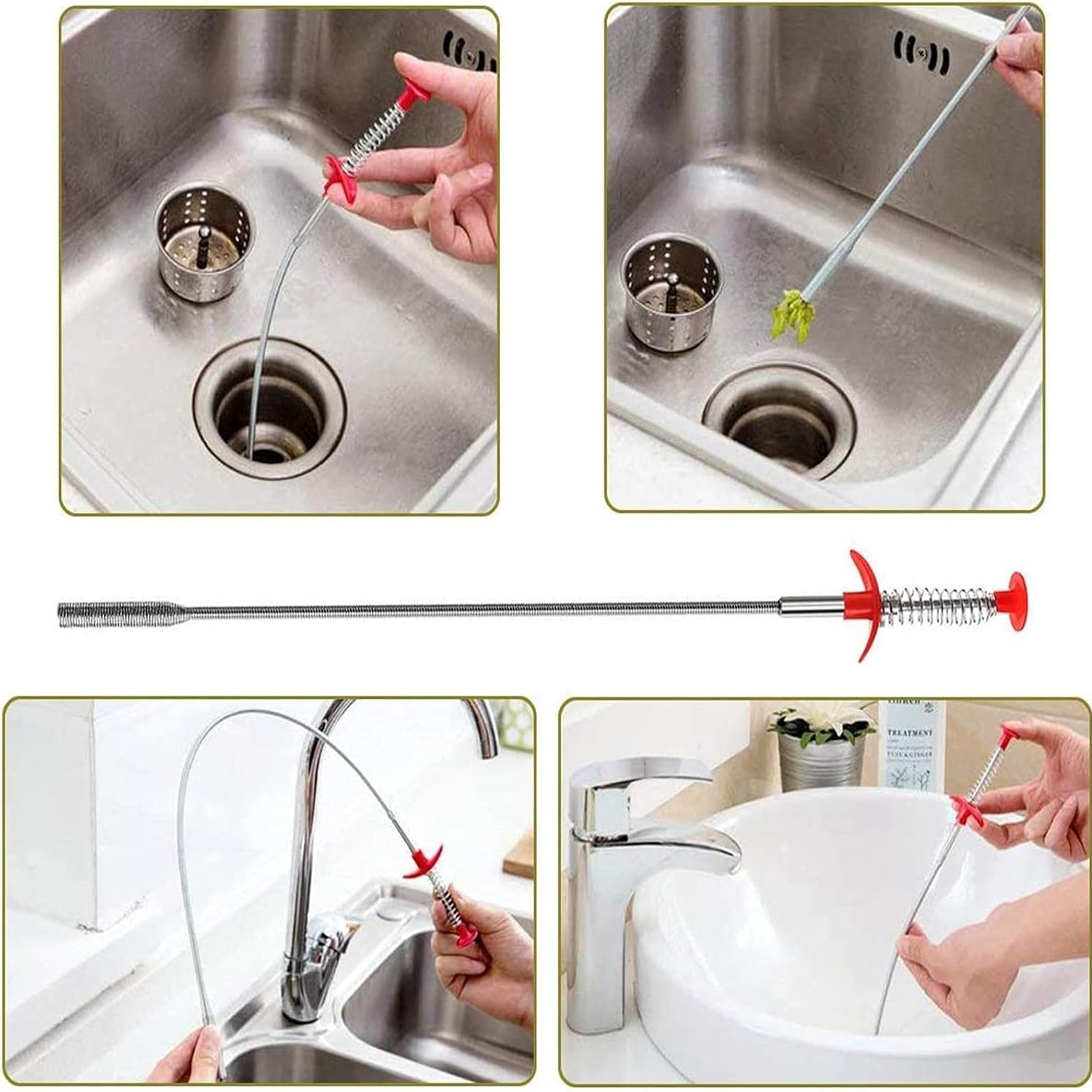
The fourth tool does a different job. It is a 24 inch metal plumbing snake with a sprung shaft and four small claws at the tip. Squeeze the handle, the claws open. Let go, they close. This is the tool for grabbing something solid, whether that is a lump of compacted debris in a kitchen drain or the ring that fell off the edge of the basin. The extra length also helps in floor drains where the trap sits deeper.
Who this set suits
Households with long hair get the most out of it. If two or three people with shoulder-length hair share a shower, that drain is going to need attention every few weeks no matter what you do, and having a flexible drain clog remover on hand turns a plumber call into a two-minute chore.
Renters do well with it too. You are not making any permanent change to the plumbing, nothing gets dismantled, and the tool travels with you when you move. For anyone in a place with older pipework, mechanical clearing is also kinder than pouring strong chemicals into joints that may already be tired.
It suits anyone who has quietly decided they are never calling a plumber again for something this small. A call-out for a basin that just needs a hair clog pulled out costs many times what a set of tools costs, and the actual work takes less time than the plumber spends parking.
The one group it does not suit is anyone dealing with a blockage deep in the main line. If several fixtures in the house back up at once, or if a toilet and a shower are both affected, the problem is further along than 24 inches and you need a professional with a powered machine.
Choosing the right tool for each drain
Start with where the water is sitting. If it pools right at the plughole and drains slowly, the clog is close and a plastic wand will almost certainly reach it. If the fixture drains fine for ten seconds and then backs up, the blockage is deeper and you want the longer metal snake.
For bathroom basins, use a plastic wand and go in beside the stopper. For showers, lift the grate if it comes out and feed the wand straight down. Bathtubs often have an overflow plate, and going in through the overflow sometimes reaches the trap more directly than going through the plughole.
Kitchen sinks are a different animal. The build-up there is grease and food rather than hair, so the claw end is often more useful, followed by a long flush of very hot water to carry the loosened grease away. If you have a disposal unit, switch the power off before putting any tool near it, and work in the pipe below rather than the grinding chamber.
Floor drains and laundry gullies collect everything, from lint to small objects. The metal snake handles mixed debris better. Expect to make several passes rather than one heroic pull.
How to actually do it
Put a towel down and get gloves on. Have a bin bag or an old container ready, because you do not want to be hunting for one while holding a dripping wand.
Feed the tool in slowly and let it find the path. Do not shove. When you feel resistance, push a little further so the barbs get past the clog, then draw back with a gentle twisting motion. The twist is important, because it stops the barbs from catching on the pipe wall and lets them release cleanly.
Wipe the tool off into the bag. Go again. Keep going until the wand comes out clean, which usually takes three or four passes. Then run hot water for a minute to flush out what is left loose.
If the tool stops hard and will not pass at all, back off. A plastic wand should not need force. Something that solid is either a mechanical obstruction or a collapsed section, and both are jobs for someone with the right gear.
Care and keeping them usable
These are simple tools and they last if you treat them reasonably. Rinse under hot water straight after use, with a drop of dish soap and an old brush on the barbs if needed. Let them dry properly before storing, because damp plastic sitting in a cupboard gets unpleasant fast.
Store the wands flat or hanging so they stay straight. If one takes a permanent kink, do not try to heat it back into shape, just use it as-is or retire it. Check the barbs before each use and look for any splits in the shaft.
The best habit is spreading the set out. Keep one wand in each bathroom and one in the kitchen. A tool in a drawer three rooms away does not get used. A tool under the sink it belongs to gets used monthly, which means you never deal with a fully blocked drain again.
The short version
Hair clogs are physical, so the fix should be physical too. This set gives you three 21 inch barbed plastic wands for the everyday hair mat in basins, showers and tubs, plus a 24 inch metal snake with four claws for solid debris and dropped items. The plastic wands suit thinner pipes and usually work without removing the plug.
Rinse them, store them, use them regularly, and the slow drain problem mostly stops happening. For anything beyond the trap, or if multiple fixtures back up together, call a professional. For everything closer than that, four tools under the sink will do.