
The complete guide
Drill Drain Auger Buying Guide, How To Clear A Blocked Pipe Yourself
The problem with a slow drain
Blocked drains rarely announce themselves. They start as a sink that takes a few seconds too long, or a shower tray holding water around your ankles. Then one day the water does not go anywhere at all.
At that point you have three choices. You pour something caustic down the pipe and hope. You pay for a callout. Or you put a cable down the pipe and find out what is actually in there.
Chemicals are a coin flip. They can shift light soap and grease, and they do nothing at all against hair, wipes or roots. A callout gets a result, but you are paying trade rates for what is sometimes twenty minutes of work on a soft blockage sitting four metres in.
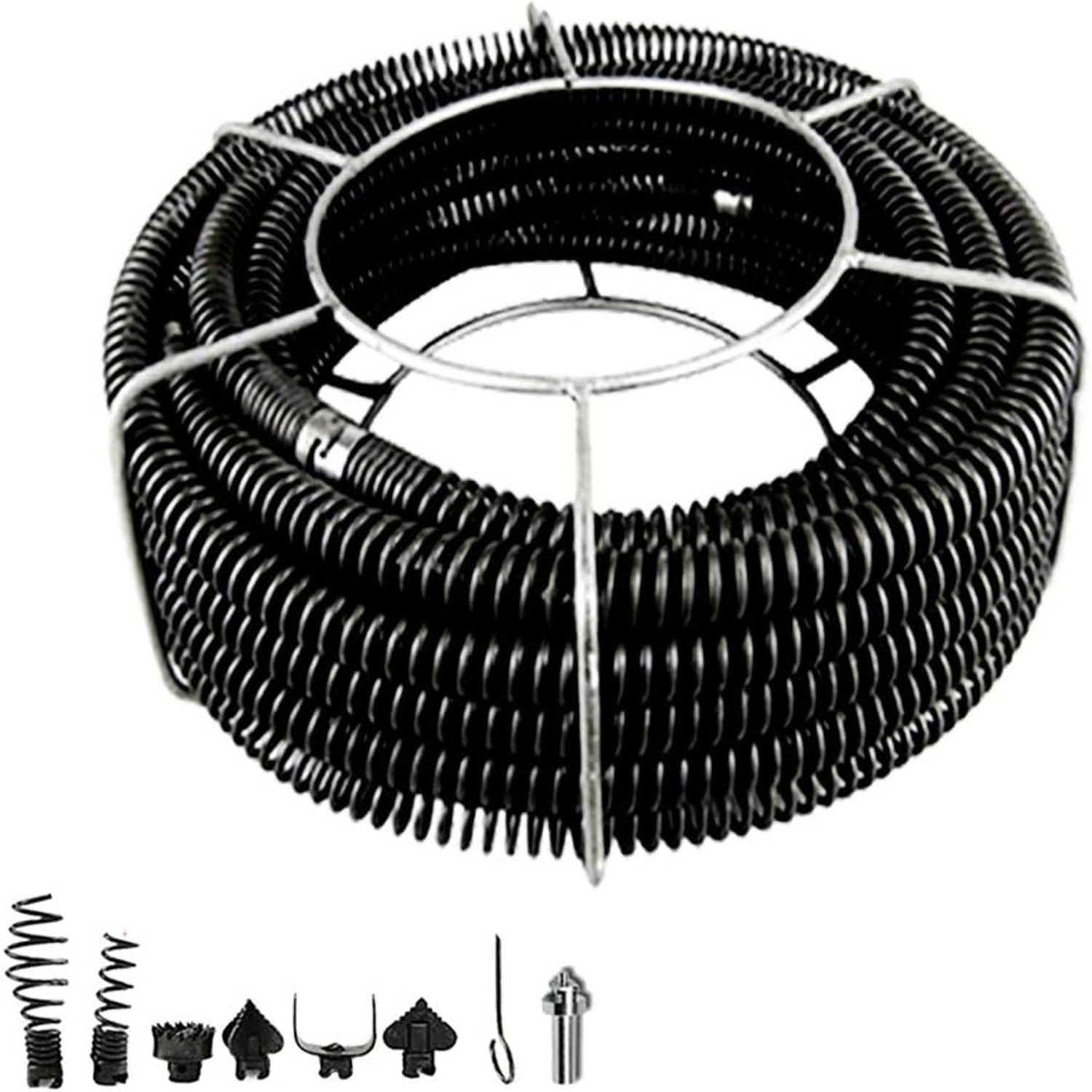
The third option is what this kit is for. A 12m drill drain auger lets you reach well past the trap, break up whatever is there, and see the evidence with your own eyes.
How a drill-driven drain auger works
The principle is old and simple. A long flexible steel spring goes into the pipe with a shaped head on the end. You spin the spring. The head chews through or grabs the blockage, and you work it back and forth until water runs.
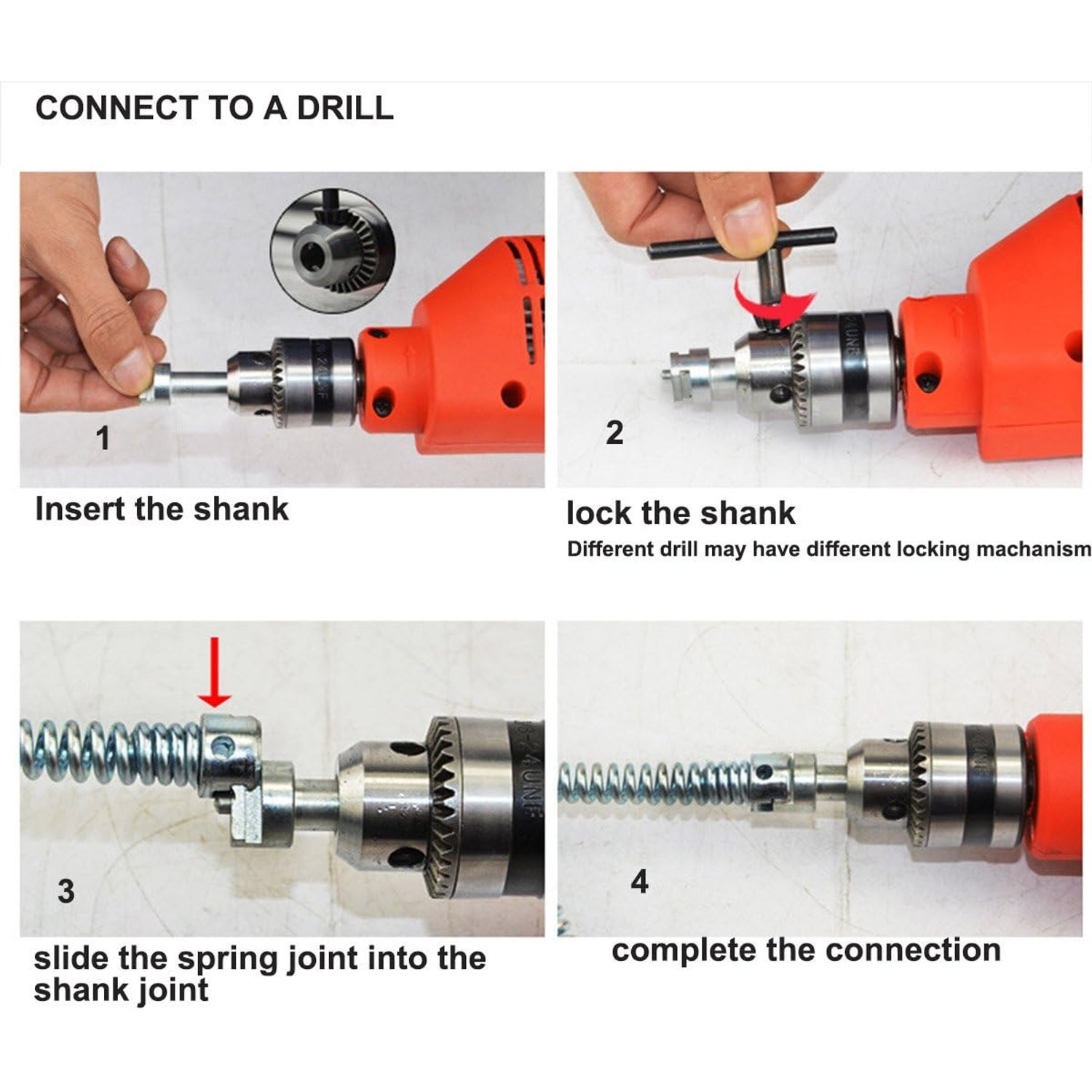
What makes this version a DIY tool is the power source. Instead of a dedicated drain machine, a shank adapter clamps the cable into an ordinary drill chuck. Corded or cordless, it does not matter much. Torque matters more than speed.
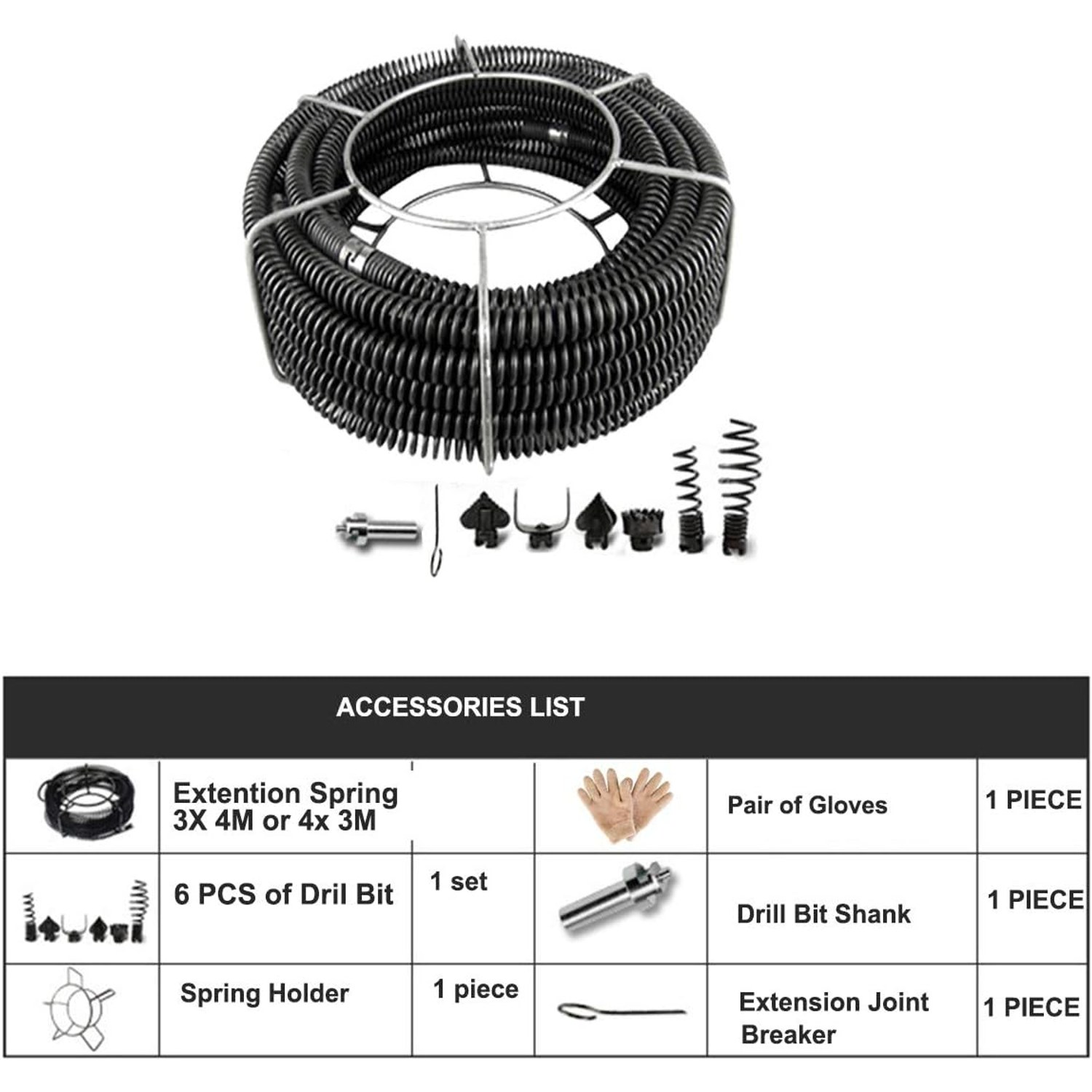
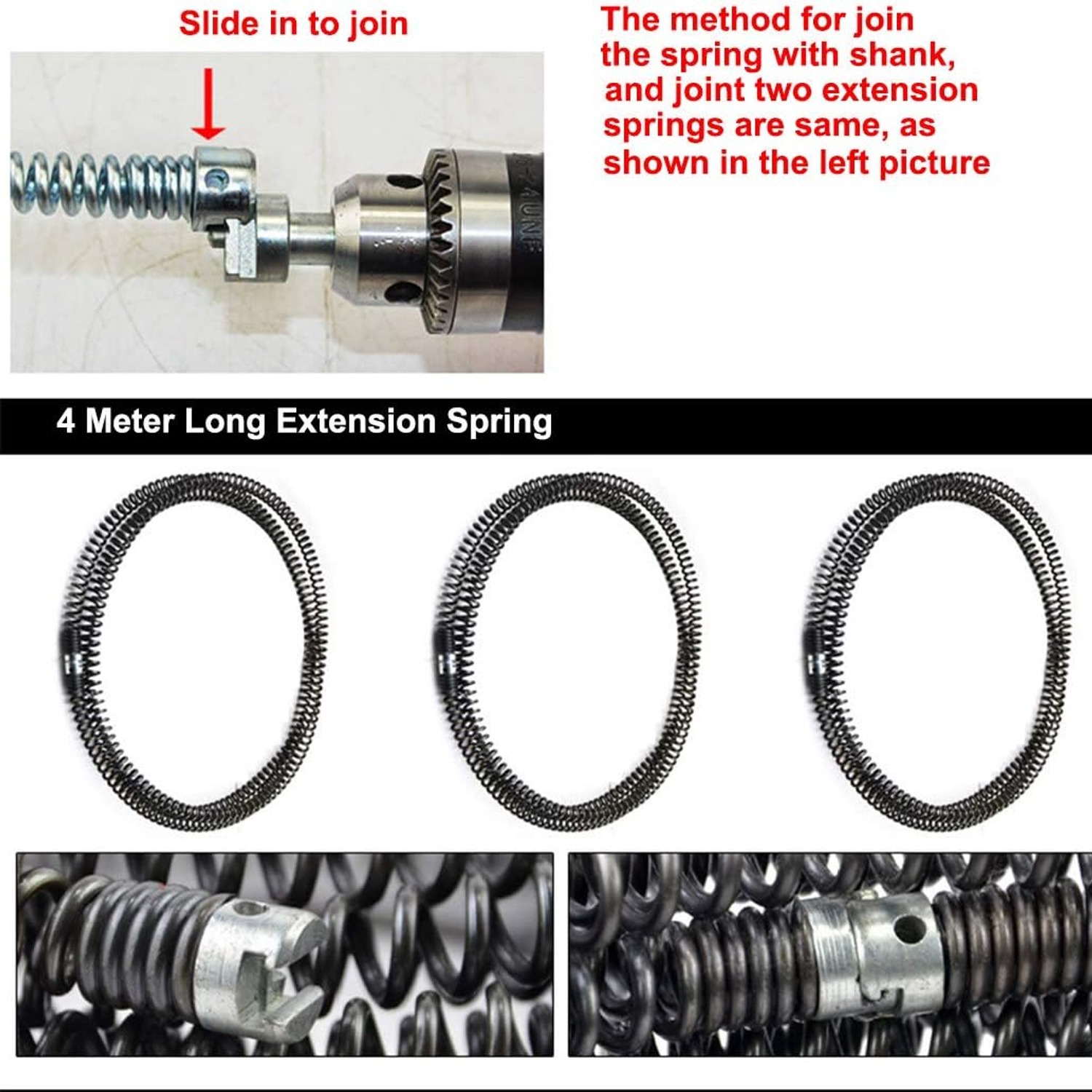
The cable here is supplied as four sections totalling 12 metres. You join only what you need. If a kitchen line clears at three metres, you never unpack the rest. That is genuinely useful, because handling twelve metres of spring in a small laundry is awkward and unnecessary.
Six bits come with the kit. One of them is a coil style head, and that is usually the one to start with. Its job is not really cutting. Its job is grabbing a sample and dragging it back out so you can look at it.
Read what comes out of the pipe
This is the step most people skip, and it is the one that saves the most time and money.
Soft grey sludge means grease and soap build-up. That is the easy case, and the kit handles it well. A tangled grey rope means hair, common in bathroom lines and also straightforward. Shredded fabric means wipes, which clear but take patience.
Fine pale threads mean roots. That is where the honest conversation starts. The spring can cut light root growth, but root masses hold sandy mud, and that packed mud is hard for this type of cable to get through. If you pull back roots and grit, you have learned something valuable for the price of ten minutes of work.
Nothing coming back at all, with the cable stopping dead at the same point every time, can mean a collapsed section or a hard offset. That is a camera job.
Who this suits
This kit fits a homeowner or long-term renter who already owns a drill and does not mind getting hands dirty. No licence is needed and no training is required, but there is a skill curve and the first job always takes longer than the second.
It also suits anyone who wants a diagnostic before spending money. Even if you end up calling a plumber, walking outside and saying "it stops at about six metres and pulls back roots" is a better starting position than "the sink is slow".
It does not suit someone looking for trade equipment. The manufacturer is upfront about this. It is not built for heavy blockages, commercial lines or daily professional use. If you clear drains for a living, you want a proper machine.
It also does not suit someone without a drill, since the drill is the engine and it is not included.
Working safely
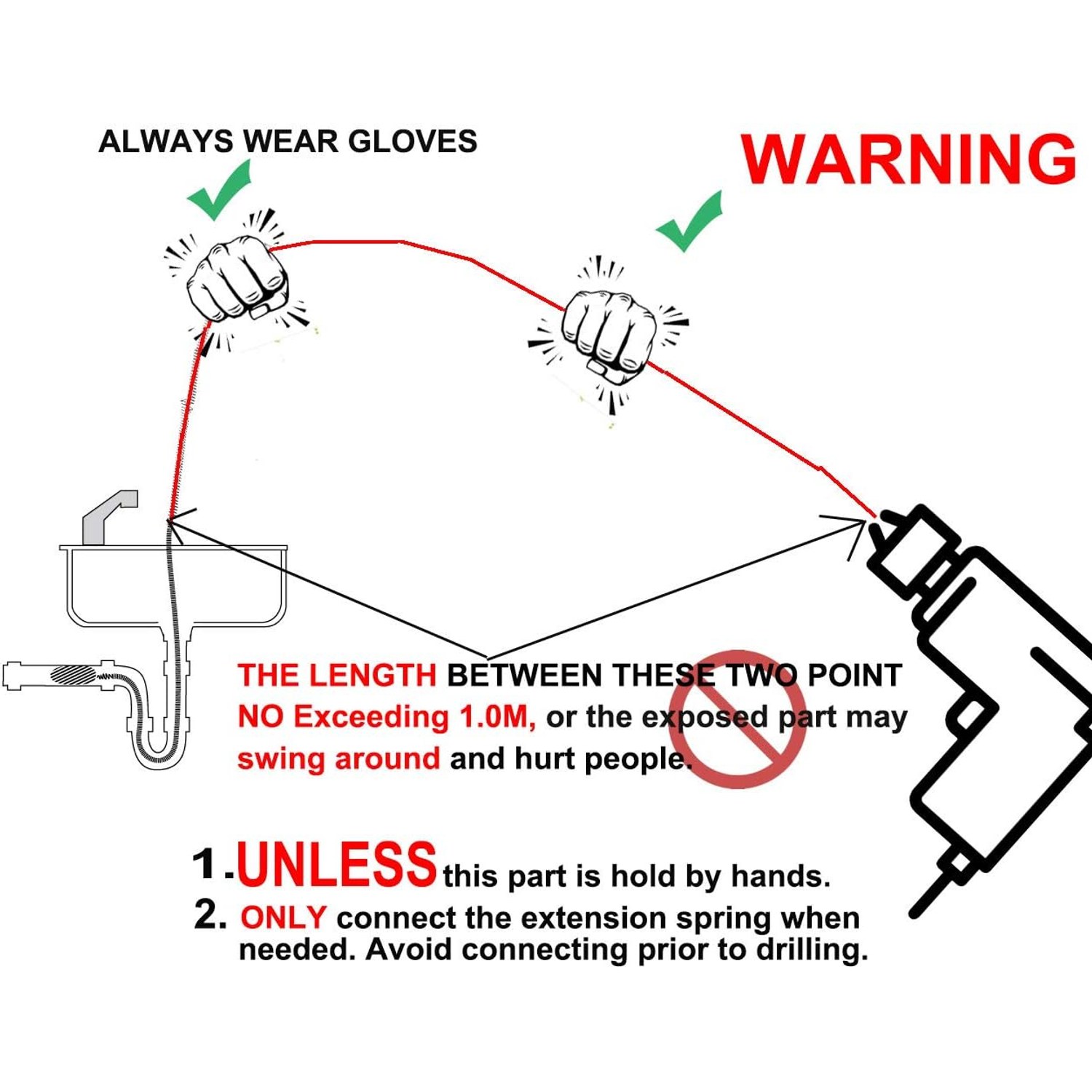
The spring is strong, and a strong spring spinning under power deserves respect. The manufacturer recommends two people where possible. One person runs the drill, the other steadies the cable where it enters the pipe so the exposed section cannot whip.
If you are working alone, the suggested trick is to run the cable through a length of rigid PVC pipe between the drain opening and the drill. The PVC contains the spinning section and takes most of the risk out of it.
Wear the gloves that come in the box. Keep sleeves, cords and long hair well clear. Work at moderate speed rather than flat out, because feel matters more than revolutions. When the head bites and the cable starts to wind up, stop and ease back before it kinks.
One more thing. If someone has already poured caustic cleaner down the pipe, flush it through with plenty of water before you put a cable in. Splashback from chemical sludge is nasty.
Getting a result
Feed the cable in slowly, by hand, until you feel resistance. Only then start the drill. Let the head work rather than shoving it forward. Short back-and-forth movements do more than constant pressure.
Change bits if progress stalls. That is the whole point of having six heads. What fails on packed grease may work on hair, and the other way around.
Expect the cable to behave differently as you go. The section near your hands bends easily. The far end stiffens up, which makes bends harder to negotiate the deeper you go. This is why short runs succeed more often than long ones, and why clearing from the nearest access point is always worth trying first.
Patience is the actual tool here. Success depends on drill power, how much cable is out, how curved the run is, what caused the blockage, and how carefully you work. None of those are things you can rush.
Looking after the steel
Drains are the worst possible environment for bare steel. Grit, moisture and whatever else is down there will start rusting a spring within days if you put it away wet.
Rinse the spring sections and every bit you used with clean water. Dry them properly. Then apply an anti-rust spray or a light machine oil before storing. The manufacturer specifically recommends this, and it is the single biggest factor in how long the kit lasts.
Store it somewhere dry and off the floor. Check joints and bits before the next job. A deformed joint or a cracked head should be replaced rather than used.
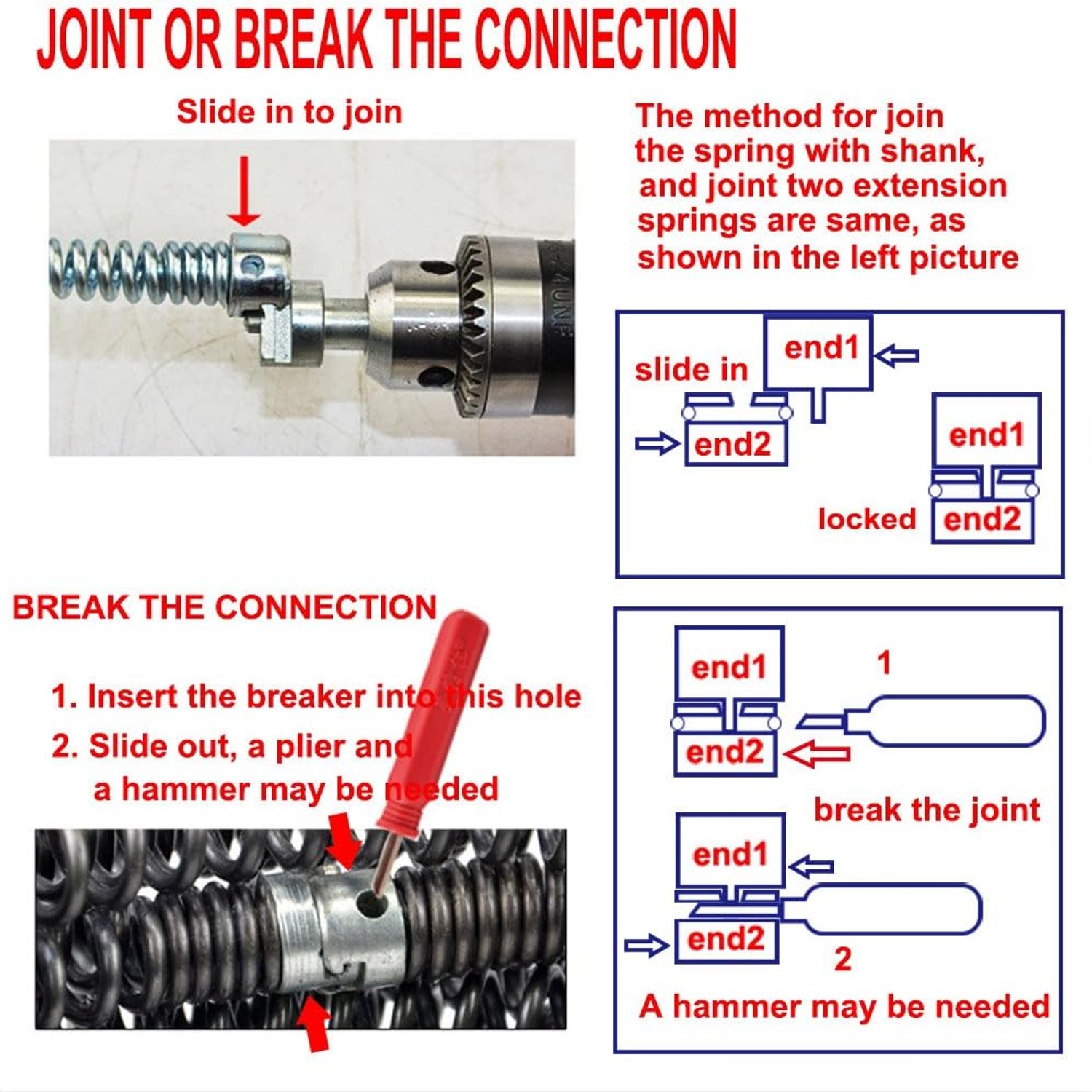
The joint breaker in the kit matters here too. After a hard job the sections tighten against each other and hand strength will not separate them. Use the breaker rather than improvising with pliers.
The short version
This is a 12 metre spring cable drain snake that runs off a drill you already own. Four sections, six bits, a shank adapter, a joint breaker and gloves, weighing about 4 kg in total.
It is built for home use on sink, tub, stormwater and sewer lines, and it is genuinely good at soft blockages. It is not built for roots packed in mud, collapsed pipes or trade work.
Use the coil bit early to pull back a sample. Work patiently, preferably with a second pair of hands. Clean and oil the steel afterwards.
Worst case, you learn exactly what is wrong before the plumber arrives. Best case, the water runs and you keep the callout fee.