
The complete guide
How To Choose And Use An Adjustable Handle Plunger
The problem with the plunger you probably own
Most plungers get bought in a panic. Something has backed up, the shop is closing, and you grab whatever is on the shelf. It works once, badly, and then lives in the corner of the bathroom for the next five years looking like a bad houseguest.
Two things usually go wrong. The first is shape. A plunger cup that sits flat is built for a sink or a shower waste, where the drain opening is a flat hole in a flat surface. A toilet is nothing like that. The outlet curves away and down, so a flat cup has nothing to grip and just skids around, flinging water at the walls. The second thing is size. A standard plunger is long and bulky, and in a small bathroom there is simply nowhere to put it.
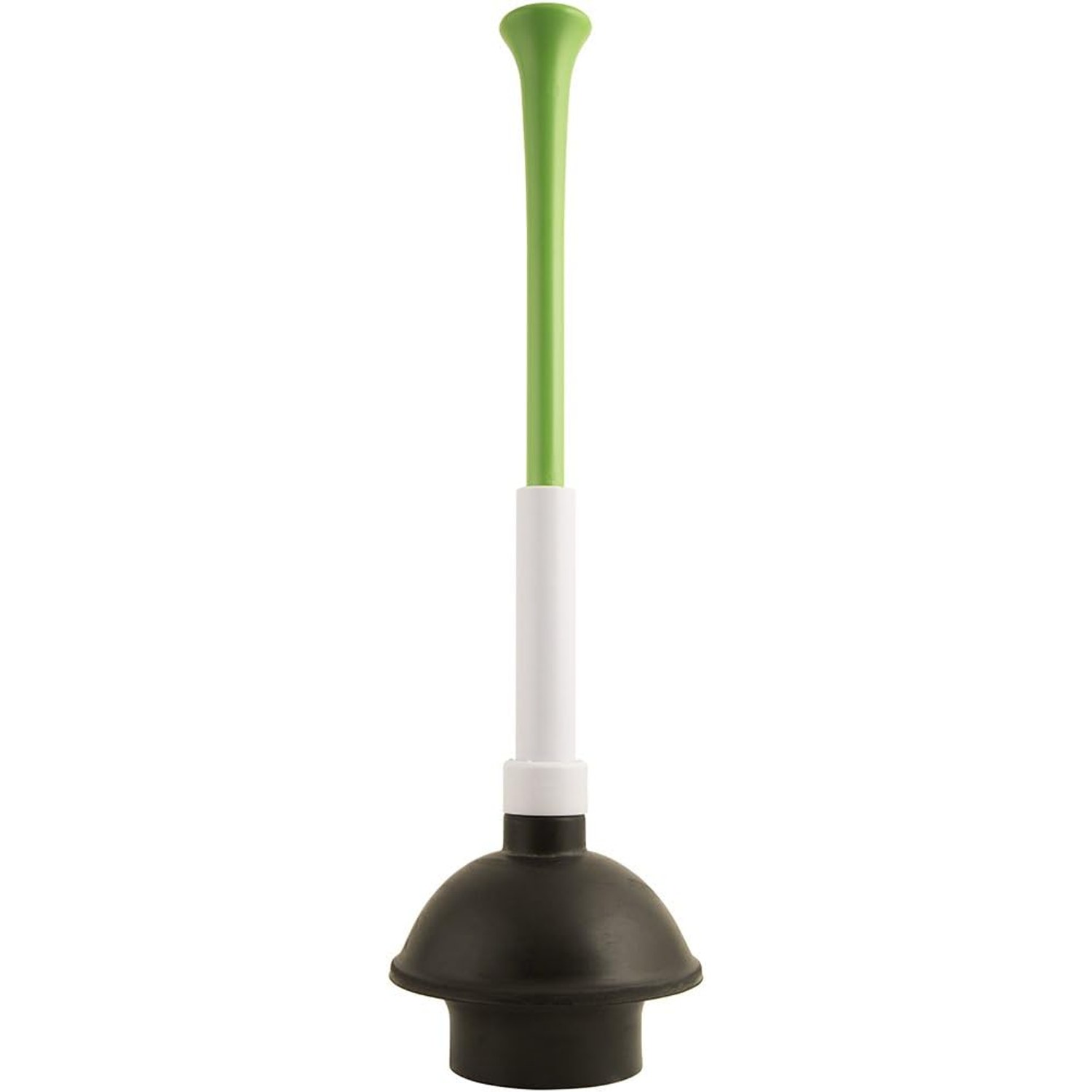
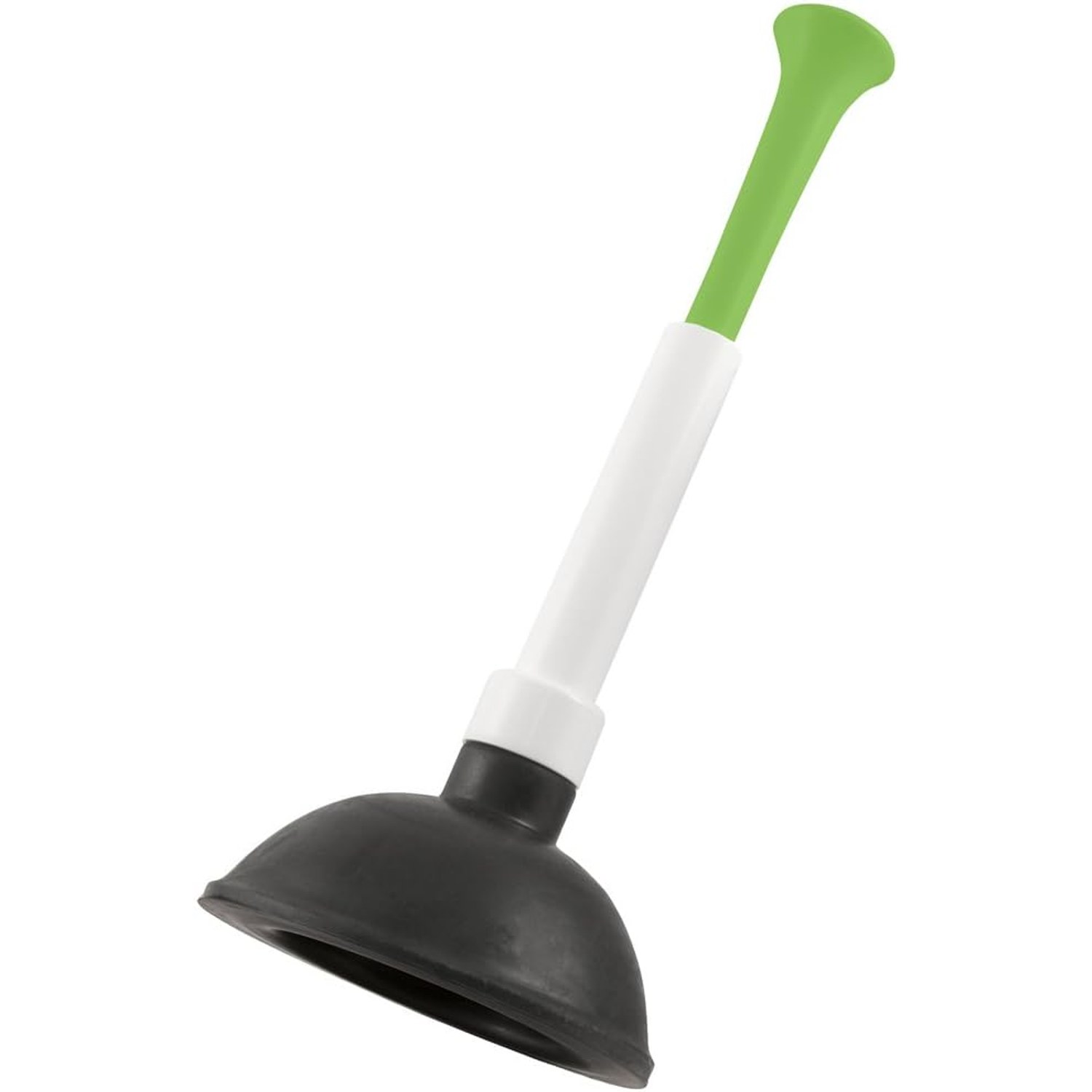
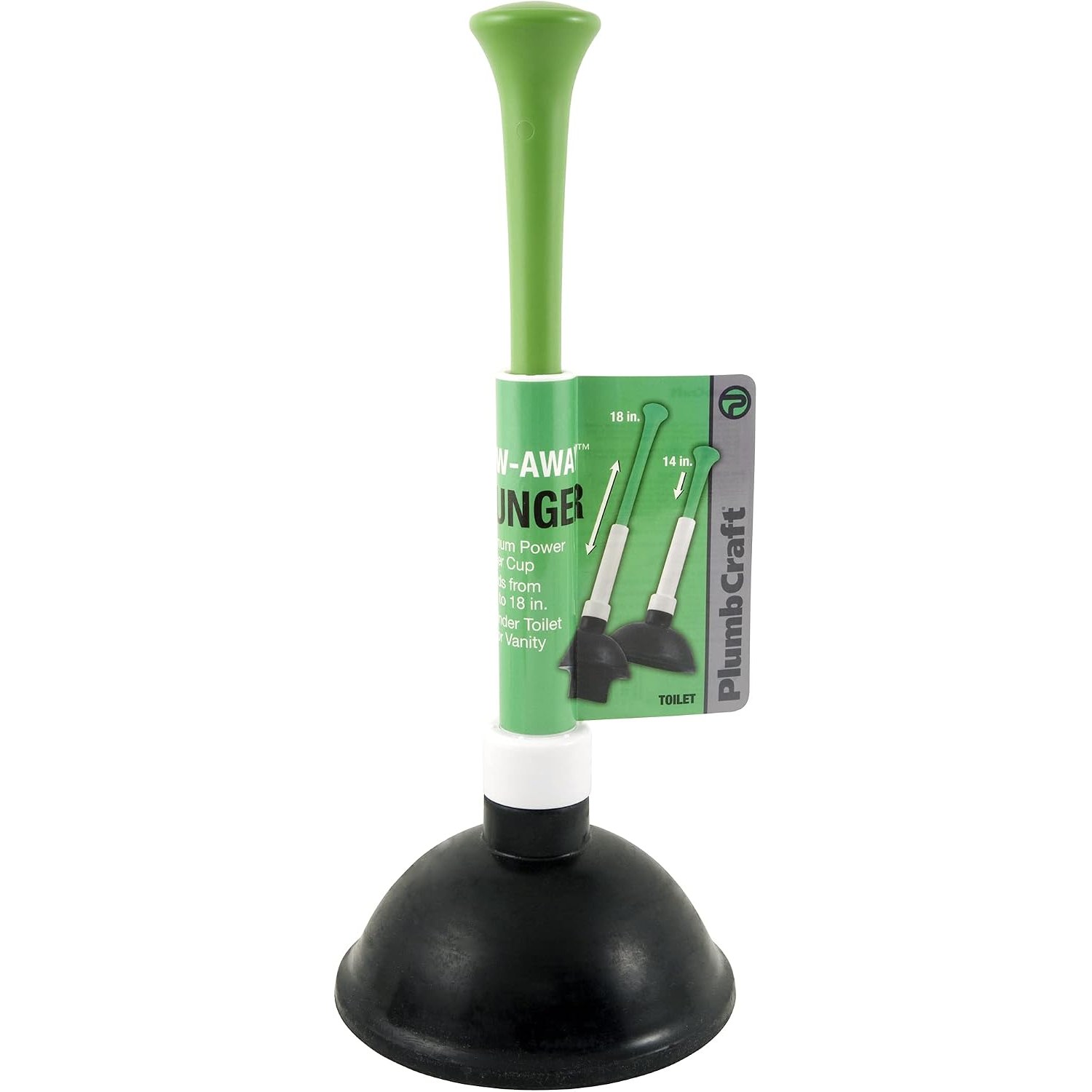
An adjustable handle plunger goes after both problems at once. The handle shrinks for storage and extends for use, and the cup has a flange that pulls out when you need to seal a toilet and tucks back in when you need a flat face.
How the flange actually works
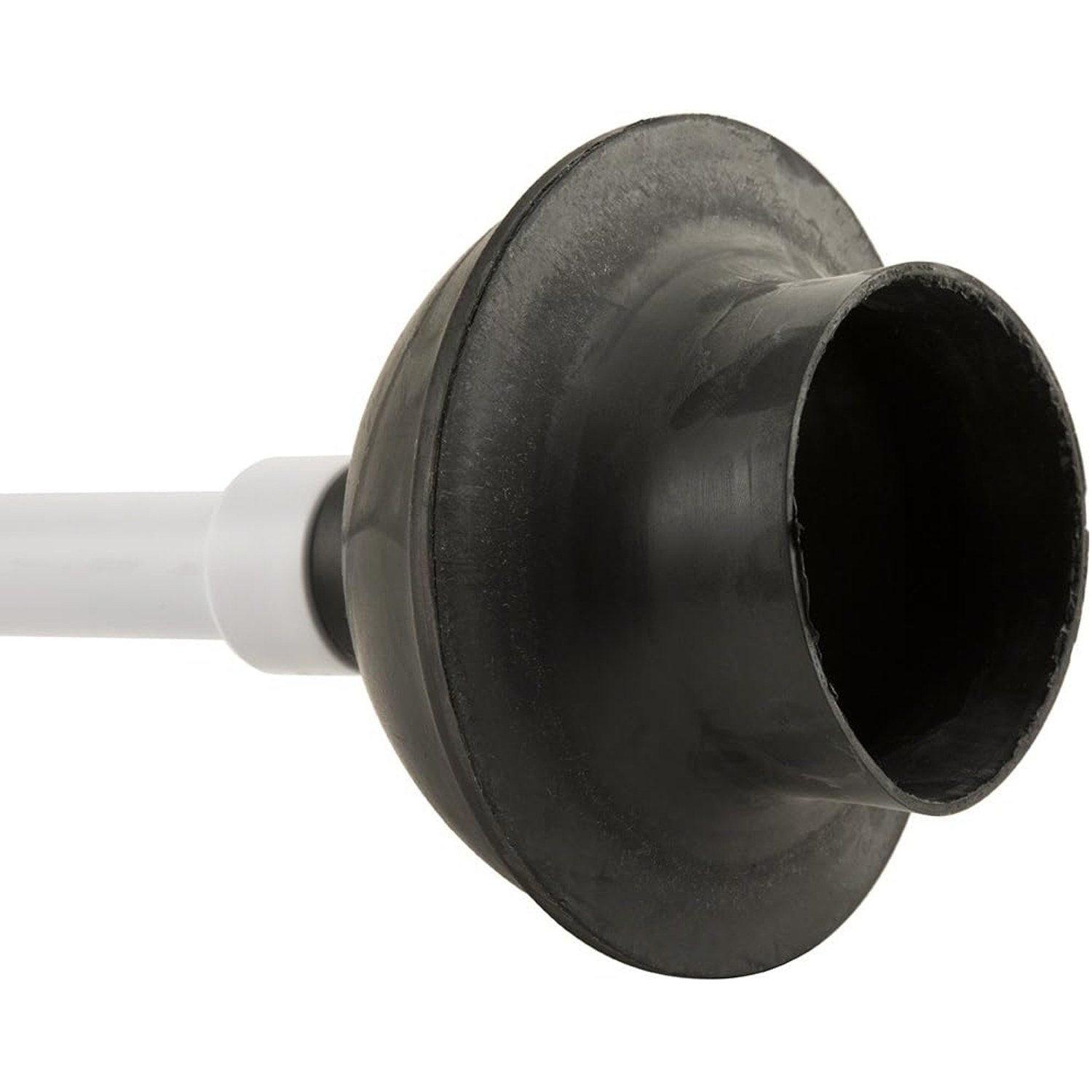
Inside the rubber cup there is a second, softer lip that folds away. Reach in, pull it out, and you now have a narrow rubber snout that drops into the throat of a toilet. That snout is what creates the seal. With a seal, every push and pull you make moves water in the pipe, and it is that back-and-forth water movement that breaks a clog apart.
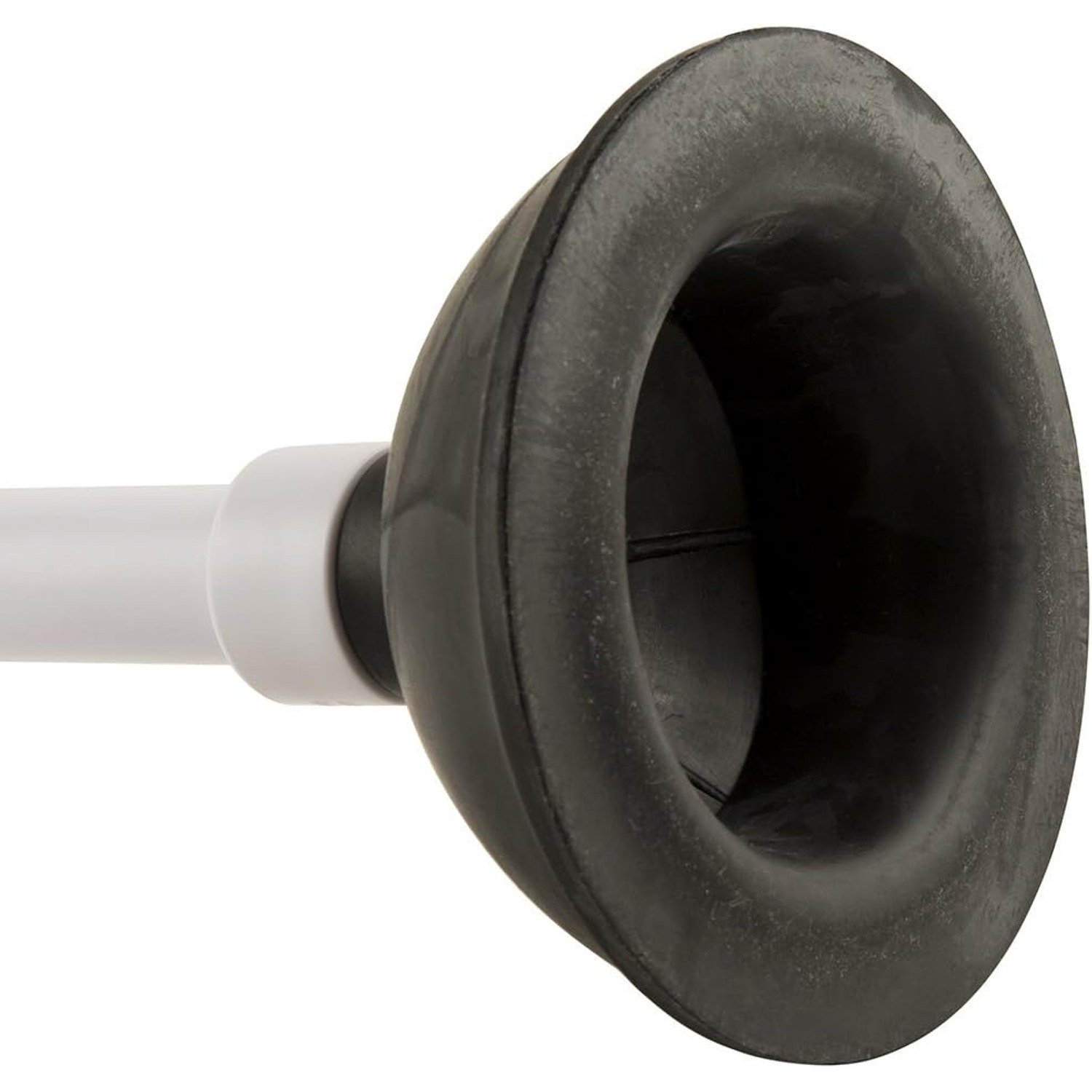
Push the flange back inside the cup and you have an ordinary flat-faced plunger again. Now it sits properly on the base of a kitchen sink or a basin, where the drain is just a hole in a flat surface.
This is why the flange design keeps showing up when people compare the best plunger with flange options. It is not a gimmick. It is one tool covering two very different drain shapes, which means one tool in the cupboard rather than two.
Why the adjustable handle matters more than it sounds
Handle length changes how much force you can apply and how well you can control it. A longer handle gives you more force and keeps your hands further from the splash zone. A shorter handle gives you precision and lets you work in a cramped spot, like a basin set under a mirror where there is no room to swing.
With a twist-to-adjust handle you pick whichever suits the job in front of you. Twist to unlock, slide, twist to lock. Check it is firm before you start, because a handle that slips mid-stroke is annoying at best.
Then there is storage. A full length plunger simply will not fit in many vanity cupboards. Collapsed, this one will, which is the whole reason for the stow-away name. It is also the main reason people shopping for the best compact plunger for storage end up on telescoping models rather than fixed wooden ones.
Weight, grip, and why light is better
The plunger weighs 454 g. People sometimes read that and assume it is flimsy. It is not how plunging works.
Clearing a drain is about rapid pressure changes, not about hitting the clog with mass. You want to be able to push and pull quickly, twenty or thirty times, without your shoulder giving out. A light handle lets you keep that rhythm. A heavy one just tires you out before the clog shifts.
The flat top on the handle is worth noticing too. During the downstroke you press straight down with the heel of your palm, and a flat surface spreads that pressure instead of concentrating it in one spot. Over a long session that is the difference between a sore hand and a comfortable one.
Getting a proper seal, step by step
Most failed plunging is failed sealing. Here is what actually helps.
Make sure the cup is covered by water. You are trying to push water, not air, because water does not compress and air does. If the bowl is low, add some. If a sink is nearly dry, run a little in.
Lower the cup in slowly and tilt it so trapped air escapes out the side. Seat it over the drain, press down to compress it, then start plunging with firm, straight strokes. Pull back as hard as you push, because the upstroke does at least as much work as the downstroke.
On a sink, block the overflow hole with a wet cloth. If you skip this, a good share of your pressure escapes out that hole and does nothing to the clog. On a double sink, plug the other side as well.
After ten to twenty strokes, break the seal and see whether the water drains. Repeat if it looks promising. If three solid rounds change nothing, the blockage is deeper than a plunger reaches and it is time for a drain auger or a call to a plumber.
Who this suits
Renters and flat dwellers get the most out of it, because storage space is usually the constraint rather than money. Anyone with one small bathroom and no laundry cupboard is in the same boat. It also works well in caravans, boats and holiday houses, where you want one tool that packs down and handles whatever the plumbing throws at you.
Larger households with several bathrooms sometimes prefer a dedicated plunger per room, purely to avoid carrying one through the house. That is a reasonable preference. If it is yours, buy two and keep them separate.
If you deal with heavy commercial blockages or long runs of old pipe, a plunger of any kind is only a first step. A proper auger belongs in that toolkit as well.
Looking after it
Care is simple and takes about thirty seconds. Rinse the rubber cup under running water, or flush it in the bowl itself as a first pass. Wipe the plastic handle with warm soapy water or a household disinfectant, then dry it.
The thing that ruins plungers is storing them wet. Water trapped in the cup goes stale and smells, and a wet plunger left on a towel or a carpet leaves a mark you will not forget. Stand it somewhere it can drip, or sit it in a tray or bucket.
Keep it out of direct sunlight too. Sun and heat harden rubber over time, and hard rubber will not seal. If the cup ever feels stiff or shows cracks, replace it rather than fighting with it.
Avoid solvents and long bleach soaks on the rubber. A normal bathroom cleaner is plenty.
The short version
An adjustable handle plunger solves two everyday annoyances. It changes shape through the flange, so one tool seals both a toilet and a flat sink drain. It changes length through the handle, so it gives you more force when you are using it and disappears into a cupboard when you are not.
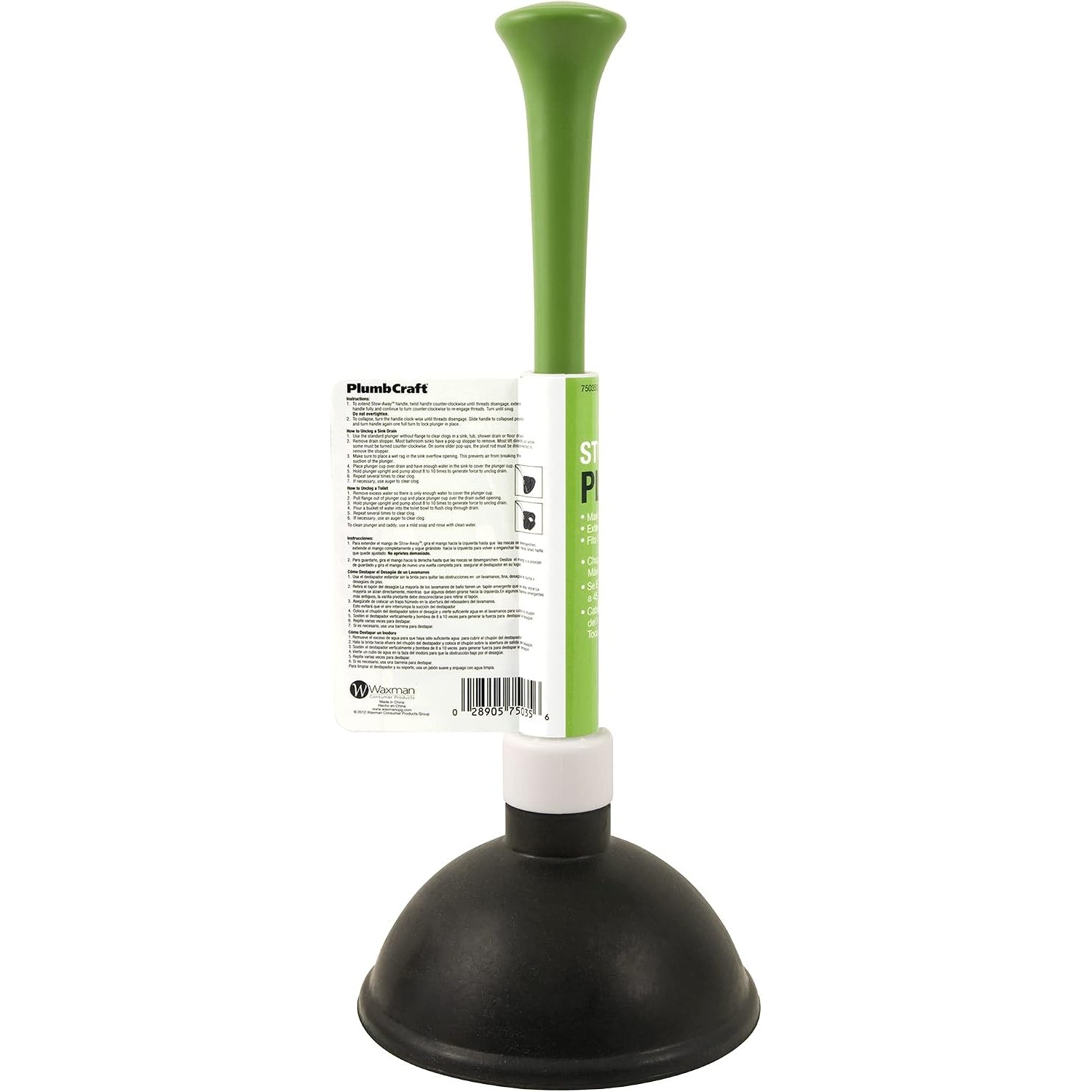
This one is 36.2 x 14.6 x 14.6 cm assembled, weighs 454 g, and pairs a rubber cup with a plastic handle that has a flat top for your palm. It comes as a single plunger, nothing to assemble.
If your current plunger slides around the toilet bowl, or stands in the corner because it will not fit anywhere else, this is the straightforward fix. Measure your storage space, check it works for you, and then forget about it until the next gurgle.