
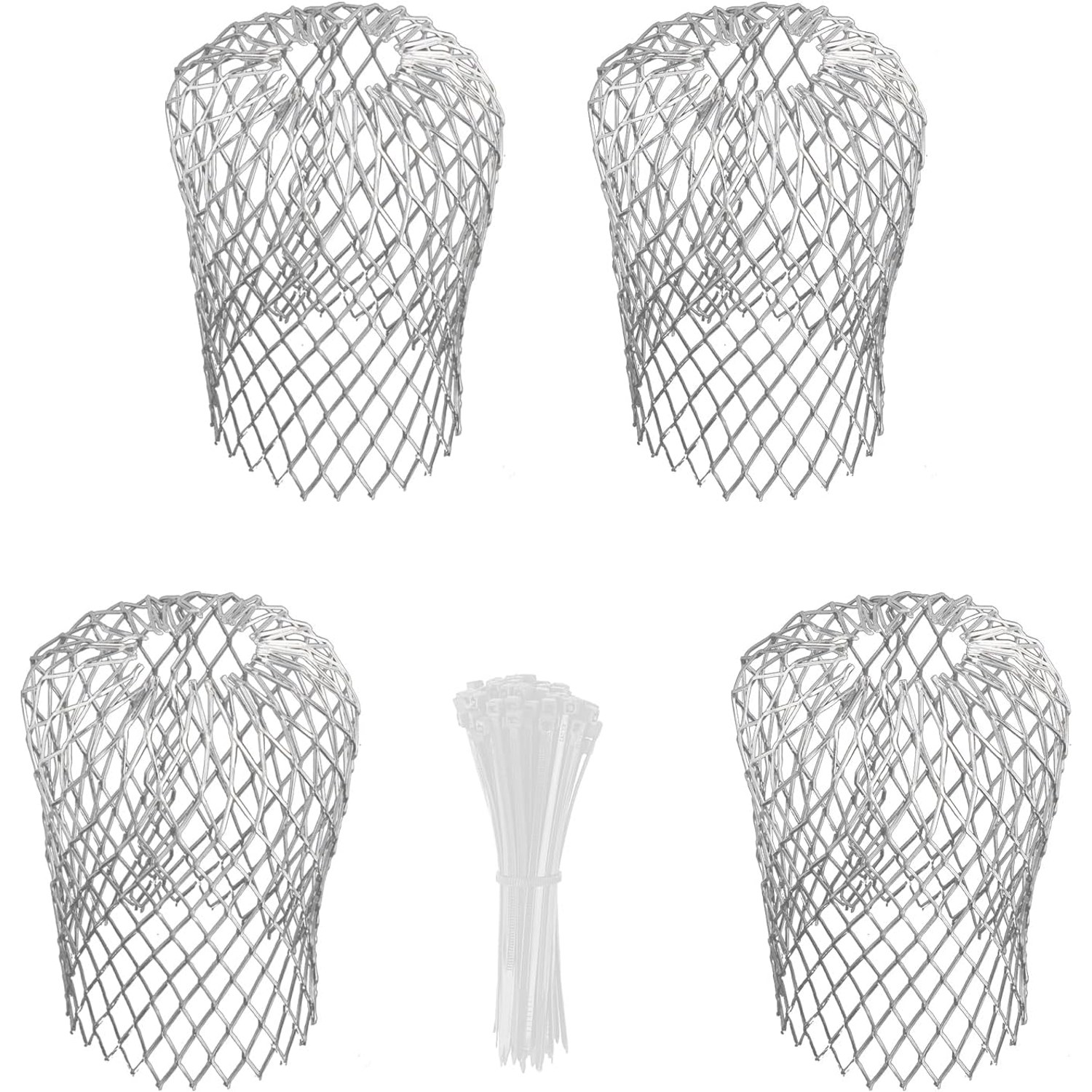
The complete guide
How To Choose And Fit A Downpipe Leaf Guard
The problem nobody notices until it rains
Gutters rarely fail in the middle. They fail at the outlet, the small hole where the gutter empties into the downpipe. Water funnels towards that point, and it carries everything with it. Leaves, seed pods, bark, moss, roof grit and the fine sand that washes off tiles all head for the same opening.
A few leaves arrive first and lodge sideways in the throat of the pipe. The next lot catches on them. Within a season you have a plug that is sitting half a metre down the downpipe where you cannot see it and cannot reach it. Then a heavy shower arrives, the gutter fills, and water sheets over the front edge onto the path, the window, or straight down the wall.
That overflow is the expensive part. Water running down a wall finds render cracks and window frames. Water pooling at the base of a downpipe soaks the soil next to the footings. Neither shows up straight away, which is exactly why it keeps happening.
A downpipe leaf guard fixes the problem at its source. It puts a mesh screen right in the outlet so debris stops where you can see it, not deep inside the pipe.
How a downpipe leaf guard works
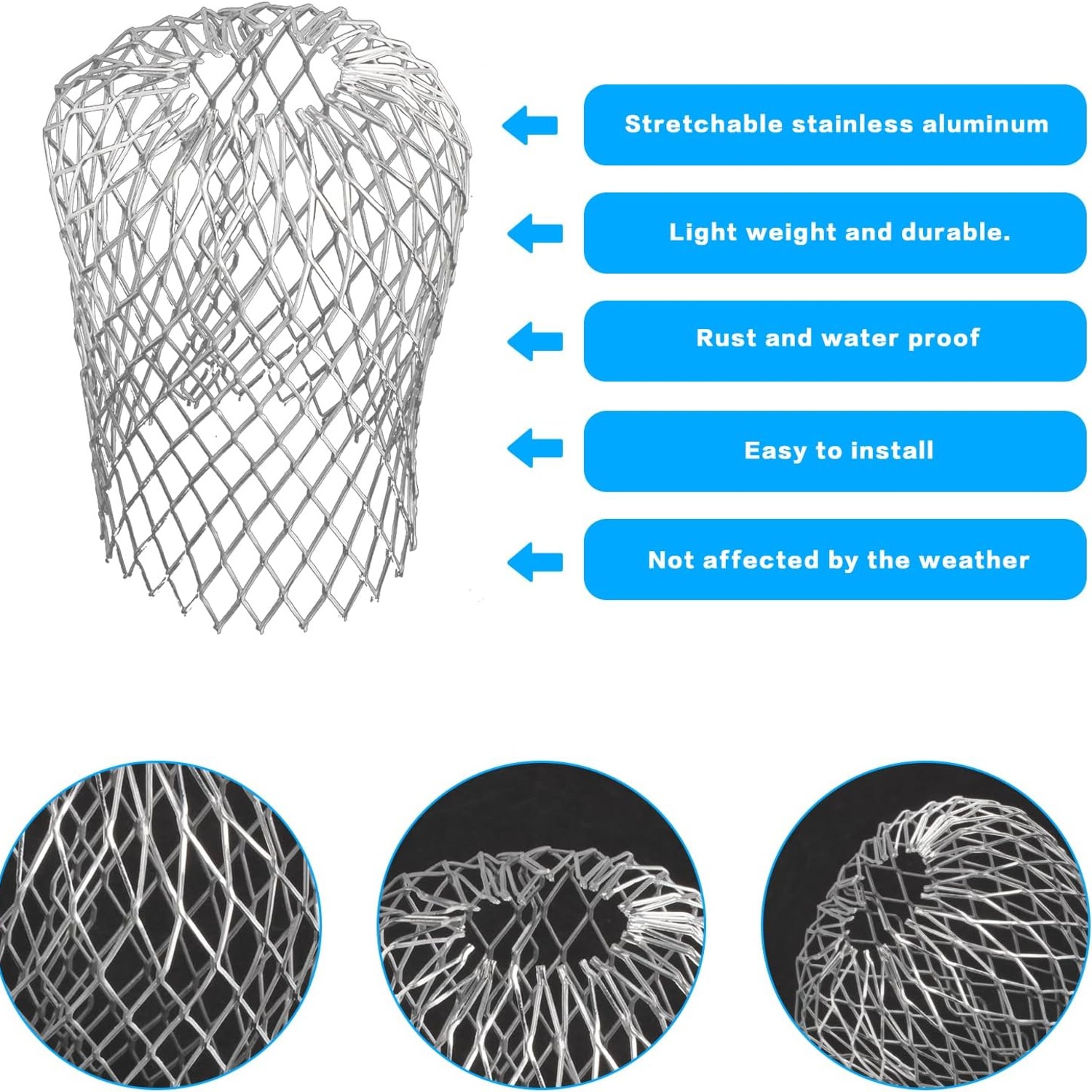
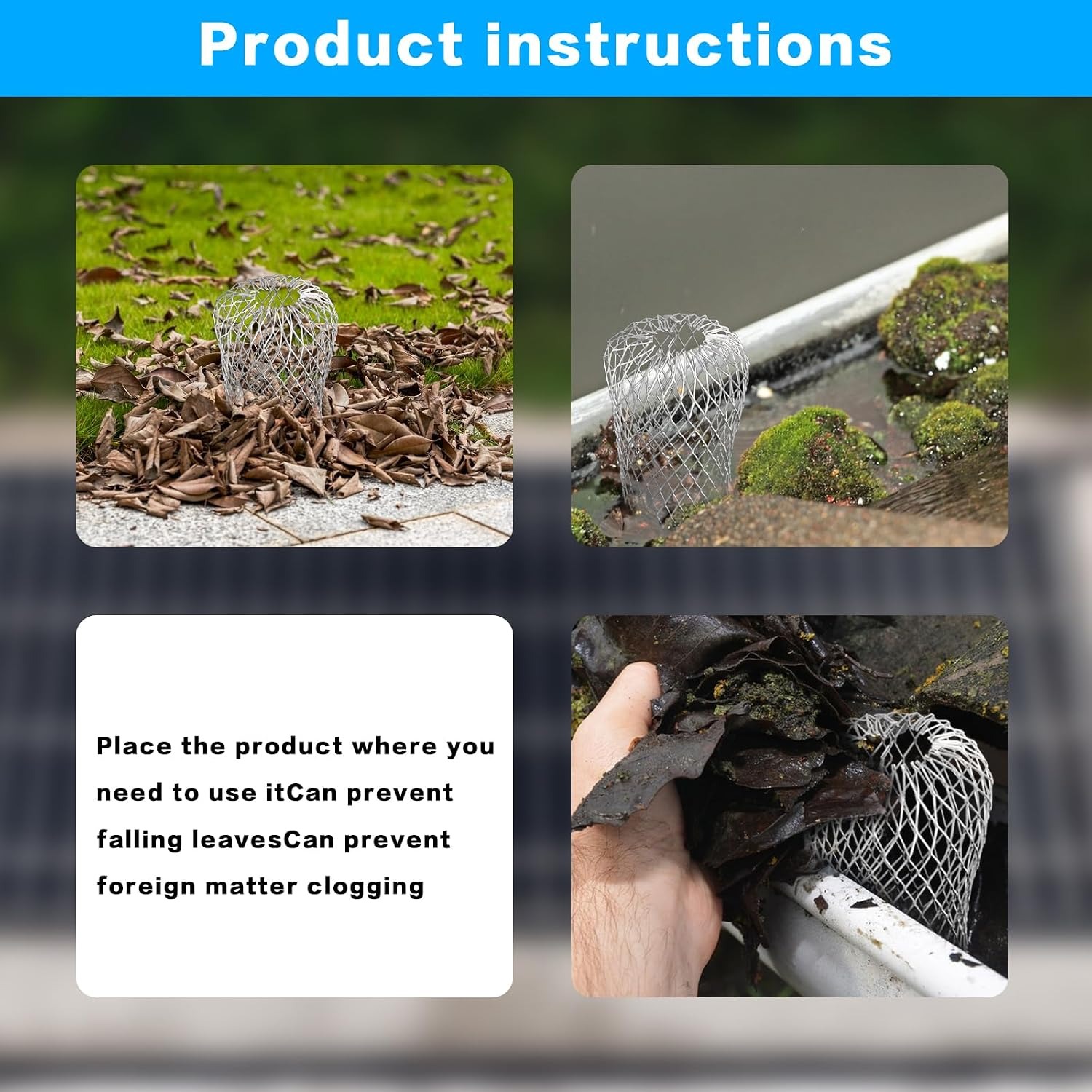
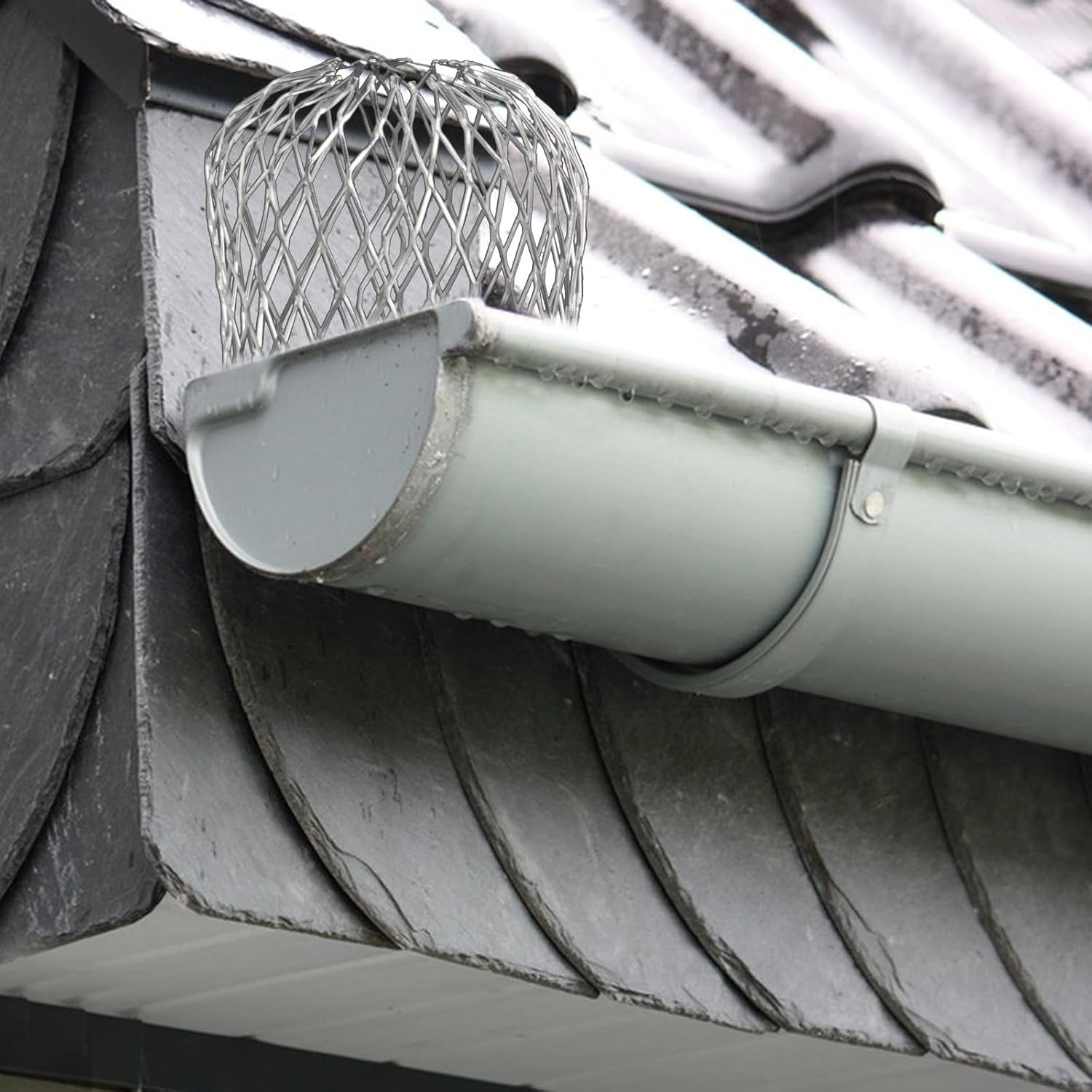
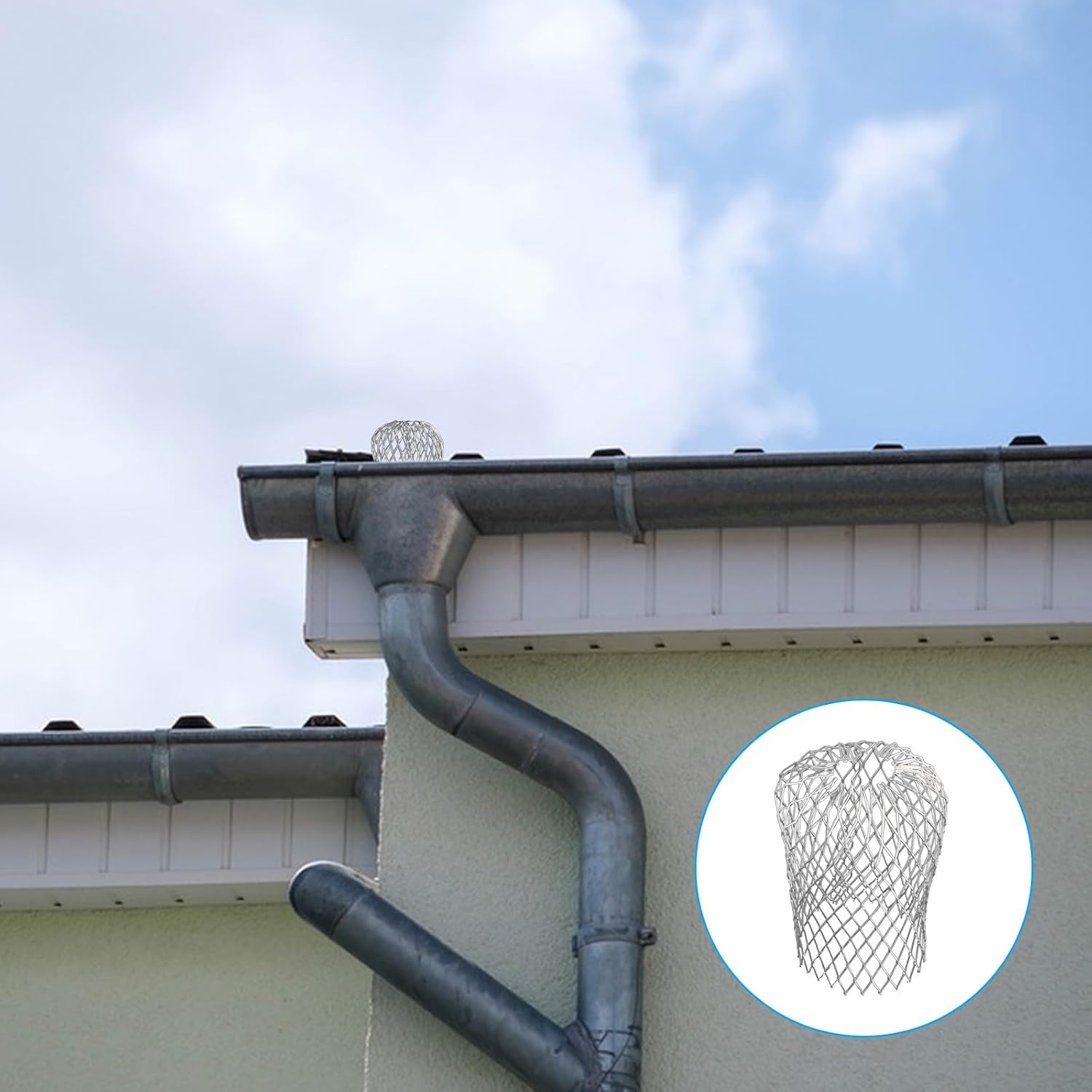
The idea is simple. You take a flexible sheet of aluminium mesh and shape it into a shallow cage or cone that sits inside the gutter outlet. Water passes through the mesh and runs on down the pipe. Solids sit on top of the mesh, in plain view, inside the gutter where you can scoop them out.
Shaping is done by hand. Roll the mesh into a cylinder for a round outlet, or press it into a squarer form for a rectangular one. Then push it into the opening until it sits firmly against the sides. No drilling. No brackets. No cutting unless you want to.
This is the difference between an expandable downpipe filter and a solid gutter cover. A solid cover sits over the top of the gutter and sheds leaves off the roof edge. That works until leaves build up on top of it or wind drives them underneath. A mesh strainer takes the opposite approach. It lets everything into the gutter, then stops it at the one point that actually matters.
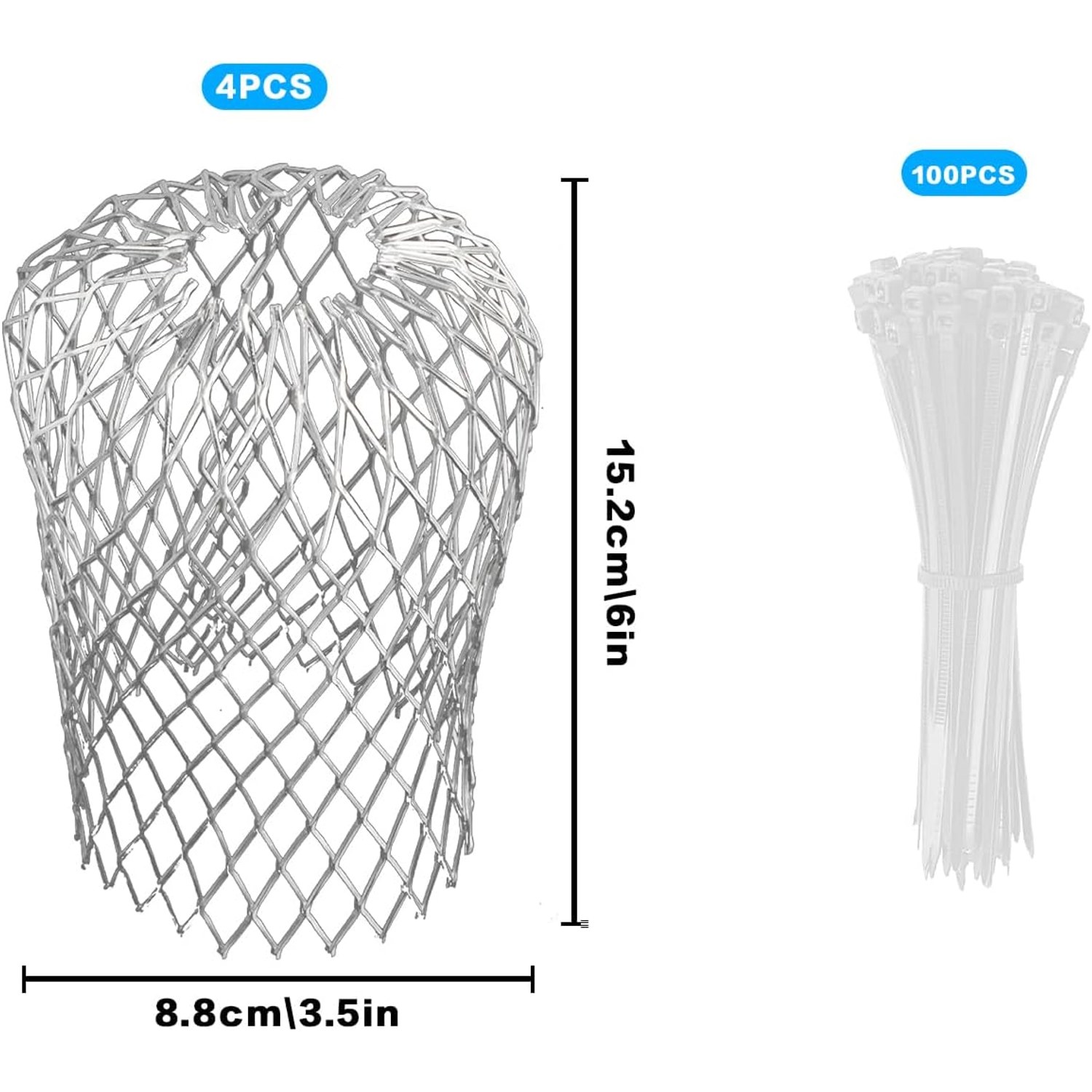
Each guard in this four pack weighs 82 g, so you can carry the whole set up a ladder in a jacket pocket. White cable ties come in the box for anchoring a guard on an exposed roof where wind or a sudden rush of water might lift it.
Who gets the most out of them
If you have trees anywhere near the roofline, you are the obvious candidate. Deciduous trees drop a heavy load over a few weeks in autumn, and that is when most blockages form. Evergreens drop a smaller amount all year, which is sneakier because the build up is slow and steady.
Older tile roofs are another good case. Concrete and terracotta tiles shed fine grit as they weather, and that grit mixes with leaf matter into a dense sludge. A mesh strainer catches the clumps before they set into something solid at the base of the pipe.
Anyone who dislikes ladders should think about this too. The honest appeal of the best downpipe leaf guard is not that it eliminates maintenance. It is that it converts an awkward job into an easy one. Hooking a plug out of a downpipe means rods, a hose, sometimes pulling apart an elbow at ground level. Lifting out a strainer and tipping it into a bucket takes under a minute.
Rental property owners and holiday house owners also benefit, because the failure mode changes. Without a guard, a blocked pipe can overflow for weeks before anyone sees it. With a guard, debris stays visible in the gutter and the water keeps draining for longer.
Choosing the right guard
Start with your outlet. Go up and look at the actual opening in the base of the gutter, not the downpipe where it meets the ground. Note whether it is round or square and roughly how wide it is. Common residential outlets fall within a fairly narrow range, which is why a flexible mesh guard suits most homes.
Count your outlets next. A simple rectangular house usually has four, one at each corner, which is exactly what this pack covers. Add sheds, carports and garages to the count. Those are the gutters nobody inspects, and they are often the first to block.
Then think about material. Aluminium is the standard choice for a reason. It does not rust the way steel does, it is light, and it is soft enough to bend by hand but stiff enough to hold the shape you give it. A rust proof gutter strainer matters here because the component lives permanently in standing water after every shower.
Finally, consider mesh openness. A very fine mesh catches more, but it also clogs faster and needs clearing more often. A more open mesh passes small material and holds back the clumps that cause real blockages. For a leaf guard for downpipes, the open approach is usually the better trade off, since the goal is free drainage rather than perfect filtration.
Fitting them in a few minutes
Pick a dry day and set your ladder on firm, level ground. Clear the gutter first, because there is no point installing a strainer on top of a season of sludge. Scoop out the loose material, then flush the gutter with a hose and watch the water run through the outlet. If it drains slowly, clear the pipe before you fit anything.
Put on gloves. Cut aluminium mesh edges can nick your fingers and the job is not worth a scratch.
Shape the first guard to match the opening. Aim for a snug fit rather than a tight one. Press it down into the outlet until it sits firmly and does not rock. If you are on an exposed roof or a steep pitch, loop a cable tie through the mesh and around the gutter edge or a bracket so the guard cannot lift.
Repeat at each outlet, then run the hose again and check the flow. Water should pour through with no pooling. Four outlets usually takes less than ten minutes once you have done the first one.
Keeping them working
The guards do not need servicing, but they do need emptying. Set two reminders a year, one after the main leaf drop and one in late spring. In heavy tree cover, a quick look every couple of months is wiser.
Clearing is the same every time. Lift the guard out of the outlet, tip the debris into a bucket or onto a garden bed, then hose or brush the mesh if silt has packed into it. Let it dry and press it back in. If a guard has lost its shape over time, bend it back by hand before refitting.
Watch for the warning sign in between visits. Water spilling over the gutter edge near one outlet during rain almost always means that guard is full. From the ground, that spill is far easier to spot than a hidden blockage inside the pipe, which is part of the point.
The short version
Blockages form at the outlet, so that is where the fix belongs. This pack gives you four aluminium mesh strainers that you shape by hand and press into the opening, with cable ties for anything exposed. Each weighs 82 g, the listed colour is silver, and no tools are needed.
They do not replace gutter cleaning. They change what cleaning means, from wrestling a packed downpipe to lifting out a strainer and emptying it. For most houses, that one change is the difference between a job you keep putting off and a job you actually do.