
The complete guide
Choosing a Square Floor Drain That Actually Keeps Your Bathroom Dry and Odour Free
The problem nobody talks about until it happens
Floor drains are invisible until they fail. Then they are the only thing in the room you can think about.
It usually starts small. Water takes a bit longer to clear after a shower. Then it pools around your ankles while you rinse. A few weeks later the whole bathroom floor stays damp an hour after anyone has used it, and the grout starts going dark in the corners. In laundries the complaint is different. The floor drains fine, but every warm afternoon there is a faint sour smell near the washing machine that no amount of surface cleaning touches.
Both problems come back to the same fitting. The floor waste.
Most houses get a basic pressed grate dropped in when the floor is tiled, and that is the last anyone thinks about it. A plain grate has no way to catch hair before it enters the pipe, and no barrier to stop air travelling the other direction. Over a few years, hair knits into a mat in the pipe bend and the drain slows. Meanwhile, in a drain that rarely gets used, the water trap dries out and the pipe becomes an open channel into the room.
A better cover fixes both without touching the plumbing.
How a gravity seal drain works
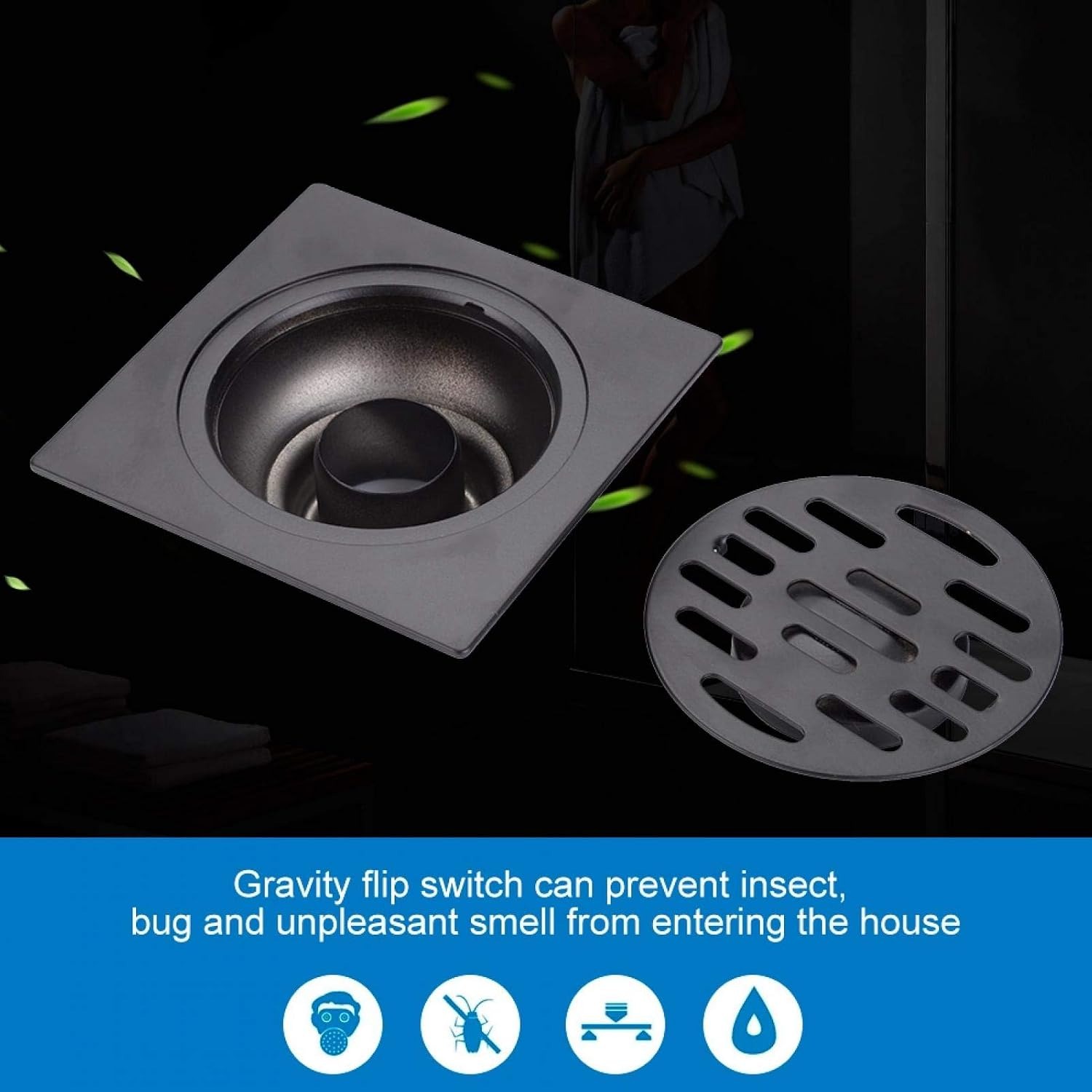
The idea is simple enough to explain in a sentence. Under the grate there is a hinged flap. Running water pushes it open by weight. When the water stops, the flap falls shut on its own.
That closed flap is a physical barrier. Air from the pipe cannot travel past it easily, so the room stays fresher even when the drain has not been used in weeks. This is why the feature matters most in the places people complain about most, guest bathrooms, laundries, and second showers that only run on weekends.
It is worth being clear about what this does and does not replace. Your plumbing should already have a water trap, the curved section of pipe that holds a small pool of water as a seal. That trap is the primary defence. The gravity flap is the backup for when the trap dries out, which happens faster than people expect in a warm climate or an unused room.
Together, they cover each other's weak points.
The second layer that saves you a call-out
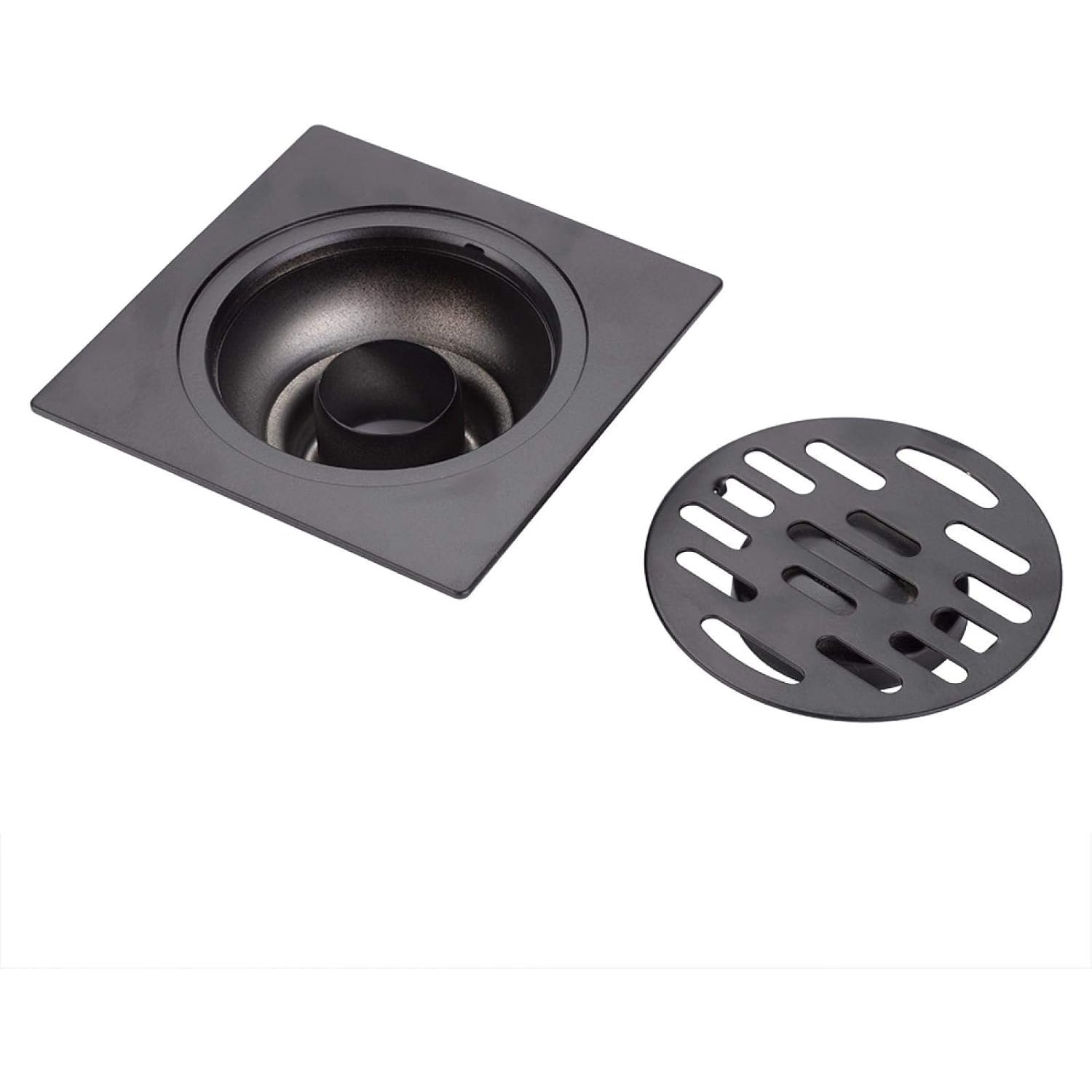
The other feature doing real work here is the double layer design. Under the top grate sits a separate removable basket.
Think of it as a filter with two stages. The grate stops the obvious stuff, a bottle cap, a hair tie, a chunk of soap. The basket underneath catches everything finer, mostly hair, lint, and the grit that washes off shoes and towels.
Here is why that matters more than it sounds. Hair is the main cause of blocked shower drains. It does not block the pipe on its own. It catches on a rough spot in the bend, then soap scum and skin oils bind to it, and over months that mat grows until water cannot get past. By the time you notice, the clog is deep in the pipe and you are either buying a drain snake or calling someone.
A basket moves that whole process above the floor. The hair gathers somewhere you can see it, and you tip it in the bin in about twenty seconds. That one habit is the difference between a drain that works for years and one you fight with every spring.
Does this one fit your floor?
This is the question that decides everything, so take two minutes on it before anything else.
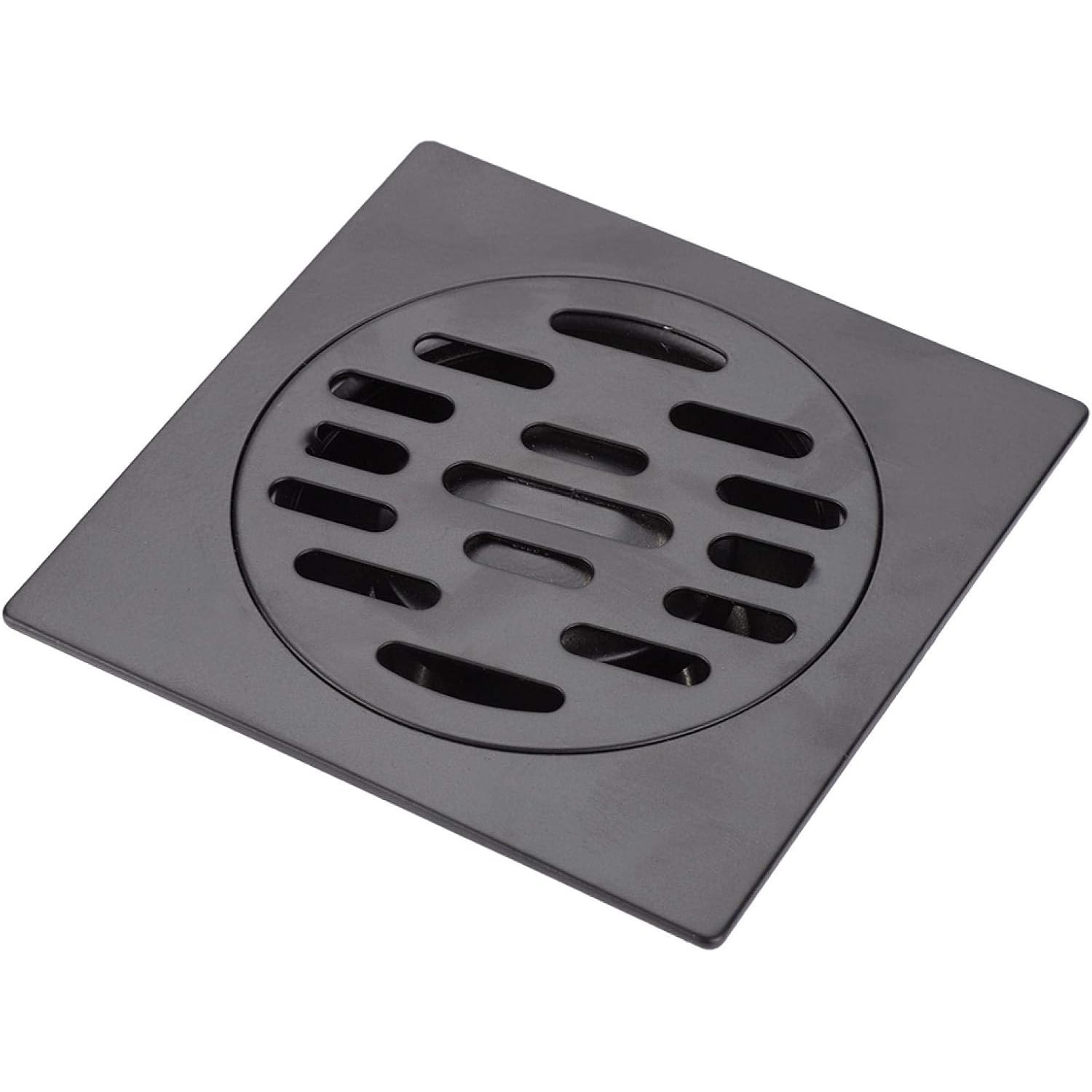
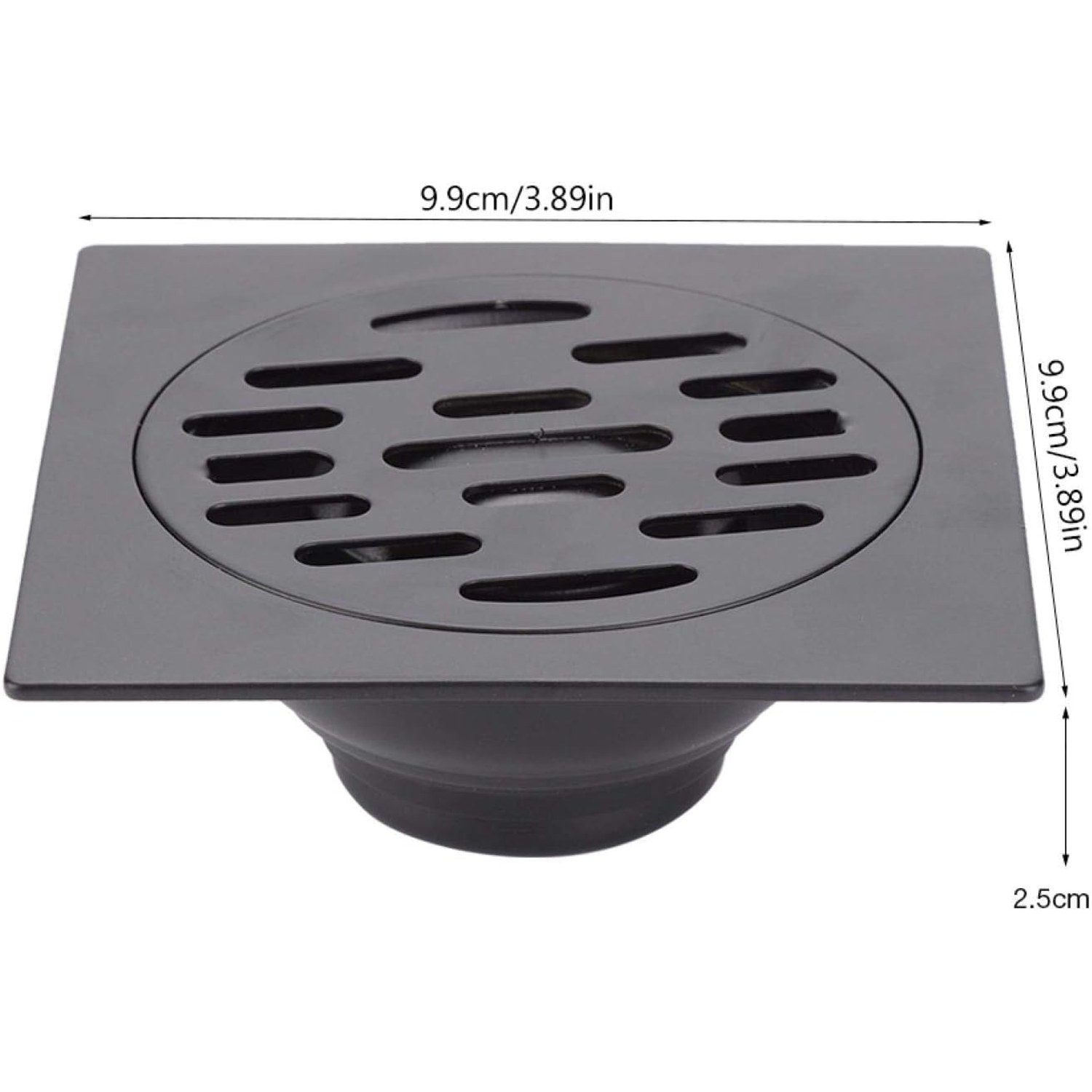
The drain measures 9.9cm wide and 2.5cm high. That suits the common square floor waste opening around 100mm, which is widespread but not universal. Older homes, renovated bathrooms, and anything fitted by a previous owner with a creative streak can all throw up odd sizes.
Lift your existing cover out. Measure the square opening in the floor, edge to edge, in both directions. Then measure how deep the recess is from the tile surface down. Compare both numbers.
Width matters because a drain that is too wide will not drop in, and one that is too narrow leaves a gap for debris to slip past. Depth matters because a drain that sits higher than the surrounding tile becomes something you stub a toe on, and a stray toe in a wet bathroom is not a small thing.
If both numbers line up, the swap is usually a lift and drop. Clear the old silicone if there is any, wipe the recess clean, seat the new one. No cutting, no glue for most fittings, no plumber.
If the numbers do not line up, do not force it. Either look for a different size or get someone to look at the recess.
Why stainless steel for a wet floor
Material choice in a bathroom is less about looks than most people assume. It is about what survives constant damp.
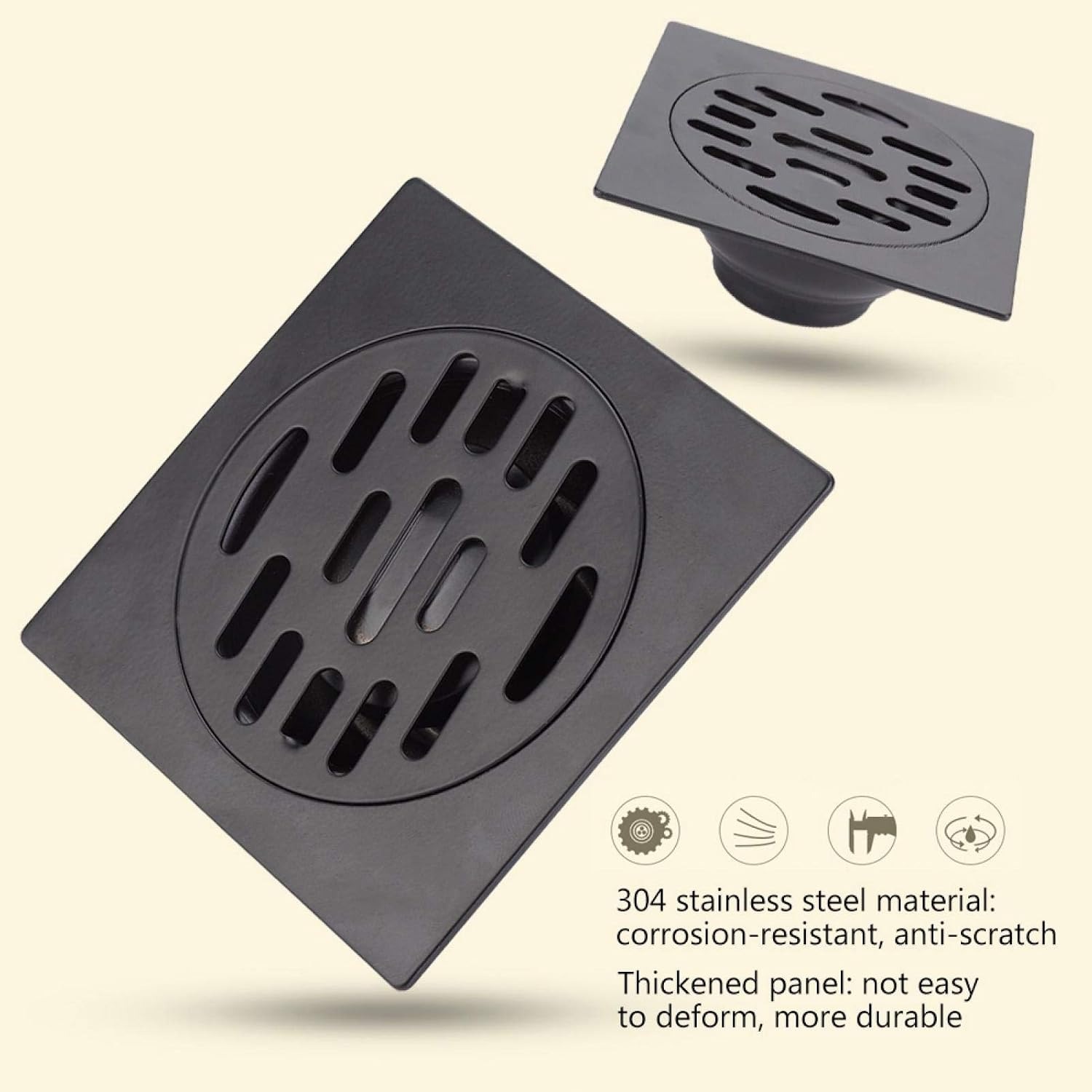
Stainless steel is the standard for floor fittings because it handles humidity without pitting, and it takes weight. A floor drain gets stood on, every single day, often by someone wet and off balance. A thin pressed cover flexes under that and eventually warps out of the recess. Thickened steel holds its shape.
The painted finish here gives the dark look that suits black tapware and matte shower fittings, which is the common pairing in current bathrooms. Painted coatings are durable with normal use, but they do not love harsh chemicals. Bleach, strong acid cleaners, and abrasive pads are the three things most likely to mark one. Warm water and a soft brush will do everything you need.
The whole unit weighs 260 grams. Light enough to lift with one hand, solid enough that it does not feel like a toy.
Where it earns its keep
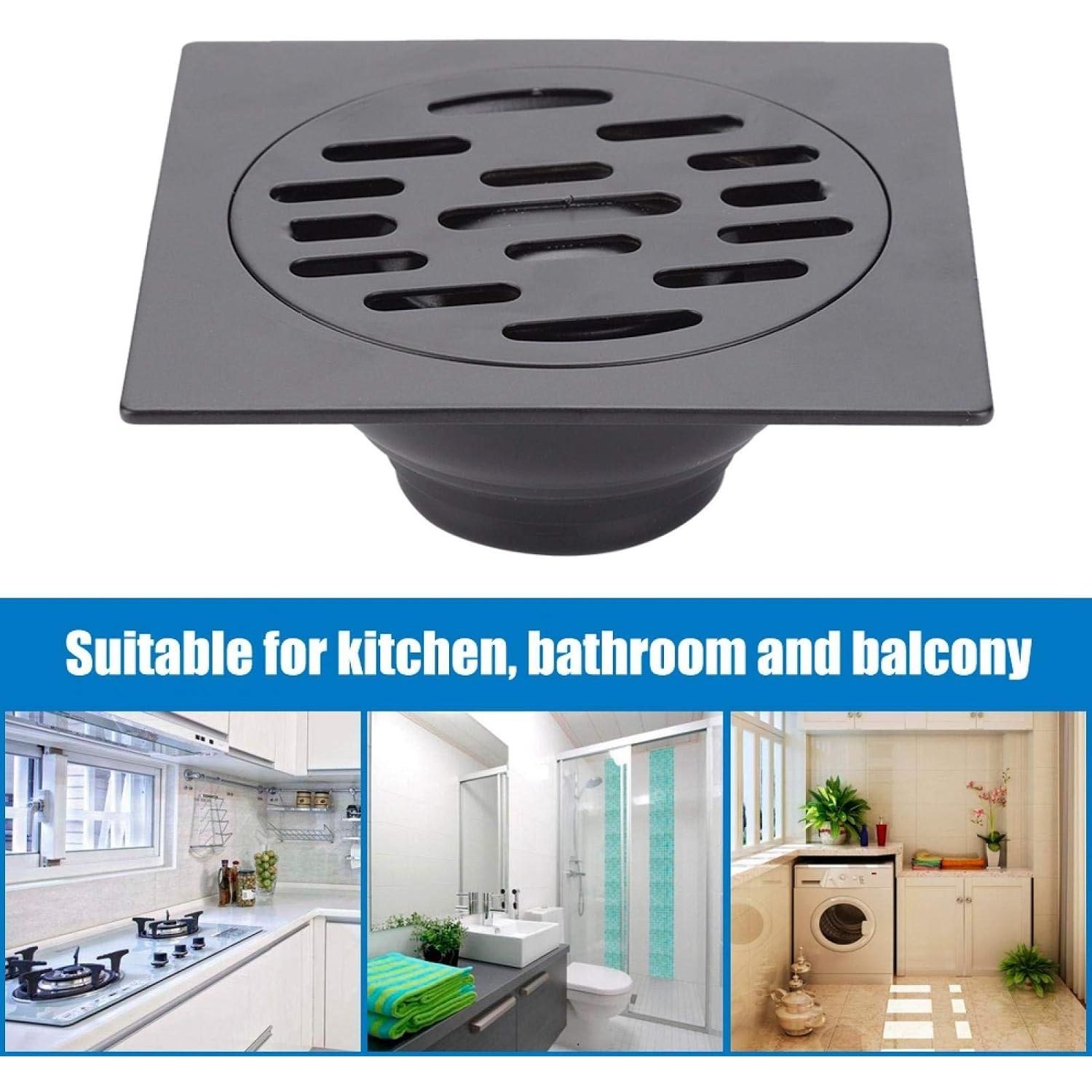
The obvious place is the shower. Daily hair, daily soap, the highest clog risk in the house.
The laundry is the quieter win. A washing machine outlet pushes a large volume of water in a short burst, so the large drainage holes matter there. Lint also builds up faster than people expect, especially with towels and bedding, and a basket catches it before it lines the pipe. The manufacturer lists the washing machine outlet pipe as a suitable use, which matches how these drains are generally fitted.
Guest bathrooms are the third case, and they are almost entirely about smell. A drain that runs twice a year has a trap that is dry most of the time. The gravity flap covers that gap.
Covered outdoor areas with a floor waste can work too, though full weather exposure is harder on any painted surface. Rinse it down and dry it if it sits outside.
Keeping it working
The routine is short.
Lift out the basket, tip the hair into the bin, rinse the basket and grate under warm water. If soap scum has built up, a soft brush and a little mild detergent clears it. Before you put the basket back, check the flap underneath swings freely, because hair tangled in the hinge is the one thing that stops a gravity seal doing its job.
Weekly suits a shower in daily use. Two to four weeks is usually fine for a laundry or guest bathroom. If water starts to pool, that is the real signal, whatever the schedule says.
Skip the chemical drain cleaners for routine upkeep. They are rough on coated finishes and on moving parts, and if you are clearing the basket regularly you should not need them.
The short version
A floor drain is a small fitting with an outsized effect on how a wet room behaves day to day. This one does two useful things. The gravity flap drops shut when the drain is idle, which helps keep pipe odour out of the room. The removable basket catches hair above the floor instead of letting it knit into a clog in the pipe.
It is stainless steel, 9.9cm across and 2.5cm deep, painted in a dark finish that sits well with modern black fittings. Measure your existing opening first, both width and depth. If those match, the swap takes a few minutes and no tools worth mentioning.
Then clear the basket now and then, and mostly forget about it. Which is exactly what you want from a floor drain.