
The complete guide
How to Choose and Fit a Dishwasher Drain Hose
The puddle nobody expects
A dishwasher is a sealed box until it is not. One morning there is a damp patch at the toe-kick, or the cycle finishes with a few centimetres of grey water sitting in the base. The first thought is usually something expensive. Nine times out of ten the cause is far simpler. The drain hose has split, sagged, or worked loose from its clamp.
That hose does the ugliest job in the kitchen. It carries hot, greasy, detergent-heavy water out of the machine several times a week, bends around a cabinet, and gets squashed every time the appliance is pushed back into place. Plastic does not love that combination forever. The good news is that a replacement is one of the cheapest parts you can buy for a dishwasher, and fitting one is a job most people can do in half an hour with a screwdriver.
What the hose actually does
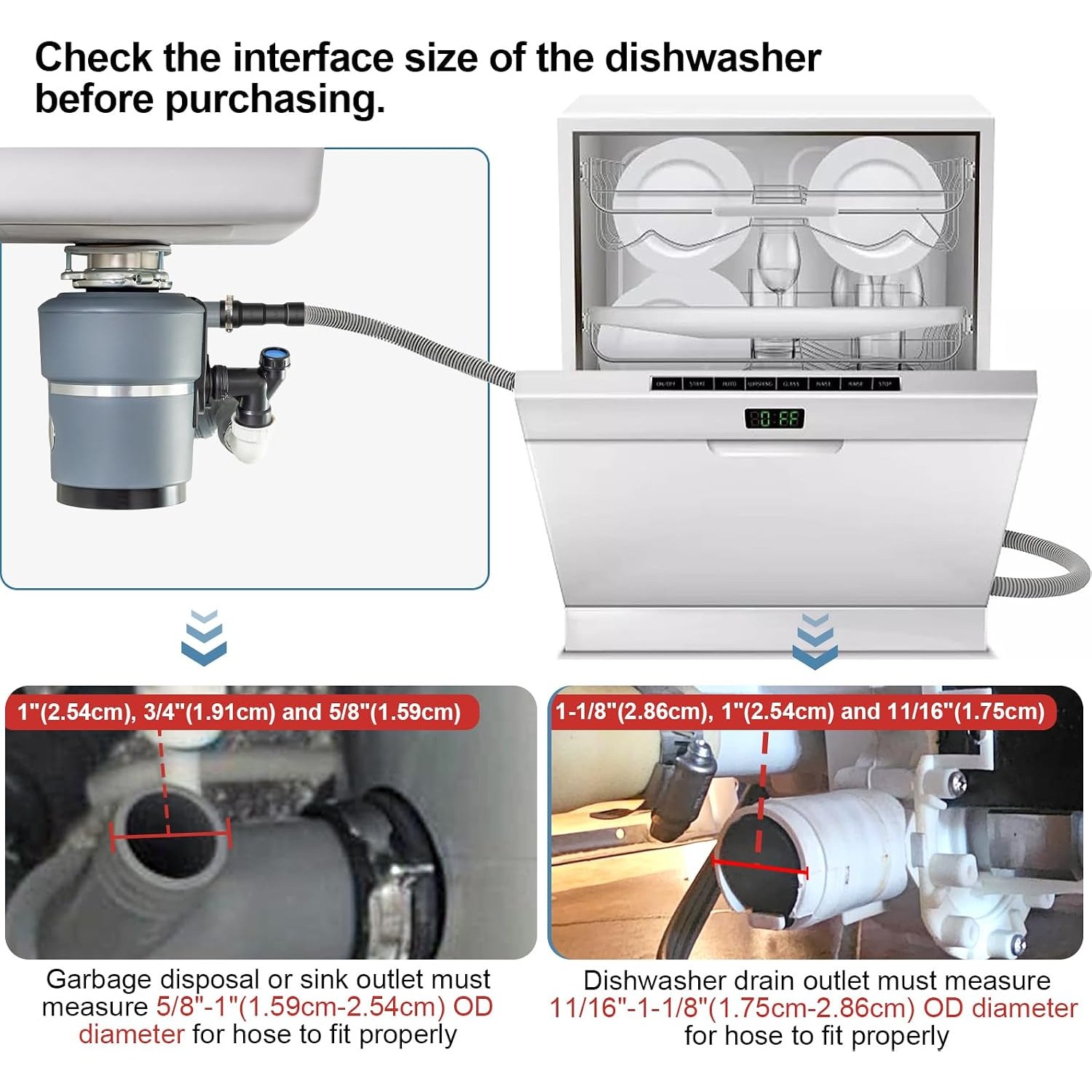
When the wash cycle ends, the drain pump pushes dirty water out of the tub and along the hose to your waste point. That waste point is usually one of three things. A spigot on the sink trap, a standpipe behind the cabinet, or the side inlet on a sink waste disposal unit unit.
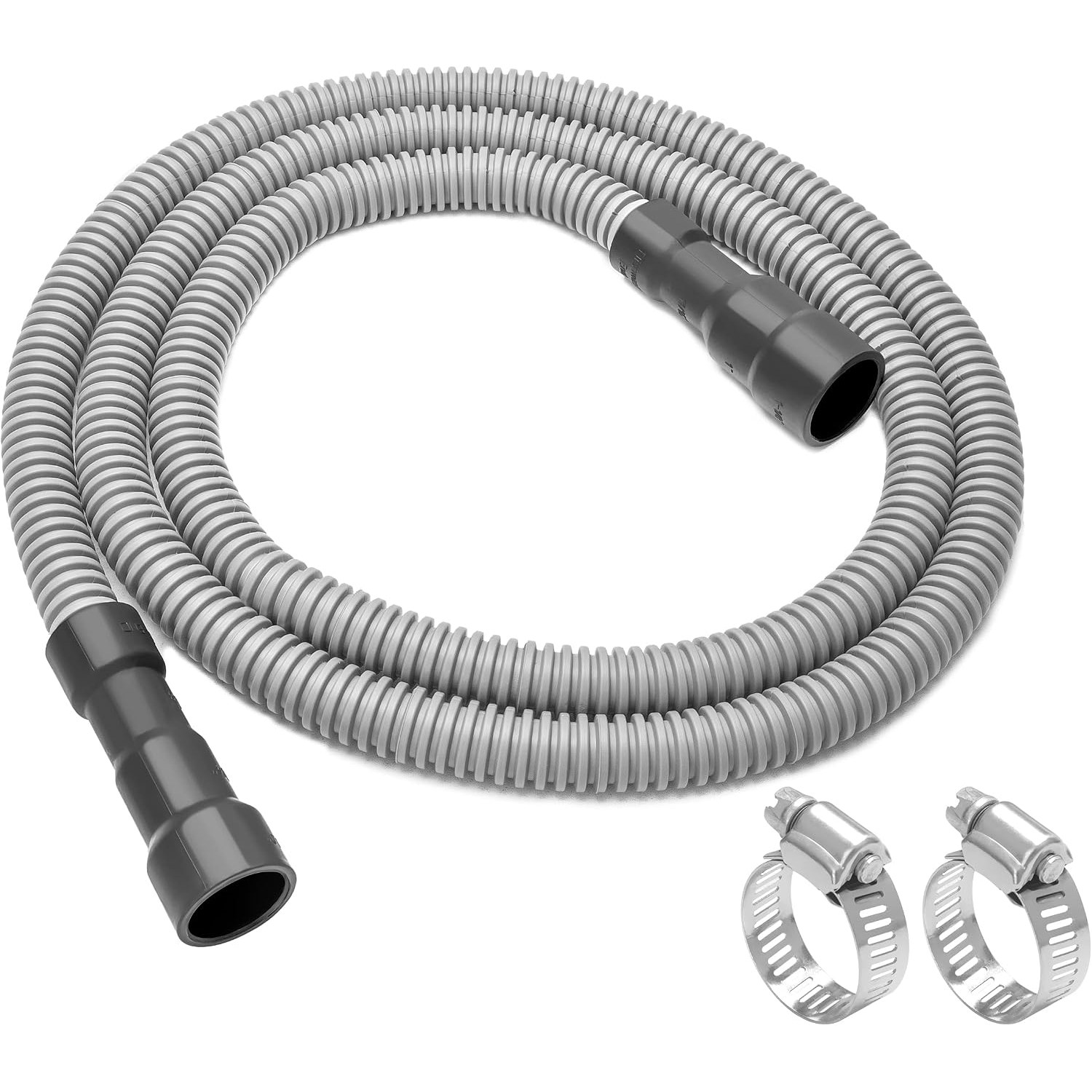
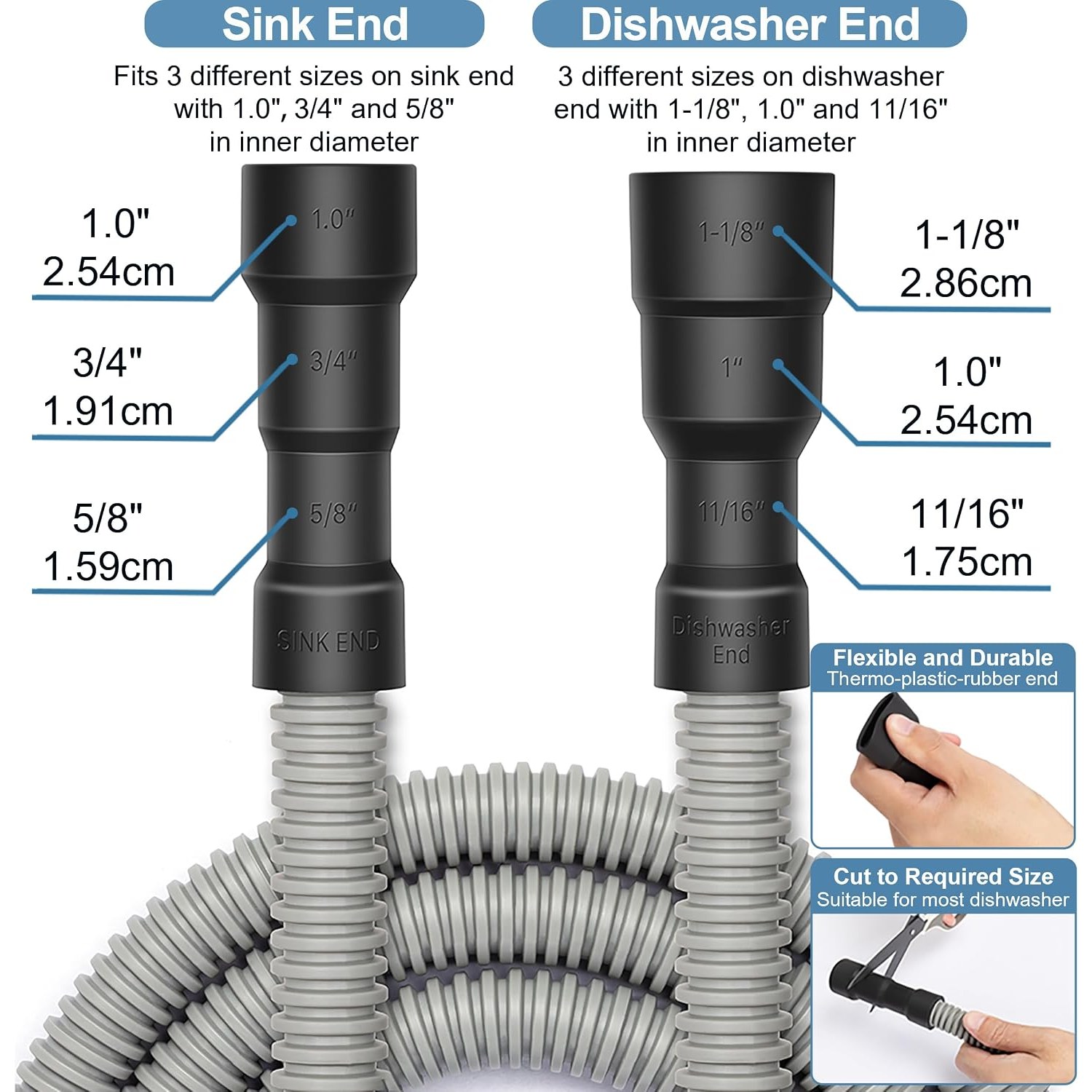
Two things matter in that run. The first is diameter. The hose has to seal on the pump outlet at one end and on the waste fitting at the other, and those are rarely the same size. That is why a universal dishwasher drain hose has a stepped, formed outlet end. You cut at the step that matches your fitting, which saves hunting for adapters.
The second is shape. The hose needs to rise to a high point before it drops to the waste. That high loop stops dirty sink water from running back down into the machine when the sink fills. Without it, you get smells and sometimes standing water. A hose that is too short cannot make that loop, which is one of the main reasons people go looking for a longer one.
Why length is the thing people get wrong
Factory hoses are cut for a specific cabinet. The moment anything changes, the length stops working. New machine in an older kitchen, a move from a standpipe to a disposal, a sink that sits one bay further along than the dishwasher. Suddenly the hose is stretched tight with no slack for a loop.
At 2.04 metres this one gives you working room. You can route it up and over, bring it around a cabinet wall, and still have spare to trim off. Spare is good. Too short is a problem you cannot solve without buying again.
Do not leave the spare in a coil behind the machine, though. A loop sitting low will hold water, and water that sits goes stale. Cut the hose back so the run is clean from the pump outlet to the high point and then down to the waste.
Materials and why they matter
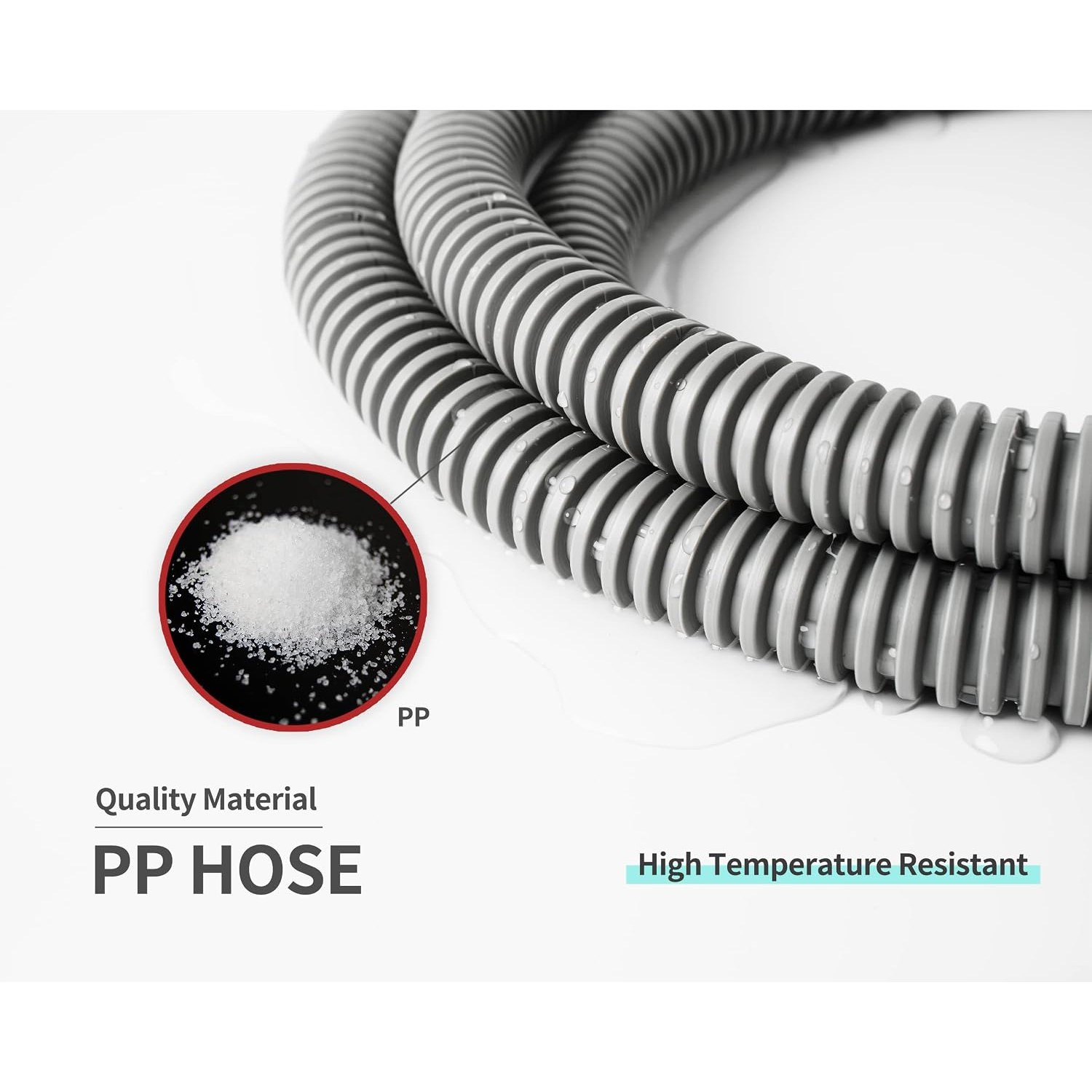
This hose is polypropylene with alloy steel used in the supplied clamps. Polypropylene is the standard choice for appliance waste lines for a few reasons. It copes with the hot water a dishwasher discharges, it does not corrode, and the inner wall is smooth.
That smooth bore is worth more than it sounds. Residue, grease and food fines need something to grip. A rough or scaled pipe gives them plenty. A smooth one gives them very little, so the hose stays clearer for longer and water moves through it with less turbulence. Less turbulence also means a quieter drain cycle. You will still hear the pump, but the rush and gurgle through the pipe is softer.
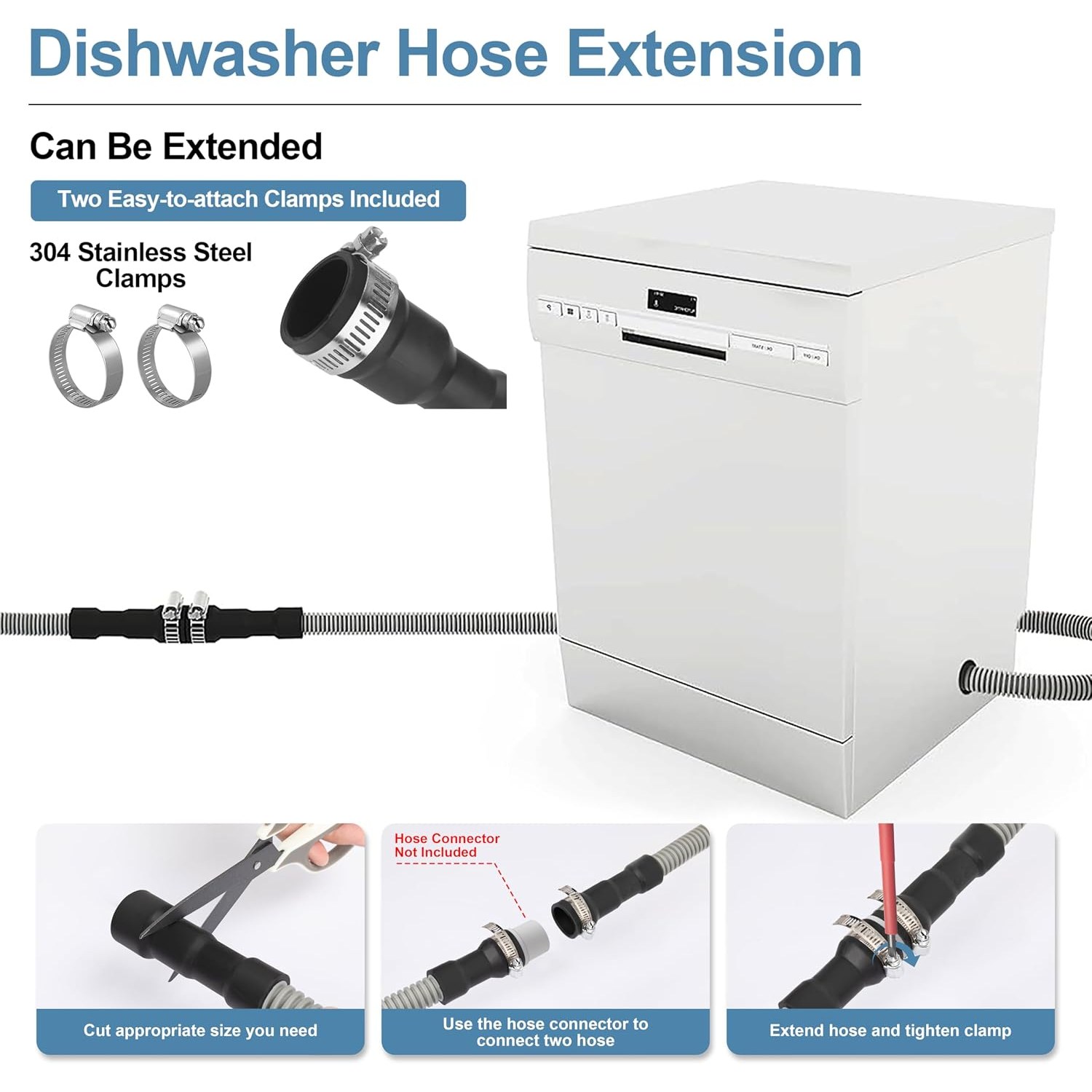
The outer wall is corrugated. That is what lets the hose bend around a cabinet without collapsing flat. A smooth-walled tube of the same diameter would kink and block. The trade-off is that corrugation needs a clean cut and a properly tightened clamp, which is why two stainless steel clamps are supplied rather than leaving you to improvise.
Who this suits
Anyone replacing a failed hose on an existing machine. Anyone installing a dishwasher in a kitchen where the waste point is further away than the supplied hose can reach. Anyone moving from a standpipe to a disposal unit, where the inlet size is often different from what came in the box.
It also makes sense as a spare. If you own a rental, manage a holiday let, or just like having the common failure parts on a shelf, a flexible drain hose costs very little and saves a scramble when a tenant calls about water on the floor.
It is not for supply lines. This carries used water away from the machine only. Never fit a waste hose to an inlet connection.
Fitting it without drama
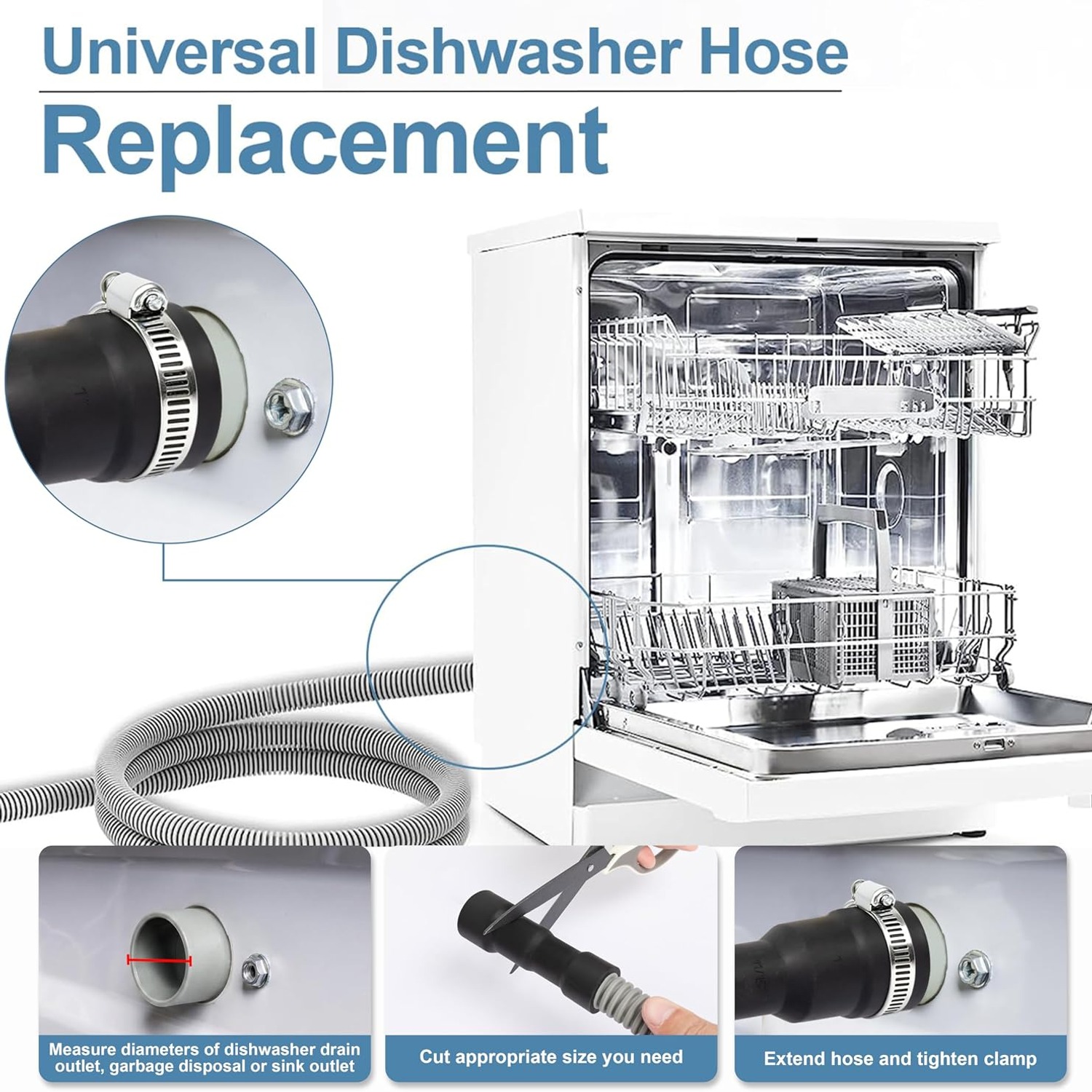
Turn off the water supply and the power at the socket. Pull the dishwasher forward slowly so you do not strain the supply line or the electrical lead. Put a shallow tray and a towel on the floor, because the old hose will be full.
Release the clamp at the waste end first and lift the hose end above the tray as you pull it free. Then release the appliance end and drain it out. Compare old and new side by side so you can see roughly where to cut.
Trim the stepped outlet end to the size that matches your waste fitting. Cut square, between corrugations, with a sharp blade. Slide a clamp onto the hose before you push it on, not after, because it is fiddly to fit later. Push the hose fully onto the spigot and tighten until it will not twist by hand. Repeat at the appliance end.
Then test. Run a short cycle, watch both joints through the drain phase, and feel underneath with a dry hand afterwards. Re-tighten gently if anything weeps. Only push the machine back when you are confident, and leave a few centimetres so the hose is not crushed against the wall.
Looking after it
There is very little to do. Keep the run free of kinks. Check the clamps every few months and nip them up by hand if they have loosened with heat cycling. If a smell develops, run a hot empty cycle with a dishwasher cleaner before you assume the hose has failed.
When you do move the machine for any reason, take thirty seconds to look at the hose. Splits usually start at a bend. Soft or swollen sections mean the plastic is tired. Either one is a cheap fix now and a flooded floor later.
Replace rather than repair. Tape and cable ties on a waste line are a short-term fix at best, and the failure usually comes back worse.
The short version
A dishwasher drain hose is a wear part, not a permanent fitting. This one is 2.04 metres long, made from polypropylene with a smooth bore and a corrugated outer wall, and ends in a stepped outlet sized for 11/16", 1" and 1-1/8" connections. Two stainless steel clamps are in the box.
Measure your pump outlet and your waste fitting before you order. Cut the stepped end to match, make a high loop, clamp both ends properly, and test before you push the machine back. That is the whole job, and it costs far less than the floor repair you avoid by doing it.