
The complete guide
The Practical Guide to Disposable Sink Strainer Mesh Bags
The problem nobody wants to deal with
Every kitchen has the same small, grim job. You finish the washing-up, pull the plug, and there in the basket is a wet grey heap of rice, onion skin, tea leaves and a bit of fat that has gone cold and solid. Somebody has to pick it out. Usually that somebody stands there for a second deciding whether to use a fork.
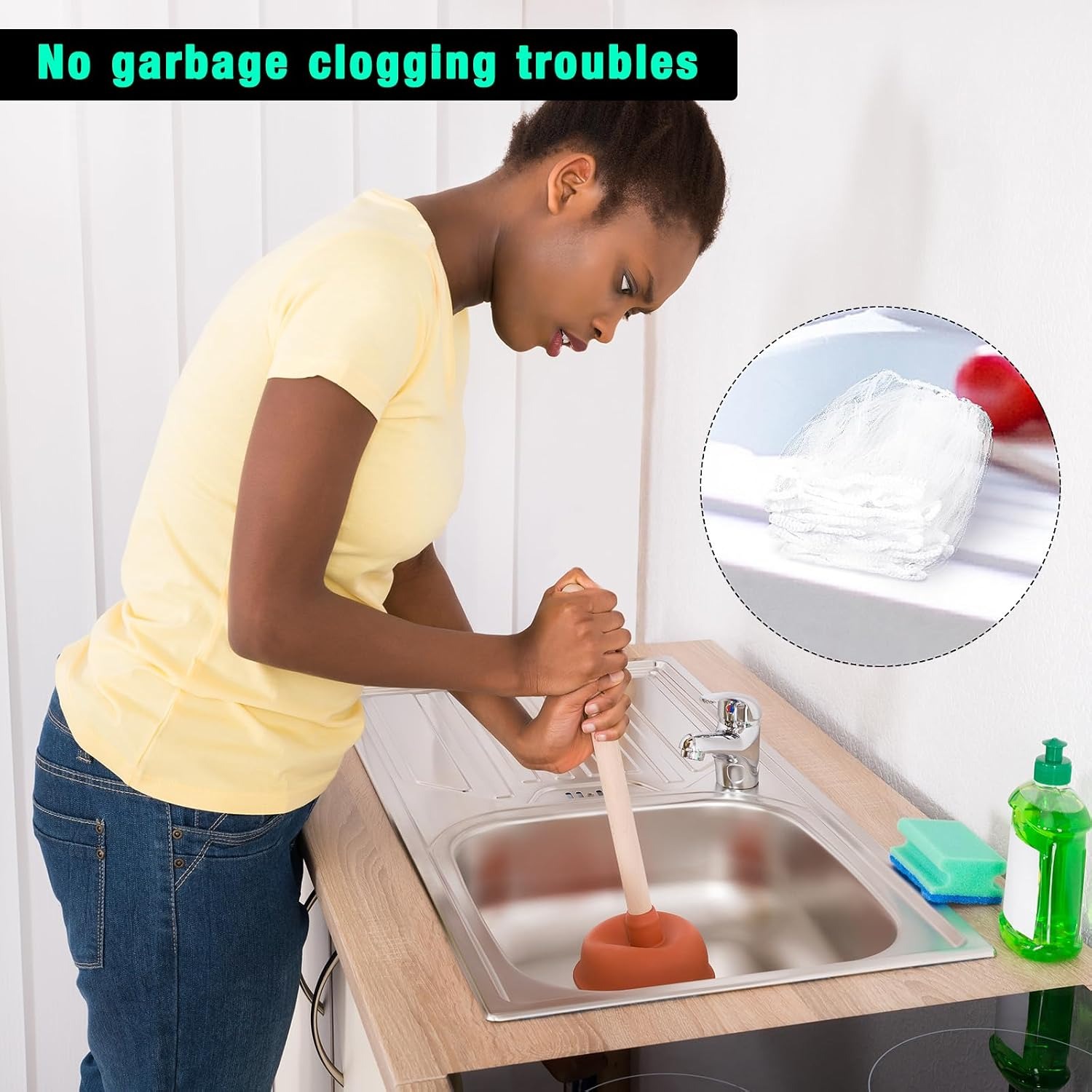
Drains are the other half of the problem. Blockages are rarely one dramatic event. They build from months of small things washing past a half-blocked basket and settling in the bend of the pipe. By the time water starts draining slowly, you are looking at a plunger, a bottle of drain cleaner, or a call-out fee.
Disposable sink strainer mesh bags solve both problems with almost no effort. The bag lines the basket, catches everything, and then goes in the bin. You never touch the contents, and nothing gets a chance to settle in the pipes.
How the bags work
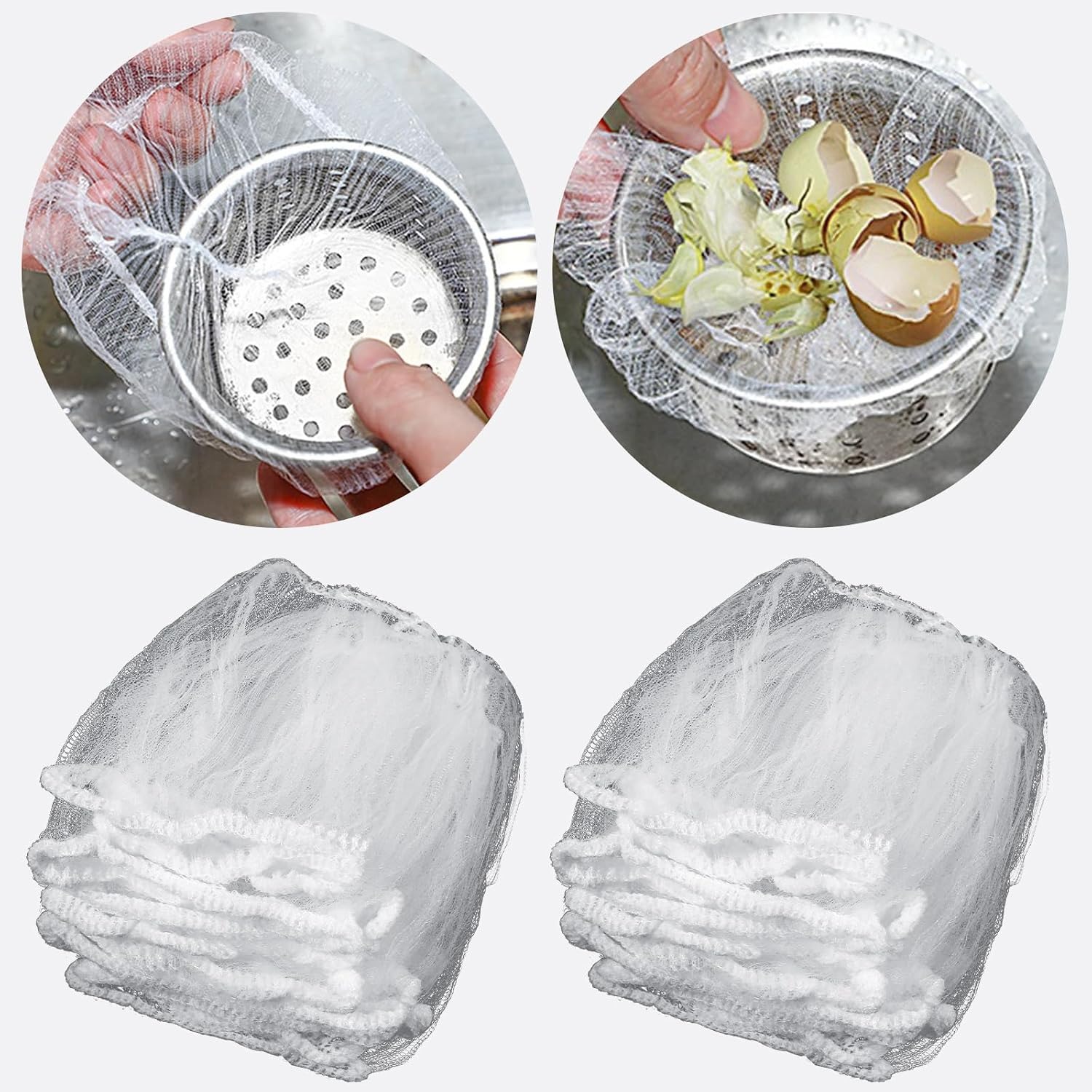
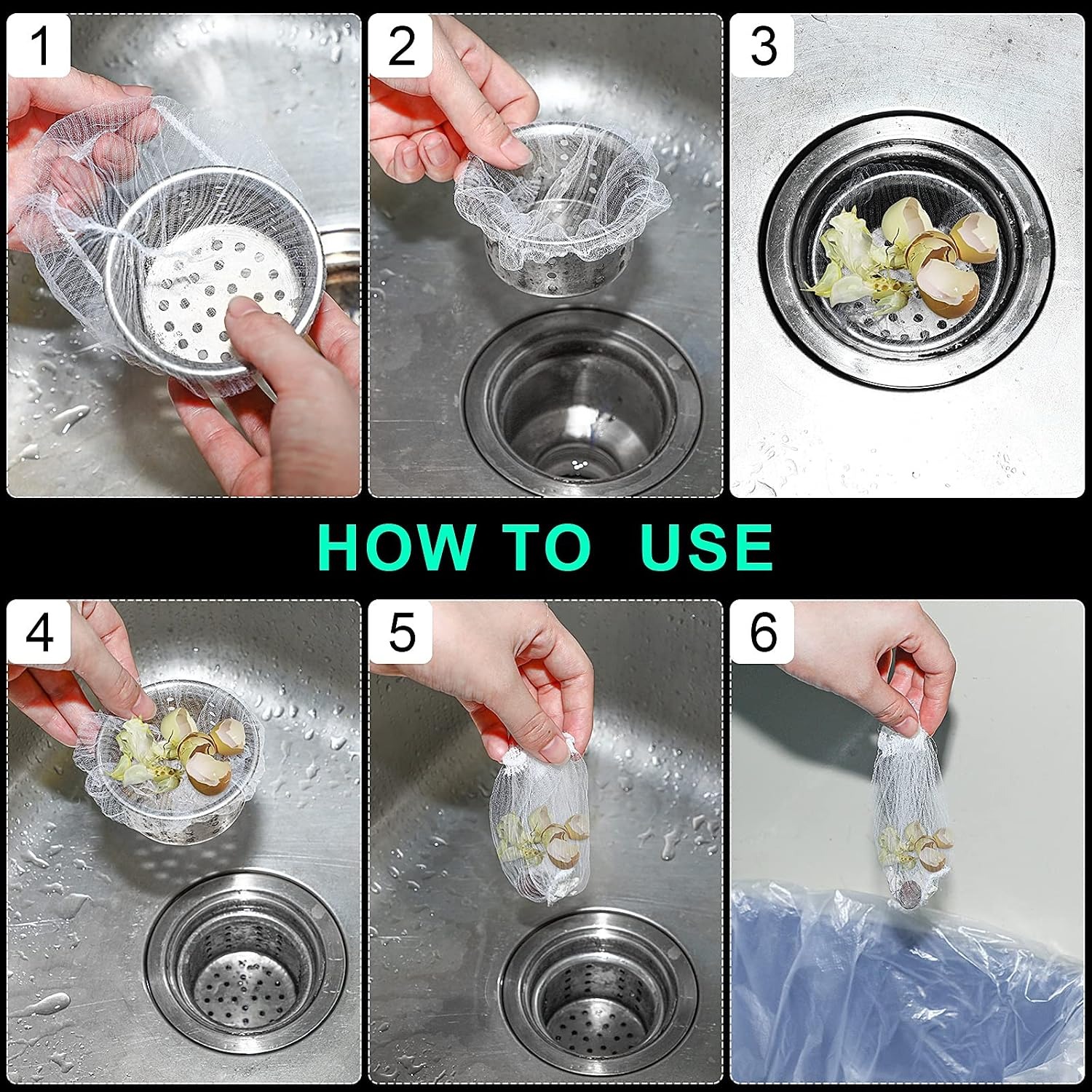
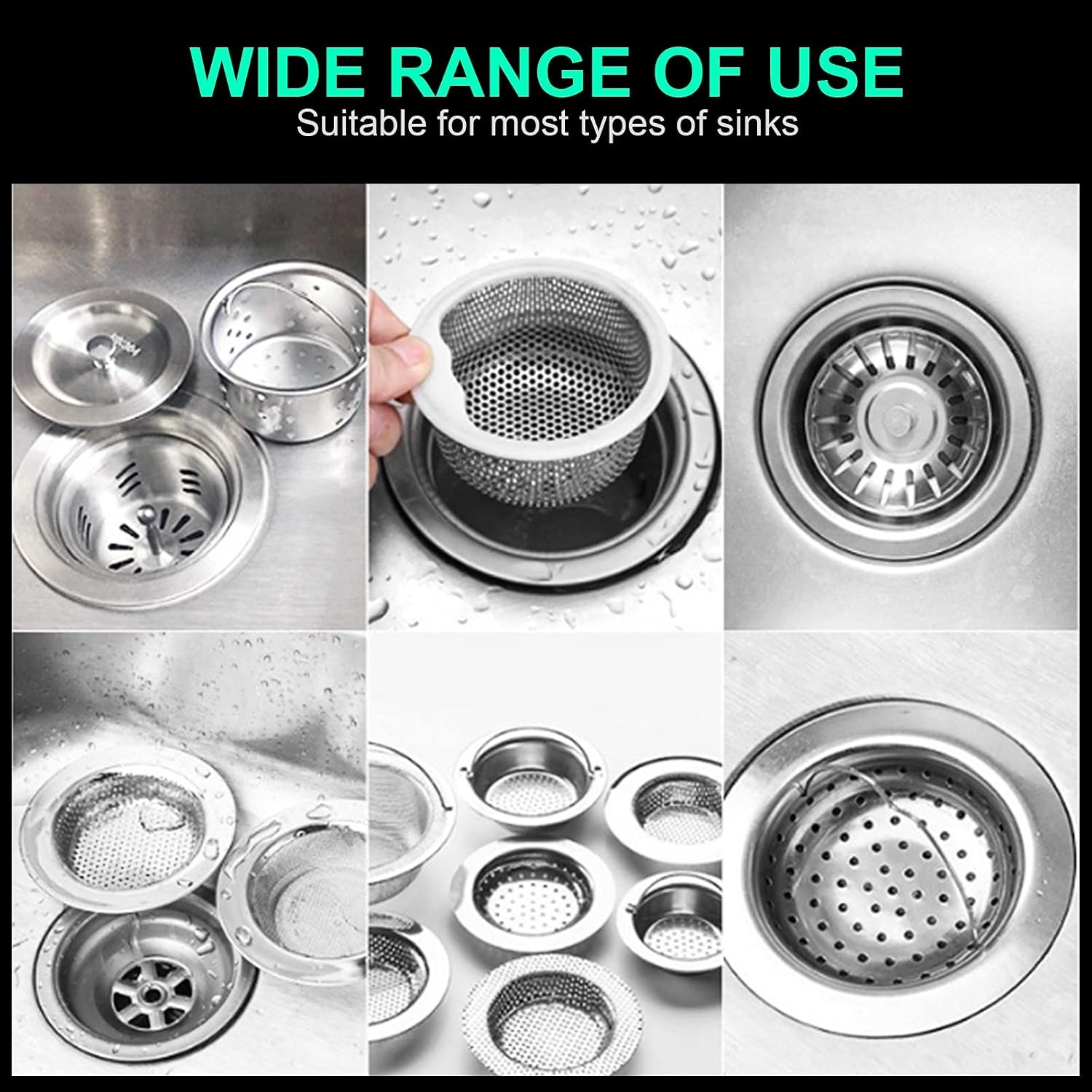
The idea is simple enough that it almost does not need explaining. Each bag is a small pouch of plastic mesh with an elastic opening. You stretch the opening over the rim of your sink filter basket so the mesh lines the inside of it. The basket gives the bag its shape, and the elastic holds it on the rim.
Water runs through the mesh. Solids do not. Rice, pasta, crumbs, coffee grounds, peel, lint and hair all stay in the bag while the sink drains normally. Because the mesh is fine but not tight, drainage stays close to full speed, which matters when you are tipping out a pot of pasta water.
When the bag fills, you lift it out by the rim and drop it straight in the bin. Fresh bag on, done. The whole change takes two seconds and involves no rinsing, no scraping and no contact with anything unpleasant.
That is the part people underestimate. Plenty of drain products work. Very few of them remove the unpleasant bit entirely, and that is what keeps you actually using them.
What you get in this pack
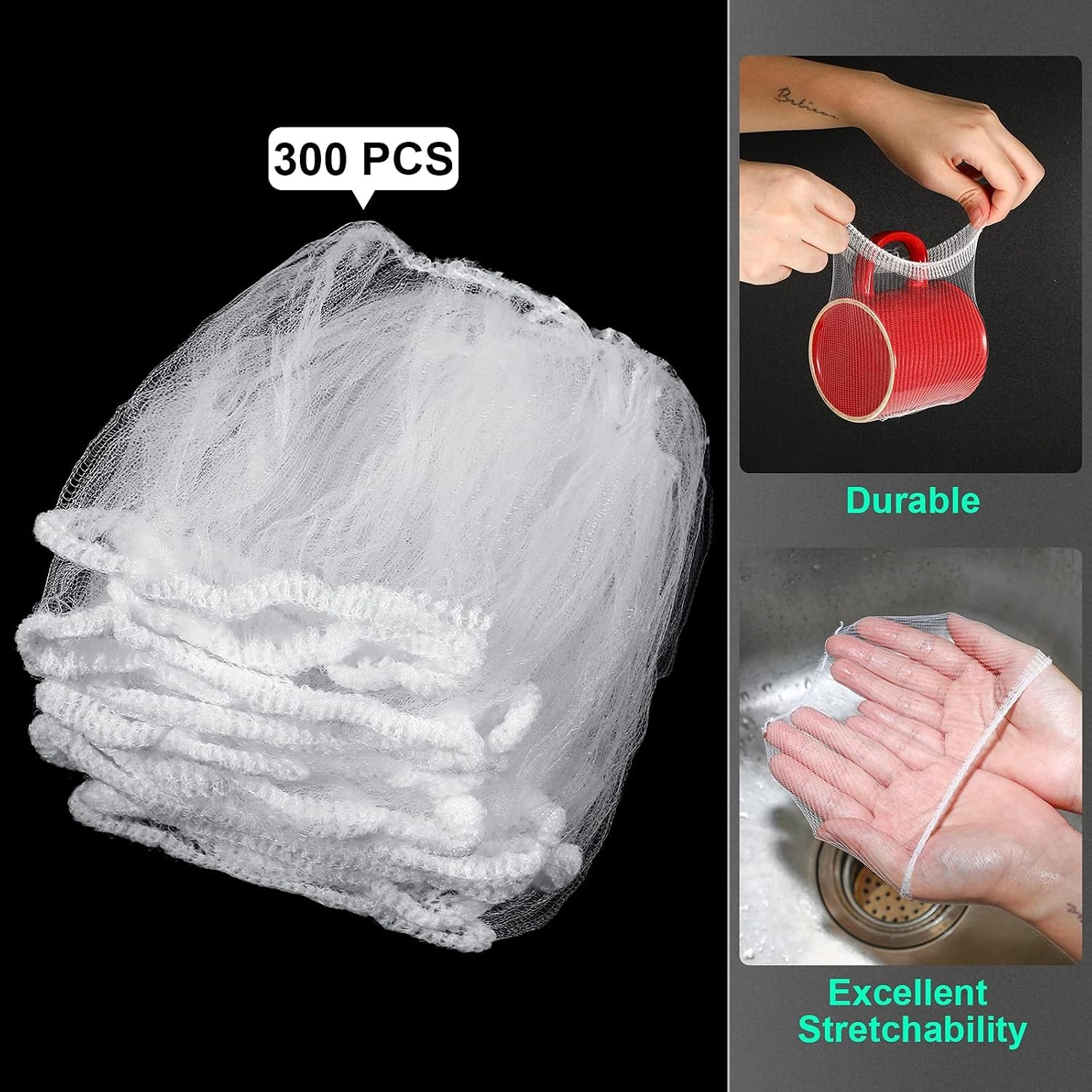
This is a 300 piece box from Tatuo, model CS-Tatuo-463. Each bag is white, made from plastic, and measures around 9.9 cm wide by 10.9 cm high. The listed compatible groove diameter is 1.5 inches, which is the standard size for the filter basket you will find in most kitchen sinks.
Three hundred bags sounds like a lot until you do the maths. A household that cooks properly most nights goes through one or two a day. At two a day, the box lasts about five months. At one every other day, you are closer to a year and a half. Either way, you are not thinking about reordering any time soon.
The pack weighs very little, with a listed item weight of 0.28 lb and a shipping weight of 0.13 kg, so it stores flat in a drawer and takes up less room than a packet of cereal.
Who these suit
If you cook from scratch, these pay for themselves in saved aggravation. Chopping vegetables, draining rice, scraping plates before loading the dishwasher, all of it sends small solids towards the drain, and all of it ends up in the bag instead.
Share houses and rentals are another good fit. Nobody in a share house volunteers to clean the sink basket, which is exactly why those drains block. A box of the best kitchen sink waste bags removes the argument. The person who fills it is the person who bins it, and it takes no effort.
Landlords and property managers often buy them in bulk for the same reason. A blocked kitchen drain is one of the more common and more preventable maintenance calls.
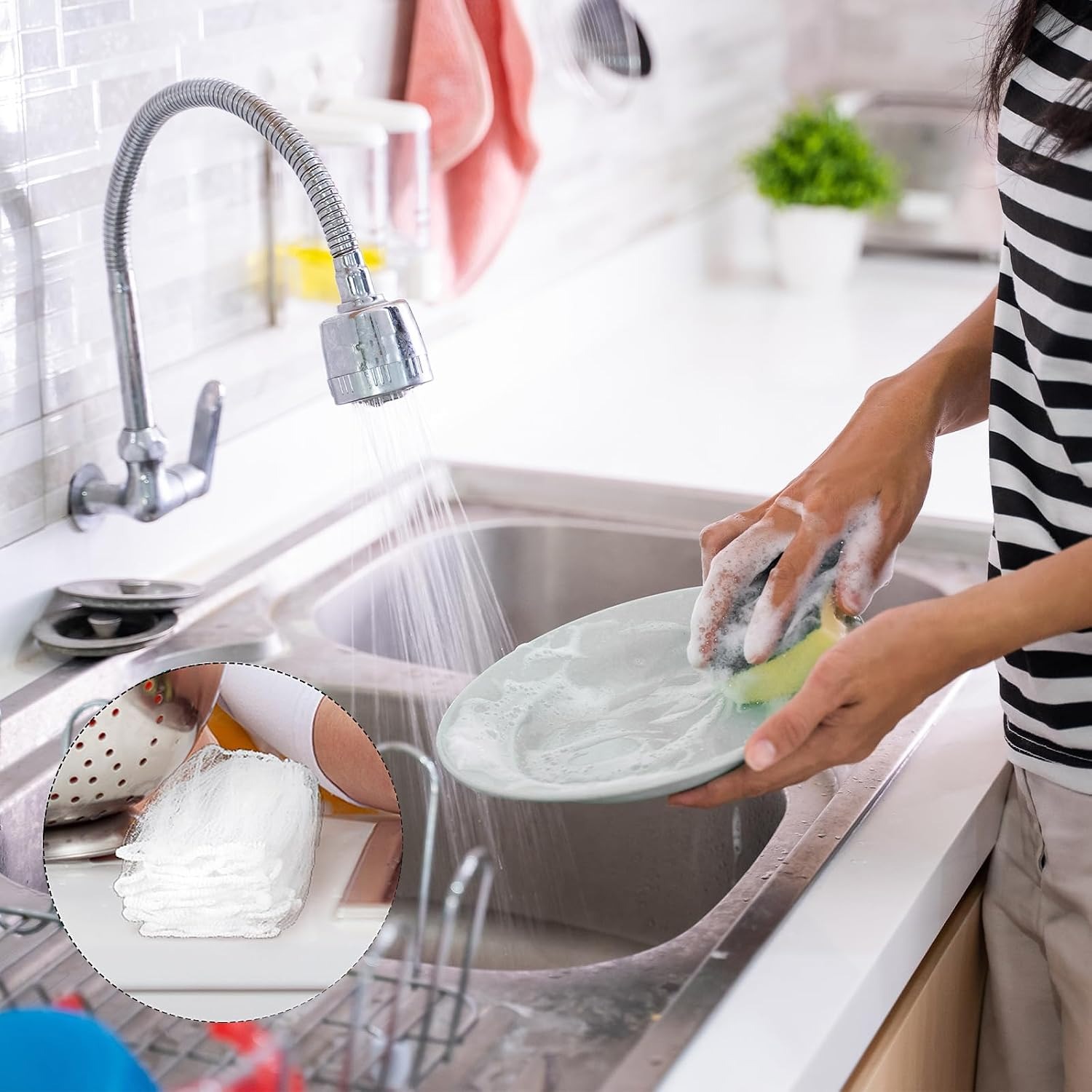
They also work outside the kitchen. Bathroom basins collect hair and toothpaste residue. Shower drains collect hair, full stop. Laundry tubs collect lint from hand-washing. A single pack can cover every drain in a house, which is why people searching for the best mesh drain bags usually end up using them in more than one room.
Choosing the right strainer bag
A few things separate a bag that works from one that irritates you.
Fit comes first. A bag that is too small will not stretch over the rim and will sag into the opening. One that is far too large will slip. The 9.9 cm by 10.9 cm size here is a general fit built around the standard 1.5 inch basket groove, with enough stretch to cope with minor differences between sinks. If your basket is unusually wide or narrow, measure it before ordering.
Mesh density is the second thing. Too tight and water pools in the bowl, which makes people give up and stop using them. Too open and the small stuff slips through, which defeats the purpose. The mesh on these holds residue and fibres while keeping the flow going.
Strength matters more than you would think. A bag has to survive being lifted out while heavy and wet, often with a bit of standing water still in it. Thin mesh splits at the rim and dumps the contents back in the sink, which is a genuinely miserable experience. These are described as stretchy without tearing easily under normal use.
Quantity is the last piece. Buying twenty at a time means buying again next month. Bulk packs are cheaper per bag and mean you always have one to hand, which is the actual reason people keep the habit going.
Getting the best out of them
Fit the bag properly. Pull the elastic opening fully over the outside lip of the basket rather than tucking it loosely inside. A properly seated bag stays put even under a full sink of draining water.
Change it before it is overflowing. A bag crammed to the top slows drainage and is harder to lift out cleanly. Changing it at the end of a cooking session is an easy rule to remember.
Scrape plates into the bin first. The bags are there to catch what you miss, not to handle an entire plate of leftovers. Used that way, one bag easily covers a full day.
Keep the contents out of the drain. The bag and everything in it goes in the general waste. If you compost or have a food waste collection, tip the scraps into your caddy and bin the empty mesh, since the material is plastic and will not break down.
One thing to note: if you have a waste disposal unit fitted, a bag over the opening will stop it working. Use the bags on your other drains in that case.
Care and storage
There is no maintenance beyond using them. The bags are single use, so there is nothing to wash, dry or replace parts on. Do not try to rinse and reuse one, since you lose the main benefit and the mesh is not designed for repeat loads.
Store the spares somewhere dry, away from heat and direct sunlight. A kitchen drawer or the cupboard under the sink is fine. With 300 pieces in one box, it helps to keep a small handful near the sink and the rest stored away so you are not rummaging mid-washing-up.
If you are using them in the bathroom as well, split a stack into a small container in the bathroom cabinet. The best disposable drain catcher is the one that is within reach when you need it.
The short version
Disposable sink strainer mesh bags do one job and do it without fuss. They line your existing sink basket, catch food scraps, hair and lint before any of it reaches your pipes, and lift straight out into the bin when full. No rinsing, no scraping, no blocked drain three months down the line.
This pack gives you 300 white plastic mesh bags sized at roughly 9.9 cm by 10.9 cm, built to fit the standard 1.5 inch basket groove, with enough stretch to work on kitchen sinks, bathroom basins, laundry tubs, utility sinks, floor drains and shower drains. For most households that is several months of covered drains from one small box.
It is not an exciting purchase. It is just one of those things that quietly makes the kitchen easier, and you notice it most on the day you run out.