
The complete guide
How To Choose And Use A Flexible Drain Brush
The smell comes before the blockage
Nobody rings a plumber about a smell. They light a candle, pour something down the plughole, and hope. A week later the basin is holding water for a few seconds after the tap goes off, and a month after that it is a genuine problem.
What is actually happening is simple. Every time you wash your hands, shave, rinse a pan or brush your teeth, a thin layer of fat, soap and protein sticks to the inside wall of the pipe. Hair catches in it. The layer thickens. The pipe does not block all at once, it just gets narrower, and the narrower it gets the faster it fills.
A liquid cleaner can soften part of that layer. It cannot scrape it. And it never touches the overflow channel, which is the little hidden tube running from the hole near the rim of your basin down to the waste. That channel is permanently damp, rarely flushed, and is where a lot of bathroom smells actually come from.
A brush solves a physical problem physically. That is the whole argument for one.
How a double ended drain brush works
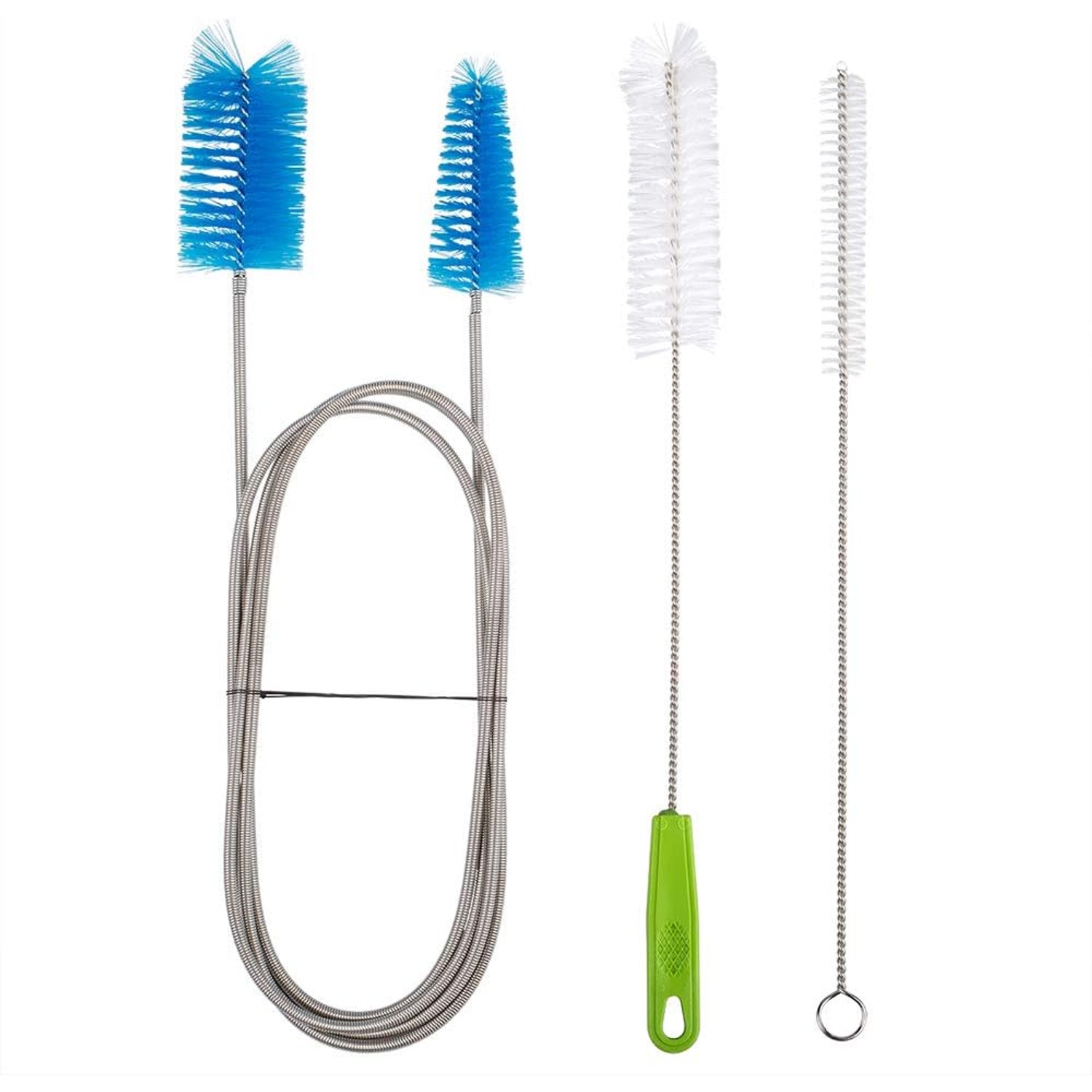
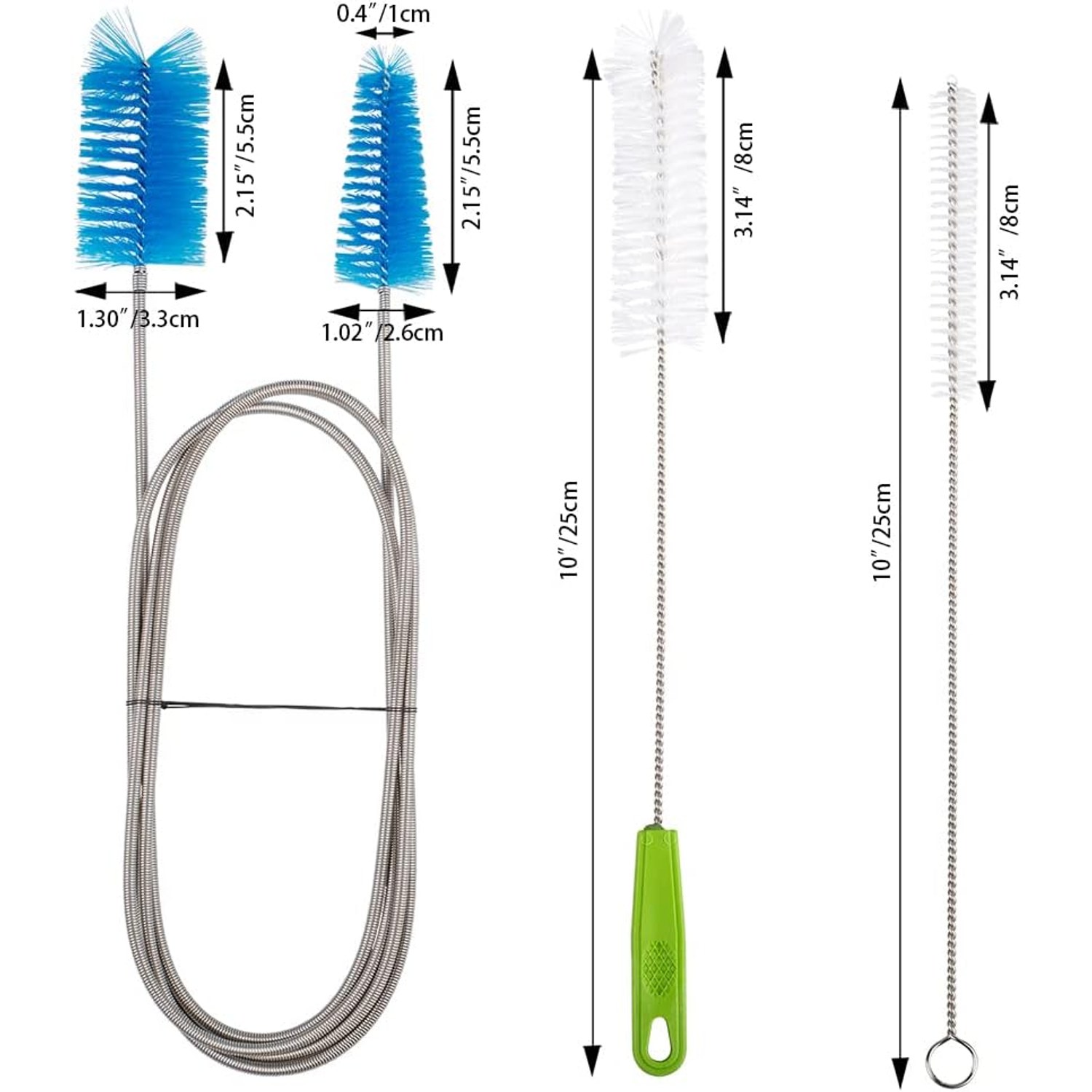
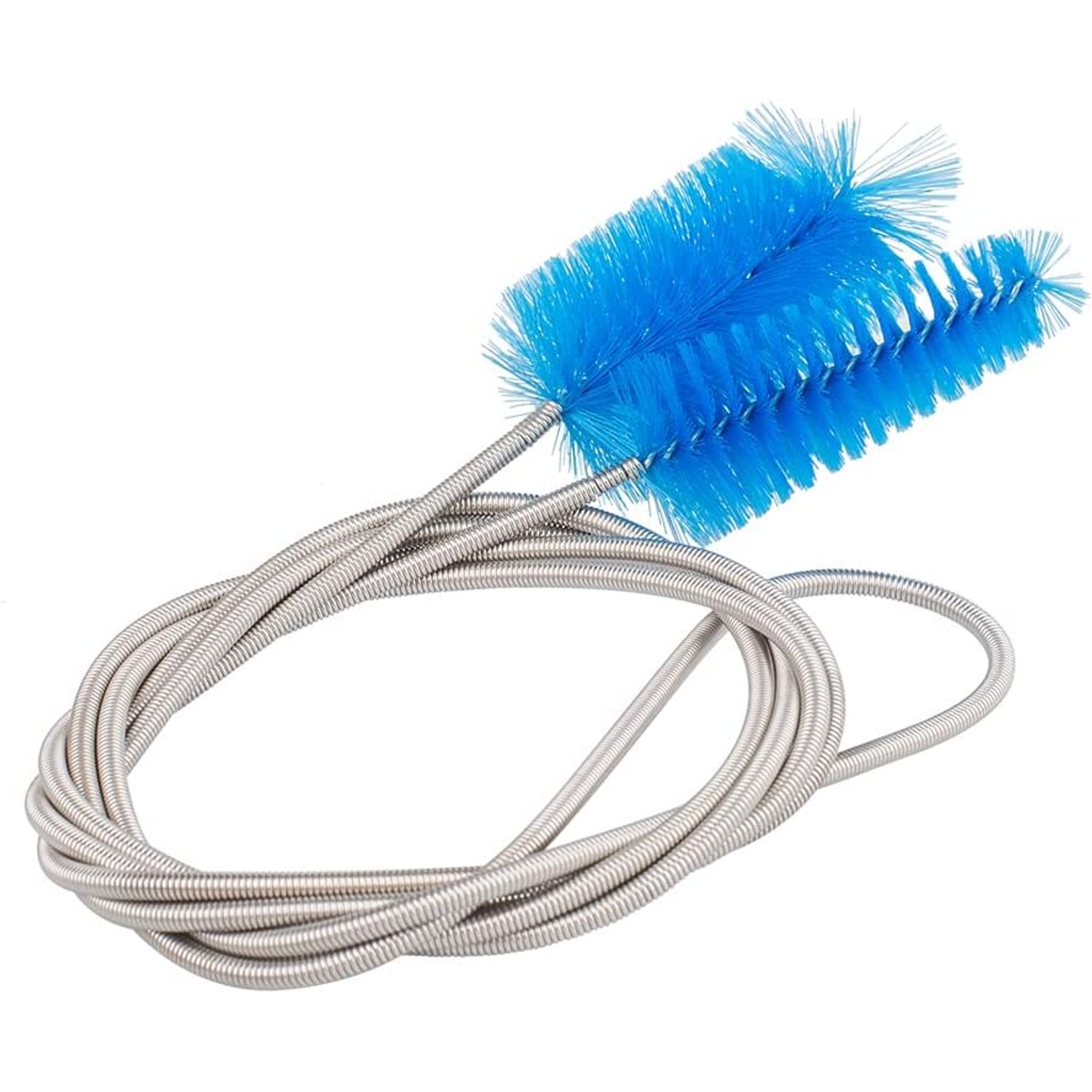
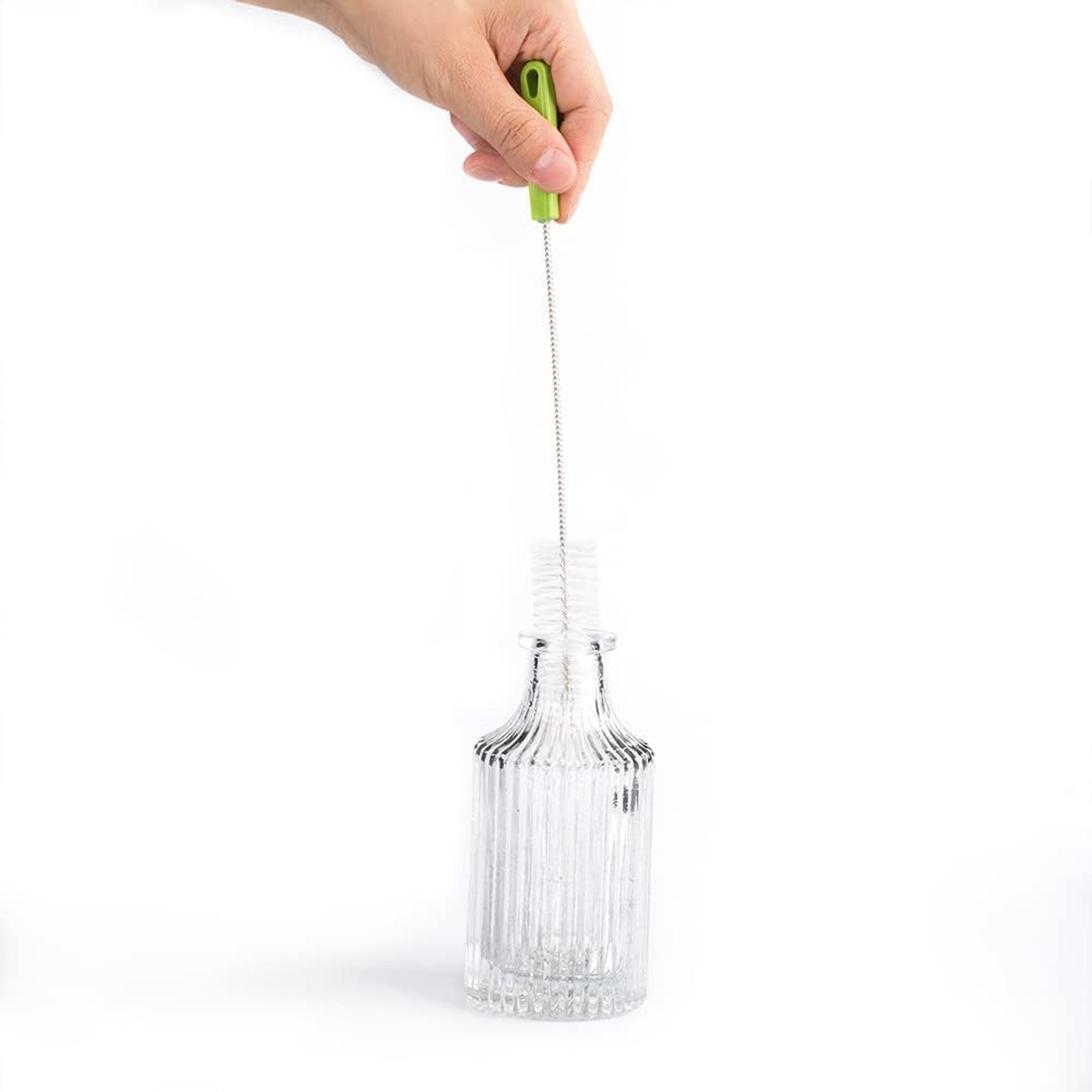
The main tool in this pack is a long flexible brush built on a stainless steel shaft with nylon bristles. The shaft is springy. You can bend it into a loop and it comes back. That matters because pipes under a sink are not straight, and a rigid rod stops at the first elbow.
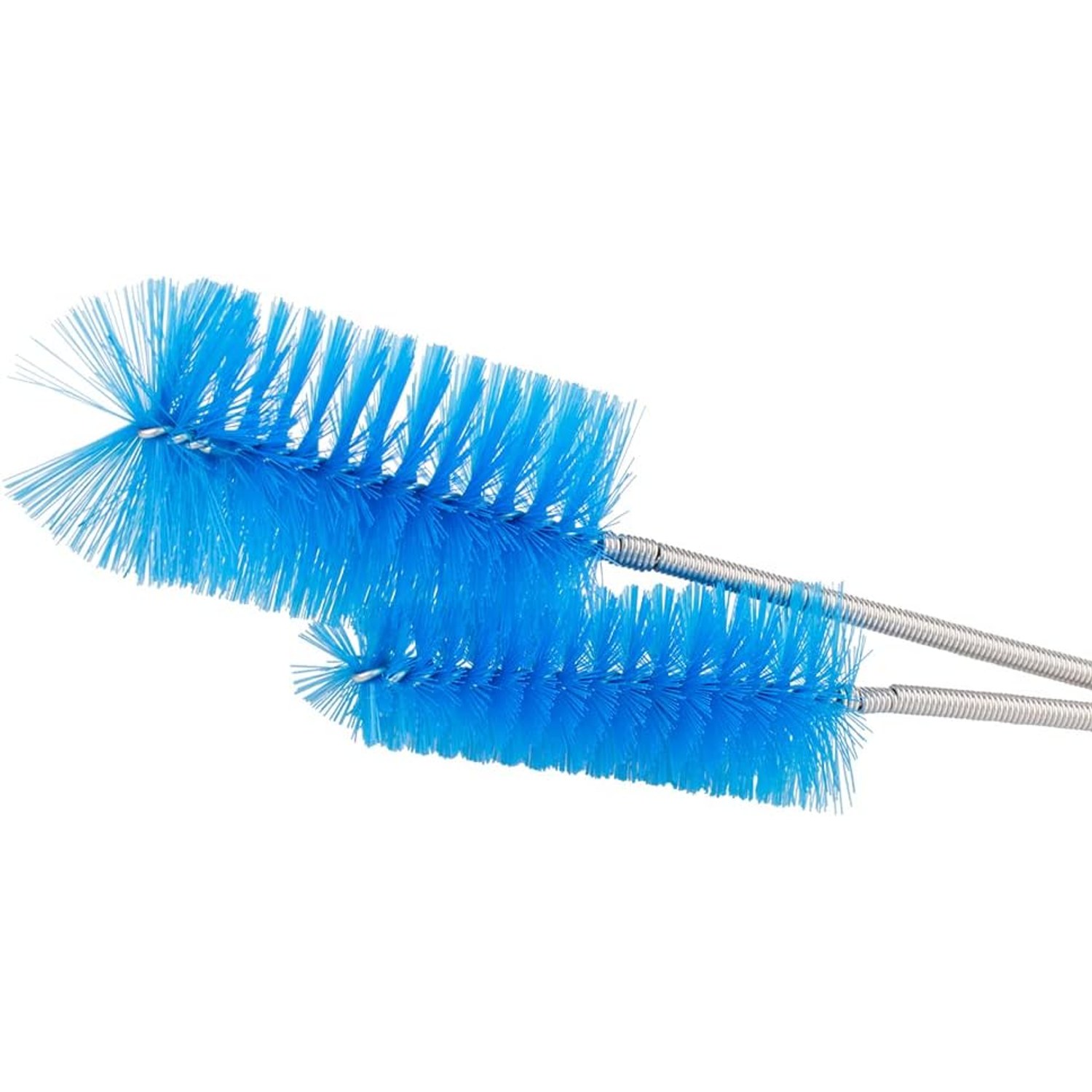
The double ended part is the clever bit. Bristles sit at both tips. When you push the brush in, the leading end scrubs. When you draw it back, the trailing end scrubs. On a single ended brush half of each stroke does nothing except move debris around. Here, both halves work, so you cover the same length of pipe in fewer passes.
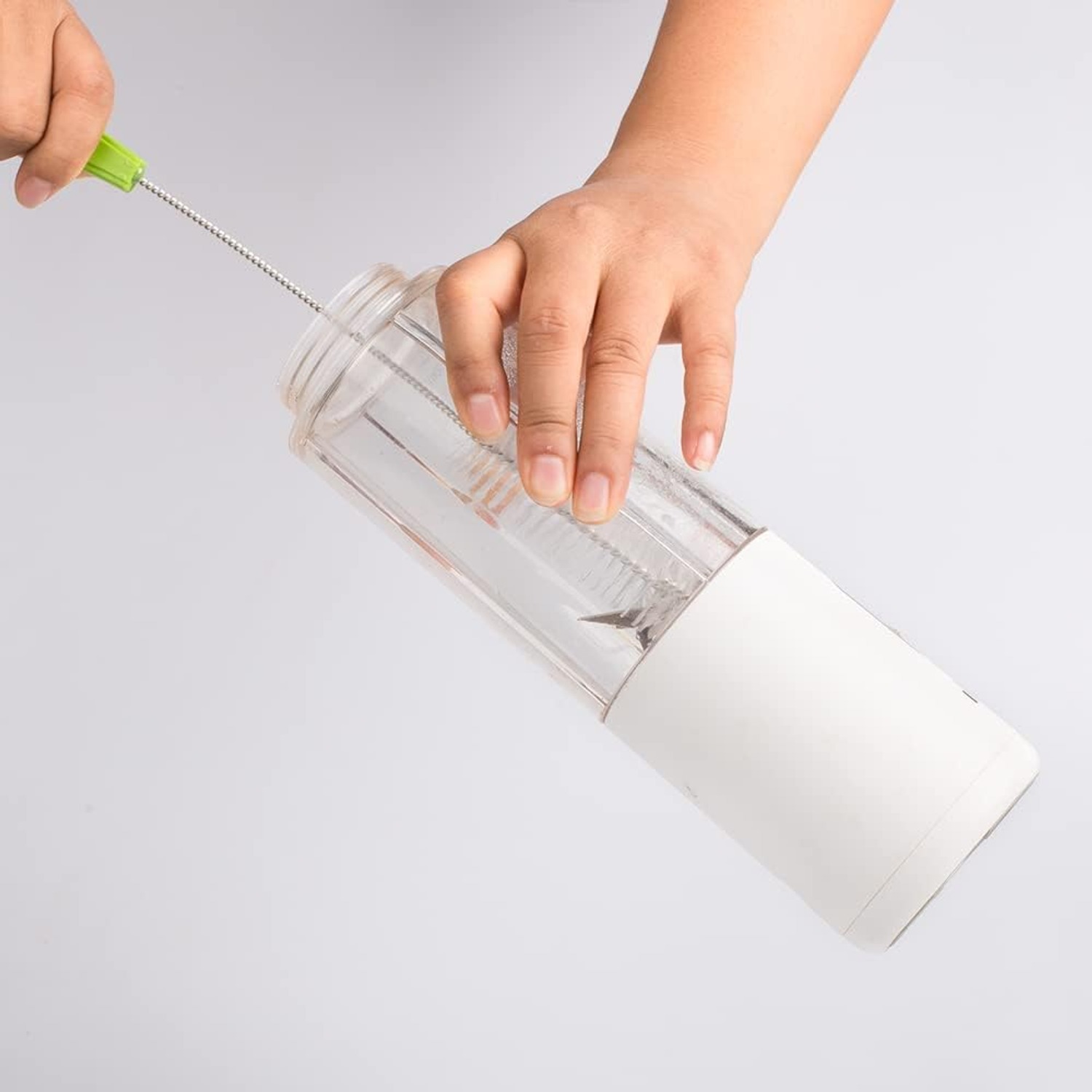
The two short nylon brushes in the pack are a different job entirely. They are sized for straws, bottle necks, tap spouts, narrow vases and small openings. If you own a reusable water bottle with a straw lid you already know these are the only way to get it properly clean.
The materials are listed as nylon and stainless steel. Medium bristle firmness. Black finish. Hanging hole on the brushes so they can dry out rather than sit wet in a drawer. The whole set weighs 45 grams.
Who this actually suits
People with long hair in the house. Bathroom basins and shower drains are the number one use case. Hair plus conditioner is a reliable recipe for a slow drain, and a long flexible brush pulls it out before it compacts.
Anyone who cooks a lot. Kitchen sinks get a grease film that builds up quietly. A brush pass every couple of weeks keeps the pipe wall clean and the water moving.
Aquarium keepers. Filter hose grows biofilm inside where you cannot see it. Flow drops, and you assume the pump is tired when it is really the tubing. The product theme is listed as household and aquarium cleaning for exactly this reason, and a long flexible brush is the standard tool for the job.
Households with reusable bottles and straws. The short brushes earn their place here. Metal straws in particular hide residue that rinsing never shifts.
Renters. You may not want to pull apart plumbing you do not own. Working through the plughole and the overflow with a brush is low risk and leaves nothing to reassemble.
Choosing between brush types
Not every drain tool does the same thing, and buying the wrong one is a common mistake.
A plunger moves water pressure. It is good for a sudden full blockage and useless for routine film.
A drain snake or auger is for a hard clog some distance down the line. It cuts and hooks. It is overkill for maintenance and can scratch chrome and plastic if you are careless.
A flexible drain brush sits in the middle. It cleans along the pipe wall for its full working length, removes the layer before it becomes a clog, and does it without chemicals. Think of it as maintenance rather than rescue.
A short straw brush is for anything you can see into.
Most homes want the brush and the straw brushes, which is why they are sold together. You only need the snake when you have left things too long.
When you compare options, the things worth checking are reach, whether the shaft actually flexes or just bends and stays bent, bristle firmness, and whether there is a loop for hanging. A brush with no hanging hole ends up damp in a drawer and gets replaced twice as often.
Using it without making a mess
Lay a towel down and put a bucket or bowl under the sink if you are nervous. Run the tap briefly first so the pipe is wet, which helps the brush slide.
Start at the plughole. If the grate lifts or unscrews, take it out. Feed the brush in slowly, with a gentle twist rather than a shove. When you feel resistance, that is usually the trap, so ease off, rotate, and let the flexible shaft find the curve rather than forcing it.
Work it back and forth over the same stretch a few times. Pull it out slowly so the trailing bristles carry debris up with them instead of pushing it deeper. Expect something unpleasant on the first pull. That is the whole point.
Then do the overflow. Feed the brush into the small hole near the basin rim and work it the same way. Most people have never cleaned this and the result is often dramatic.
Finish by running hot water for a minute to flush everything through. If you want, follow with an enzyme drain treatment, which works much better on a clean pipe than a coated one.
For hose, disconnect it first, brush from one end, then flush with water. For aquarium tubing, use plain water only and keep that brush separate from the ones you use with detergent.
Looking after the brushes
This bit takes thirty seconds and doubles how long the set lasts.
Rinse under the tap straight after use, working the bristles with your fingers to free hair. Add a little dish soap for greasy kitchen jobs. Shake the water out, then hang the brush by its loop so the steel shaft dries properly.
Do not leave it soaking for hours, and do not store it wet in a closed drawer. Avoid repeatedly kinking the shaft in the same spot, because that is where any flexible tool eventually fails. Gentle curves are fine, sharp folds are not.
Replace a brush when the bristles splay out and stop making contact with the pipe wall. A well cared for set lasts a long time, which is the whole reason reusable beats disposable here.
The short version
Slow drains and bathroom smells are nearly always a film on the inside of a pipe, not a solid blockage. Chemicals soften that film. A brush removes it.
This pack gives you a long flexible stainless steel brush with bristles at both ends for drains, traps, overflows and hose, plus two short nylon brushes for straws, bottles and taps. Medium firmness, black, 45 grams, with hanging holes so everything dries between uses.
Use it once a month on bathroom basins, more often on a kitchen sink, and you will spend a lot less time standing over a basin waiting for water to disappear.