

The complete guide
How To Choose And Use A Drain Brush Set That Actually Clears The Clog
The problem nobody notices until it is bad
Drains rarely fail all at once. The basin takes a bit longer to empty. The shower holds water around your ankles for a minute after you turn the tap off. You tell yourself you will deal with it, and three weeks later the water is not going anywhere at all.
What is happening is simple. Hair goes down the plughole, soap scum and conditioner stick to it, and the whole thing catches on the inside wall of the pipe just past the trap. Grease does the same job in a kitchen sink. The mass grows slowly from the edges inward until there is barely a channel left.
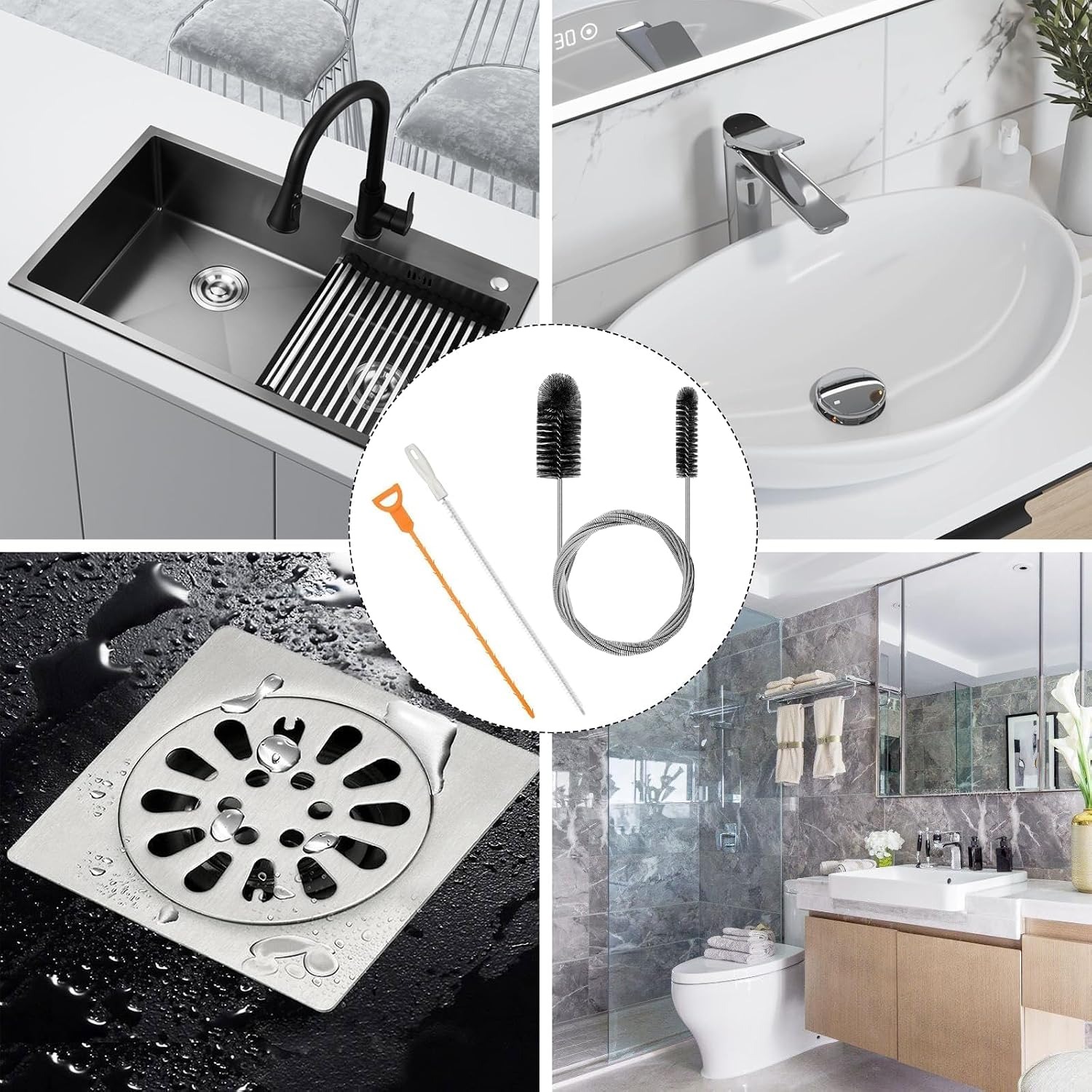
Hot water does almost nothing to that. Chemical liquids soften the surface, run around the edges and drain away. The only thing that reliably works is getting hold of the mass and pulling it out, which is exactly what a drain brush set 3 piece kit is for.
How these tools work
All three tools in this set work on the same principle. You feed them into the drain, give them a twist so the bristles tangle into the hair and debris, and then pull back slowly. The clog comes with them.
The twisting part matters. If you just push a brush in and out, you polish the clog. If you rotate it a quarter turn, the nylon filaments wrap into the hair like a fork into spaghetti, and then the whole mass lifts as one piece. Go slowly on the way out so you do not shear it off halfway.
The second thing these tools do is scrub. The inside of a waste pipe builds a greasy film that new hair sticks to. Running a stiff brush along that wall strips the film away, so the drain stays clearer for longer after the obvious clog is gone. That is the difference between unblocking a drain and maintaining one.
What each of the three tools is for
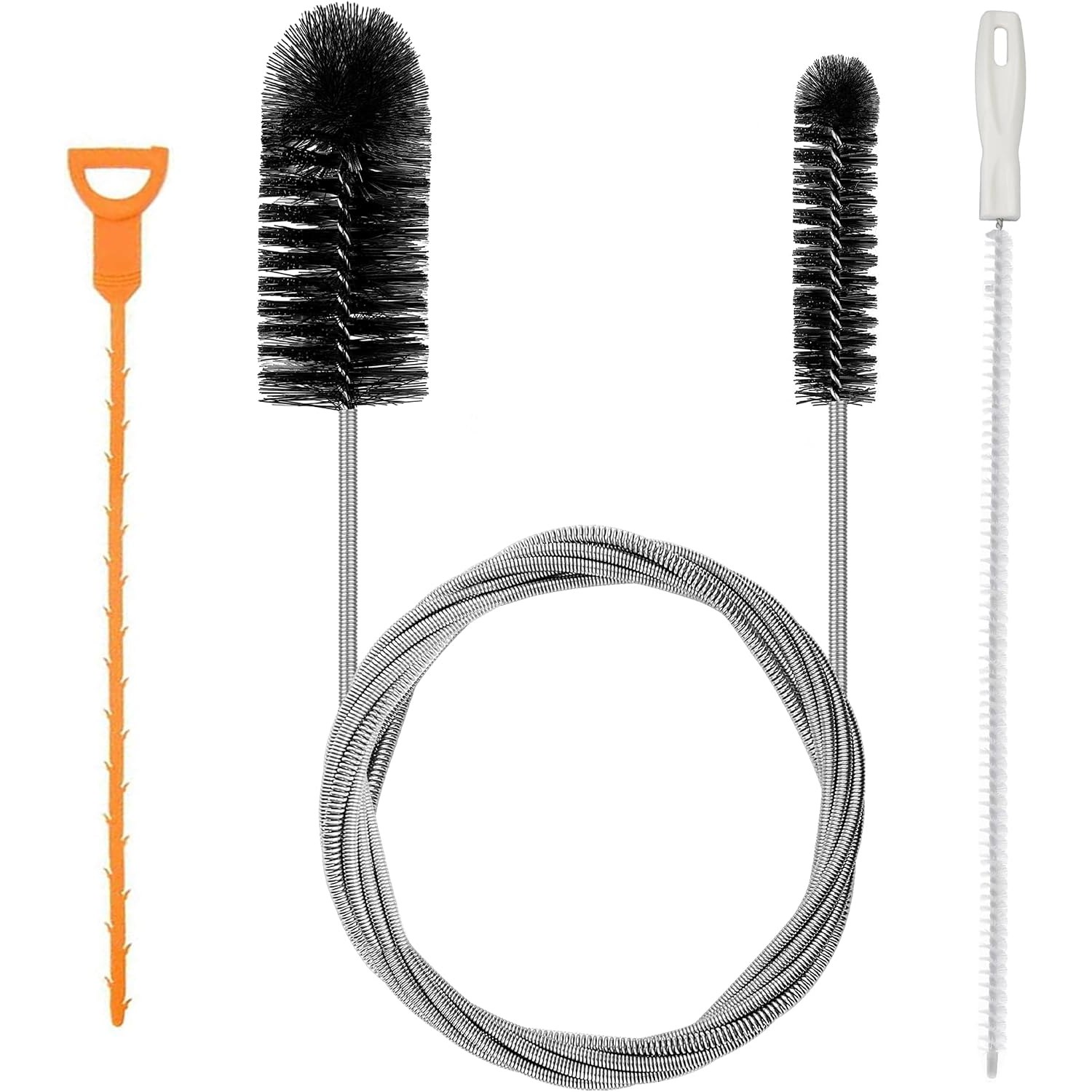
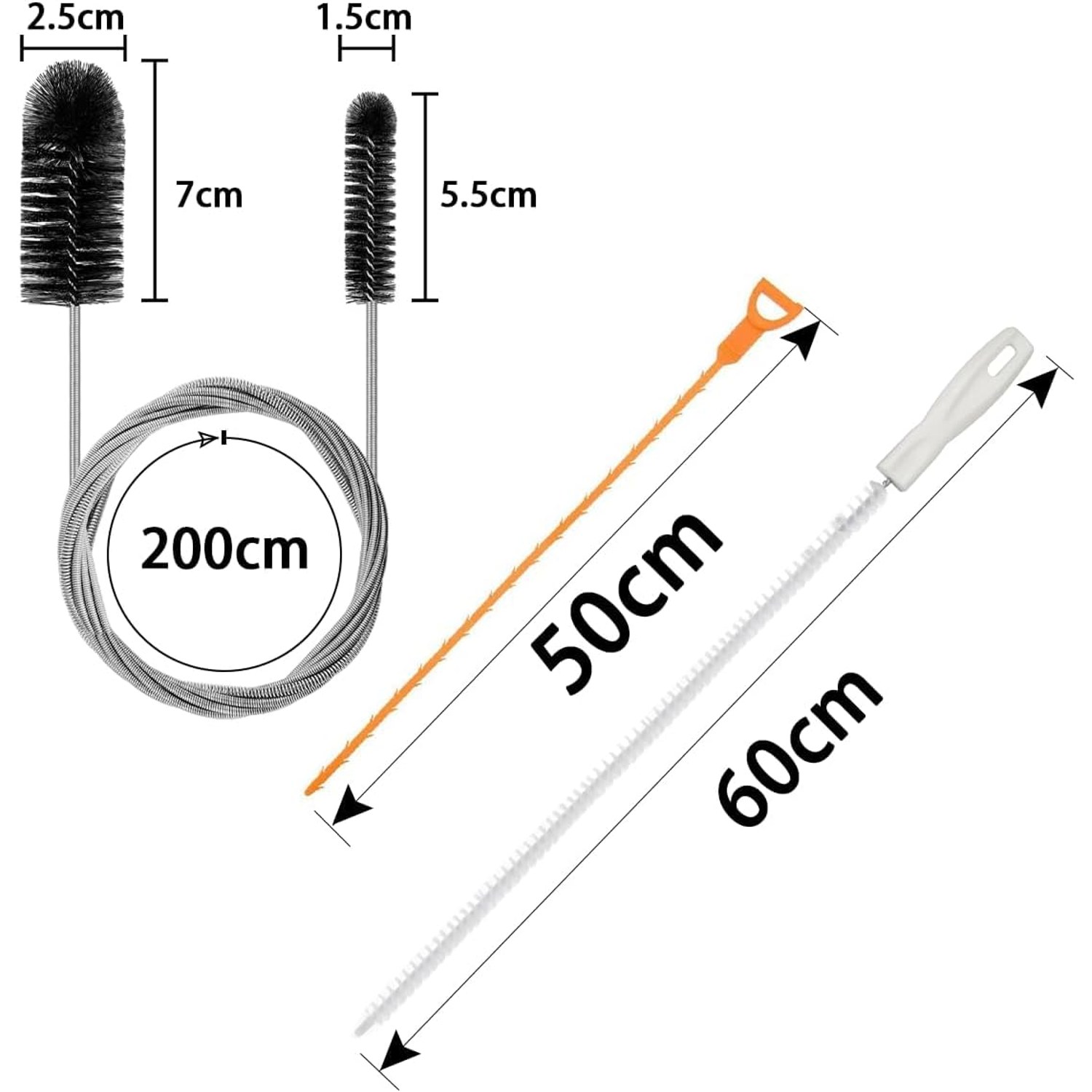
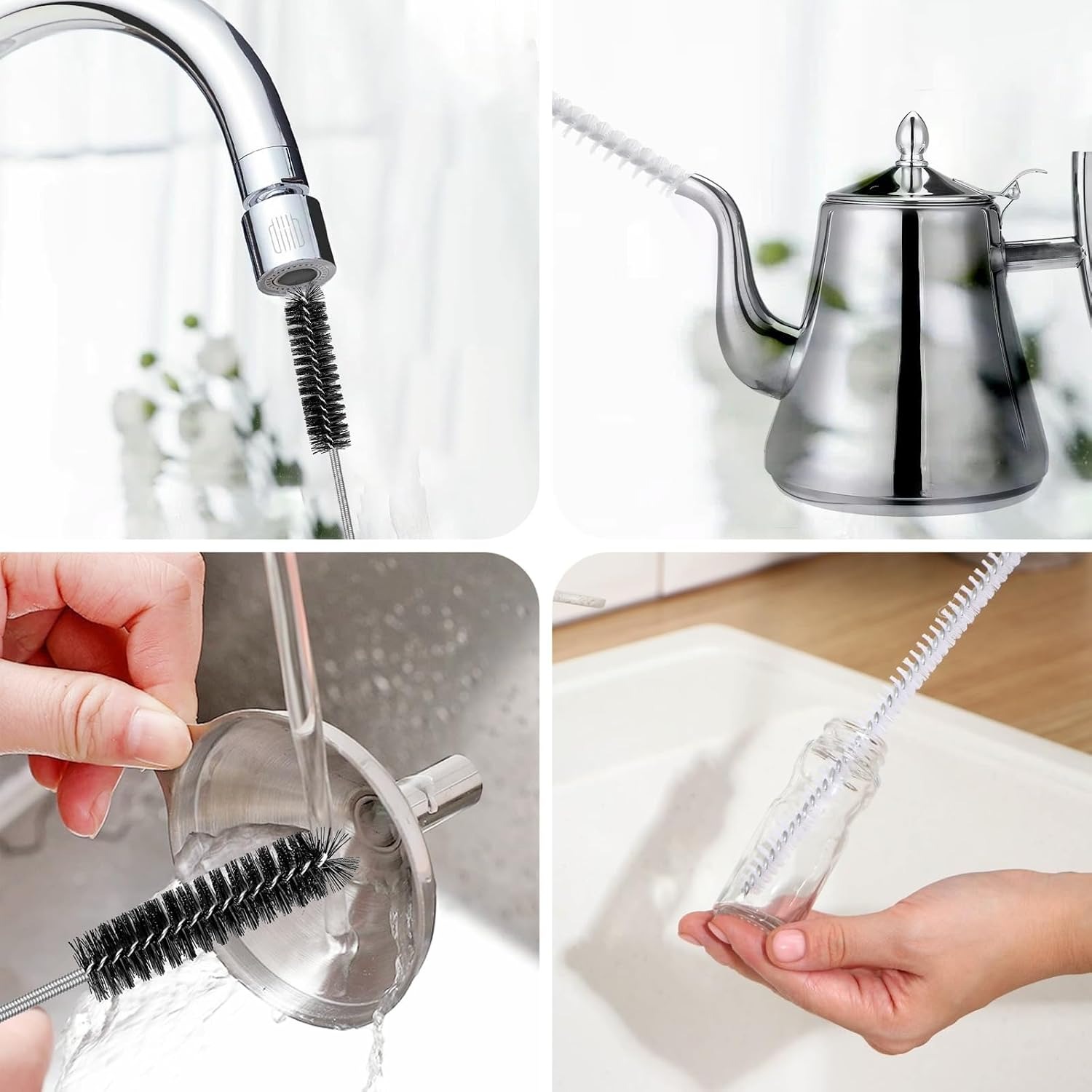
The 200cm flexible brush is the long one, with a bristle head at both ends and a stainless steel wire core running through the middle. It is not really meant to go two metres down a shower waste. Its job is narrow tubing, which is why it is such a useful fridge drain hose brush, aquarium filter line cleaner and washing machine hose tool. Anywhere there is a long, thin, curved tube you cannot see into, this is the one.
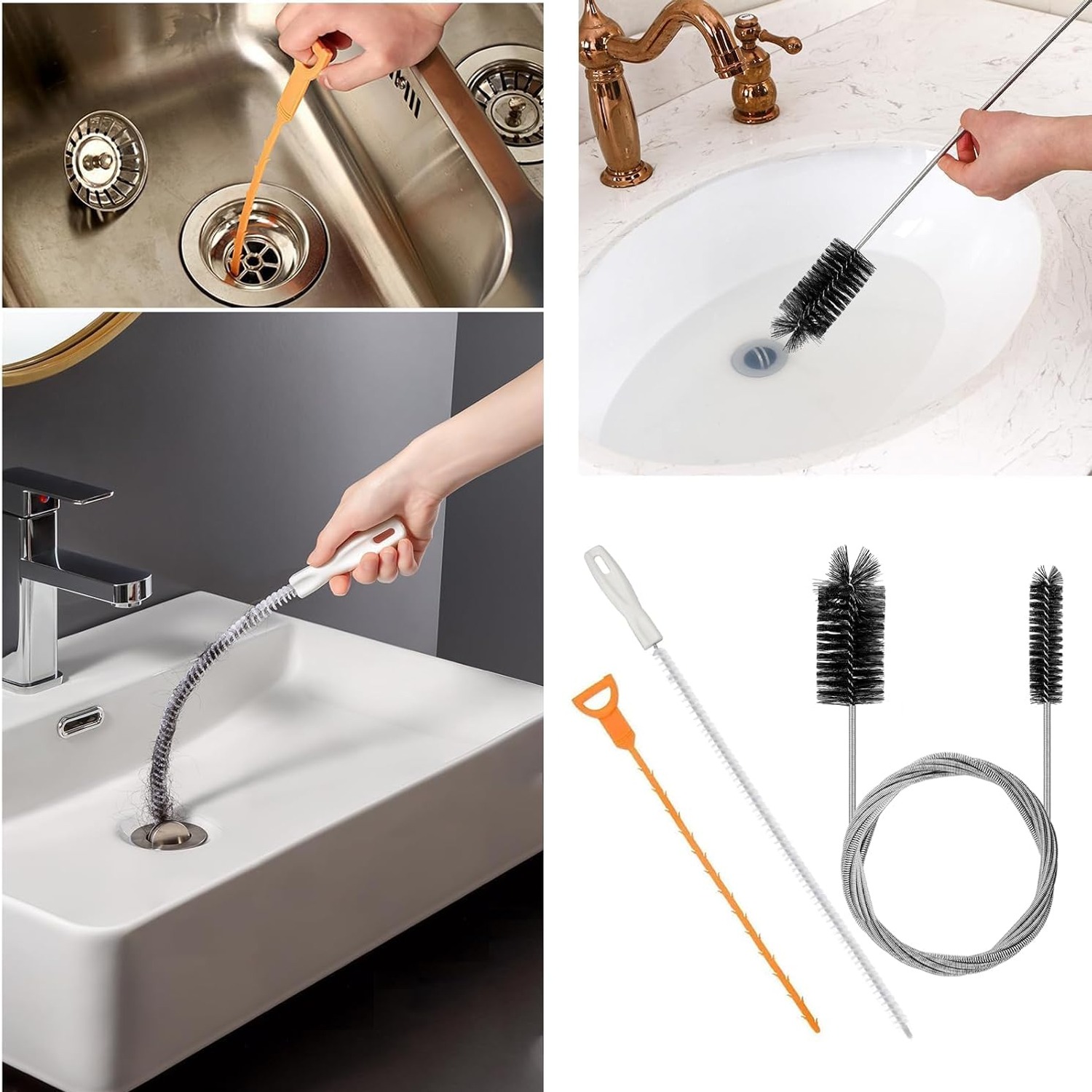
The 60cm brush is the workhorse for basins and bathtubs. It is stiff enough to scrub and long enough to pass the trap on a standard sink. If your basin is slow but not blocked, this is where to start.
The 50cm orange stick is the fastest tool in the set for a shower. It is thin enough to slip between the bars of a grate, which saves you unscrewing anything, and it is designed to hook hair rather than scrub. For most households this ends up being the one that gets used every month.
Choosing a drain brush that lasts
There are plenty of cheap versions of this tool and they fail in predictable ways.
The first failure is the core. A brush with a soft or plain steel wire core bends permanently at the first tight curve, and once it has a kink it will not feed into a pipe properly again. Plain steel also rusts in a bathroom cupboard. Stainless steel wire holds its spring and comes back straight after a bend, which is what lets it follow a trap.
The second failure is the bristles. Low-density bristles flatten after two or three uses and then slide over a clog instead of gripping it. High-density nylon filaments stay upright because there are enough of them to support each other, and nylon does not go soft when wet.
The third thing to look at is length variety. A single tool, however good, is the wrong shape for at least half the jobs in a house. A kit with a few lengths covers basins, showers, floor drains and tubing without compromise. That is the main argument for the best bathroom drain cleaning kit over a single brush.
Firmness is listed as medium on this set, which is the sensible middle ground. Too soft and the brush will not scrub. Too stiff and it will not follow a bend.
Who this suits
Households with long hair are the obvious group. Two people with shoulder-length hair sharing one shower will block a waste every few months without fail, and a brush turns that into a five minute job instead of a call-out.
Renters benefit too, since you are not putting anything caustic into pipework you do not own, and a small kit in a drawer travels with you.
It also suits anyone on a septic system. Chemical drain cleaners can knock back the bacteria that a septic tank relies on, so a mechanical tool is the safer choice. The same logic applies in caravans and boats with small waste tanks.
And it suits people who just want to know what the problem actually is. When you pull out a fist of hair, you know. When you pour in a litre of liquid and wait, you are guessing.
Using it without making a mess
Have a bin bag or an old container ready before you start, because whatever comes out is going somewhere and you do not want it in the sink you just cleared. Wear gloves.
Remove the plug or grate if it lifts out easily. Feed the tool in until you feel resistance, which is usually the trap. Twist a quarter turn, then pull steadily. Do not snatch. If the clog tears, go back in and get the rest.
Once the obvious mass is out, run the brush in again a couple of times to scrub the pipe wall, then flush with hot water for a minute. That last flush carries away the loose bits the brush knocked free.
If three passes make no difference at all, stop. The blockage is further along the line than this kind of tool is designed to reach, and a plumber with a powered snake will sort it in less time than you will spend fighting it.
Looking after the set
Rinse each tool under hot water straight away, with a little dish soap, and work the bristles with your fingers. Shake the water off and leave them to dry before putting them away. Damp storage is the single thing that makes drain tools smell.
Store the long brush in a loose coil rather than folded. A hard crease sets in the wire and makes the brush awkward to feed into tubing afterwards.
When the bristles start splaying outward and no longer spring back, the brush has done its time. With a rinse after every use that is usually years away.
The short version
Most slow drains are a soft plug of hair and soap sitting just past the plughole, and the fix is mechanical, not chemical. A set with a few different lengths covers basins, showers, floor drains and narrow tubing, which is where one tool always falls short.
Look for nylon bristles and a stainless steel core, twist before you pull, and give everything a rinse before it goes back in the cupboard. Do that once a month and you will probably never watch a shower tray fill up around your feet again.