
The complete guide
How to Clear a Blocked Drain Yourself, A Practical Buyer's Guide
The puddle that tells you something is wrong
You notice it in the shower first. Water starts gathering around your ankles halfway through, then takes a minute to disappear after you turn the tap off. A week later it is two minutes. A week after that you are standing in a shallow bath.
Nothing has broken. In almost every case, what has happened is that hair, soap residue and skin oils have knitted themselves into a mat on the crossbars just below the plughole. It starts as a thin film and ends as a surprisingly solid plug. The same thing happens in basins, in bathtubs and, with grease and food instead of hair, in kitchen sinks.
The frustrating part is how simple the fix is once you have the right tool, and how expensive it gets if you do not. A plumber callout for a blocked basin can cost more than most people spend on cleaning supplies in a year, and much of that visit is them pulling out the same lump of hair you could have removed in five minutes.
Why chemical cleaners often disappoint
Pouring a bottle of caustic cleaner down the drain feels decisive. Sometimes it works. Often it does not, and here is why.
A hair clog is not a solid mass. It is a tangled net with water channels running through it. The cleaner finds those channels, drains straight past the blockage, softens the outer edges a little, and ends up in the sewer. The core of the clog is still there. You get a day or two of better flow, then it closes up again.
There is a second problem. Repeat use of strong chemicals is not great for older pipe joints or for septic systems, and if the drain is fully blocked you now have a pipe full of caustic liquid sitting there with nowhere to go. That is genuinely unpleasant to deal with.
Mechanical removal avoids all of that. You put a tool in, you catch the blockage, you bring it out and put it in the bin. The clog has left the building.
What is in this kit and what each piece does
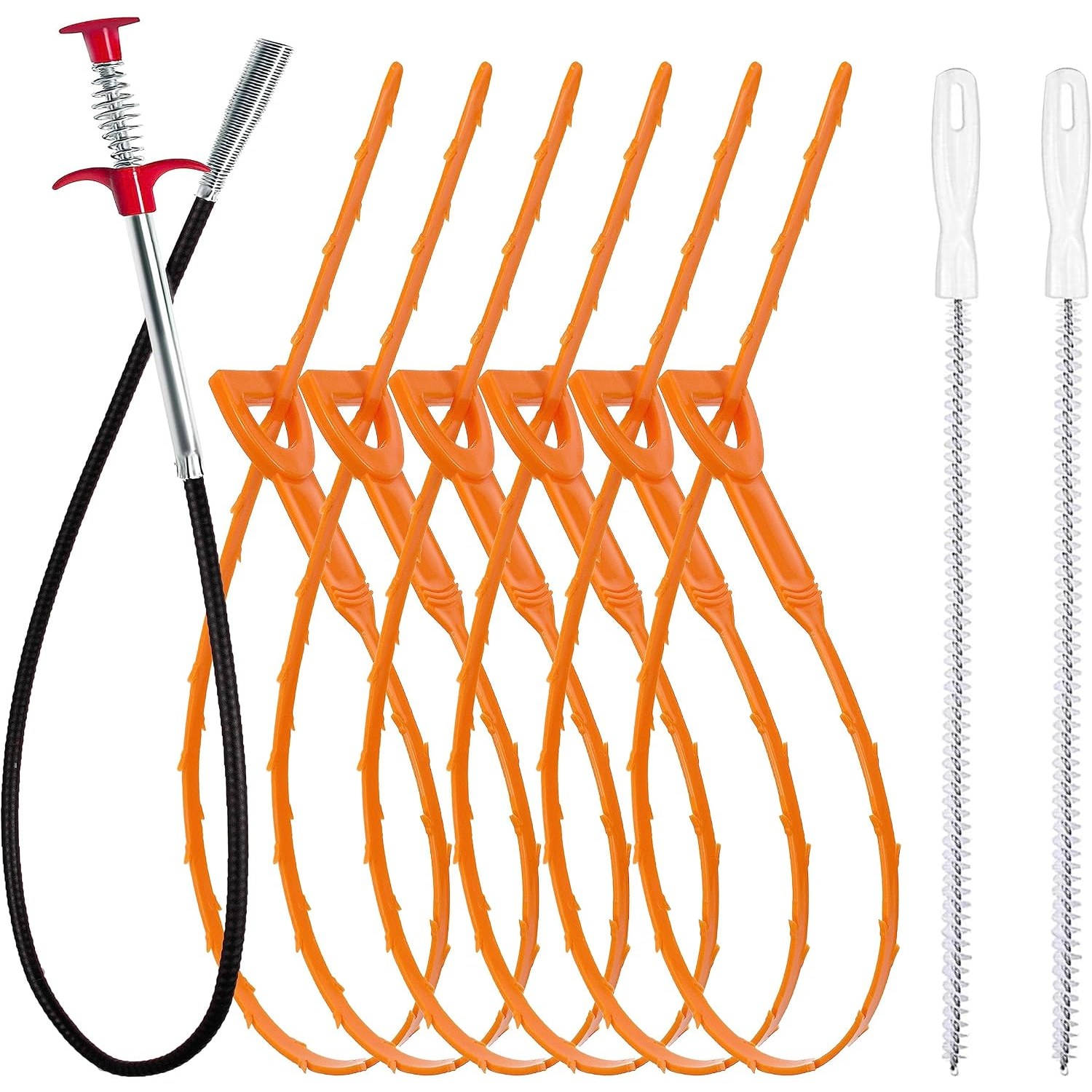
Nine tools, three types.
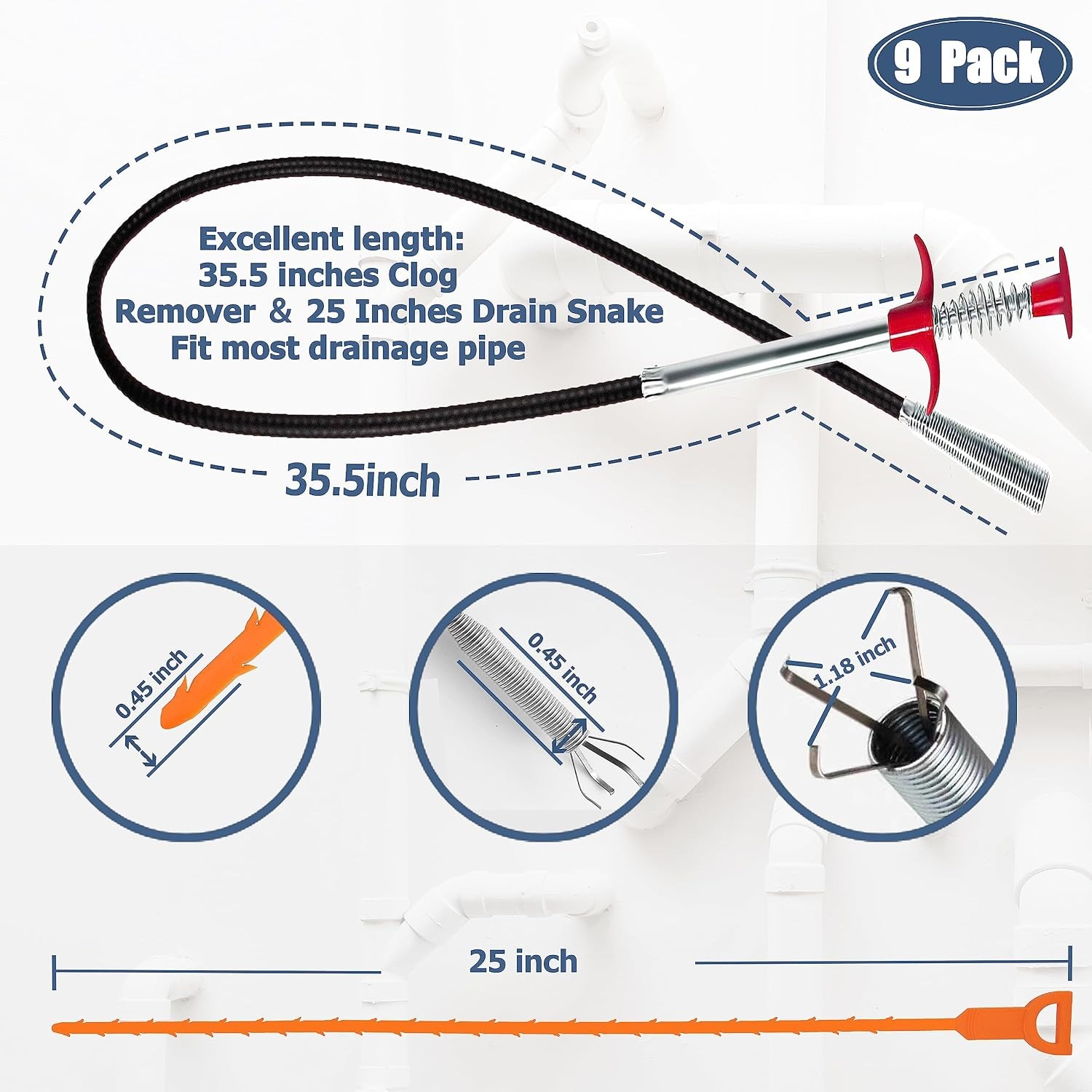
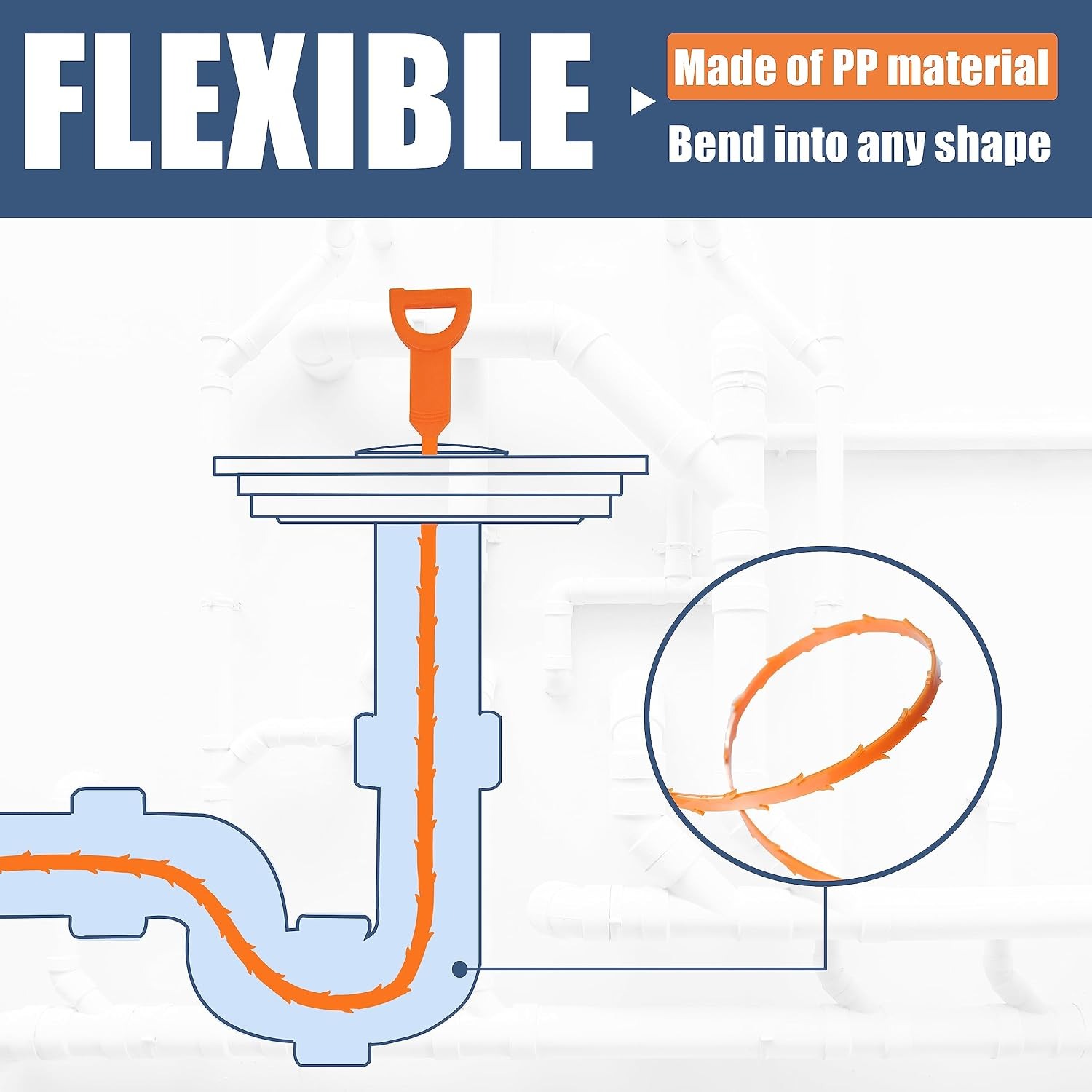
Six 25 inch drain snakes. These are the workhorses. Thin flexible plastic strips about 63 cm long, with rows of small hooked teeth running up the shaft. The teeth face back toward the handle so they slide down easily and grip on the way out. You will reach for these ninety percent of the time. Having six means you can keep one in each bathroom and still have spares, and there is no guilt in binning one if it gets truly disgusting.
One 35.5 inch metal clog remover. About 90 cm of bendable wire shaft with a claw at the business end. This is what you use when the plastic snake comes back empty but the drain is still slow, which usually means the blockage is further along than the snake can reach. Because the shaft bends and holds its shape, you can pre-curve it to match the run of your pipe. The claw grabs things a toothed strip cannot, like a clump of fabric or a wad of wipes.
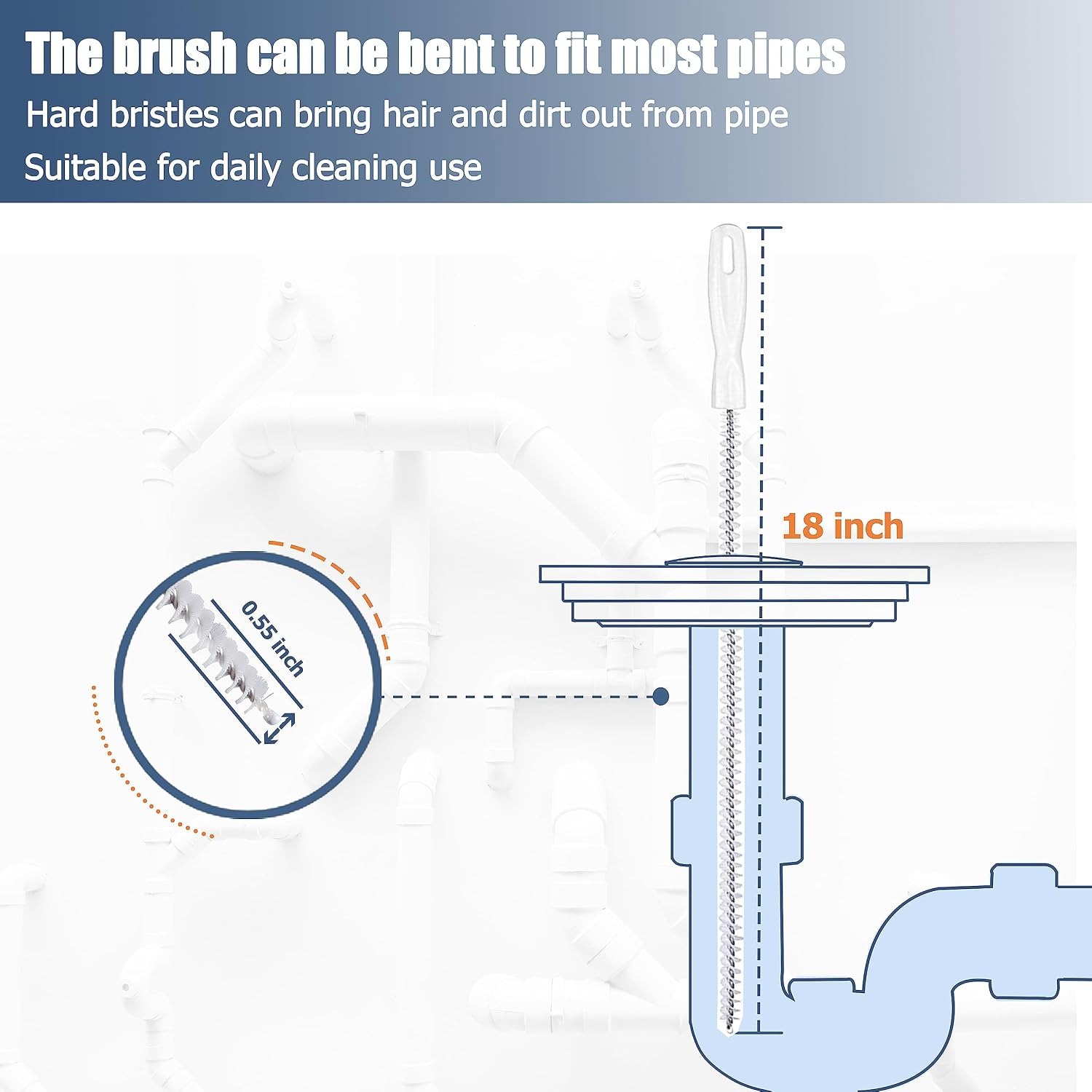
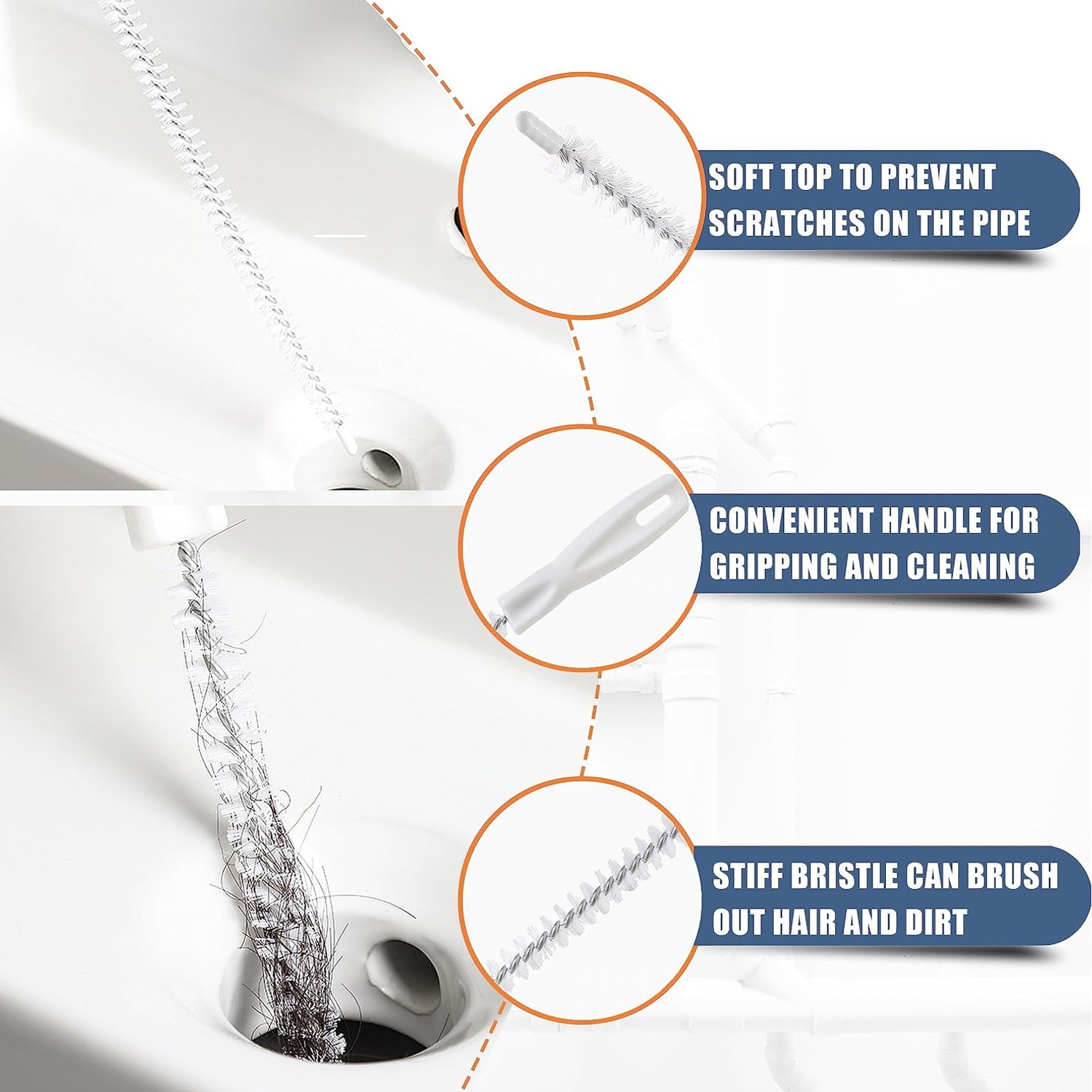
Two cleaning brushes. Long, slim, bendable brushes for scrubbing the inside of the pipe and the overflow hole. Most people skip this step and then wonder why the clog is back in six weeks. The answer is that the greasy film left on the pipe wall is sticky, and the next few hairs that come along attach to it immediately. Scrubbing the wall resets the clock.
How to actually do the job
Lay an old towel down and put on gloves. Have a plastic bag or bin nearby, because you want somewhere to put what comes out.
Take the drain cover off if it lifts or unscrews. If it is fixed, the plastic snakes are usually thin enough to slide between the bars.
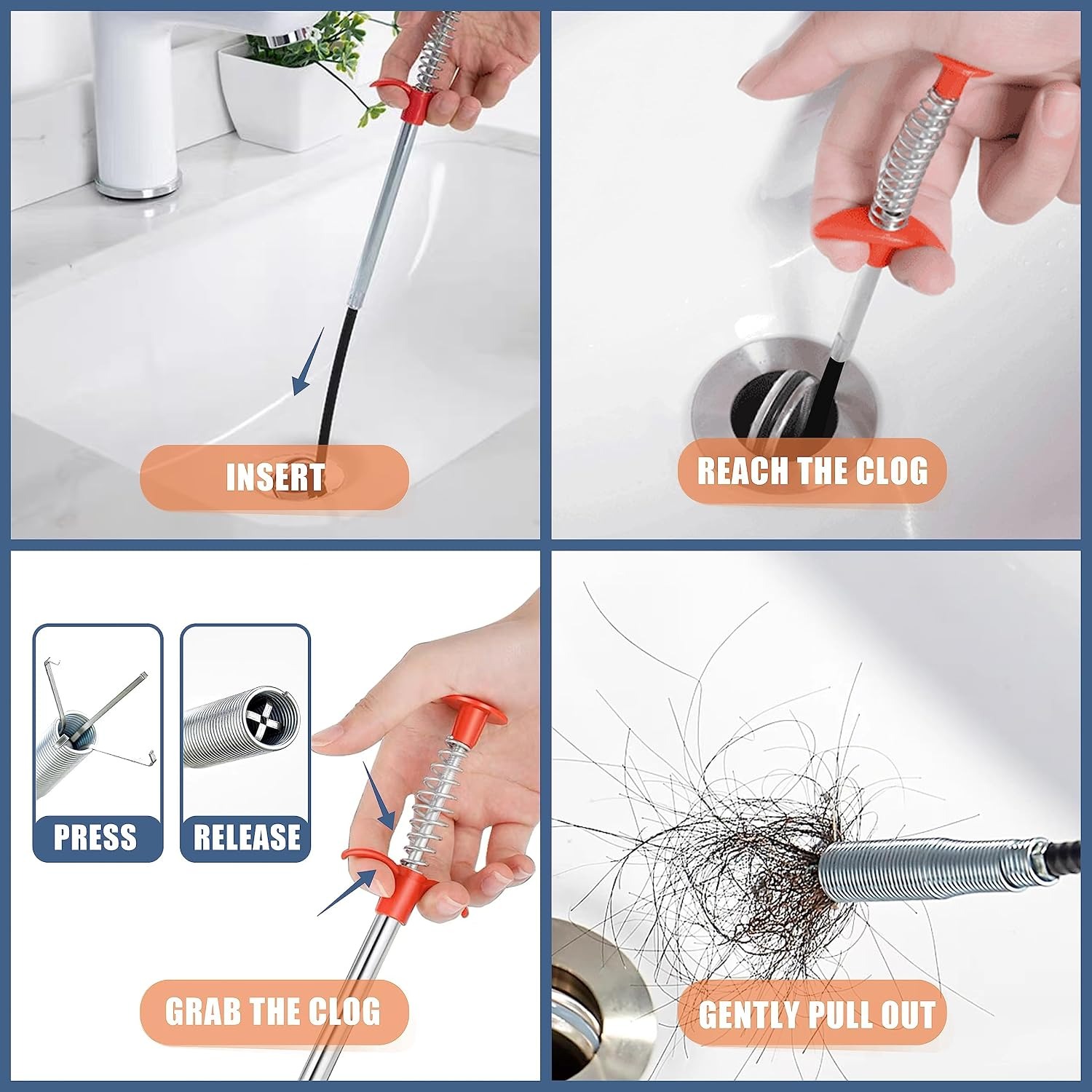
Feed the snake in slowly until you feel resistance. Do not shove. Turn it a half rotation, then draw it back up steadily. You will often feel the weight of the clog coming with it. Wipe the tool into the bag, and repeat until the snake comes back clean. Two or three passes is typical.
If the drain still runs slow, switch to the metal grabber. Bend it to roughly match the bend of the pipe, feed it in, rotate gently and withdraw. The claw tends to come back with things that surprise you.
Finish with the brush. Run it in and out several times with a twisting motion to scour the wall. Then flush with hot water from the tap for a minute.
Choosing the right tool for the drain you have
Shower and bath drains are hair territory, so the plastic snakes are your first choice. Look for the best drain snake for hair in terms of tooth density rather than length, because the clog is rarely far down.
Basin drains often have a pop up plug assembly in the way. Either lift the plug out or work the snake around it. The overflow hole on a basin also collects slime, and that is where the brush earns its place.
Kitchen sinks behave differently. The problem there is congealed fat with food trapped in it. Hot water and a brush do more than a toothed snake will, and the metal grabber is useful for pulling out a solid lump. If your kitchen sink blocks repeatedly, change what goes down it rather than buying more tools.
Toilets are their own case. Try a plunger first. The metal grabber can retrieve a soft obstruction from the trap, but a hard blockage or anything lodged deep in the pan needs a proper closet auger or a plumber.
When to stop and call someone
A tool kit like this handles the first metre or so of pipe. That covers the large majority of household blockages. It does not cover everything.
Stop and get professional help if more than one fixture is backing up at once, if water rises in a different drain when you run a tap, if you smell sewage inside the house, or if you have cleared the same drain three times in a month. Those are signs the problem is in the main line, not in your basin, and no hand tool is going to fix a root intrusion or a collapsed section of pipe.
Knowing the limit is part of using the kit well. The point is to handle the easy ninety percent yourself and only pay someone for the hard ten.
Looking after the set
This is a two minute job that decides whether the kit lasts a year or five.
Pull the hair off the tool into the bin, never back down the drain. Wash each piece in hot soapy water. Rinse, then dry completely before it goes in the drawer. Damp tools in a closed space are what make a cupboard smell.
Keep the metal grabber roughly straight when stored, and when you do need to bend it, bend it gradually along a curve rather than folding it hard at a single point. A sharp kink is a weak spot.
Store the whole lot out of reach of children. The teeth on the snakes are small but sharp enough to scratch.
Prevention beats clearing
Once your drains run freely, a small amount of habit keeps them that way.
Fit a hair catcher over the shower drain if yours does not have one. Wipe the plughole out after a haircut or a shave. Pour a kettle of hot water down the kitchen sink once a week to keep fat moving. Run a snake through each bathroom drain once a month as a quick preventive pass, before anything has built up enough to notice.
Two minutes of maintenance is far easier than thirty minutes of clearing, and much easier than a plumber's invoice.
The short version
Slow drains are usually hair and soap scum sitting just below the plughole. Chemicals tend to go around it. A physical tool brings it out.
This set gives you six flexible 25 inch snakes for routine hair removal, one 35.5 inch metal grabber with a claw for blockages further along, and two bendable brushes for scrubbing the pipe wall and overflow. Everything washes and goes back in the drawer for next time.
It is a small, light, inexpensive kit that handles the problem most households face several times a year. Keep it where you can reach it, use it before the drain stops completely, and you will rarely need to call anyone.