
The complete guide
The Honest Buyer's Guide to Flat Sink Strainers
The slow drain nobody plans for
A blocked kitchen drain almost never arrives in one dramatic moment. It builds. A few grains of rice slip past the plug one night. Some coffee grounds go down with the rinse water the next morning. Fat from a roasting tray cools on the way through and leaves a film that everything else sticks to. Months later you notice the sink takes a beat too long to empty, and a week after that you are standing over a bowl of grey water with a plunger.
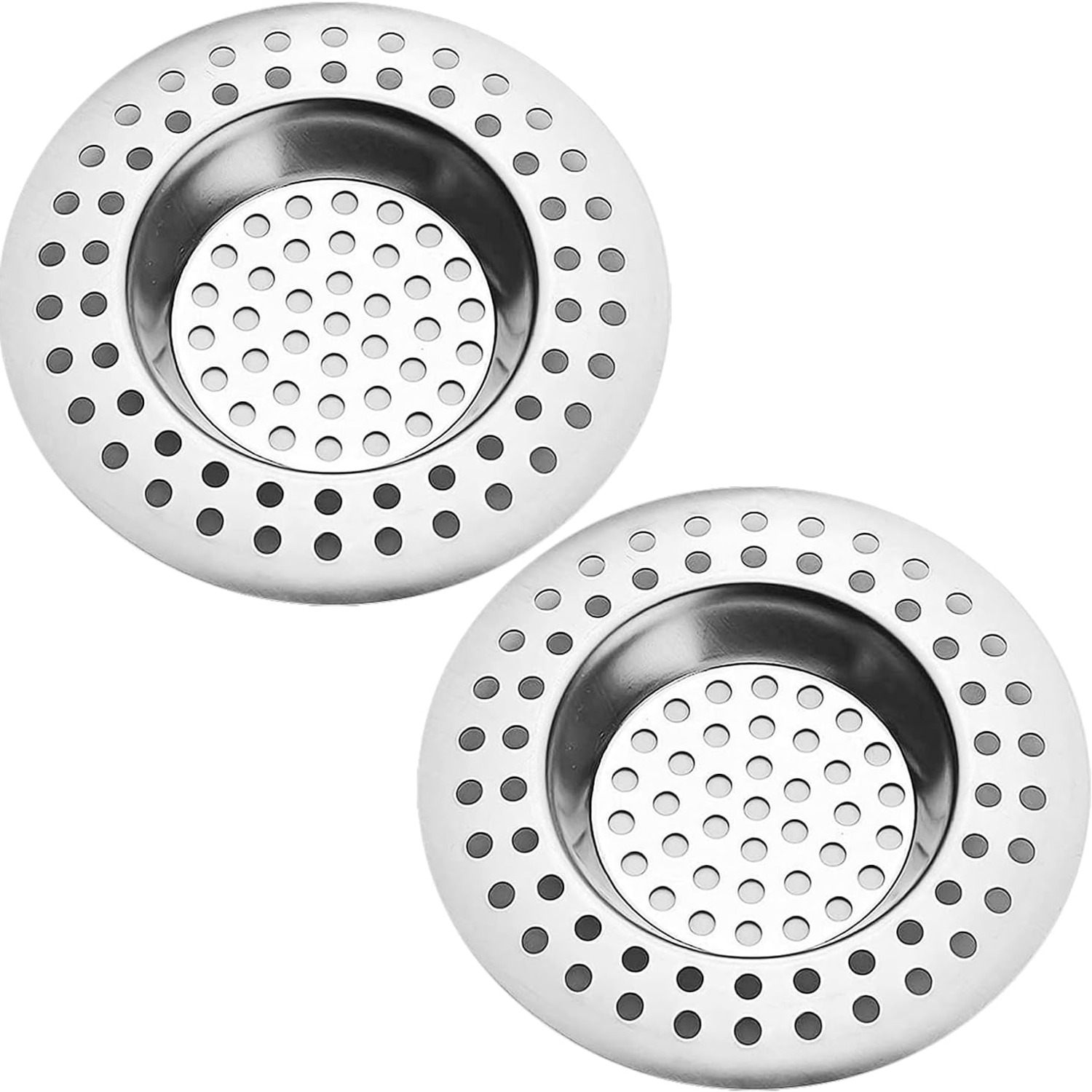
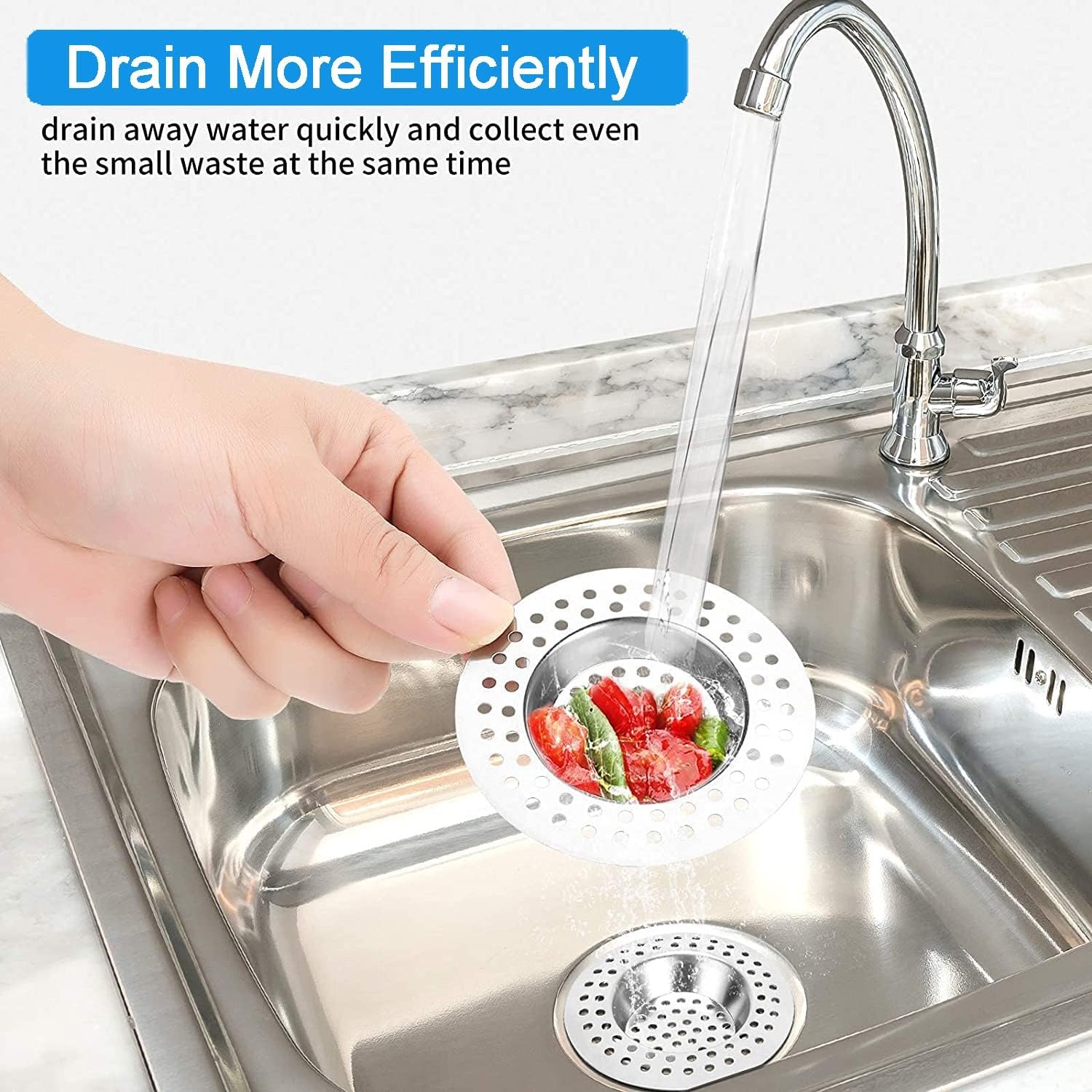
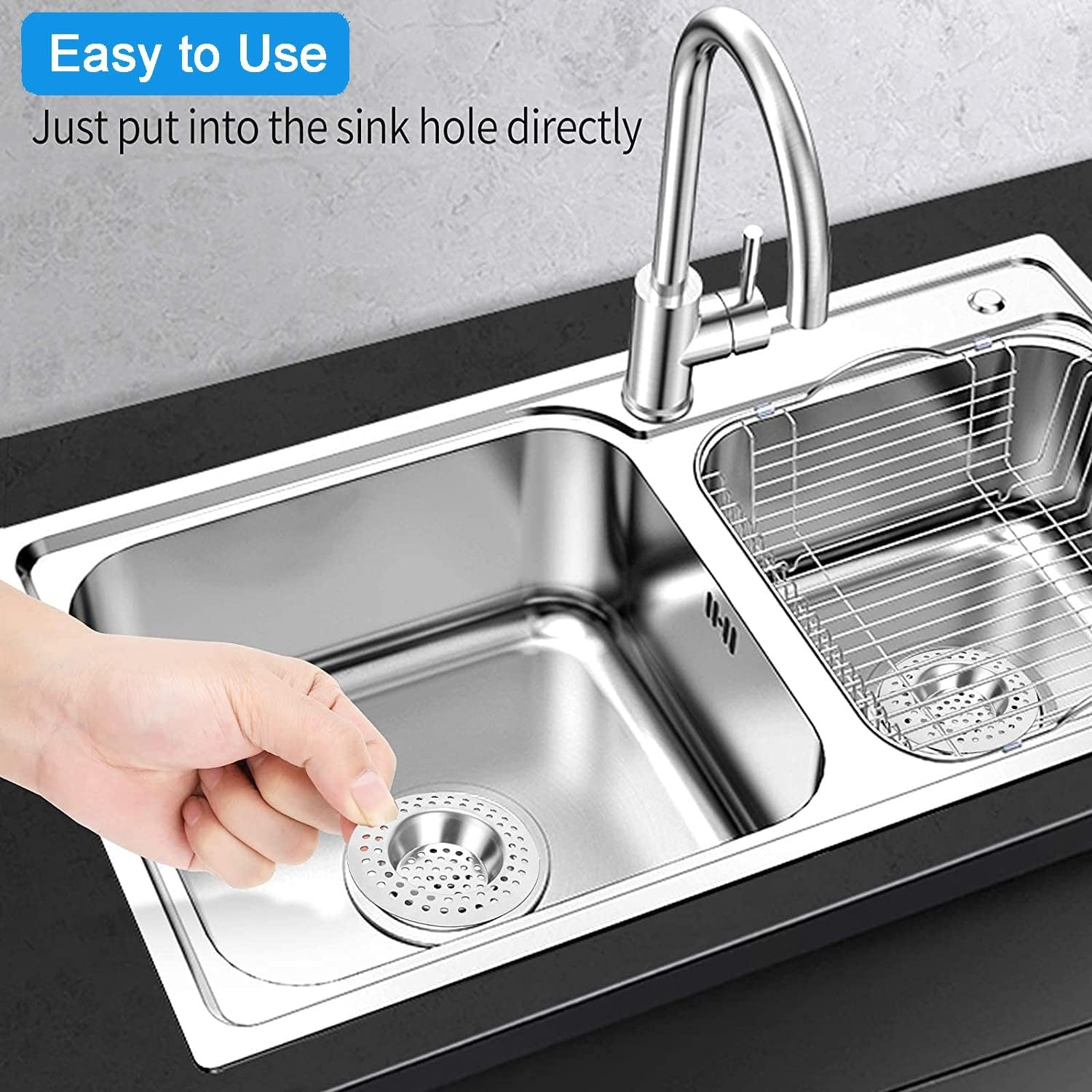
The fix is unglamorous. Stop solids from entering the pipe at all. That is the entire job of a flat sink strainer 75mm wide, and it does it without moving parts, electricity or chemicals. It is a steel disc with holes in it that sits where your drain opening is, letting water through and keeping everything else on top.
How a flat strainer actually works
The mechanics are simple enough to explain in a sentence, but a couple of details make the difference between a strainer you keep and one you throw in a drawer.
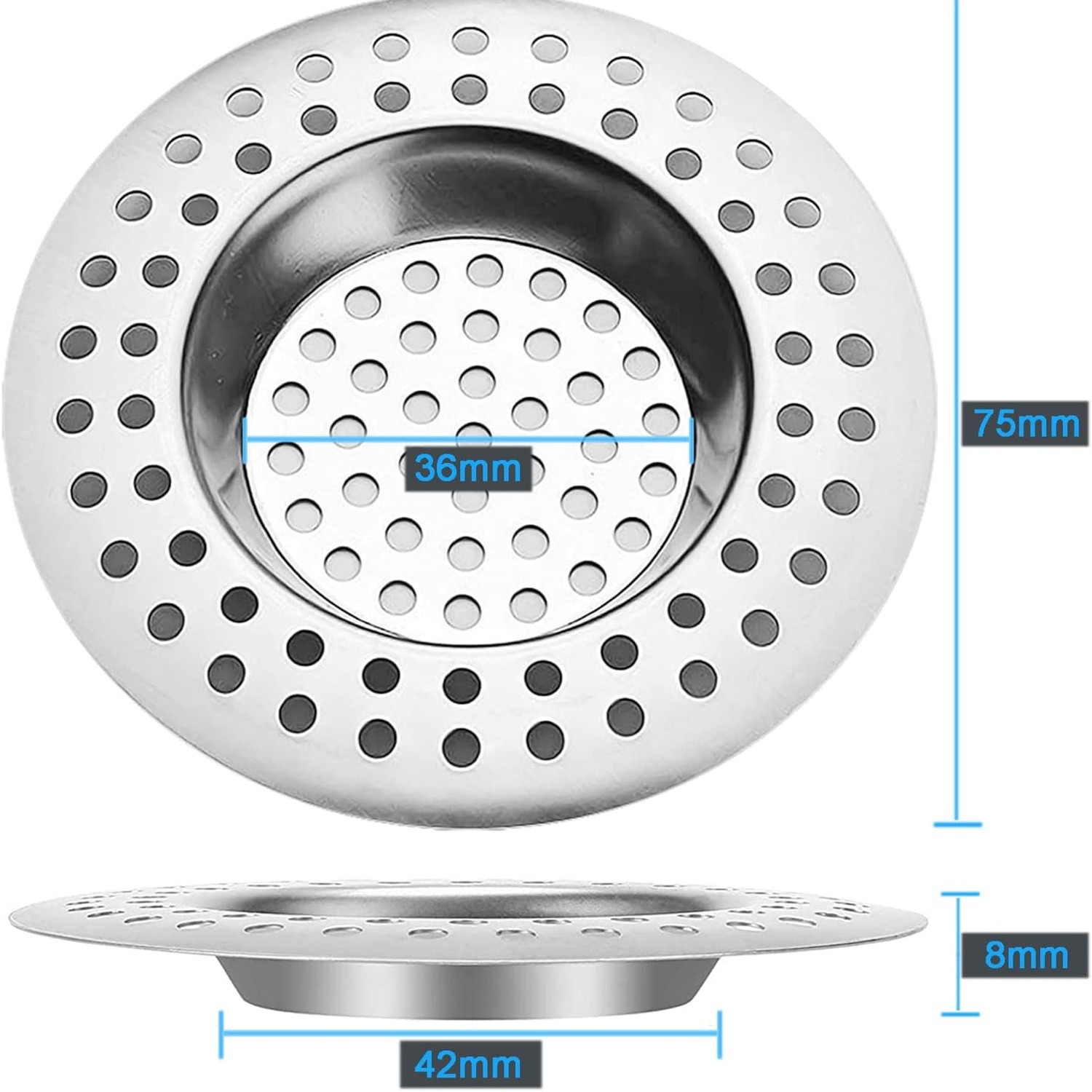
The first is hole count and size. This strainer carries 90 perforations across a 7.5cm face. That sounds like a lot of small openings, and it is, which is the point. Lots of small holes give you a large combined open area, so water moves quickly, while each individual hole is still too narrow for a grain of rice or a tea leaf to slip through. A strainer with fewer, larger holes drains fast but catches almost nothing useful. One with too few holes backs up every time you drain a full bowl.
The second is height. At 0.8cm, this disc sits low. That matters more in practice than on paper. A tall basket strainer is constantly in the way, catching the bottom of pans, tipping when you stack plates, and standing proud underfoot in a shower. A flat disc disappears into the bowl and only announces itself when you go to lift it.
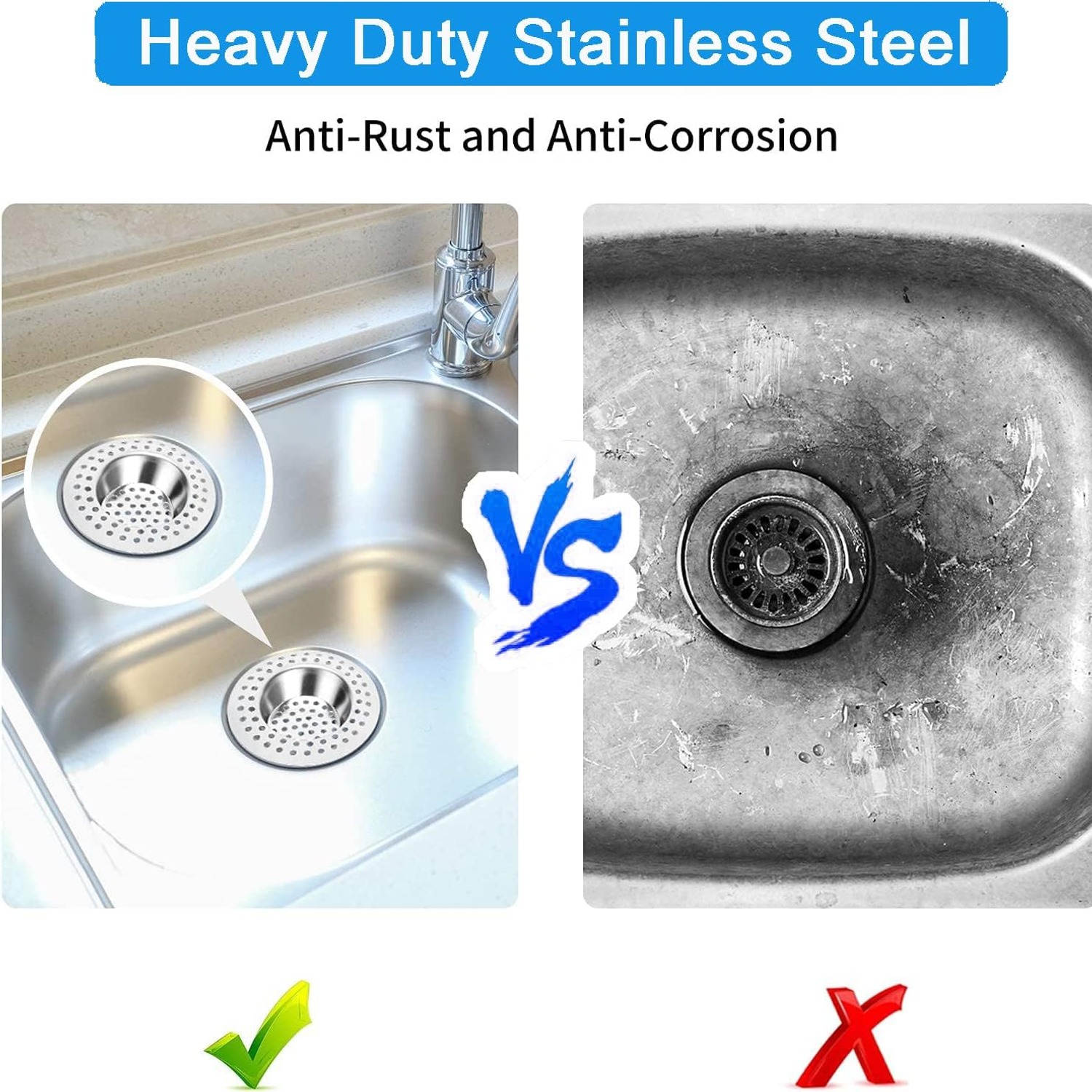
The third is the material. Stainless steel in a wet environment does not go cloudy, does not get brittle, and does not absorb odour. Plastic screens have their place, but they stain from turmeric and tomato, and the thin ones crack where they flex. If you are looking for the best stainless steel sink strainer, the appeal is mostly that it still looks and works the same in two years.
Who this suits
Anyone who cooks regularly is the obvious answer, but the use cases spread wider than that.
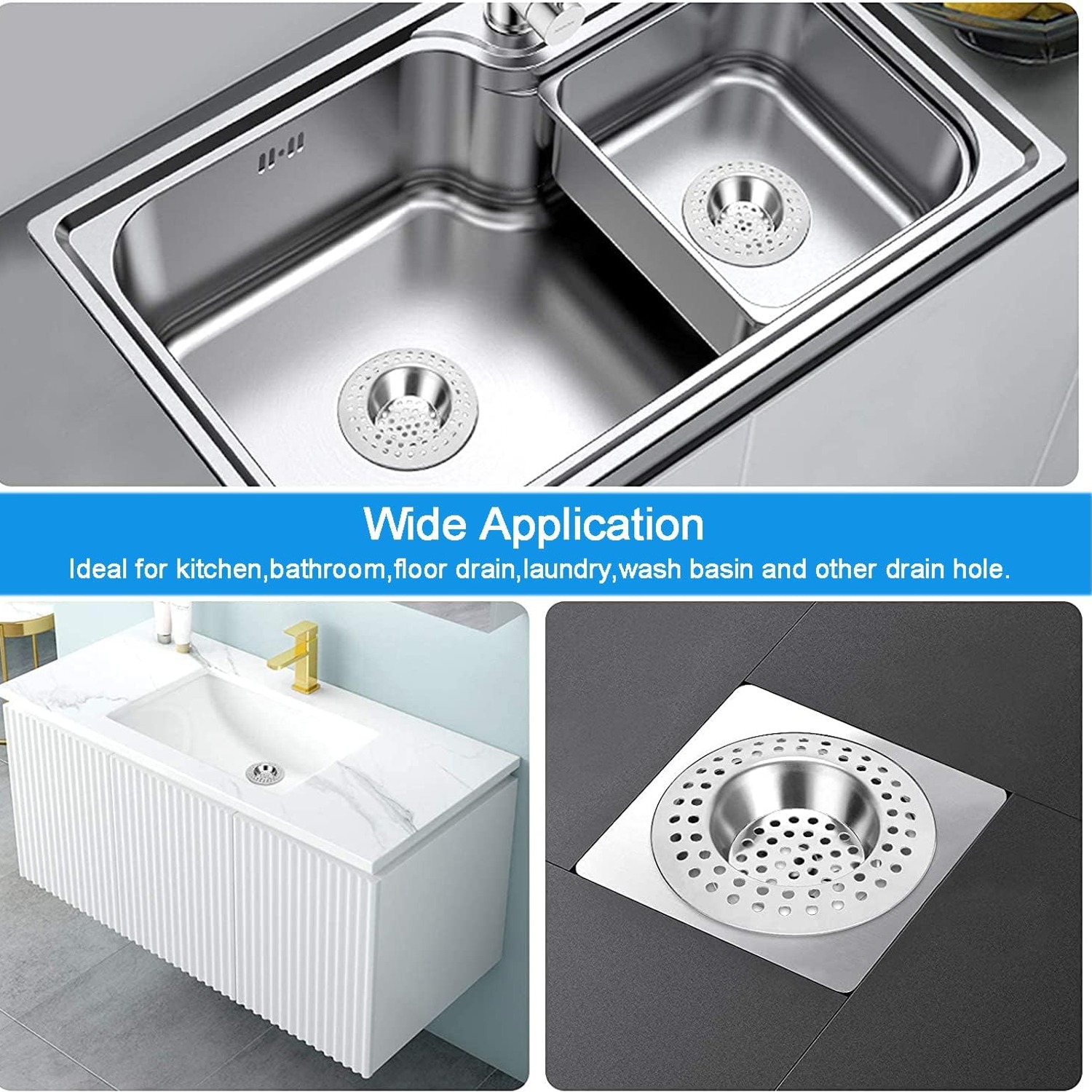
Families with long hair in the house tend to buy a sink hair and food catcher for the bathroom before they buy one for the kitchen. Hair is the single most common cause of slow bathroom drains, and it is far easier to lift off a disc than to fish out of a trap with a wire hook. A low flat strainer in the shower base works the same way.
Renters like them because there is nothing to install and nothing to undo when you move out. You drop it in, and when the lease ends you lift it out and take it with you.
People on septic systems or older plumbing care for a different reason. Every scrap that does not enter the pipe is one less thing to break down downstream. A strainer is the cheapest preventative maintenance in the house.
And then there are the practical cases. Shared houses where nobody wants to be the person with the plunger. Holiday rentals and caravans where a blockage is a genuine headache. Workshops and laundries where lint and grit are the enemy rather than food.
Getting the size right
This is where most strainer purchases go wrong, so it is worth being blunt. A flat strainer only works if it matches your drain opening. Too small, and it drops into the hole and sits uselessly below the surface. Too large, and it perches on the sink floor instead of seating in the recess.
Measuring takes thirty seconds. Lay a ruler or tape across the drain opening and read the distance from one inside edge to the other at the widest point. If your sink has a lip or recess where the old strainer rested, measure that recess, because that is the surface the disc will sit on. This strainer is made for a 75mm opening, so a measurement close to 7.5cm is what you want.
Two things to check beyond the number. First, whether your waste fitting is a fixed pop-up type, common in bathroom basins, since those have no flat seat for a disc. Second, whether there is a crossbar or grid moulded into the waste, which can hold the strainer slightly high. Neither is a dealbreaker in most cases, but it is better to know before the parcel arrives.
Living with it day to day
The habit is small. When you finish washing up, lift the disc, tip the scraps into the bin or compost, give it a quick rinse and put it back. That is it. Thirty seconds at the end of a wash-up, and your pipes stay clear.
Where people run into trouble is leaving it loaded overnight. Wet food sitting in a warm sink will start to smell by morning, and that smell gets blamed on the drain when the strainer is the real culprit. Empty it before you go to bed and the problem never appears.
Cleaning is just as basic. Warm water, a bit of dish soap and a soft brush will clear the holes if anything has lodged in them. An old toothbrush is perfect for the job. Dry it if you want the mirror finish to stay bright, though a few water marks do no harm. Skip steel wool and abrasive powders, which leave fine scratches that dull the surface and give grime somewhere to sit. If your water is hard and you start seeing white deposits, a soak in diluted white vinegar, followed by a rinse and a dry, brings it back.
The second disc in the pack earns its keep here. Keep one in service and one clean and dry on the sink edge, and you can swap instead of scrubbing when you are mid-cooking.
Where to put the second one
One goes in the kitchen. Then have a think about the other. The usual answers are a bathroom basin, a shower base, a laundry tub, or an outdoor sink. Each of those has its own kind of debris, and the strainer does not much care whether it is holding back parsley stems or hair.
If your second drain is a different size, do not force it. A strainer that does not seat will slide around and let things past the edges, which is worse than no strainer at all because you stop paying attention.
The short version
A flat sink strainer is one of those items that costs very little and quietly prevents a problem that costs a lot. This one is stainless steel so it will not rust, 7.5cm across to suit a standard 75mm drain, 0.8cm tall so it sits out of the way, and perforated with 90 holes so water drains fast while scraps stay on top. You get two, which covers a kitchen plus one more drain.
Measure your opening before you order. Empty the disc at the end of each wash-up. Give it a wash and a dry when you remember. Do those three things and you will probably forget your drain exists, which is exactly the point.