
The complete guide
How to Choose a Shower Drain Hair Catcher That Actually Works
The problem nobody notices until it is too late
A blocked shower drain never arrives all at once. It creeps up. One week the water takes a second longer to clear, the next week there is a small puddle around your feet by the time you turn the tap off, and a month after that you are standing in ankle-deep grey water with a bottle of drain cleaner in your hand, wondering how it got this bad.
The cause is almost always the same. Hair. It does not dissolve, it does not break down, and it does not politely wash away. A few strands catch on a rough seam inside the waste pipe, and from there it is a snowball. Shampoo, conditioner, soap and the natural oils off your skin all cling to that first tangle. Over a few months it hardens into a dense grey plug that water simply cannot get past.
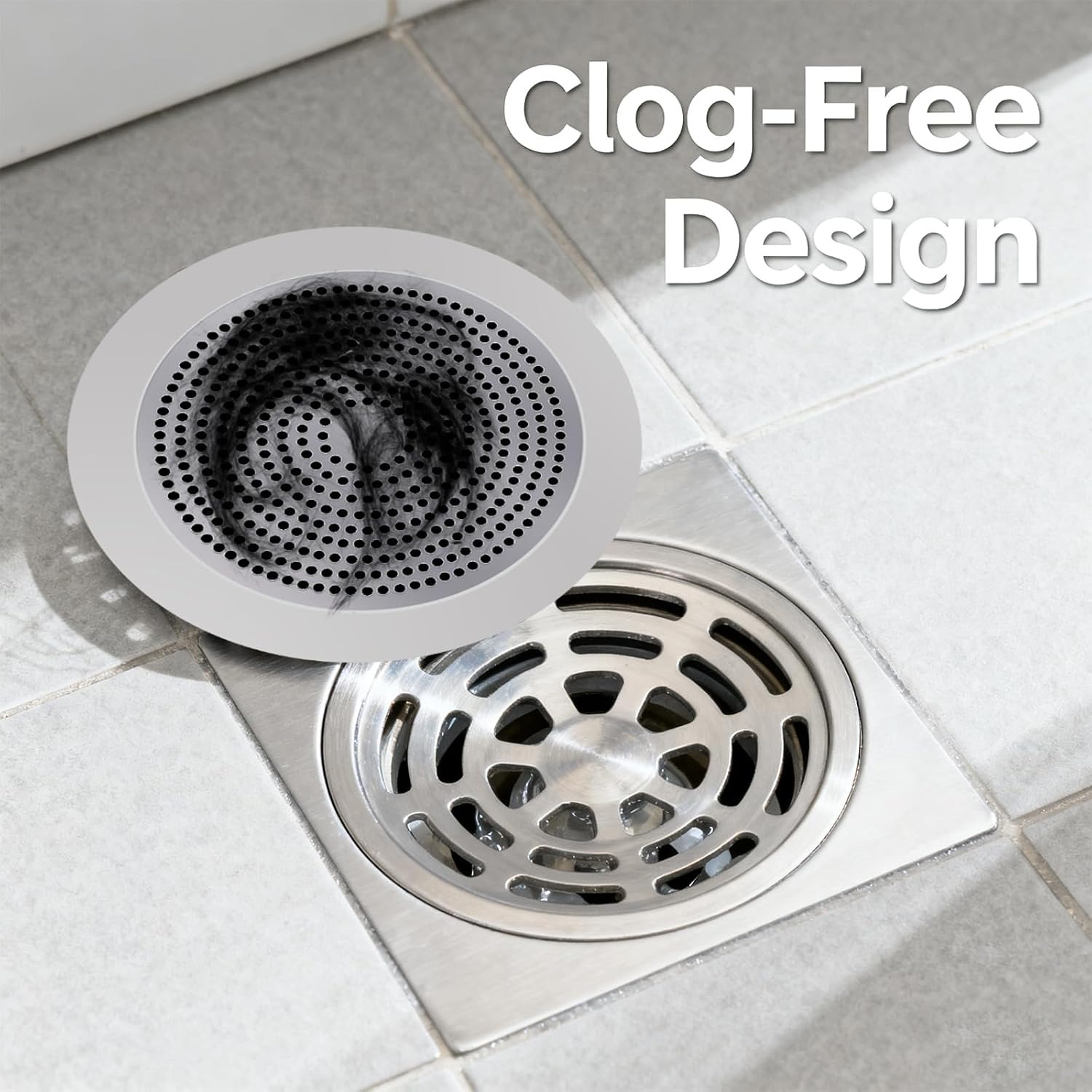
The useful thing to understand is that this whole process starts at one specific point, the drain opening. Stop the hair there and the chain never begins. That is the entire job of a shower drain hair catcher, and it is why such a simple bit of metal can save you a plumber's call-out fee.
How a flat drain catcher works
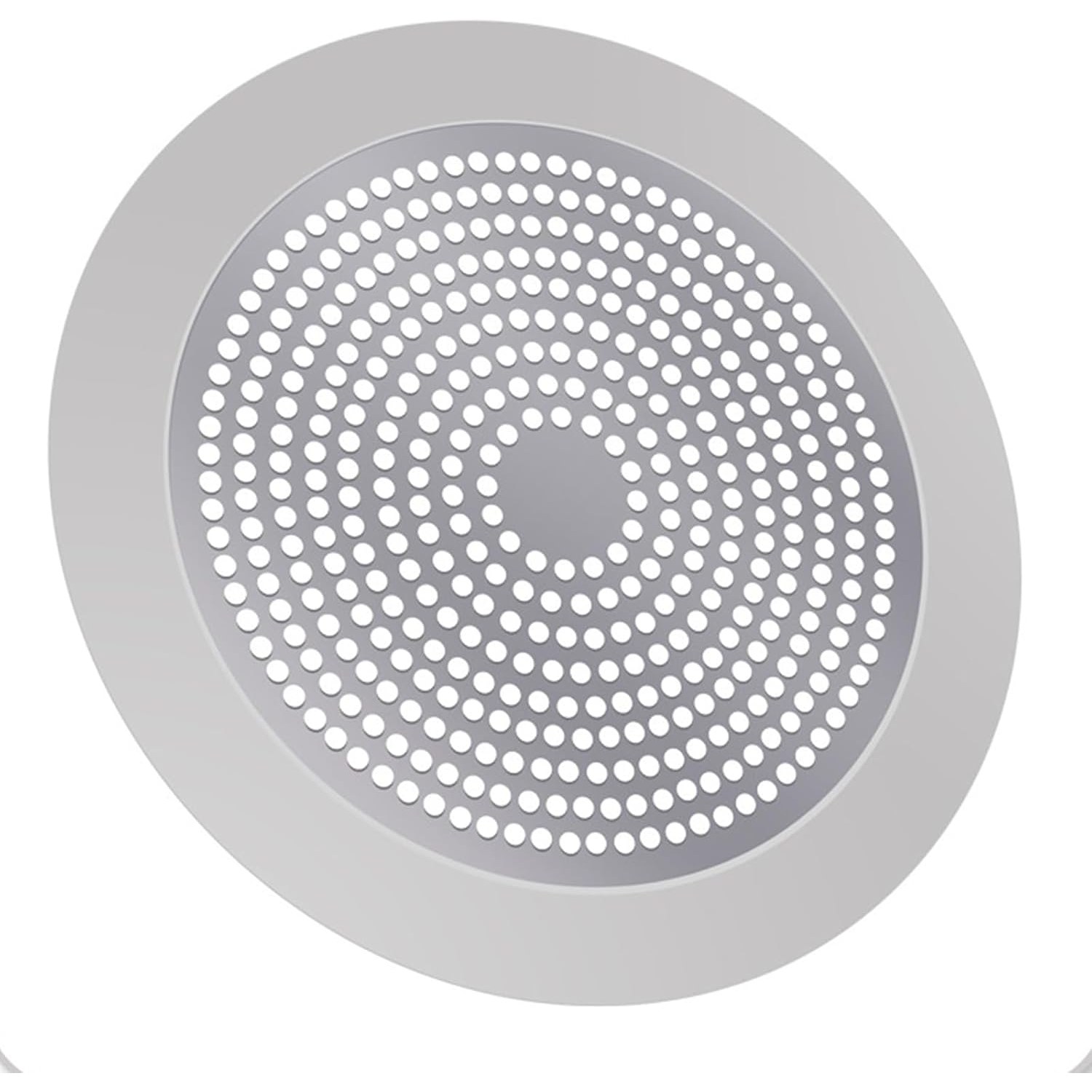
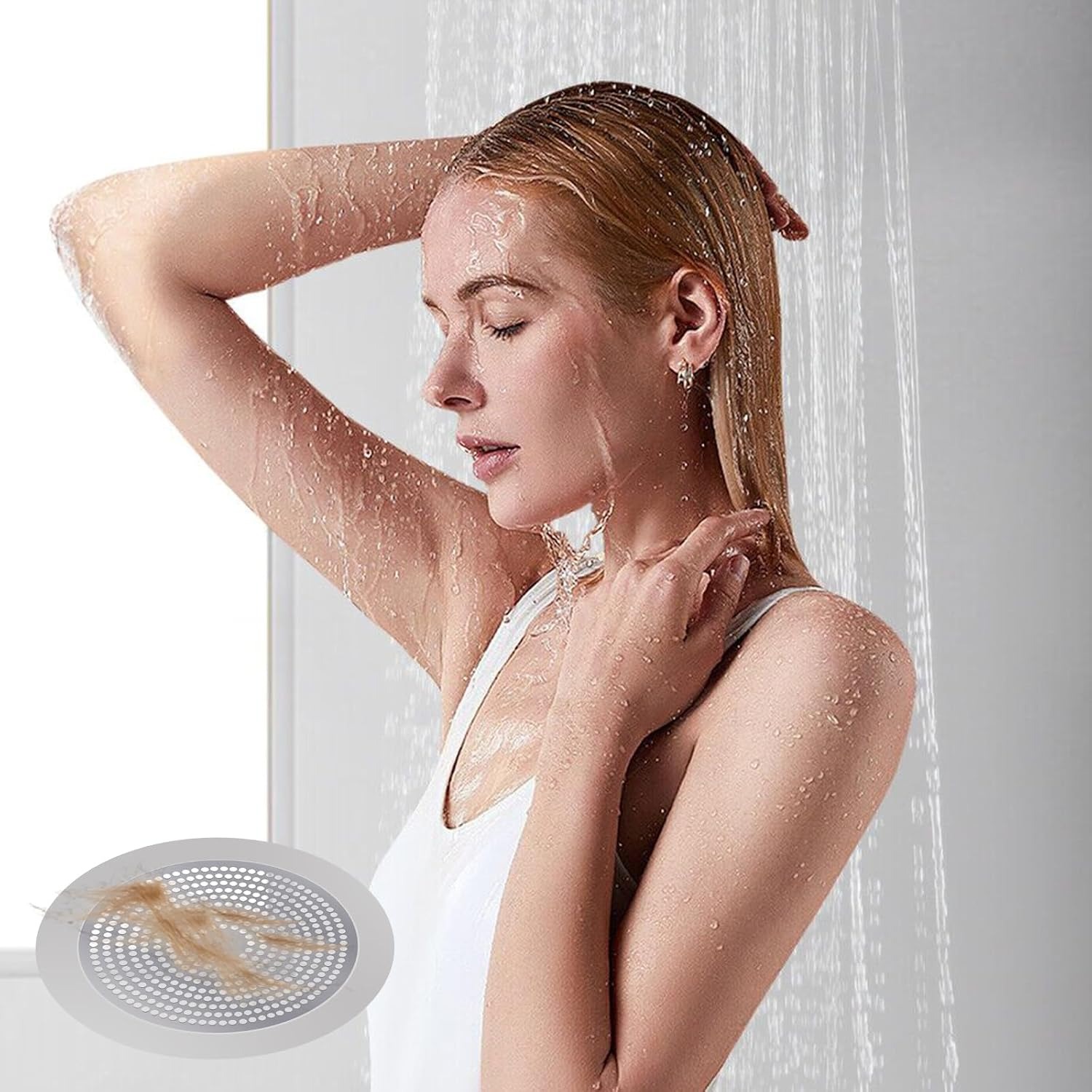
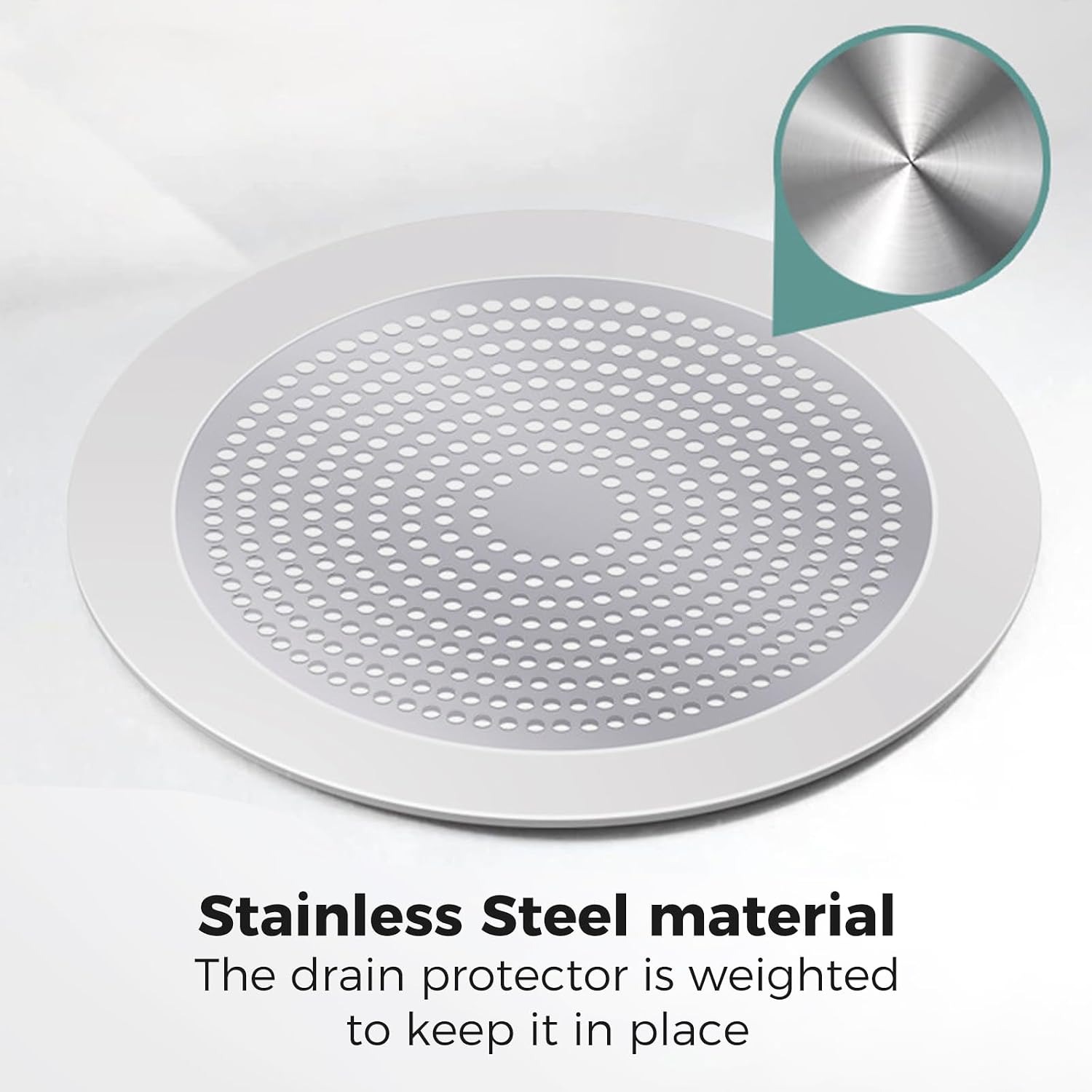
There is nothing clever going on inside. The catcher is a disc of brushed stainless steel, 14.5 cm across and 0.2 cm tall, that sits over the drain area. Water passes through and around it. Hair, being longer and stringier than water, does not. It lies on the top surface where you can see it and remove it.
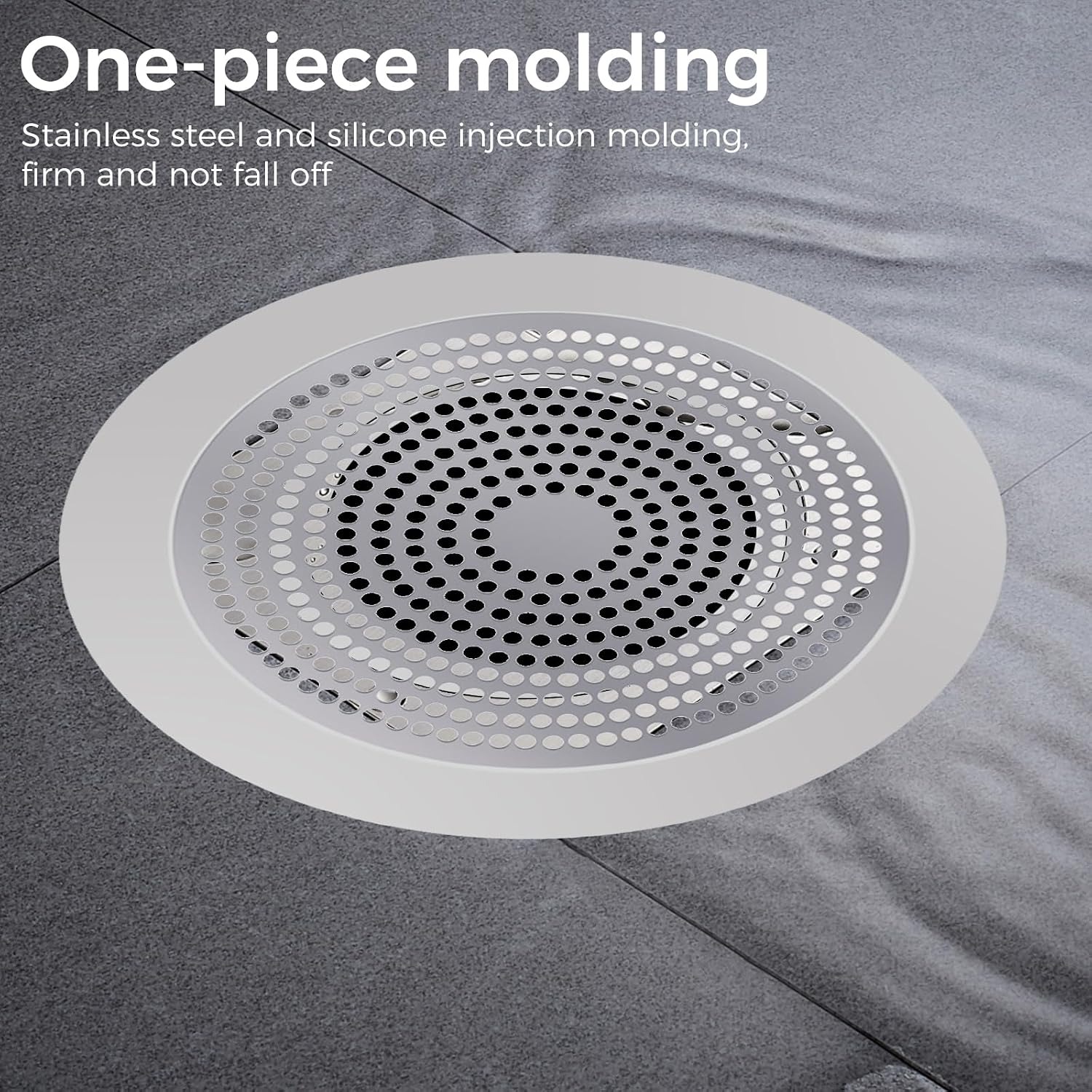
The silicone rim around the outside edge is the part that makes the difference between a cover that works and one that slides into a corner every time you shower. Soft silicone presses against the tub or shower floor and gives the disc something to grip. Combined with the weight of the steel, that keeps it reasonably steady under running water.
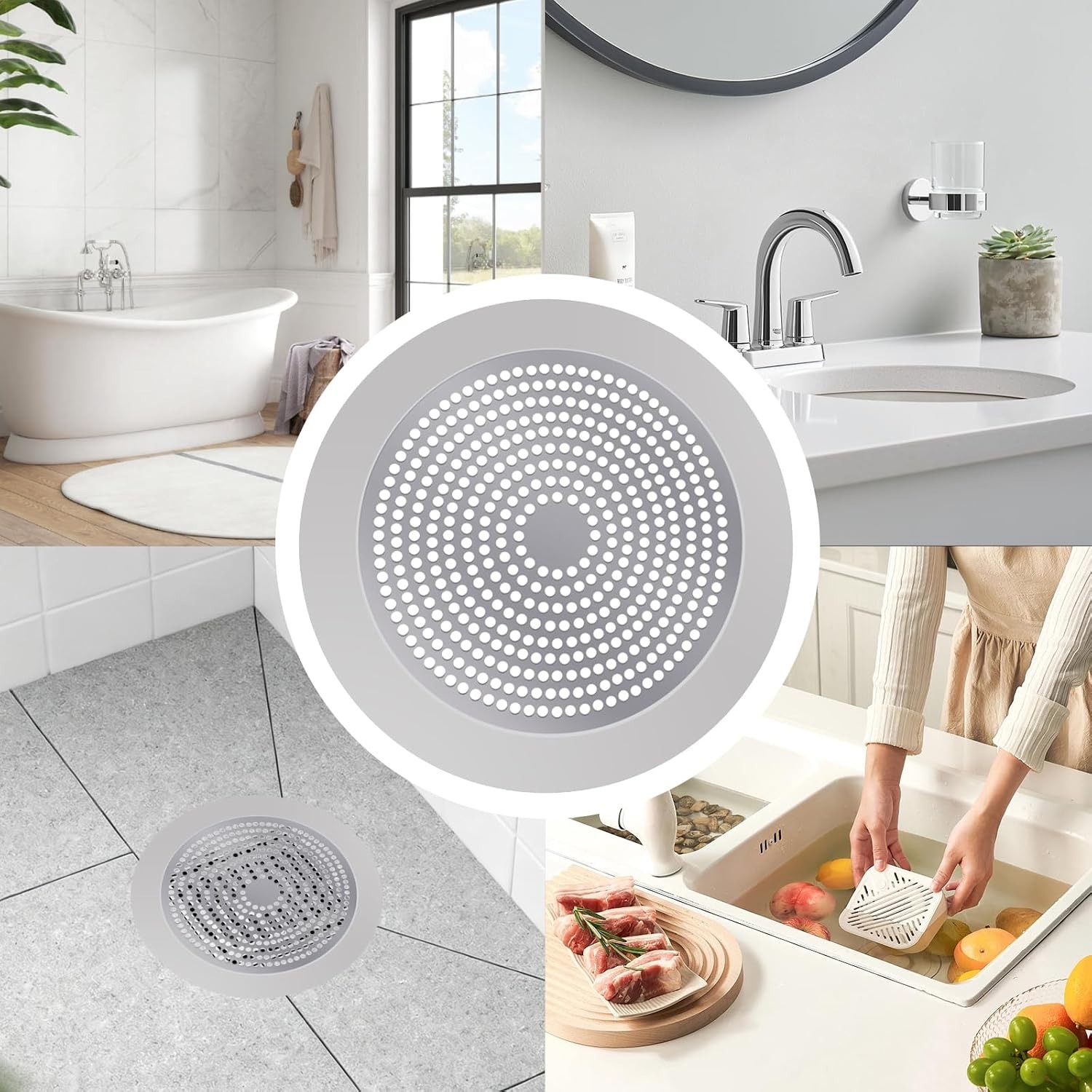
Compare that to the tall tube-style strainers that sit down inside the drain. Those work well too, but they stand proud of the floor, which can be a nuisance if you use a bath mat, a shower chair, or a squeegee. The flat design trades a little capacity for a profile you barely notice. Most households find that an easy trade.
Who this suits
Long hair is the obvious case. If anyone in the house has shoulder-length hair or longer, you are shedding something like fifty to a hundred strands a day, and a decent share of that ends up in the shower. Catching it at the surface turns a plumbing problem into a ten-second habit.
Pet owners are the second big group. Washing a dog in the bathtub puts more hair down the drain in one session than a person manages in a month. A surface catcher means you can scoop the lot out at the end rather than discovering the problem weeks later. Anyone shopping for the best bathtub drain hair catcher after a dog bath has had the same realisation.
Renters are worth a mention too. You cannot install anything permanent, and you certainly do not want to be arguing with a landlord about a blocked waste pipe when you move out. A removable cover that needs no tools and leaves no marks is about as low-risk as bathroom upgrades get.
Then there is the accessibility angle. If you have small children, an older family member, or anyone using a walking aid in the bathroom, a 0.2 cm profile is genuinely safer than a raised dome. Nothing to catch a toe on, nothing to tip a shower chair.
Getting the size right
This is where most drain cover purchases go wrong, so it is worth slowing down. This catcher is listed as suiting a 5.7 inch groove diameter, with an overall disc width of 14.5 cm.
Grab a tape measure and check two things. First, the width of the flat area around your drain. The cover needs enough smooth surface to rest its silicone rim on, so measure across the recess rather than just the hole. Second, look at how flat that area actually is. Shower bases are usually sloped toward the drain, which is fine for a flat disc, but a sharply funnelled or heavily ridged base is a different matter.
If your drain sits in a square recess rather than a round one, a round cover can still work, provided the disc is wide enough to span the opening with some overlap. If it is close, it is better to find out before the parcel arrives than after.
Steel versus plastic
Plastic strainers are everywhere because they are cheap. They also tend to disappoint. Hot water and shampoo residue leave plastic brittle and discoloured, usually within a year or two, and once a plastic strainer cracks it stops doing its job entirely. The discolouration is the bigger annoyance for most people, because a yellowed drain cover makes an otherwise clean bathroom look neglected.
Stainless steel does not have those problems. It holds its shape under hot water, it does not go brittle, and a brushed finish hides water spots far better than polished chrome. You are paying more upfront for something that should still look respectable several years in. That is the main reason shoppers chasing the best stainless steel drain cover tend not to go back to plastic afterwards.
The silicone rim is the one component to keep an eye on. Silicone lasts well, but it does not love bleach or strong solvents. Keep harsh chemicals away from it and it will stay soft and grippy.
Cleaning and upkeep
Honest answer, this takes about ten seconds. After a shower, lift the disc, tip the hair into the bin, and put it back. If you do that every time, nothing ever builds up and the drain stays clear indefinitely.
Once a week, give it a proper wash. Warm water, a little dish soap, a soft brush over both faces and around the silicone rim. Soap scum forms on everything in a bathroom, and the rim grips better when it is clean. Dry it off before you set it back down.
What to avoid is simple. No steel wool, no scouring powder, no bleach soaks. Abrasives will dull the brushed finish and leave scratch marks that collect grime, which defeats the purpose. Mild detergent handles everything that actually builds up on a drain cover.
One extra tip. Every couple of months, pour a kettle of hot (not boiling) water down the drain to shift any soap film that made it past the catcher. It costs nothing and keeps the pipe running freely.
Small habits beat big fixes
Chemical drain cleaners are a last resort, not a maintenance plan. They are harsh on older pipework, unpleasant to handle, and they only deal with the blockage you already have. A surface catcher deals with the blockage you have not got yet, which is a much better deal.
The households that never have drain trouble are rarely the ones with the most expensive plumbing. They are the ones who clear the hair out as they go. A good catcher makes that habit easy enough that you actually keep doing it.
The short version
If your shower is draining slowly and someone in the house has long hair or a dog that needs washing, a flat stainless steel catcher is about the cheapest fix available. This one is 14.5 cm wide and sits 0.2 cm off the floor, with a brushed steel face and a silicone rim that helps it stay put. It suits a 5.7 inch groove diameter, so measure your drain first.
Clean it regularly, keep abrasives away from it, and it should keep your pipes clear for years. That is the whole story.