
The complete guide
How to Choose and Use a Flexible Pipe Cleaning Brush
The problem nobody sees until the water stops going down
A slow drain is almost never sudden. It builds quietly over months. Warm fat from a frying pan cools as it hits the pipe and sticks. Soap scum settles on top of it. Coffee grounds, toothpaste, hair and food particles catch in that layer, and each one gives the next bit something to hold onto. By the time the sink starts holding water for a few seconds after you finish washing up, the inside of that pipe already has a thick, soft coating all the way round.
The usual response is to pour something down the hole. That helps a little. Liquid runs straight down the middle of the pipe, touches the surface of the sludge and moves on. It does not scrub. Anyone who has taken apart a trap and seen the black ring inside knows how little a pour-in product actually removes.
Mechanical cleaning is different. A brush pushed through the pipe makes direct contact with the wall. It peels the film off rather than softening it. That is the whole idea behind a flexible pipe cleaning brush, and it is why a simple length of bristled wire often outperforms a bottle of chemicals.
How a flexible pipe brush actually works
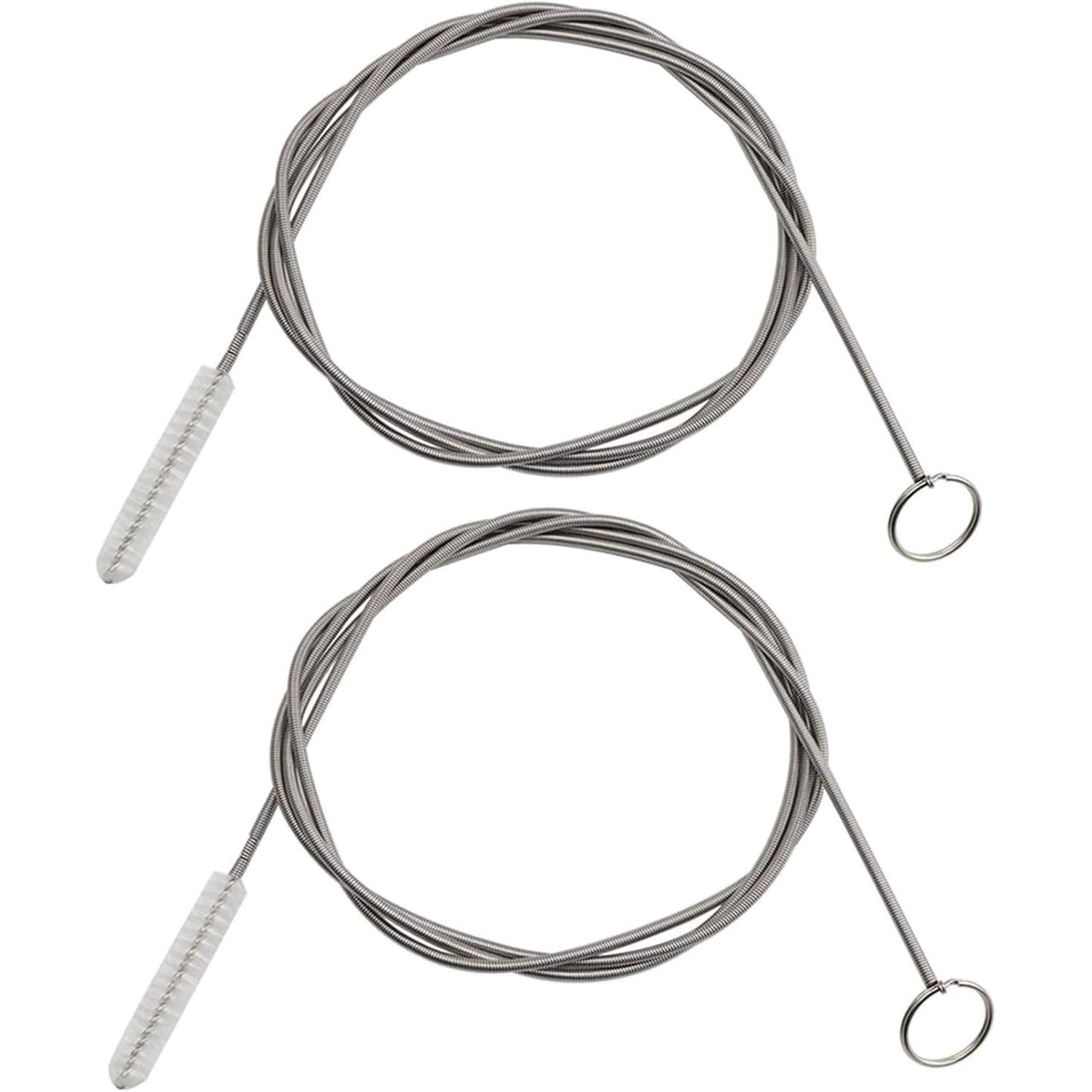
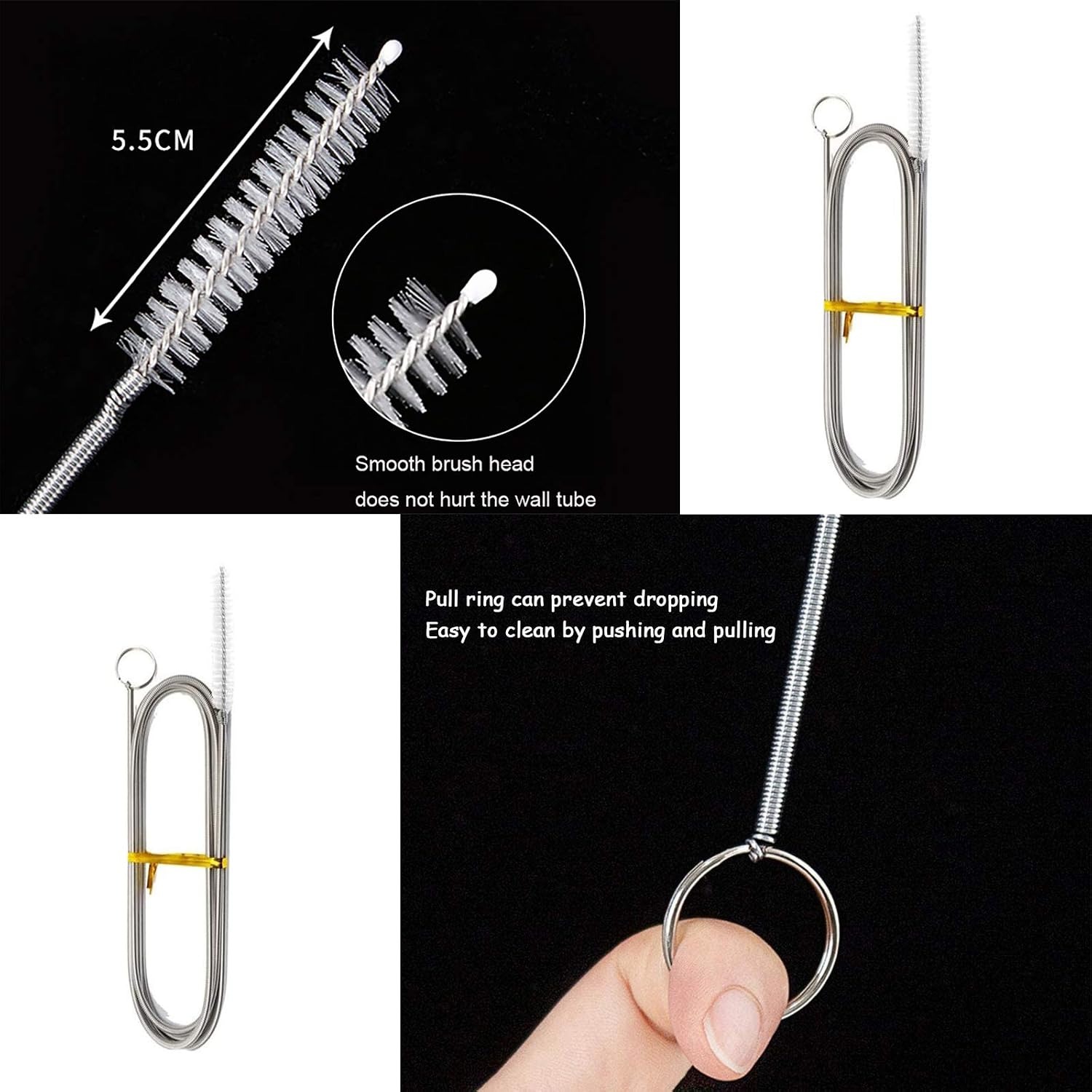
Picture a very long pipe cleaner, the kind children use for craft, but built properly. A stainless steel wire core runs the full length. Nylon bristles are twisted into that core at one end to form the brush head. The other end is bent into a closed loop.
You feed the brush head into the pipe opening and push. The wire has enough stiffness to travel forward and enough give to follow a curve. When the pipe turns, the brush turns. It can handle bends tighter than ninety degrees, which covers the U bend under most sinks and the looping condensate line behind a fridge.
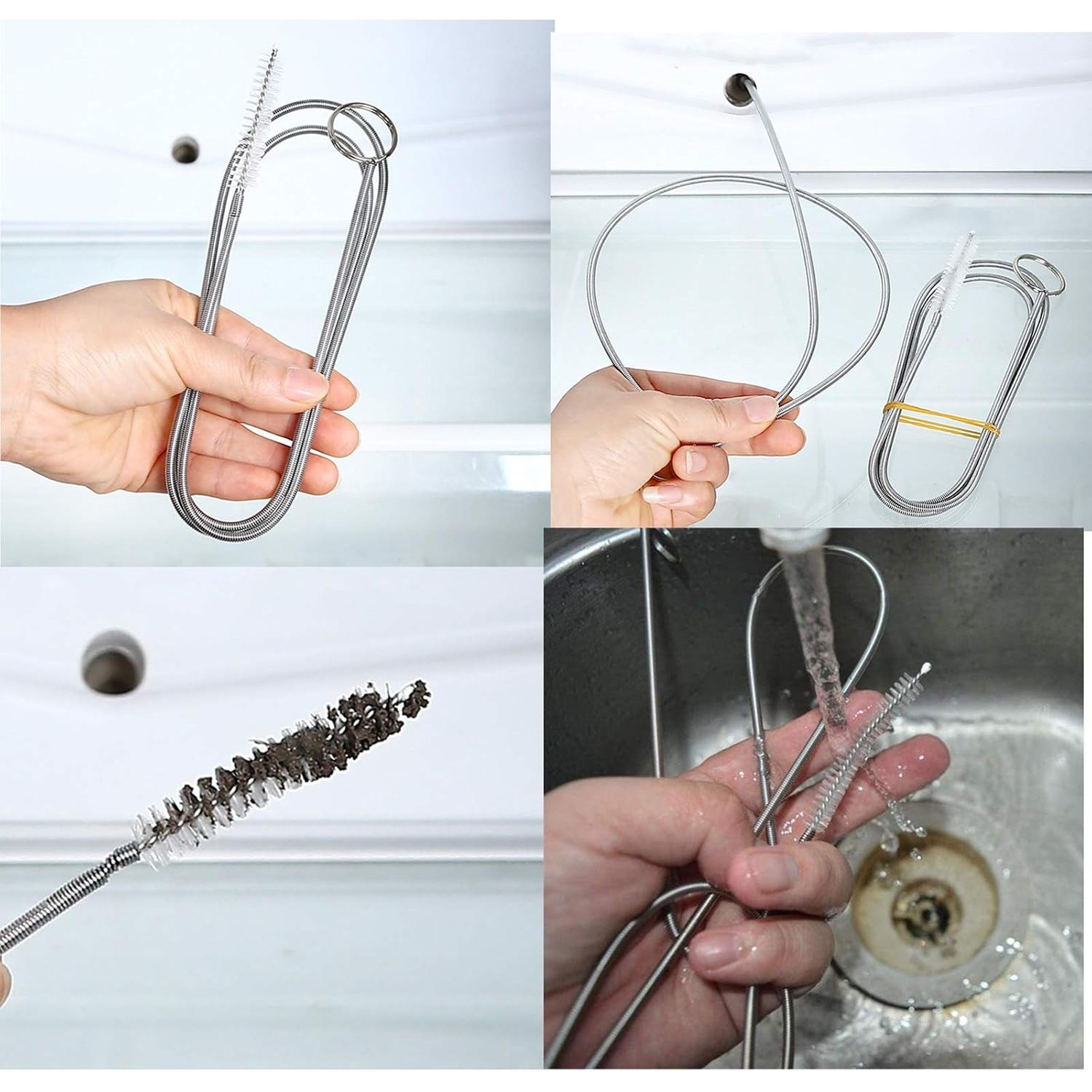
Once the brush is in as far as it will comfortably go, you pull it back slowly. This is the part that does the work. The bristles drag the loosened material out with them rather than pushing it further down the line. Two or three passes usually clears a surprising amount. Do it over a bucket or an old towel, because what comes out is rarely pretty.
The loop end is not decoration. Without it, there is a real chance of losing the brush inside a long hose with nothing left to pull on. With it, you always have a grip and a safe way back.
Who this suits
Anyone with a kitchen sink, honestly. But a few groups get more out of it than most.
People with fridges that have an internal water dispenser or an automatic defrost drain. Those drain lines are slim, dark and damp, which is ideal for algae. A slim brush is often the only sensible way in.
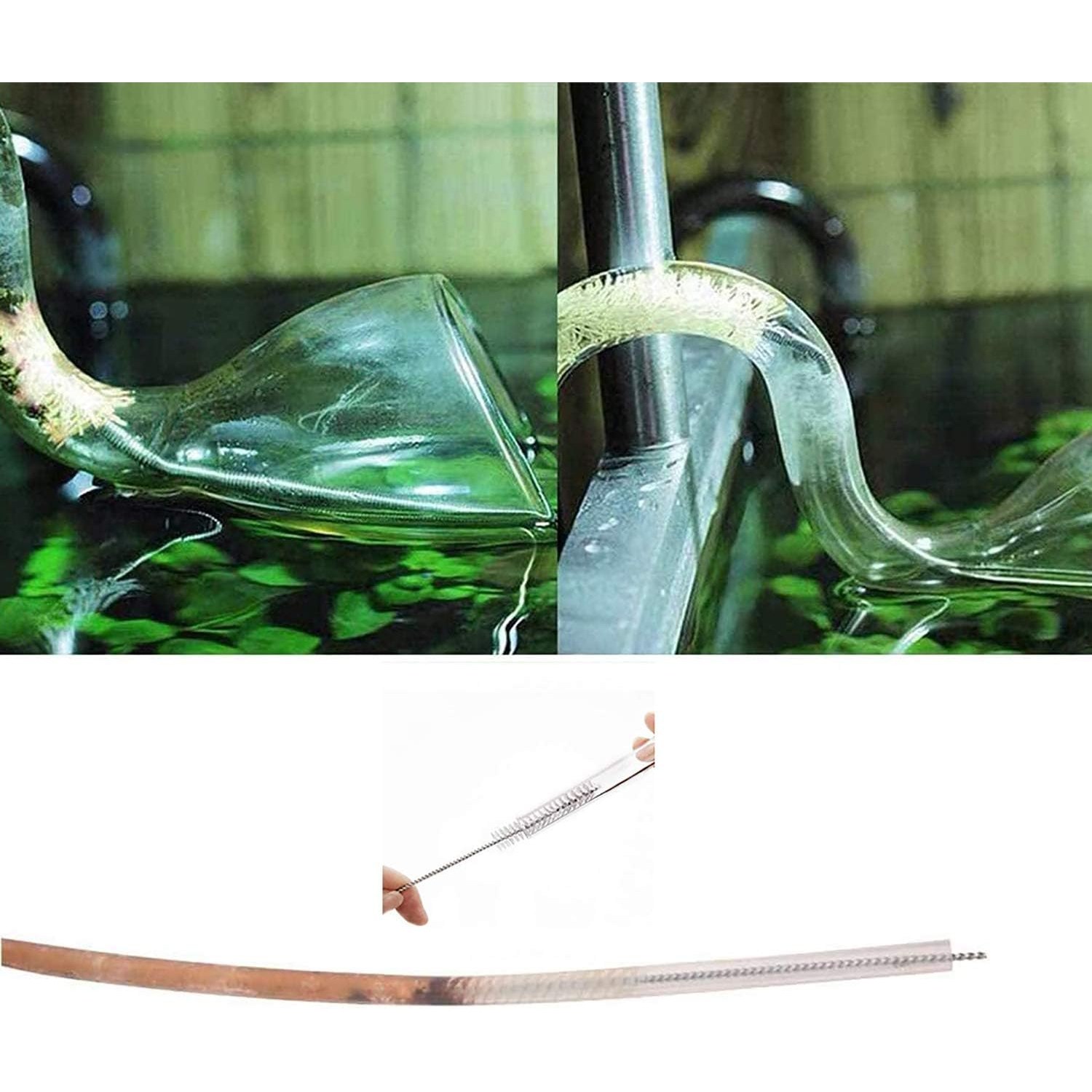
Fish keepers. Filter hoses and air lines build a biofilm that strangles flow and nobody wants to replace hose every few months. A soft nylon brush lifts it without scratching the inside, which matters because a scratched hose fouls faster next time.
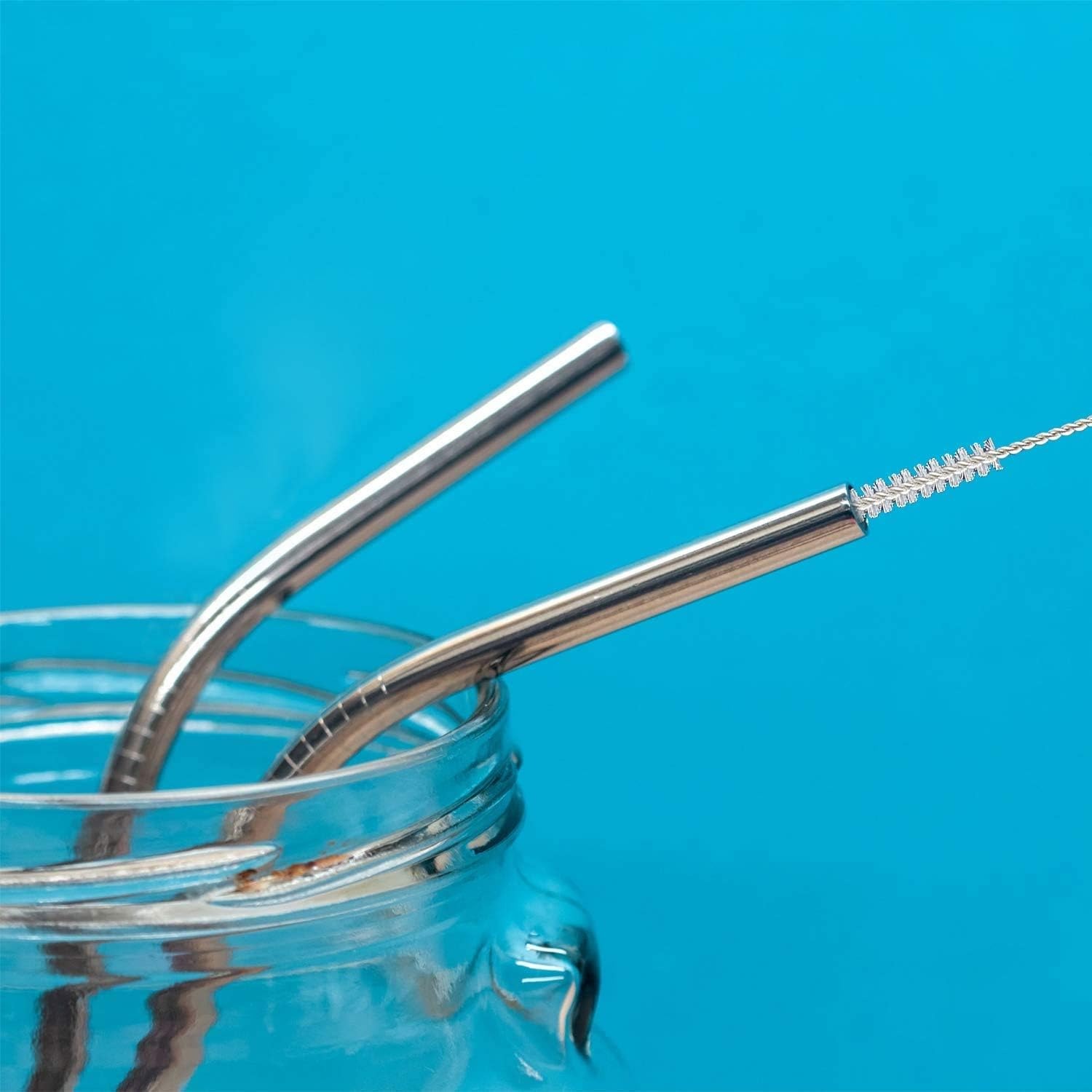
Anyone who uses reusable bottles and metal straws. A quick rinse does not clean the inside of a straw, and the slim profile of this brush does.
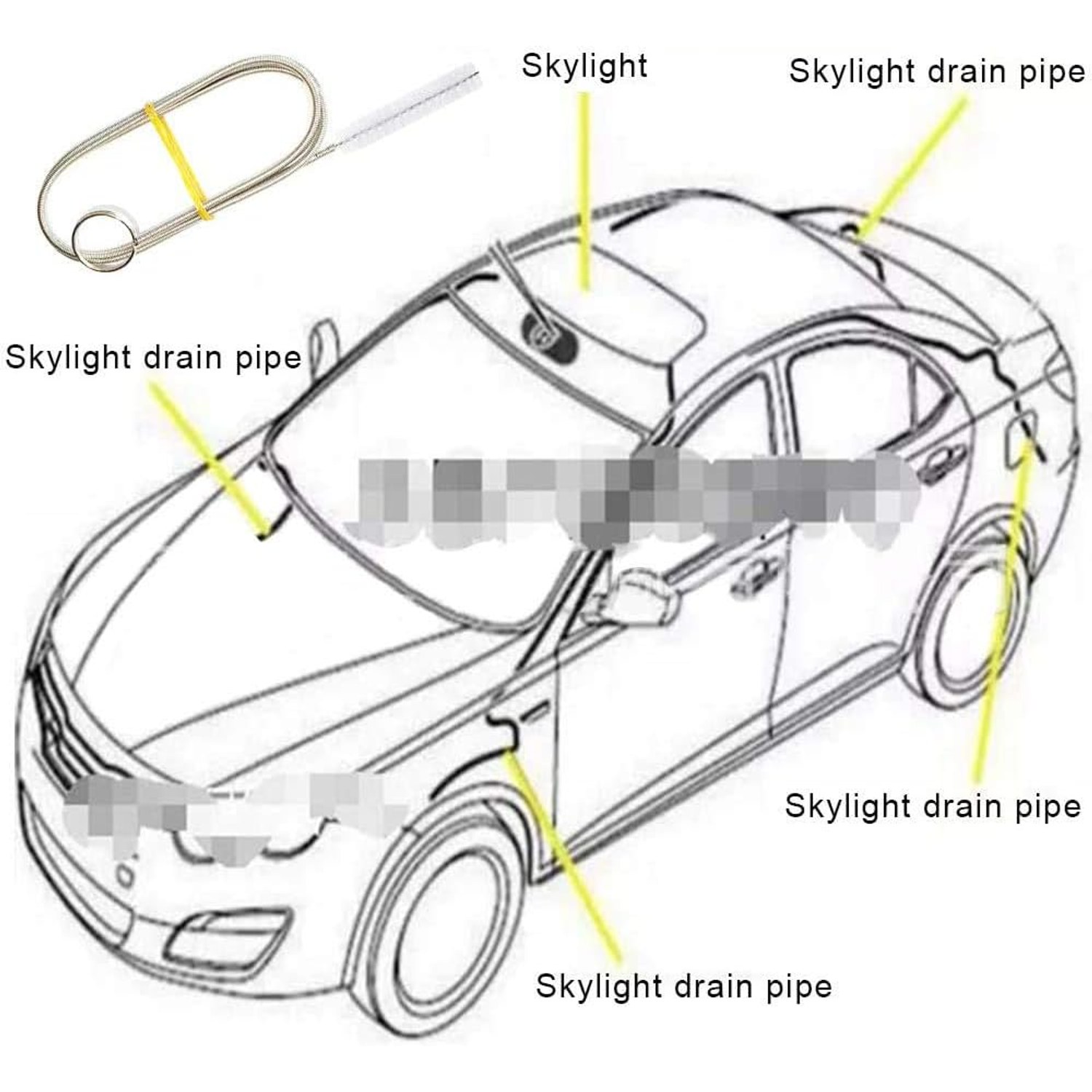
People maintaining a caravan, boat or car. Sunroof drain tubes, sink outlets and small water lines in those vehicles are narrow, curved and awkward. A bendable brush gets where a rigid tool simply cannot.
Choosing the right drain brush
The three things that actually matter are diameter, length and bristle hardness.
Diameter comes first. A brush head wider than the pipe will not go in, and one far narrower will spin uselessly in the middle without touching the wall. This brush is built for slender tubing: drain lines, hoses, straws, bottle necks. It is not the tool for a wide waste pipe where you would want a drain snake instead.
Length determines how far past the plughole you can reach. More length is generally better, since you can always leave some outside. Short brushes only ever clean the first few centimetres, which is rarely where the worst of it sits.
Bristle hardness is the one people get wrong. Harder is not better. A stiff metal brush can score plastic and acrylic, and every scratch becomes a new place for grime to anchor. Soft nylon lifts buildup while leaving the surface smooth. For almost all household tubing, soft nylon is the correct choice.
One more consideration is whether you get one brush or two. Two is genuinely more useful. A brush that has been through a kitchen trap should not then go into an aquarium line or a drinking bottle. Having a dirty brush and a clean brush solves that without any thought.
Using it well
Start with hot water. Run the tap for thirty seconds before you begin so the grease in the pipe is soft rather than set. This single step makes the brushing far more effective.
Feed the brush in bristles first, in a steady push rather than a shove. If it stops, do not force it. Back off a centimetre, twist slightly and try again. Forcing a wire against a hard obstruction can kink it, and a kinked wire never travels as smoothly afterwards.
When you reach the limit of comfortable travel, rotate the brush a few turns, then withdraw it slowly. Wipe the bristles, rinse, and repeat. Three passes is usually plenty for routine maintenance.
Finish by running hot water with a squirt of dish soap for a minute. That flushes out whatever the brush loosened but did not carry.
For refrigerator drain lines, work gently and in short sections. For aquarium tubing, use plain water only and never a brush that has touched detergent.
Looking after the brushes
Rinse under hot running water straight after use. Work a small amount of dish soap into the bristles with your fingers, then rinse again until the water runs clear. Grease left in the bristles will stiffen them and smell.
Shake the water out and hang the brush by its loop. This is the step people skip and then wonder why the bristles start to smell after a few months. Air drying matters.
Keep the wire reasonably straight when storing. Hanging does this naturally. Coiling it tightly into a drawer puts bends in the same spots over and over, and that is how a flexible wire eventually stops being flexible.
Avoid strong solvents. Nylon tolerates ordinary washing up liquid well and does not love caustic drain products. If the brush contacts something harsh, rinse it immediately and thoroughly.
With basic care, a set like this lasts for years rather than months, which is the real argument for a reusable brush over a shelf of bottles.
When a brush is not the answer
Be honest about what you are dealing with. If water sits in the sink and will not move at all, if multiple fixtures back up at once, or if there is a smell of sewage, the problem is further down the system than any hand brush can reach. That is plumber territory.
A brush like this is for prevention and for the early stage. Use it monthly and you are very unlikely to meet the serious version of the problem.
The short version
Pour-in products soften surface grime. A brush removes it. This two pack gives you a long, bendable stainless steel brush with soft nylon bristles and a looped pull ring, sized for narrow tubing like sink drains, fridge drain lines, aquarium hoses, bottles and straws. It bends around corners tighter than ninety degrees, it does not scratch plastic or glass, and the loop end means it never disappears into a hose.
Two brushes means one for dirty jobs and one for clean ones. Rinse it, hang it to dry, and use it before the drain slows rather than after. That is most of what there is to know.