
The complete guide
How to Choose and Use a Mini Sink Plunger
The problem with a slow sink
A slow sink is one of those household annoyances that never quite reaches emergency status. Water drains, just not properly. You brush your teeth and the basin holds a grey pool for a minute afterwards. You wash up and the kitchen sink empties at half speed. Nobody calls a plumber for that, so it sits there getting worse until one day the water does not go down at all.
The frustrating part is that most of these blockages are shallow. Hair, soap residue, a film of cooking fat, maybe a bit of food that slipped past the strainer. All of it collects within the first stretch of pipe below the drain, usually in the U-bend. That material is soft and loosely packed. It does not need chemicals or a plumber's van. It needs water pushed back and forth hard enough to break it apart.
That is what a plunger does. The trouble is that the plunger most households own is a big black toilet plunger, and it is the wrong tool entirely for a basin. The cup is too wide to sit flat on the sink, the flange gets in the way, and the handle is too long to swing under a vanity. So people reach for the wrong tool, fail, and assume plunging does not work.
What makes a small drain plunger different
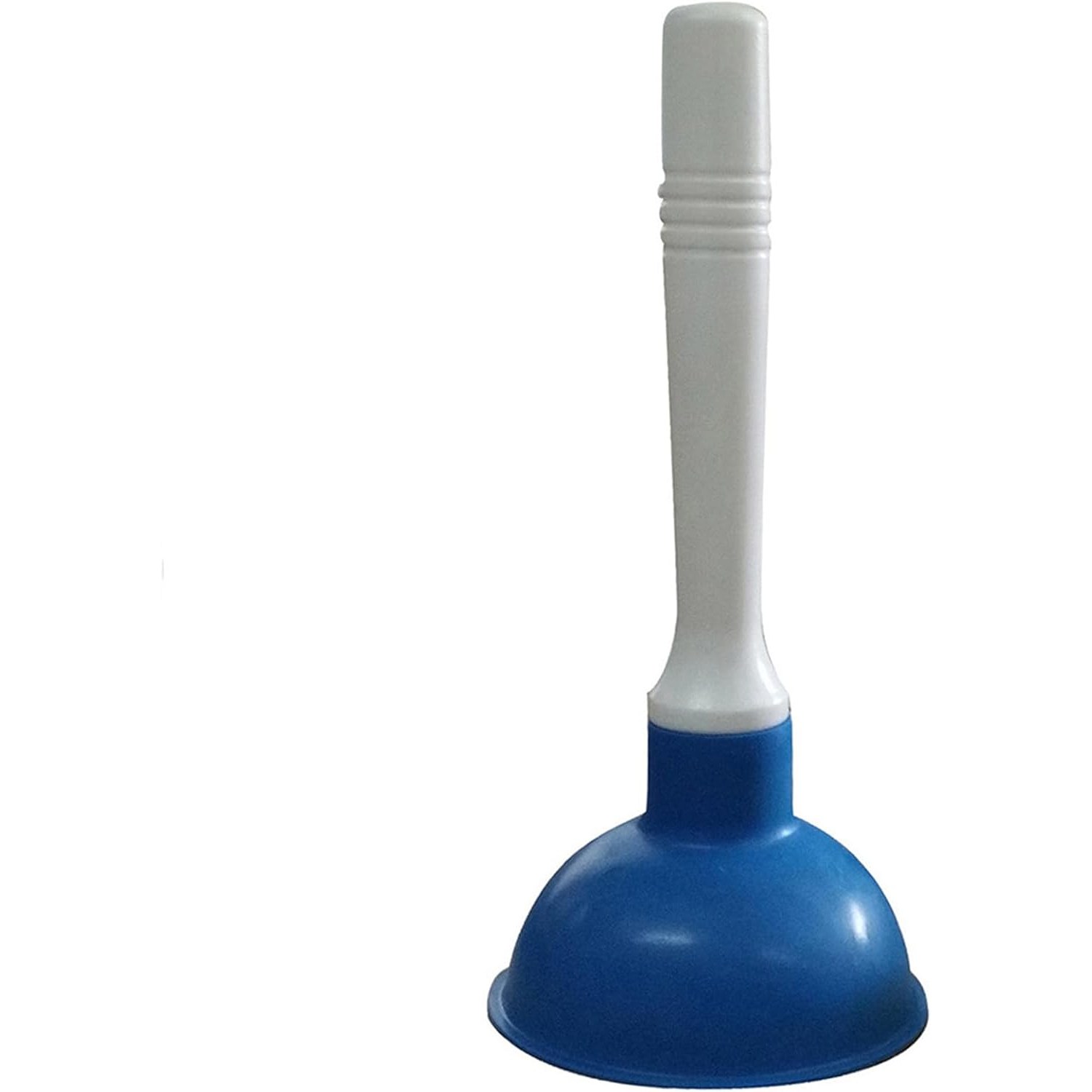
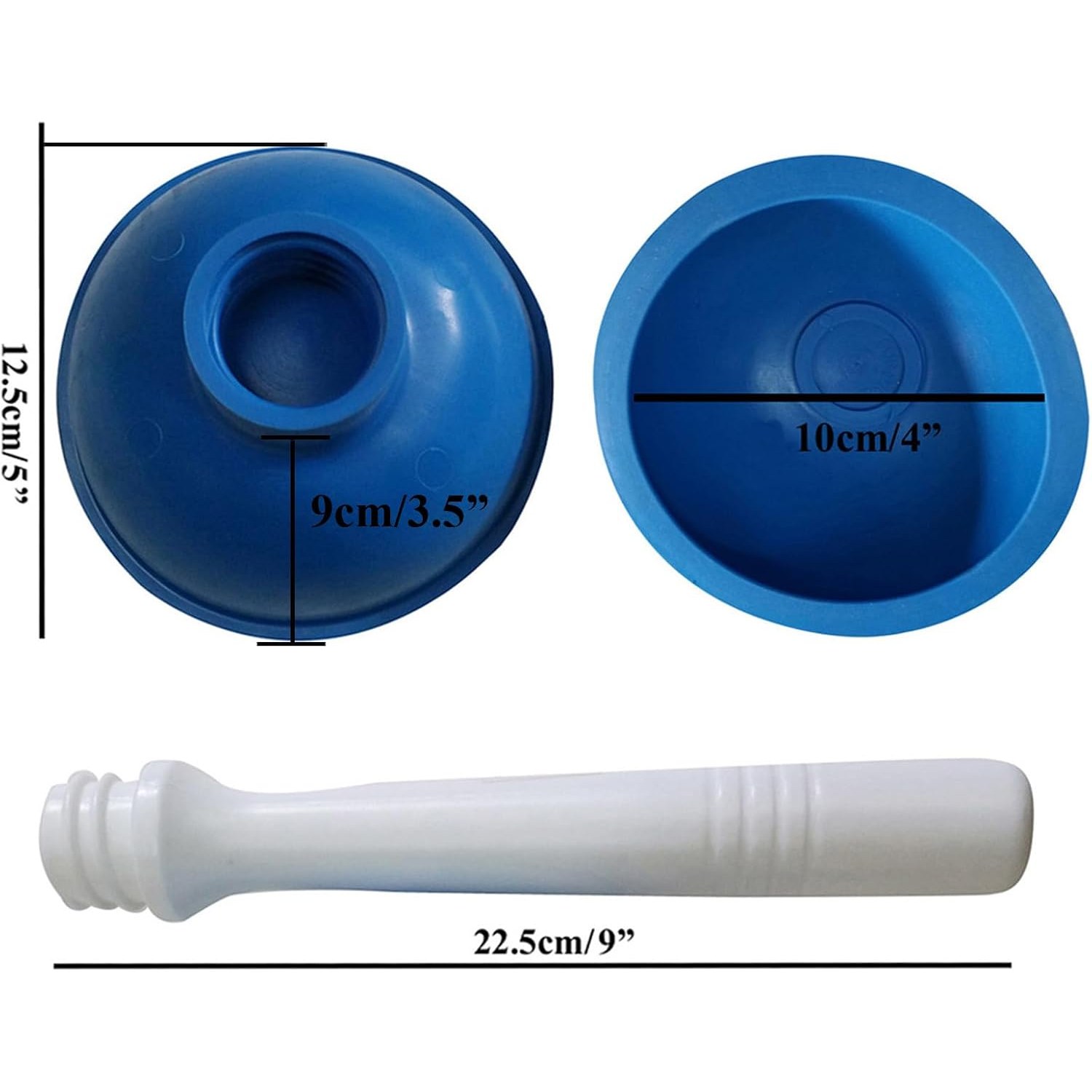
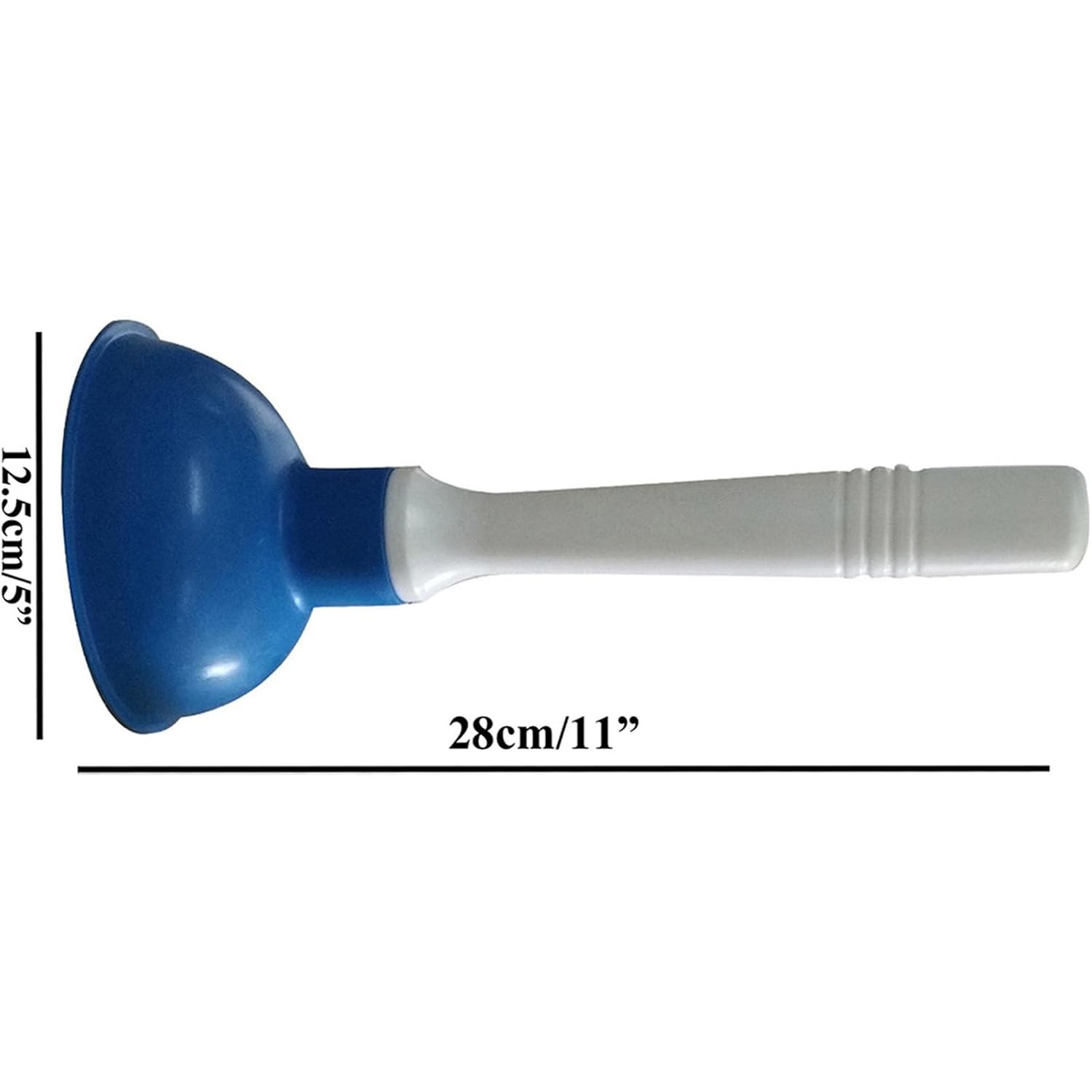
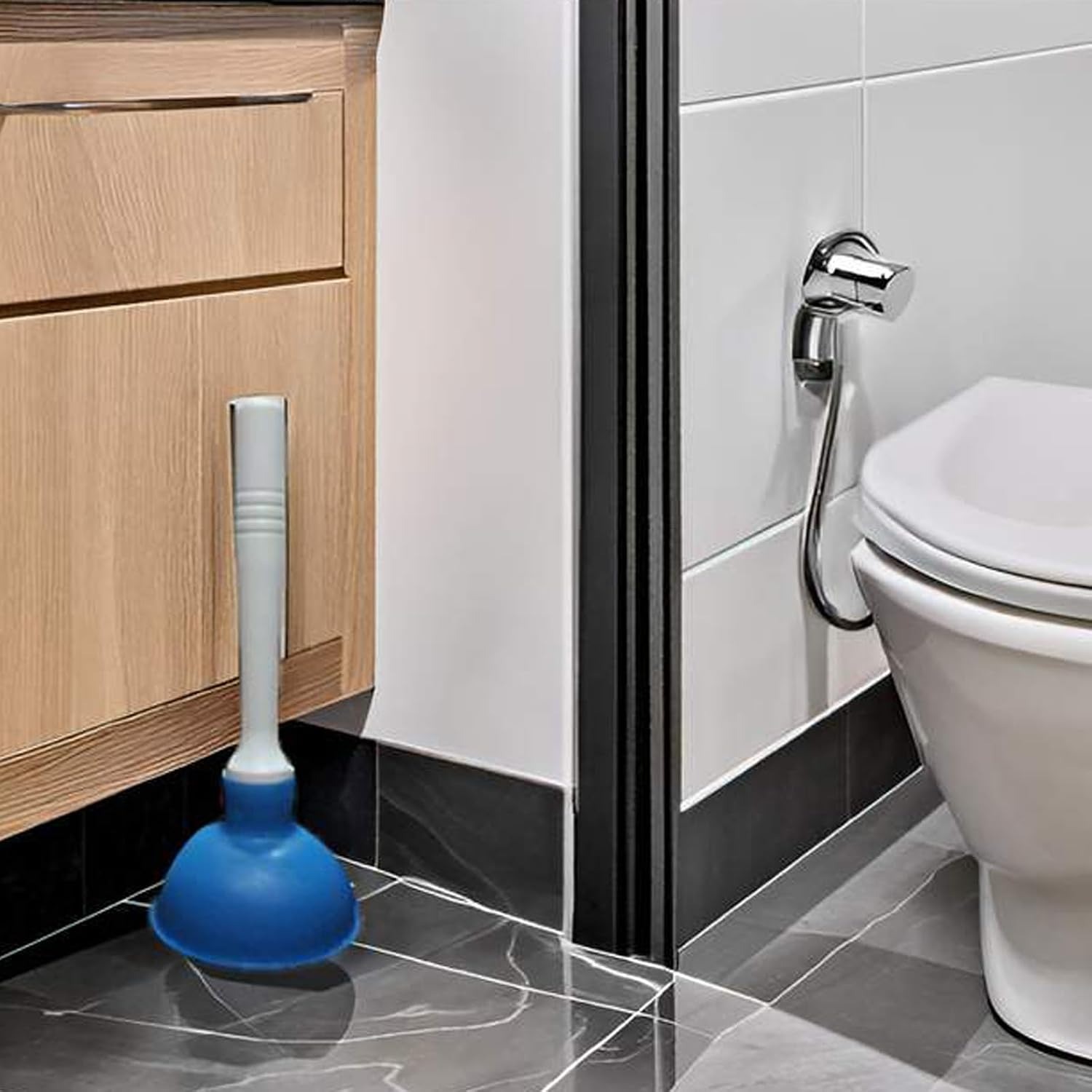
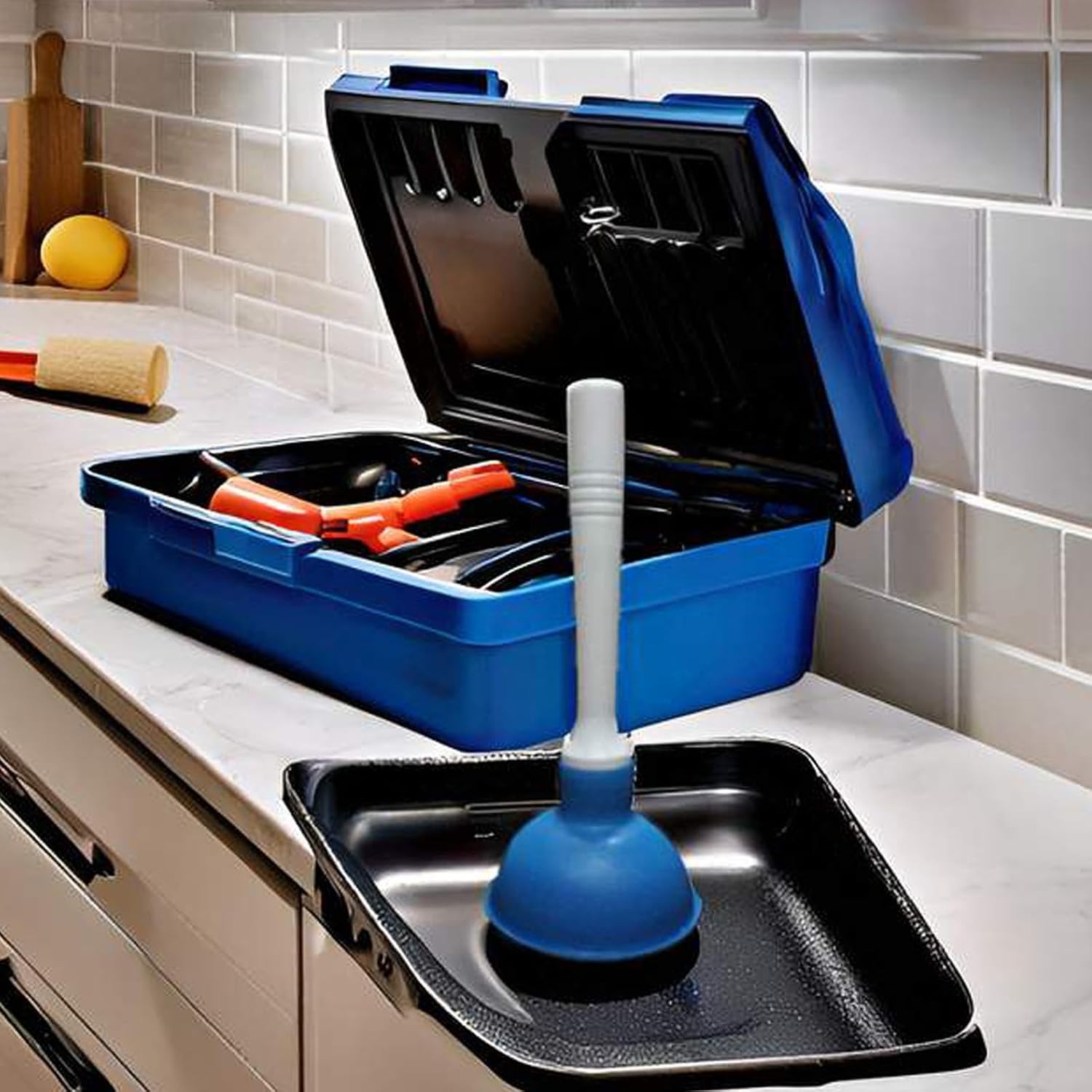
A mini sink plunger solves the size mismatch. The cup on this one measures 10 cm across when assembled, which is close to the size of a typical sink or basin drain area. That lets the rubber lip land on flat porcelain or stainless steel and form a proper seal, which is the whole game. No seal, no pressure, no result.
The handle is short and sits in the centre of the cup. That placement matters. When the handle is centred, your downward push translates straight into the cup instead of rocking it to one side. A short handle also means you can stand over a basin and work the plunger without your elbow hitting the mirror or the tap.
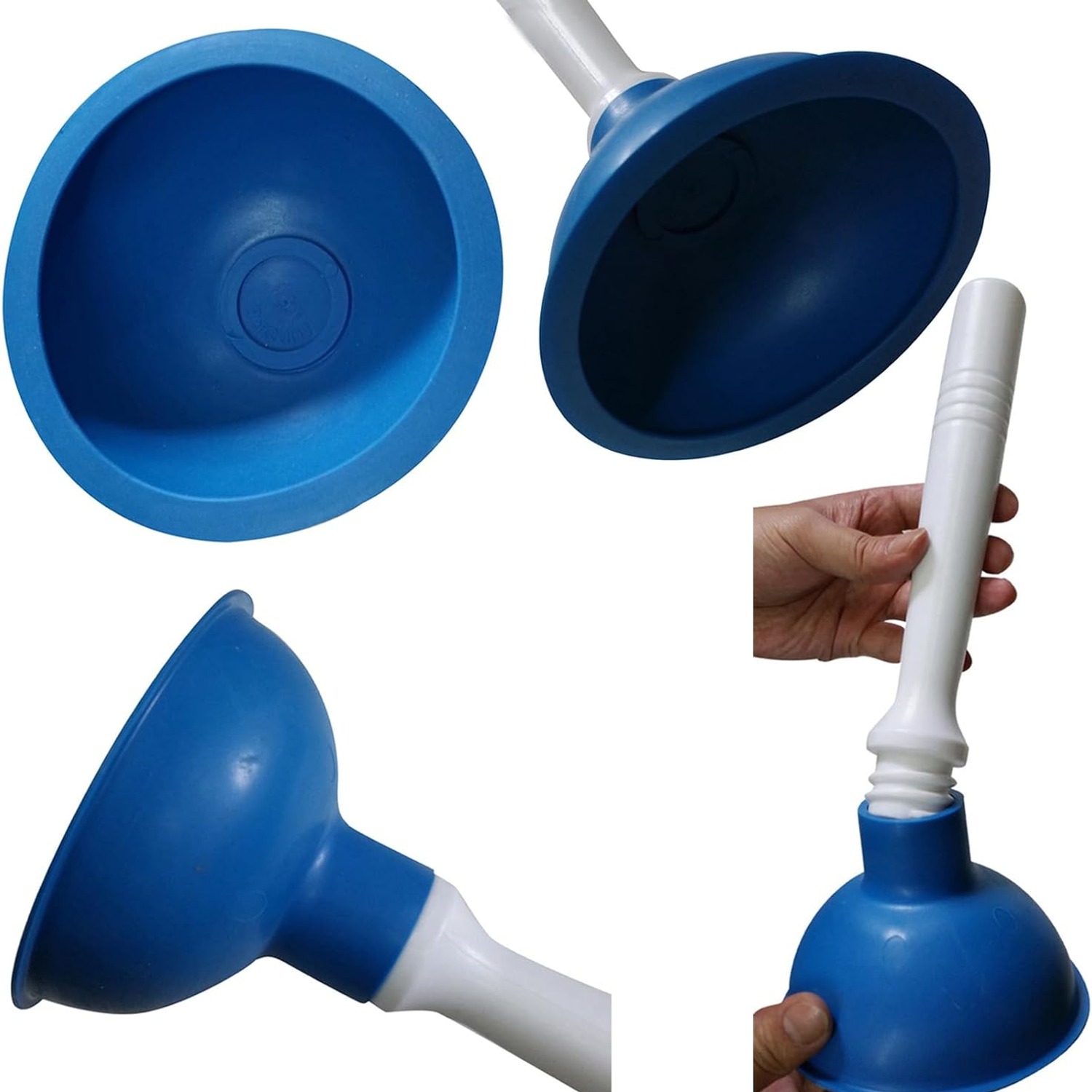
The build is two parts. You get a rubber cup and a plastic handle, and the handle screws into the cup. That is the entire assembly, done in about ten seconds with no tools. Total weight is 118 g, which is roughly the weight of a small apple. Light tools get used. Heavy ones stay in the garage.
How plunging actually works
It helps to understand what you are doing, because the technique is where most people go wrong.
When you push the cup down, you force water down the pipe. When you pull back, you pull water the other way. That rapid reversal is what tears a soft clog apart. It is the reversal that does the work, not the push. Which is why the single most common mistake is lifting the cup off the drain at the top of each stroke. The moment you break the seal, you lose all the suction and you are just splashing.
So keep the cup planted. Push and pull in a steady rhythm, ten to twenty strokes, and only lift at the end of a set to see whether the water moves.
Two other things make a real difference. First, you need water in the sink, enough to cover the cup. Water carries pressure far better than air. Second, if the fixture has an overflow hole near the rim, cover it. A damp cloth stuffed into it works fine, or a palm held firmly over it. Leave it open and your pressure escapes out the side instead of going down the drain. With a double kitchen sink, block the second outlet the same way.
Who this suits
If you own a home, you should have one. If you rent, you should probably have one too, because being able to clear a minor blockage yourself saves a week of waiting for a property manager to arrange a call-out.
It also suits anyone with limited storage. The small size makes it realistic to keep one plunger under the kitchen sink and a second in the bathroom cupboard, which is what most people would prefer anyway. Nobody loves the idea of a tool moving between a toilet and a food-prep area. Two cheap, compact units solve that neatly.
Caravans, boats, holiday cabins and small apartments all benefit for the same reason. A travel plunger that weighs 118 g and screws apart is easy to pack and easy to stow. Plumbing problems in those settings are usually small fixture blockages, which is exactly the job this handles.
Where it is not the answer is toilets. This is a flat round cup, not a flanged one, and a toilet outlet needs a flange to seal properly. Keep a separate toilet plunger and do not try to make one tool cover both.
Choosing between plunger types
There are three broad categories worth knowing.
Flat cup plungers, like this one, are for flat drain surfaces. Sinks, basins, shower bases and sometimes baths. They are the right pick for a sink unclogger.
Flanged plungers have an extra sleeve folding out of the cup that pushes into a toilet outlet. Good for toilets, awkward on a flat sink.
Accordion and bellows plungers push a lot of water but are stiff and hard to seal on a small basin. They are more of a specialist choice.
When you are comparing any small rubber plunger, look at three practical things. Cup diameter against your actual drain, because too big will not seal and too small will not shift much water. Handle length against the space you have, since a long handle is useless under a shallow vanity. And whether the rubber feels pliable, because a stiff cup cannot mould itself to the surface.
Looking after it
Care is simple. Rinse the cup under the tap after each use and shake the water out. If it has picked up anything unpleasant, wash it with warm soapy water and rinse again. Then let it dry properly before you put it away, because a cup stored wet and face down holds moisture and starts to smell.
Store it upright or hanging. Keep it out of direct sun and away from heaters, since heat and UV are what harden rubber over the years. Stored sensibly, there is no real wear mechanism on a tool like this. The signs it needs replacing are obvious enough: cracking around the lip, a cup that has gone rigid, or a seal that simply will not hold any more.
Prevention is worth a mention too. Most sink blockages build up slowly, so a strainer over the drain and a kettle of hot water down the kitchen sink once a week does a lot. Scrape plates into the bin rather than rinsing fat down the drain. Pull hair out of the basin rather than washing it through.
When to stop plunging
Know the limits. If you have worked at a blockage through several sets and nothing moves, stop. If water backs up in more than one fixture at once, or if plunging a sink makes the toilet gurgle, the problem is in the shared line and a plunger will not reach it. Repeated blockages in the same drain, week after week, also point to something structural like a partial collapse, root intrusion or a badly graded pipe.
At that point a plunger is no longer the tool. Call someone who can put a camera down the line.
The short version
A slow sink is usually a soft, shallow clog. A 10 cm flat cup on a short centred handle is the right shape to seal over a basin or kitchen sink drain and push that clog apart. Fill the sink with a bit of water, cover the overflow, keep the seal and work in sets of ten to twenty strokes.
This one is two parts, screws together in seconds, weighs 118 g and stores anywhere. Buy it before you need it, keep it under the sink, and most slow-drain problems become a two minute job instead of a phone call.