
The complete guide
How To Clear A Blocked Drain With A Pressure Washer Jetter Hose
The problem with a slow outside drain
It rarely happens all at once. The gully outside the kitchen starts to drain a little slower each month. Water sits in it after rain. Then one morning the washing machine empties and the whole lot comes back up across the paving.
Most people reach for a bottle of drain cleaner first. Sometimes that works, usually it does not. Caustic cleaner wants a clear path to sit against the blockage. If the pipe is already full of standing water, the chemical dilutes before it ever reaches the problem. You end up with a drain full of nasty water and the same blockage underneath it.
The other common fix is rods. They have their place, but they are stiff and they fight you at every bend. Push too hard and you can unseat a joint in an older line. And rods punch a hole through a blockage rather than taking it off the pipe wall, so the same spot clogs again a few months later.
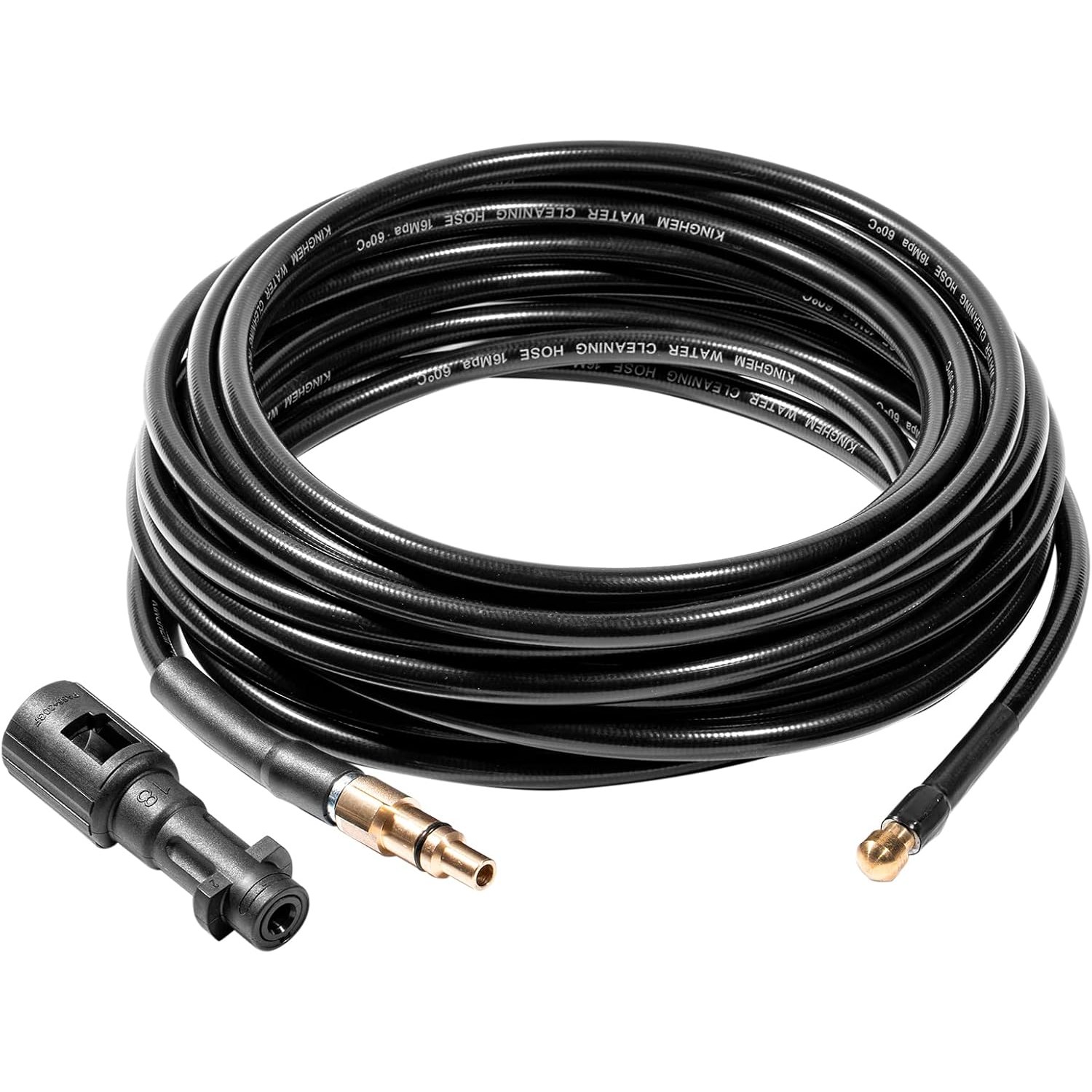
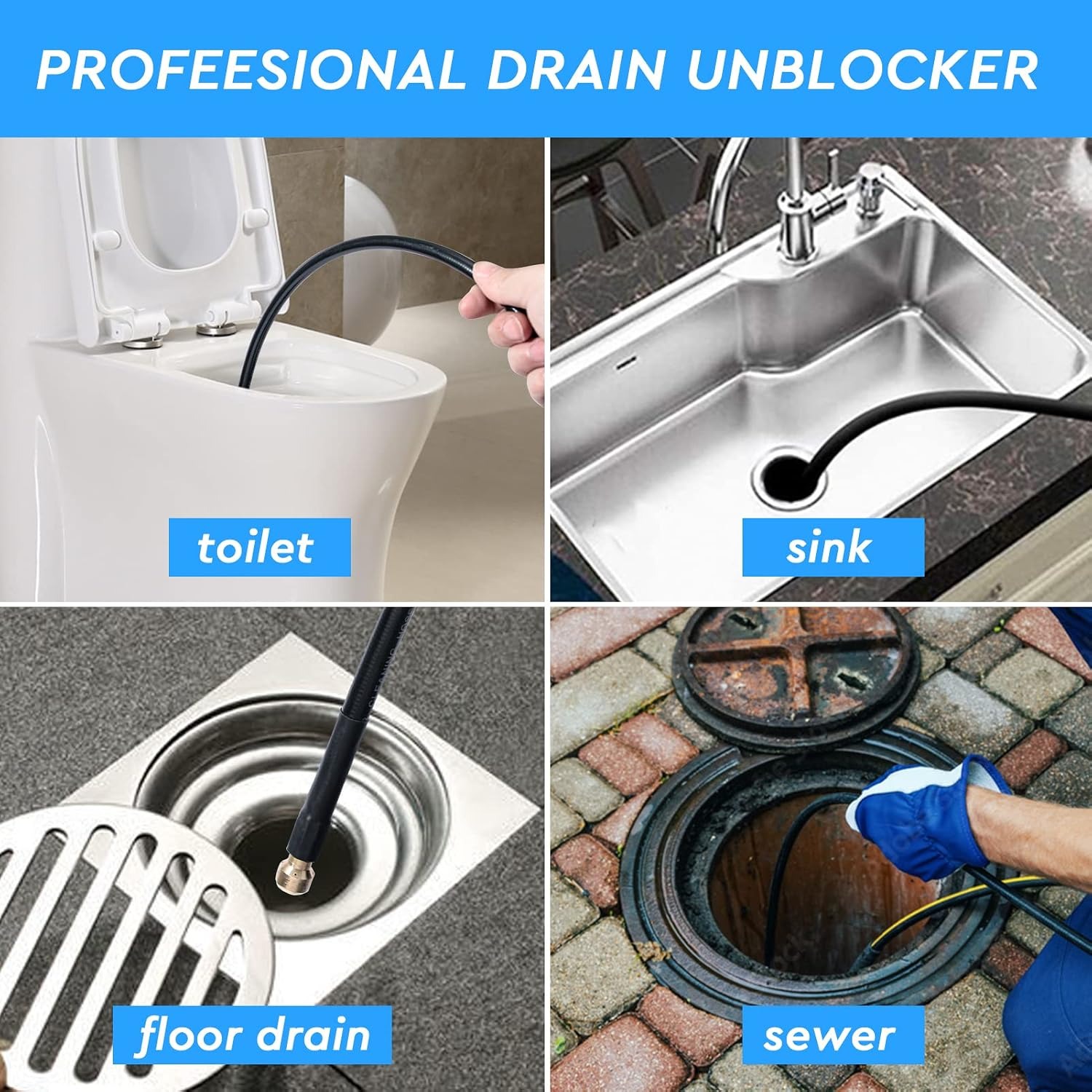
Jetting works differently. A thin hose with rear-facing jets travels along the inside of the pipe under its own thrust, and the water scrubs the walls as it goes. That is what this 10 metre drain jetter hose does, using the pressure washer most households already keep in the shed.
How a jetter hose actually works
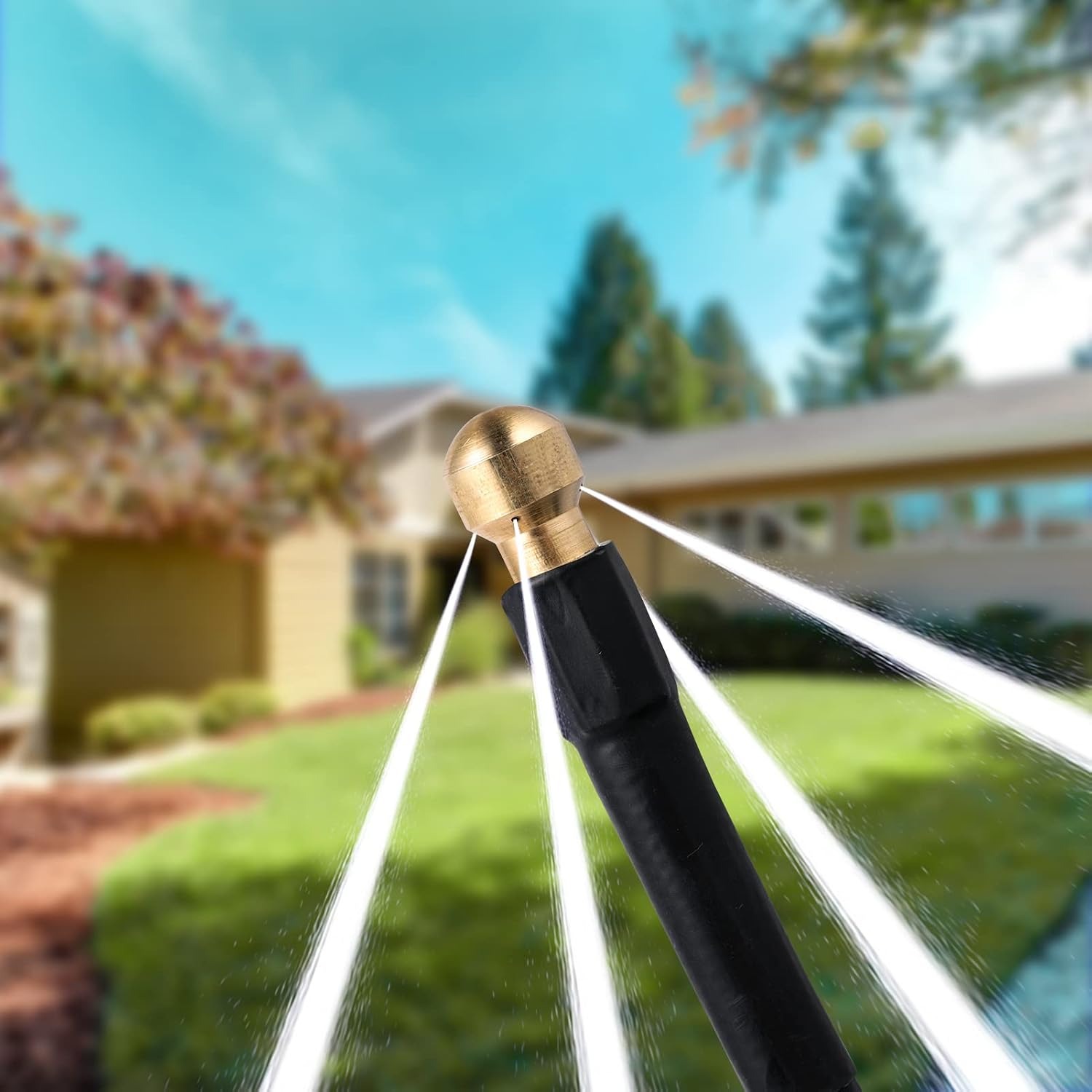
The nozzle on the end carries four jets, and every one of them points backwards. That design does two jobs at the same time.
First, the thrust. Water leaving the back of the nozzle pushes the nozzle forward, the same way a rocket works. You are not forcing the hose into the pipe. You feed slack in and the hose pulls itself along, following bends and dropping around traps that would stop a rigid rod.
Second, the cleaning. Those backward jets hit the pipe wall at an angle and strip off the greasy film that narrows the bore over time. Everything they loosen gets flushed back towards the drain opening, which is exactly where you want it. Nothing gets compacted further down the line.
The hose is black PVC with a flexible woven construction, 10 metres long and roughly 0.02 metres across, with a maximum pressure rating of 200 bar. The slim profile matters more than people expect. A fat hose will not negotiate a sharp bend in a stormwater line, and a stiff one will not follow a bottle trap.
Who this suits
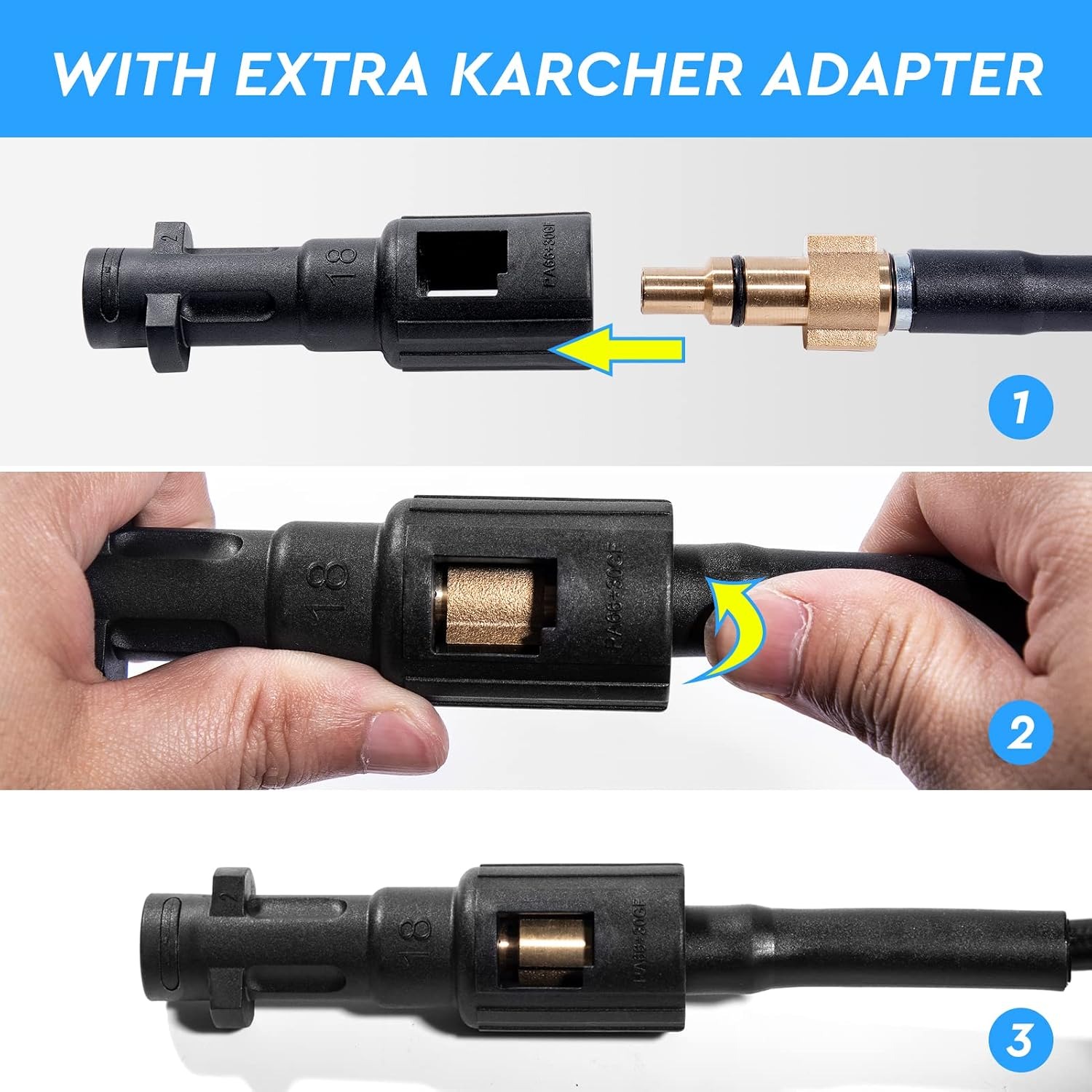
If you own a Karcher or a Lavor pressure washer and you have an outside drain that misbehaves, this is a straightforward buy. The box includes an adapter for Karcher machines and a sewer cleaning hose fitting for LAVOR, so there is no hunting around for parts before the first job.
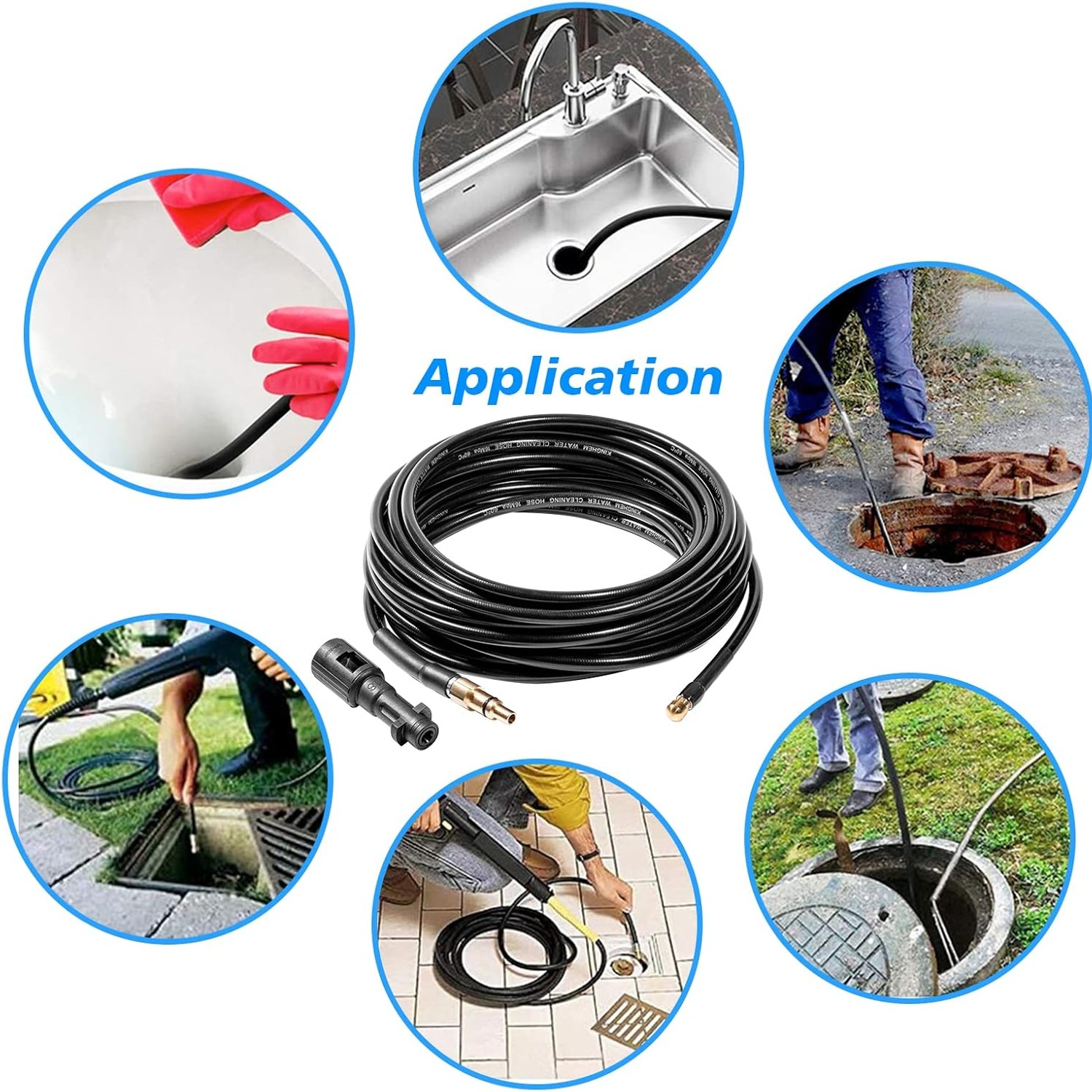
It also suits people in older houses where the pipework is clay or early PVC. Those lines hate caustic cleaner and they hate being hammered with rods. Water is the gentlest thing you can put down them.
Landlords and anyone managing a few properties get good value out of one hose, because the same tool travels between addresses. So do people with heavy tree cover, where leaf mulch in the downpipes is an annual event rather than an emergency.
It is less suited to tight indoor waste pipes under a basin. Those runs are short, narrow and have nowhere for the dirty water to escape. A hand snake or plunger is the better call there. It also will not deal with thick established tree roots, which need a cutting head or a professional with a proper jetting rig.
Choosing the right length and fitting
Ten metres is the sweet spot for domestic use. The run from an outside gully to the boundary inspection point on a typical house sits well inside that, and most downpipe blockages are within the first three or four metres anyway. Longer hoses exist, but they are harder to coil, harder to store and the pressure drops along the extra length.
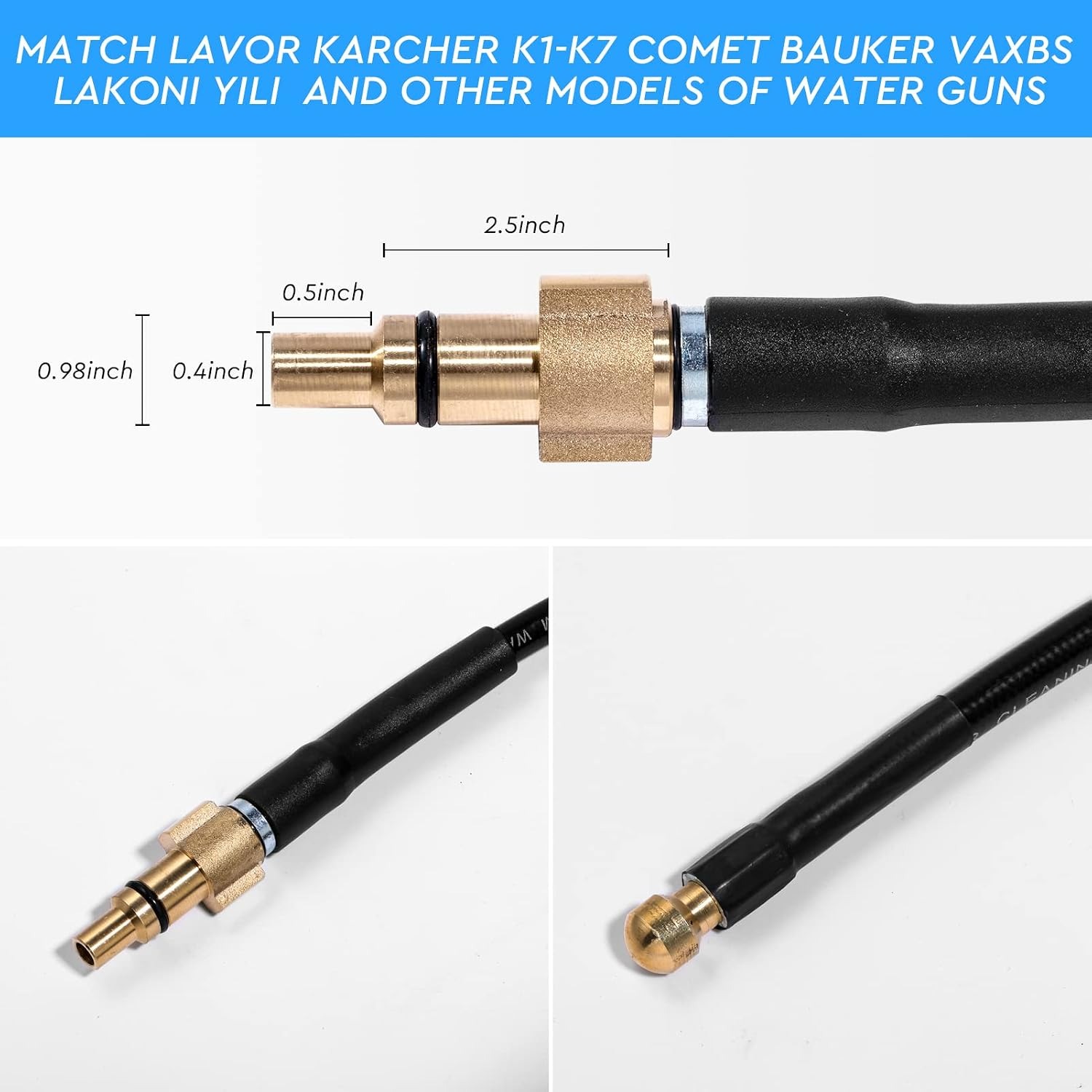
The fitting matters more than the length. Pressure washer outlets are not standardised across brands. Karcher's domestic K-series uses its own bayonet-style connection, which is why a dedicated adapter is supplied. Lavor machines use a different thread, hence the second fitting in the box.
If you run something else, a Nilfisk, a Bosch or a trade machine, check your outlet before ordering. Many of them accept a Karcher-style adapter or a common quick-connect, but some need an extra piece that is not included here. Five minutes with a tape measure and a photo of your outlet saves a wasted order.
Also think about your machine's flow rate, not just its pressure number. Flow is what carries debris back out of the pipe. A small entry-level washer will still drive the hose along, it just takes longer on heavy build-up.
Using it without making a mess
A few habits make the difference between a quick job and a soaking.
Feed the nozzle at least half a metre into the pipe before you squeeze the trigger. If you fire it up in open air, the rear jets send the hose whipping around and spray dirty water straight back at you. Release the trigger before you pull the hose back out past the drain opening for the same reason.
Wear eye protection and gloves. Old clothes and boots are a good idea too, because whatever was sitting in that pipe is coming back out.
Feed the hose in steadily rather than letting it run away from you. A strip of tape wrapped around the hose at the two and five metre marks gives you a rough idea of how far in it has travelled, which is useful when you are trying to work out where the blockage sits.
Work in short bursts. Push in a metre, pull back half a metre, push again. That back-and-forth action does a better job than simply driving the nozzle straight through, because the jets get a second pass at the same section of pipe.
When the water starts running away freely at the gully, tip a bucket down to confirm it has gone. Then pull the hose out slowly with the water off.
Looking after it
Rinse the hose through with clean water before you disconnect it. Whatever came out of the drain is now inside the hose, and if it dries in there it will eventually clog the jets.
Check the four nozzle holes afterwards. A fine pin or a piece of wire lifts out grit before it sets hard. A partly blocked jet will send the nozzle off at an angle and reduce the pull.
Let the hose dry, then coil it loosely. Tight coils and sharp kinks are what crack PVC over time. Hang it rather than squashing it under heavier tools.
Store it in a shed or garage out of direct sunlight. UV is hard on PVC and frost is not much kinder. Before each job, run your hand along the outer braid and look over the fittings. A split outer layer or a damaged coupler means the hose should be retired, not nursed along at 200 bar.
The short version
A blocked outside drain does not automatically mean a call-out fee. If you already own a Karcher or a Lavor pressure washer, this 10 metre hose turns it into a jetting tool for the price of a single plumber visit.
The four rear-facing jets pull the hose into the pipe on their own, clean the walls as they travel, and push the mess back out towards you rather than deeper in. No chemicals go down the line, which is better for older pipework, better for septic systems and better for anything growing nearby.
Check your washer's outlet against the included Karcher and Lavor fittings before you order. Beyond that, rinse it after every job, keep the jets clear and store it dry, and one hose should handle your drains for years.