
The complete guide
The Practical Guide To Drain Jetting At Home
The job that always arrives at the worst time
A slow drain is a warning. A blocked one is a problem. It usually shows up on a Sunday, or the night before guests arrive, and by then the water is sitting at the grate and the smell has made its way to the back door.
The first instinct is the plunger. That rarely helps, because the plunger pushes at the top of a column of water and the actual blockage sits metres away down the pipe. The second instinct is a bag of chemical drain cleaner. That sometimes works on a sink, almost never on an outside line, and it leaves you with caustic liquid sitting in a pipe you now have to deal with anyway.
Drain rods are the next step, and they work for a lot of people. The trouble is that rods are rigid. They go brilliantly until they hit the first bend, and then they stop and you spend twenty minutes twisting them while wearing gardening gloves. Anything past a single turn in the pipework is beyond them.
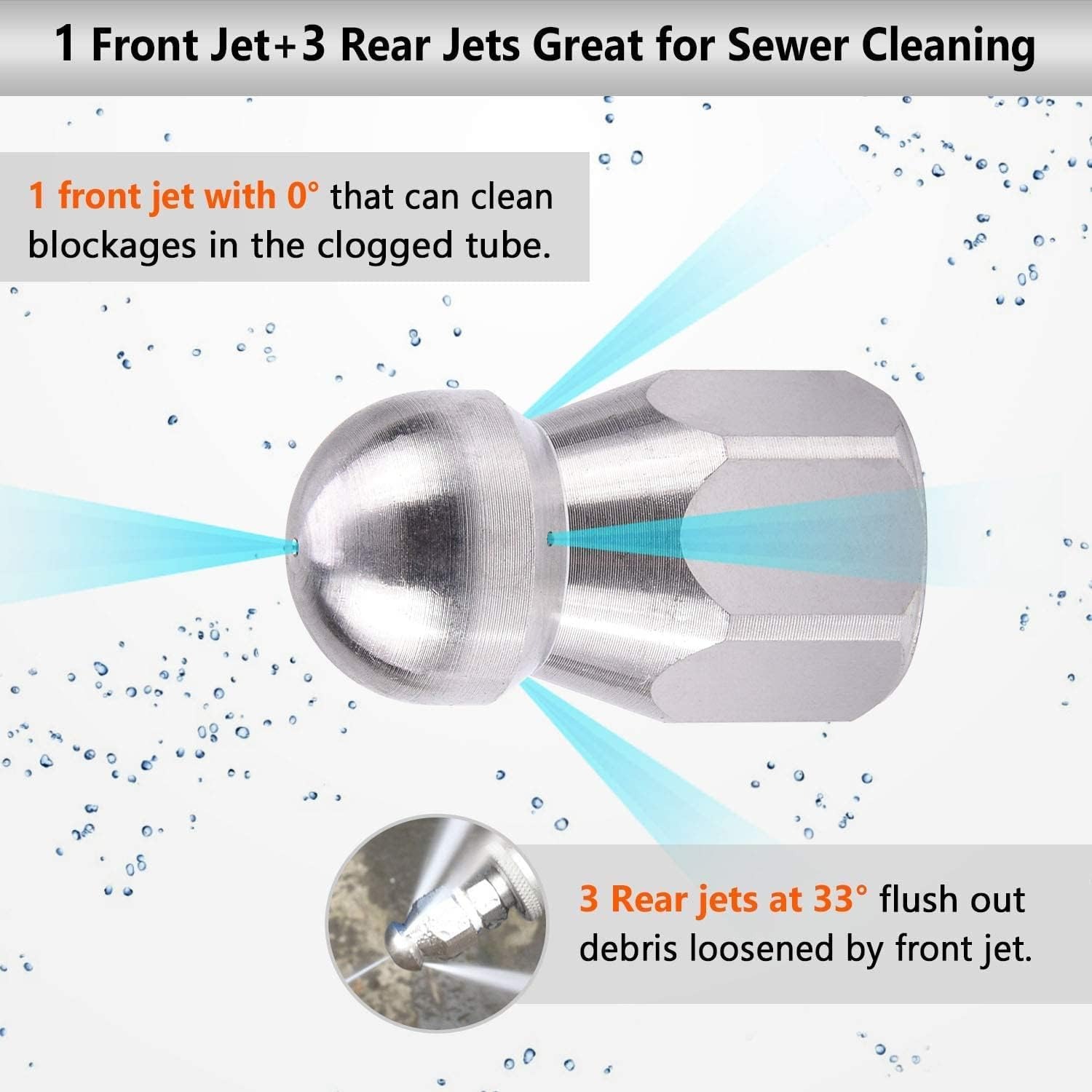
Jetting takes a different approach. Instead of pushing a stick at the clog, you send water to it. A thin hose feeds along the pipe, bends where the pipe bends, and a nozzle on the end fires water forward and backward at once. The forward jet cuts into the blockage. The rear jets drive the hose further in and flush the broken-up debris back towards you. That is the whole idea, and it is why a plumber's van has a jetter in it.
How this kit works
You already have the expensive part. A domestic pressure washer makes the pressure. This kit supplies the reach and the heads.
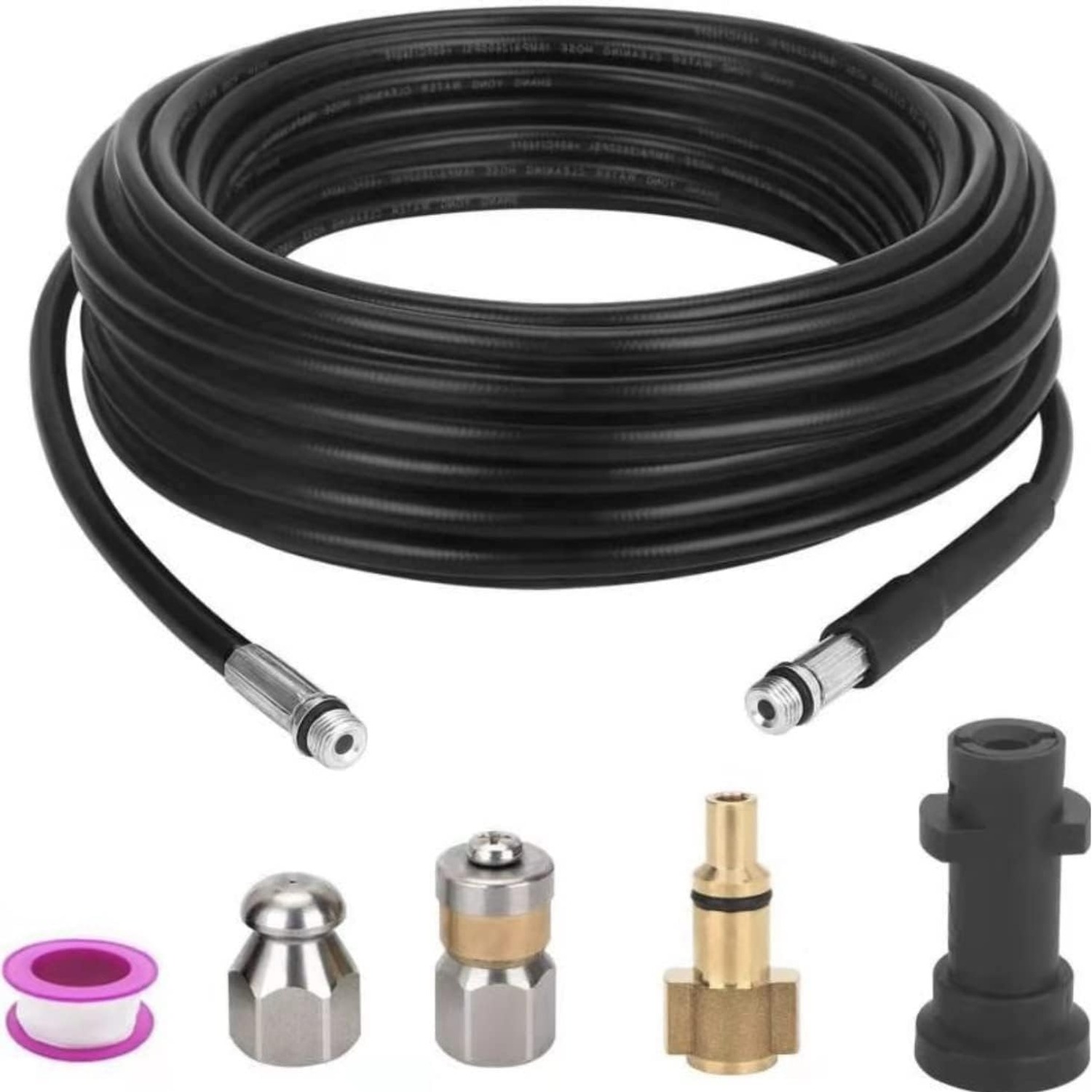
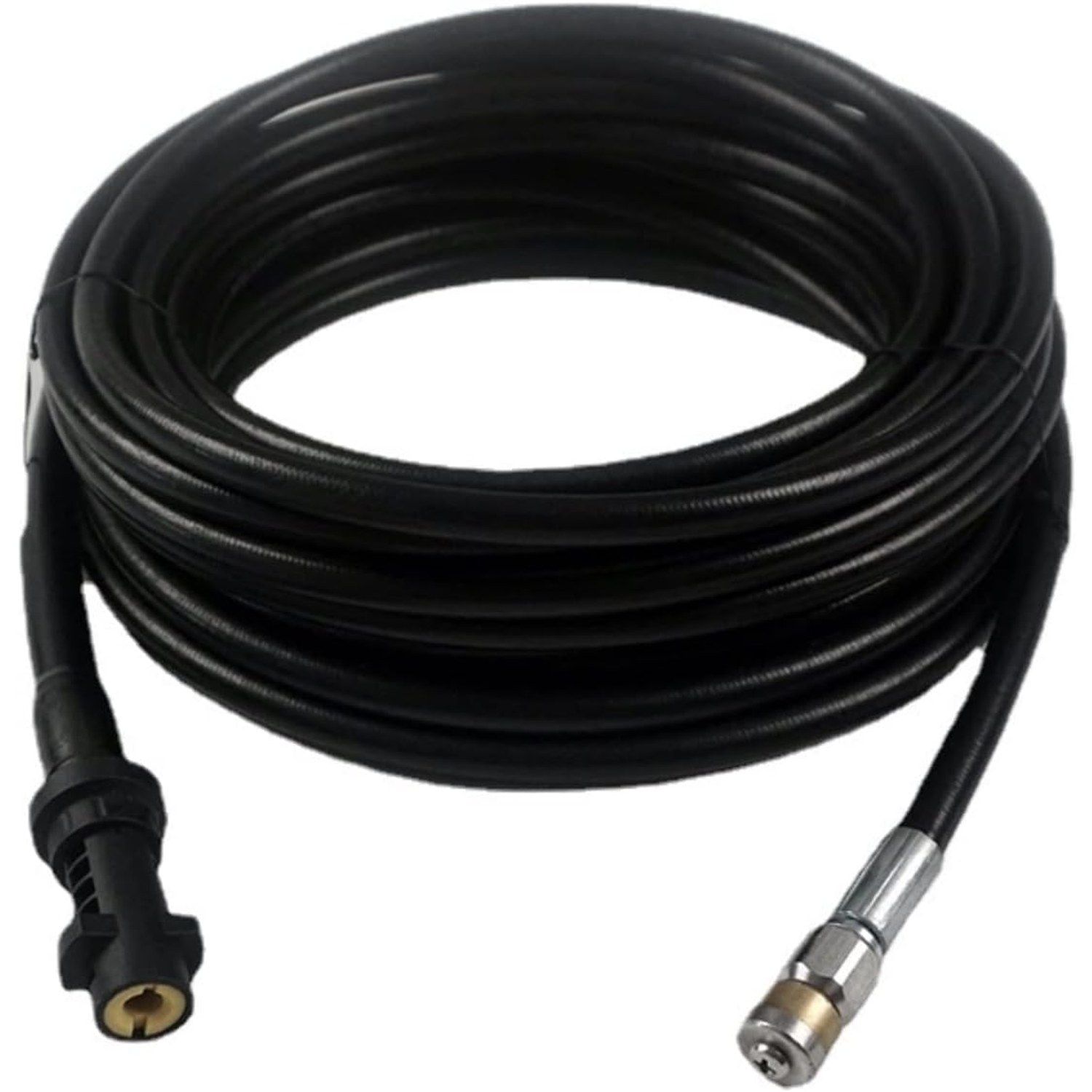
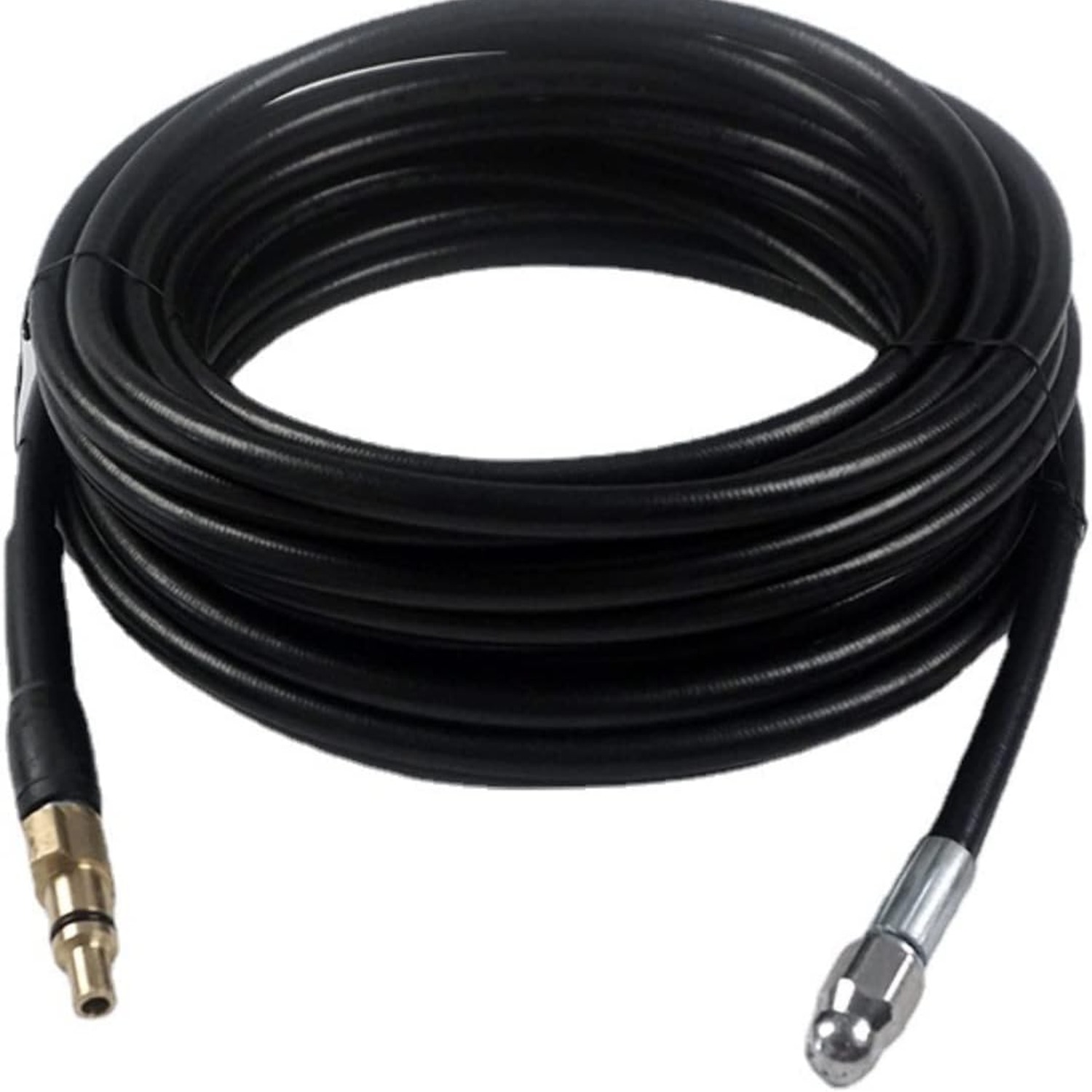
The hose is 20 metres of black PVC with an 11 millimetre outside diameter. Slim and bendy is exactly what you want here. It will follow a gully trap round and keep going. It is rated to 200 bar, which is above what most home machines deliver, so there is sensible margin built in.
Two stainless steel nozzles come with it. The button nose head has a forward jet and rear jets, so it drills into a blockage while hauling itself along. The rotating head spins, which spreads the spray around the inside of the pipe. One is a drill. The other is a scrubber.
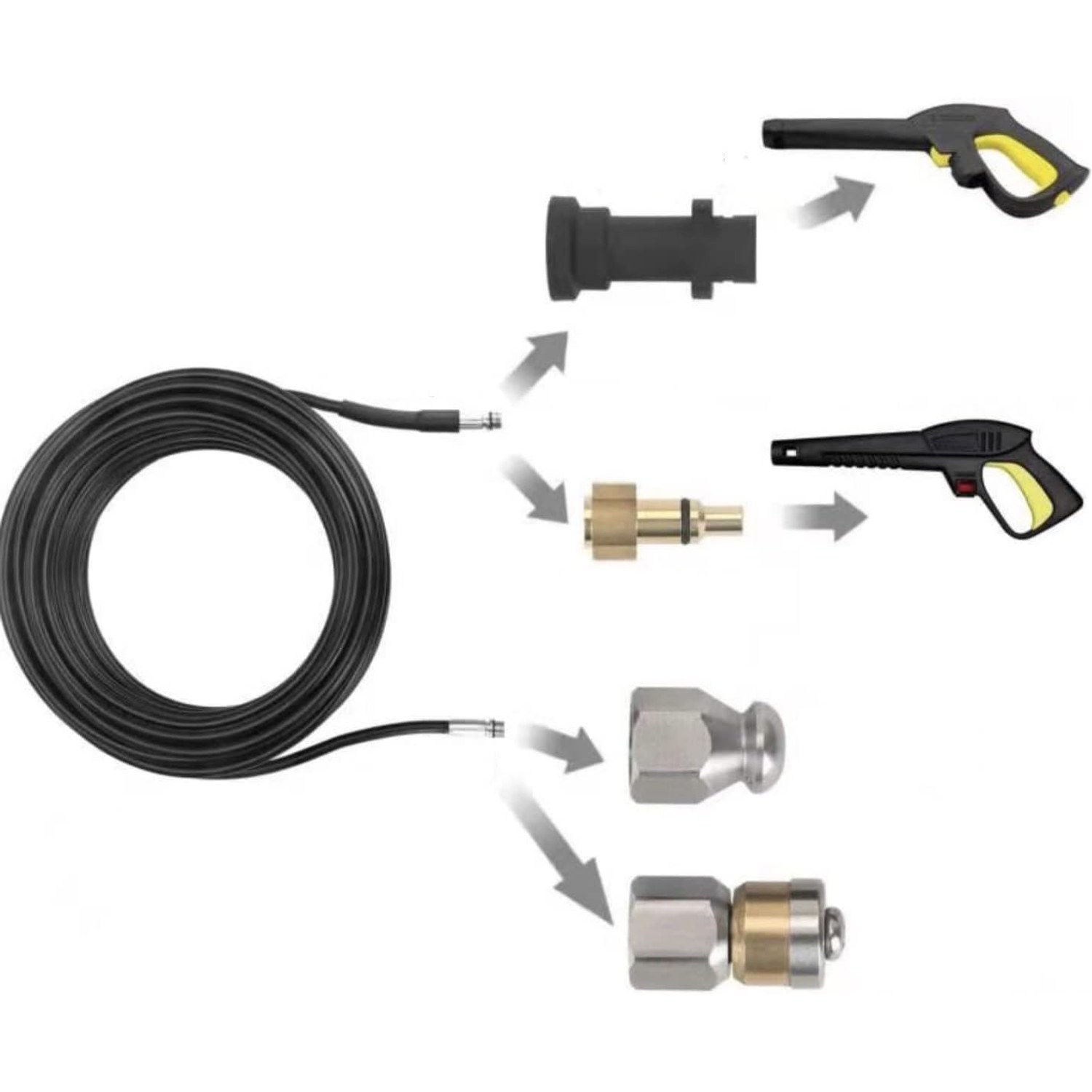
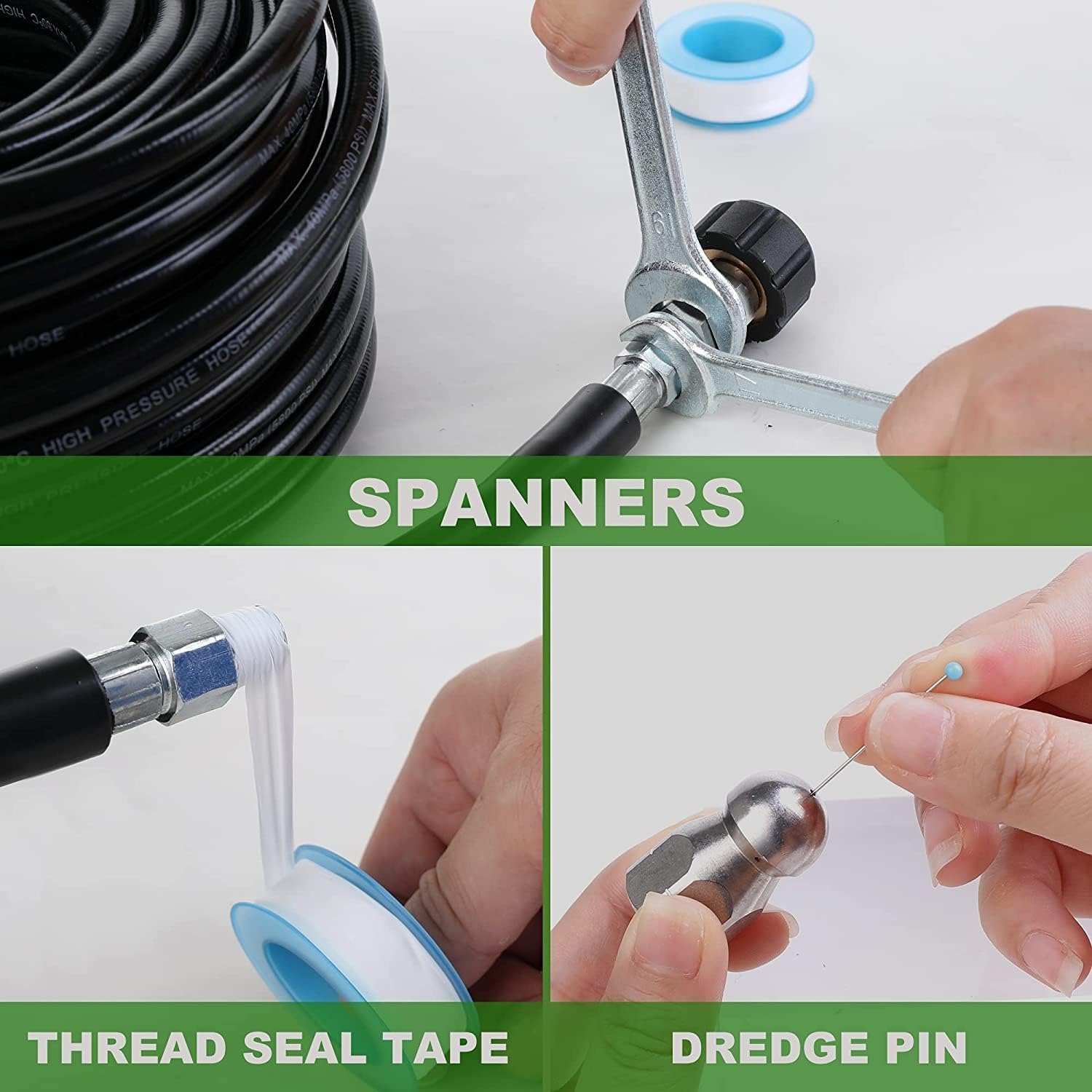
Two adapters are in the box as well, one for Karcher K-Series washers and one for LAVOR machines. They screw onto the gun end of your lance. Nothing on the washer gets modified and the whole setup comes apart in under a minute.
Who this suits
Anyone with a house, a pressure washer and a garden will find a use for it. The classic case is the outside drain that backs up after a wet week. Silt, grease from the kitchen line and a few years of general sludge narrow the pipe until one more spoonful of fat tips it over.
Gutters are the second big use. Autumn leaf mulch packs into a downpipe and the water starts running over the lip instead of down the pipe. Feeding a jetting line down from the top flushes the lot out at the bottom. That is far quicker and a lot safer than moving a ladder ten times along a roofline.
It is also handy for rural and semi-rural properties. Driveway drainage pipes, shed waste lines, caravan grey water runs and agricultural land drains all silt up and all respond to a flush. If you own more than one building, the best sewer jetter kit pays for itself quickly.
Who it does not suit: anyone without a pressure washer, and anyone dealing with a collapsed or badly cracked pipe. Jetting clears blockages. It does not repair broken pipework, and if the pipe is already failing it is worth getting a camera survey instead of blasting water into it.
Choosing the right setup
Length matters most. Twenty metres covers the run from a house gully to the boundary in most properties. Shorter lines look cheaper until the day the blockage sits a metre past where your hose ends.
Hose diameter is the second thing. A thinner line turns tighter corners. Thicker hose is tougher but fights you at every elbow in a domestic waste system. At 11 mm this sits in the useful middle.
Nozzle choice is the part people underthink. A forward-only nozzle just sprays. You want rear jets, because the rear jets are what move the hose along the pipe. Having both a button nose and a rotating head means you can start with one and swap if the pipe turns out to be coated rather than plugged.
Fittings are the last check and the most common mistake. Pressure washer gun connections are not universal. Look at the end of your lance before you order and compare it to the Karcher and LAVOR adapters supplied here. If yours is a different brand, a small brand-specific adapter usually solves it.
Using it without making a mess of yourself
Feed about a metre of hose into the drain opening before you switch the machine on. If you start it outside the pipe the nozzle will whip about and soak you, and at 200 bar capability that is more than an inconvenience.
Work in steady passes rather than one long shove. Feed in a couple of metres, let the water do its job, draw back a little, then feed in further. Pulling back and going again is what actually clears the pipe wall rather than just punching a hole through the middle of the clog.
Shut the pressure washer off before you withdraw the last metre. Same reason as before. Eye protection and waterproof gloves are worth having on, because drain water is not clean and the spray does come back out at you.
Looking after it
Two minutes of care after each job doubles the life of any jetting hose. Run clean water through the line with a nozzle fitted for a minute. Let it drain. Wipe the outside.
When you coil it, use wide loops. Tight kinks are the number one killer of flexible hose, far ahead of pressure or age. Hang it on a hook rather than folding it into a bucket.
If a nozzle starts spraying unevenly, it is almost always a partly blocked orifice. Clear it with a fine pin and flush it. The stainless steel will not mind. Never run the machine with a nozzle you know is blocked, because the pressure has nowhere to go.
Keep it out of direct sun and away from fuel, oil and solvents in the shed. Store it dry.
The short version
If you own a pressure washer and a property with drains, a jetting hose is one of the better tool purchases you can make. It does a job that rods cannot do, it reaches where a plunger has no hope, and it turns a call-out into an afternoon task.
This particular kit gives you 20 metres of flexible PVC line, two stainless steel nozzles for different kinds of blockage, and adapters for two of the most common pressure washer brands. It weighs 1.15 kg and packs down small.
Check the fitting on your lance first. After that, the main thing left to decide is where you are going to hang it in the shed.