
The complete guide
How to Choose the Right Rubber Sink Plug (and Get It to Seal Properly)
The small problem that ruins a sink
A sink that will not hold water is one of those annoyances you put up with for far too long. You fill the basin, turn away for a minute, and come back to half the water gone. You run a bath and it never gets deep enough to be worth sitting in. Or the plug vanished months ago and you have been getting by with a jar lid, a folded cloth or a plastic container pressed over the hole.
None of it is a big disaster. That is exactly why it drags on. Replacing a sink plug is a five-dollar, five-second job that most of us put off for weeks because it never quite makes it onto the shopping list.
A plain rubber plug is the oldest fix in the book and still one of the best. There is nothing in it to break. It is a shaped piece of rubber that presses into the drain and uses its own flexibility to close the gap. No springs, no levers, no rods running down behind the basin. When a fancier waste mechanism fails, a rubber plug is usually what gets the sink working again the same afternoon.
How a rubber plug actually seals
The seal happens at the rim. The plug is slightly wider at the top than the bottom, so as you press it in, the rubber meets the edge of the drain opening and squeezes against it. Water pressure from above pushes down on the plug, which tightens that contact rather than loosening it. That is why a rubber plug tends to hold better in a full sink than in a shallow one.
Two things stop this working. The first is size. If the plug is too small it drops too far in and water runs past the edges. If it is too big it perches on top and never makes contact all the way around. The second is debris. Hair, grit, a fleck of eggshell or a build-up of soap scum on the rim stops the rubber sitting flush. A quick wipe around the drain lip before you push the plug in solves a surprising number of leaking-plug complaints.
Age matters too. Rubber hardens over years of hot water and detergent. An old plug that has gone stiff and shiny has lost the give it needs to mould against the rim. That is the point to swap it out rather than fight with it.
Measuring your drain before you buy
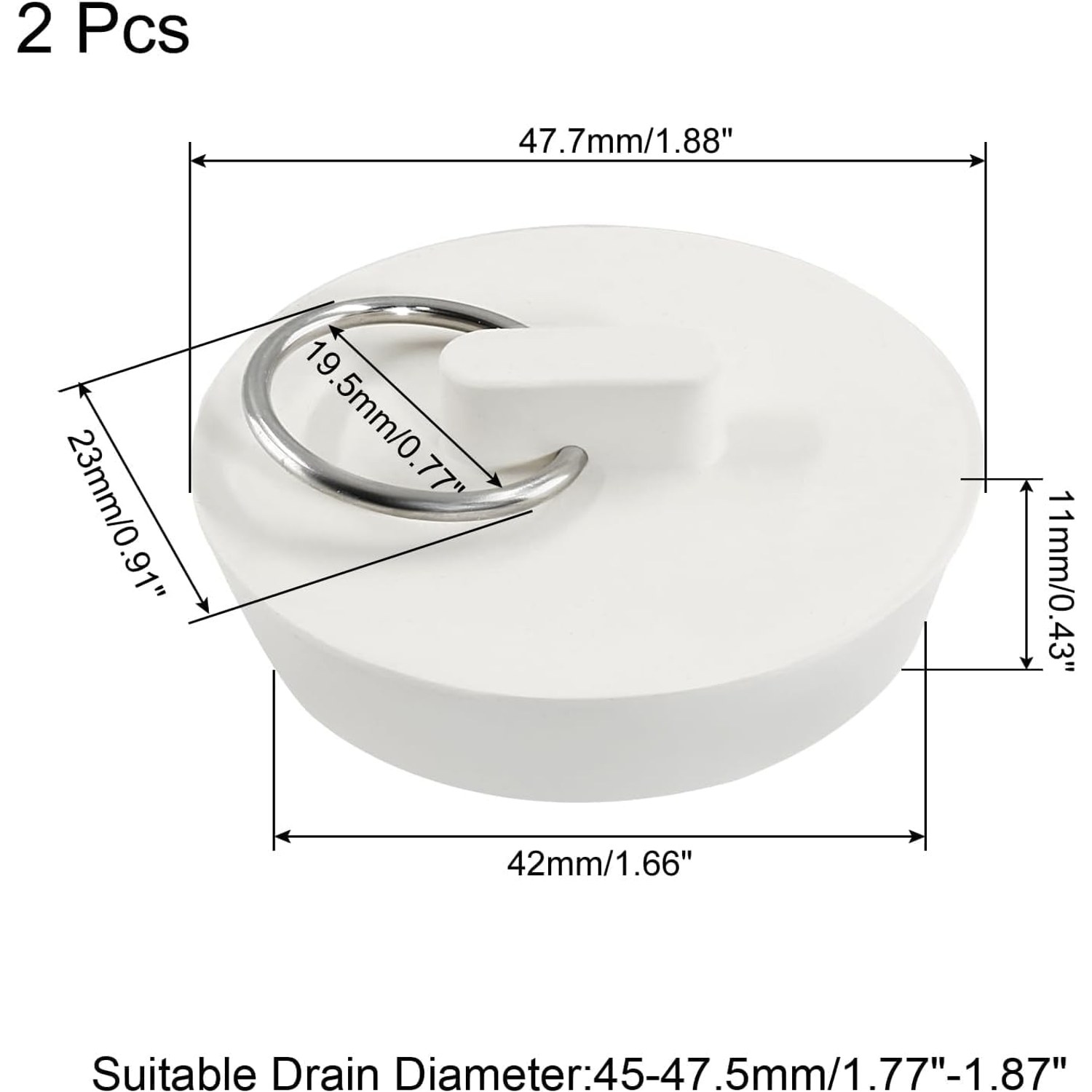
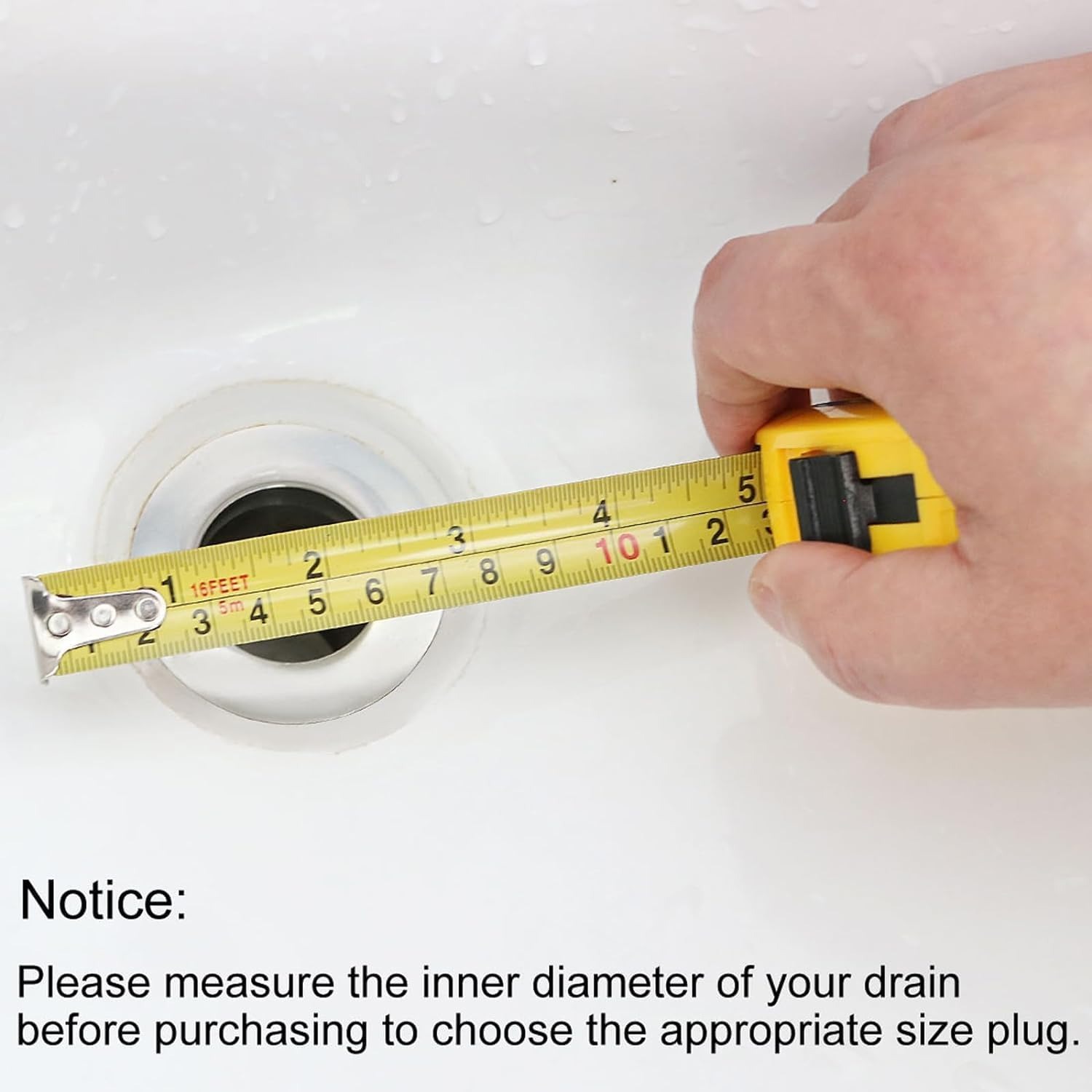
This is the step people skip, and it is the only one that really counts. Grab a ruler or tape measure and lay it across the drain opening at its widest point. You want the inside diameter of the hole, not the outside of the metal flange around it.
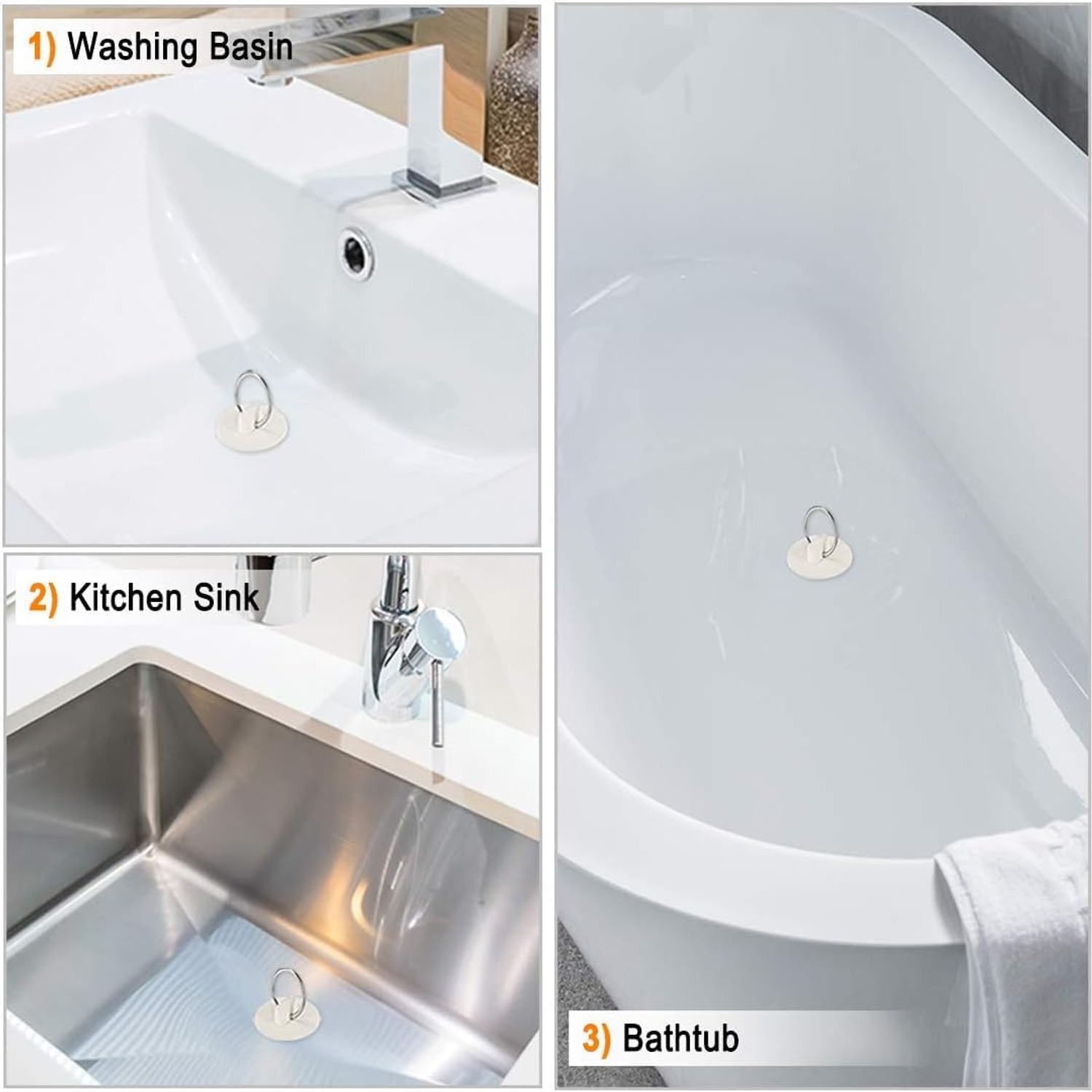
These plugs are made for openings between 45 and 47mm. That range covers a lot of standard kitchen sinks, bathroom basins and laundry tubs, but it is not every drain. Bath wastes are often bigger. Some small cloakroom basins are smaller. If your measurement is 50mm or 40mm, this is not the plug for you and no amount of pushing will change that.
If the number lands right at the edge of the range, say 47mm on the nose, the plug will usually still seal because the rubber compresses. If you are reading 48mm or more, look for a larger size instead.
Why the hanging ring matters more than you think
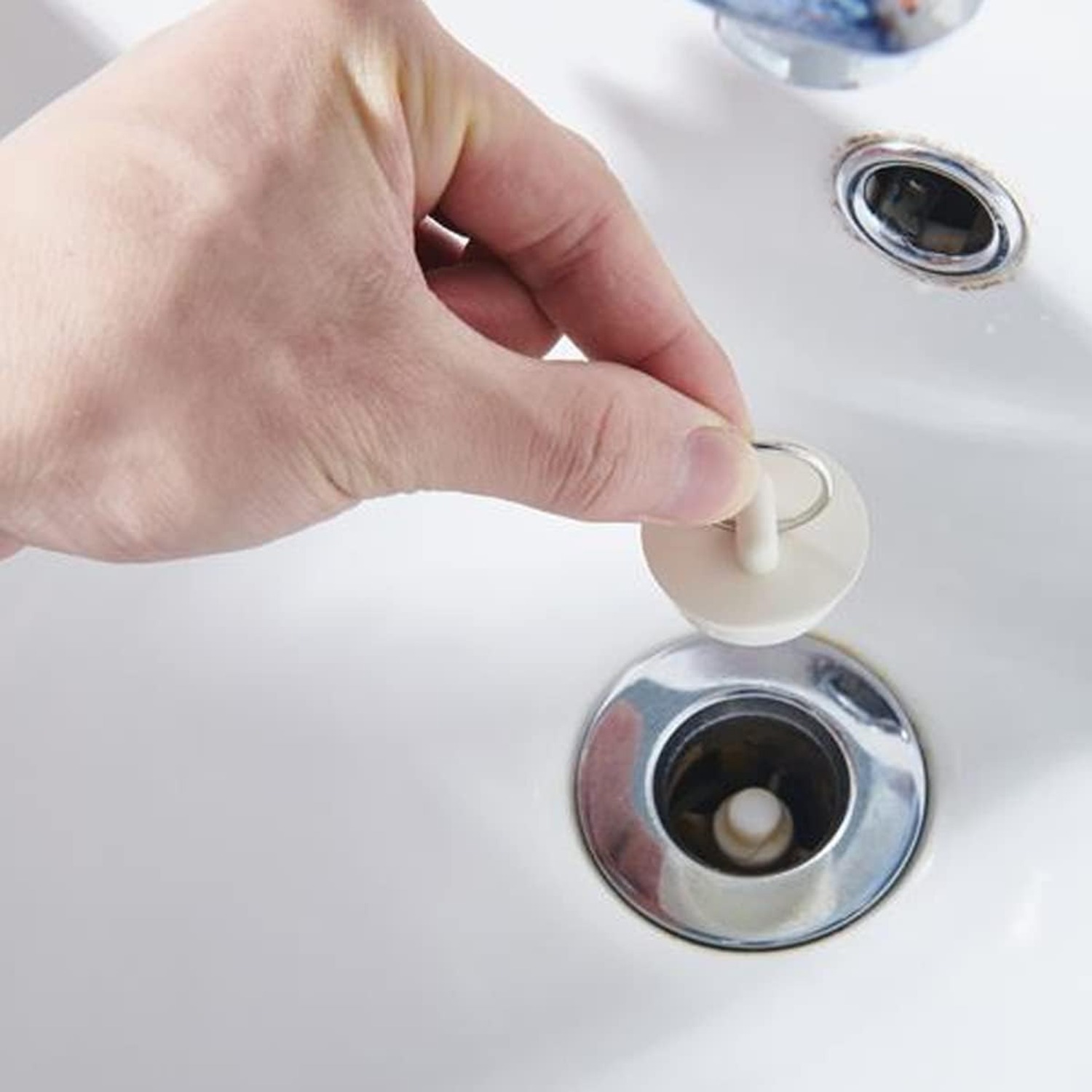
A moulded ring on top of the plug sounds like a minor detail. In practice it changes how the plug is used every single day.
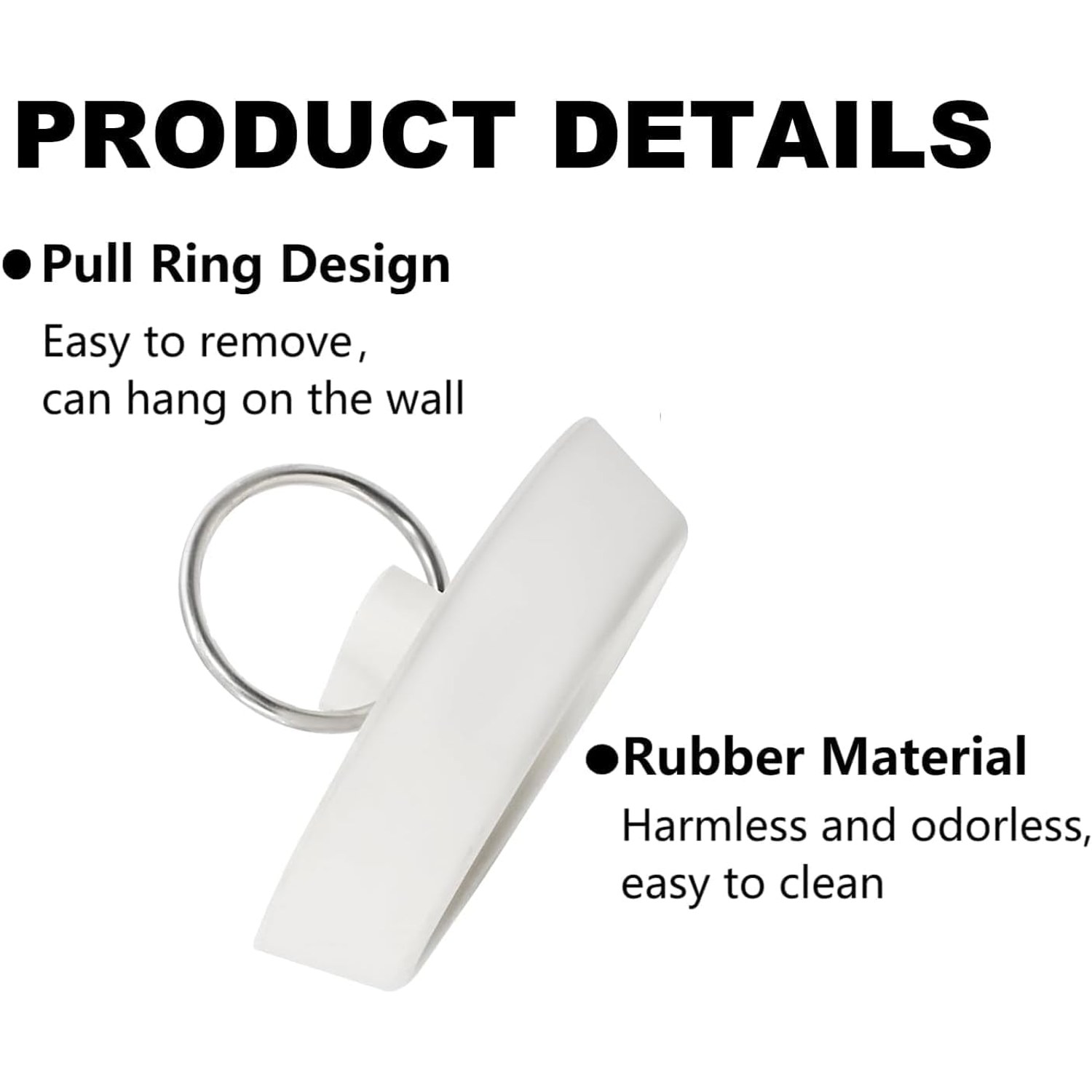
Without one, draining a sink full of hot, greasy washing-up water means pushing your hand down through it to find the edge of the plug and prise it up. With a ring, you hook one finger through and lift. Your sleeve stays dry. You do not have to go hunting under the suds.
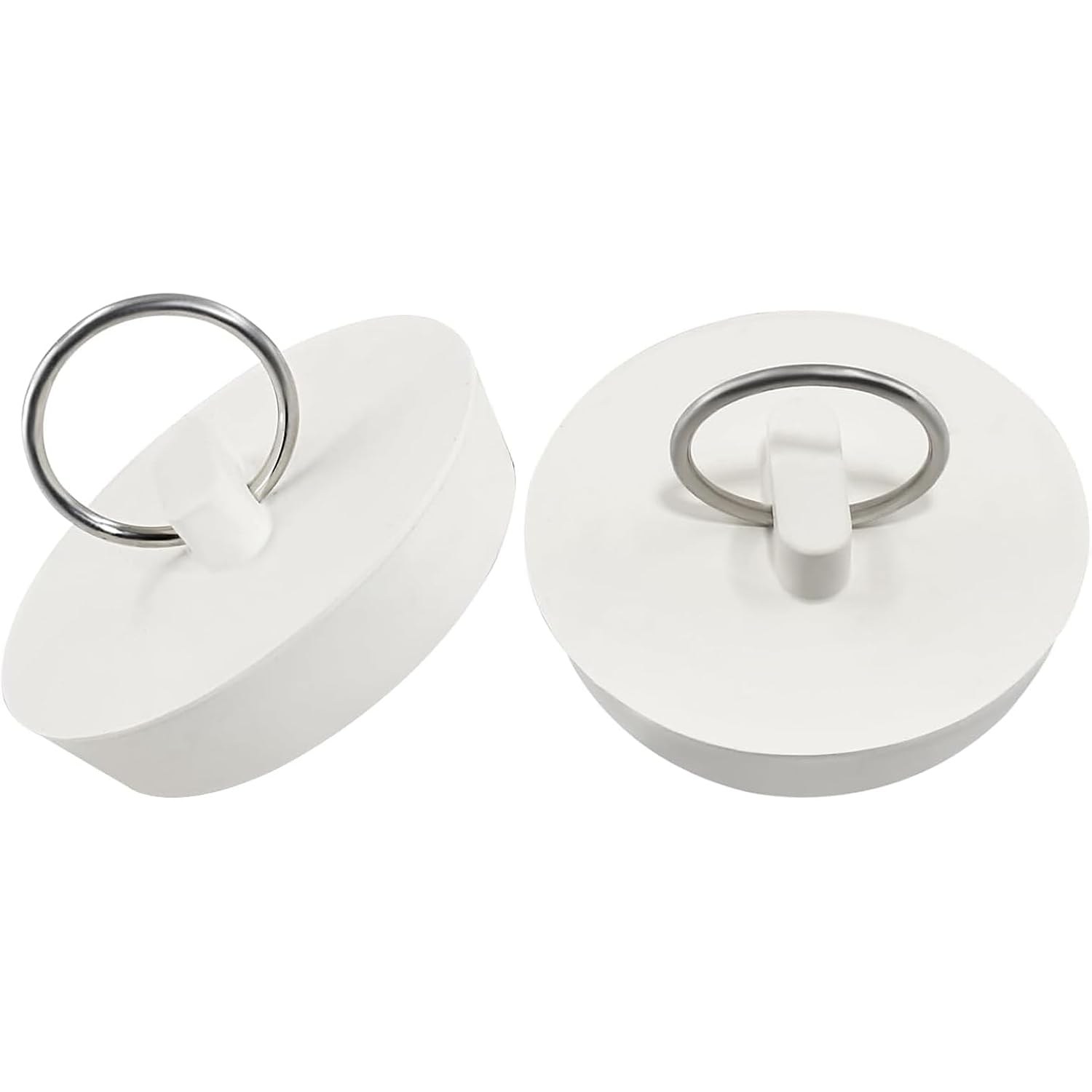
The ring also gives the plug somewhere to live. Hang it on a tap, a small hook by the sink or the chain you already have fitted. Plugs that sit loose on the benchtop get knocked into the bin, swept into the sink, or pushed to the back of a cupboard during a clean-up. One that hangs in the same spot every time does not go missing.
Where two plugs end up
The pack contains two, which is handy for one simple reason. Most homes have more than one drain, and they are rarely all the same age.
A typical split is one in the kitchen sink, the one that gets the hardest use, and the second held in reserve. The reserve plug often ends up in the laundry tub, which tends to get the saddest, most perished plug in the house because nobody looks at it. Or it goes to a bathroom basin, a bath, a garage sink or a caravan.
There are odd jobs too. Blocking a pipe end while you work on it. Holding water in a soaking tub for a stained shirt. Plugging a container that has a drain hole you do not currently want. A plain rubber stopper of a known size is one of those items that quietly comes in useful once you have a spare in the drawer.
Rubber plug versus built-in waste
Modern basins often come with a pop-up or click-clack waste built in. Push to close, push to open. They look tidy because there is no plug hanging off the side.
They also fail. The rod behind the basin can seize or detach, the seal under the cap wears flat, and hair wraps around the mechanism. When that happens the repair means getting under the sink, loosening fittings and often ordering a part that matches the brand. Some people do it happily. Many do not.
A rubber plug sidesteps all of that. If the drain opening is clear and the right size, you drop the plug in and the sink works again. It is not as sleek, but it does the one thing you need. Plenty of people keep a rubber plug in the cupboard purely as a backup for exactly this reason.
Keeping it in good shape
Care is simple. Rinse the plug under warm water after use so soap, grease and food residue do not dry onto it. Wipe it with a soft cloth and hang it up rather than leaving it sitting in a wet sink.
If it starts to feel slippery or film-coated, wash it in warm soapy water, rinse well, and dry it. Avoid leaving it soaking in bleach, and keep abrasive scourers away from it. Both will dry the rubber and roughen the surface, which is where the seal lives.
Store it out of strong sunlight when it is not in use. UV is hard on rubber and will stiffen it faster than anything that happens in the sink.
Common fit problems and quick fixes
If water still trickles away with the plug in, work through these in order. Clean the drain rim and the plug edge, then push the plug firmly straight down rather than at an angle. Check your measurement again at the widest point. Look at the plug edge for nicks or flat spots.
If the plug floats up when the basin is very full, it is probably sitting slightly loose, which usually means the drain is near the top of the size range. Pressing it down harder to set the seal often fixes it. If it keeps lifting, a slightly larger plug is the answer.
The short version
A rubber sink plug does one job and does it without any parts that can fail. These two are made for drain openings measuring 45 to 47mm, which covers a large share of kitchen sinks, bathroom basins and laundry tubs. Each one has a moulded ring so you can lift it out of hot water with a finger and hang it somewhere sensible.
Measure your drain first. If the number lands in range, you get a sealed sink, no tools, and a spare in the drawer for the next one that goes.