
The complete guide
Choosing a Square Sink Strainer That Actually Keeps Your Drain Clear
The slow problem nobody notices until it is bad
Blocked drains have a reputation for being sudden. They are not. A drain blocks over months, one small thing at a time, and the day it finally backs up is just the day the last grain of rice went in.
Think about what actually goes down a kitchen sink in a week. Rice and pasta that missed the colander. Tea leaves and coffee grounds. Onion skin, peelings, the sludge from the bottom of a soup pot. Little flecks of egg shell. None of it seems like much on its own. In the trap under your sink it all collects, grease binds it together, and the pipe narrows.
Bathroom drains have a different villain but the same story. Hair goes down, wraps around the crossbar or the pipe wall, and soap scum sticks to it. Eventually the basin empties at half speed and you start plunging it every month.
A sink strainer is the boring fix that works. It puts a physical barrier between your dinner scraps and your plumbing. You see what would have gone down the drain, and you tip it in the bin instead.
How a square sink strainer works
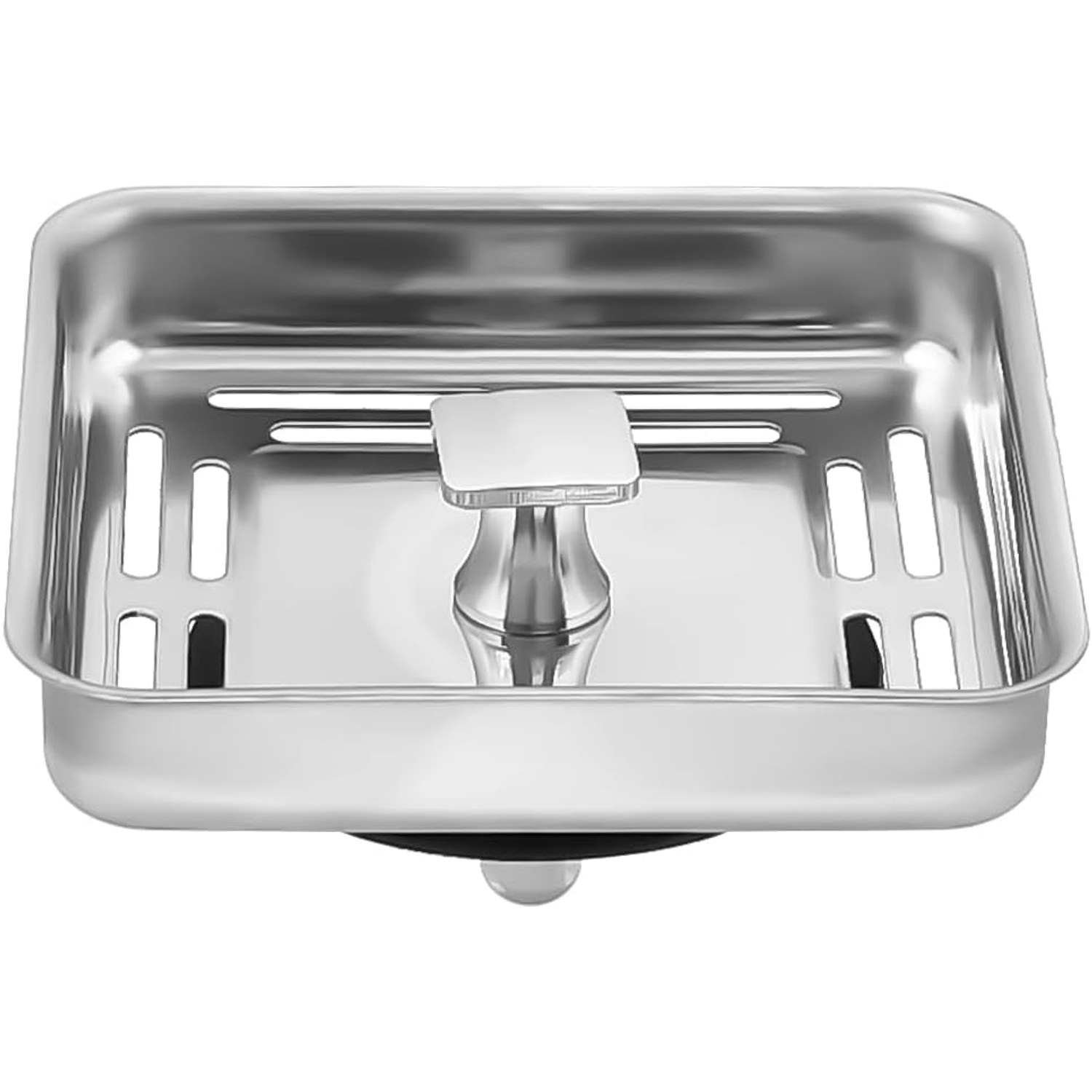
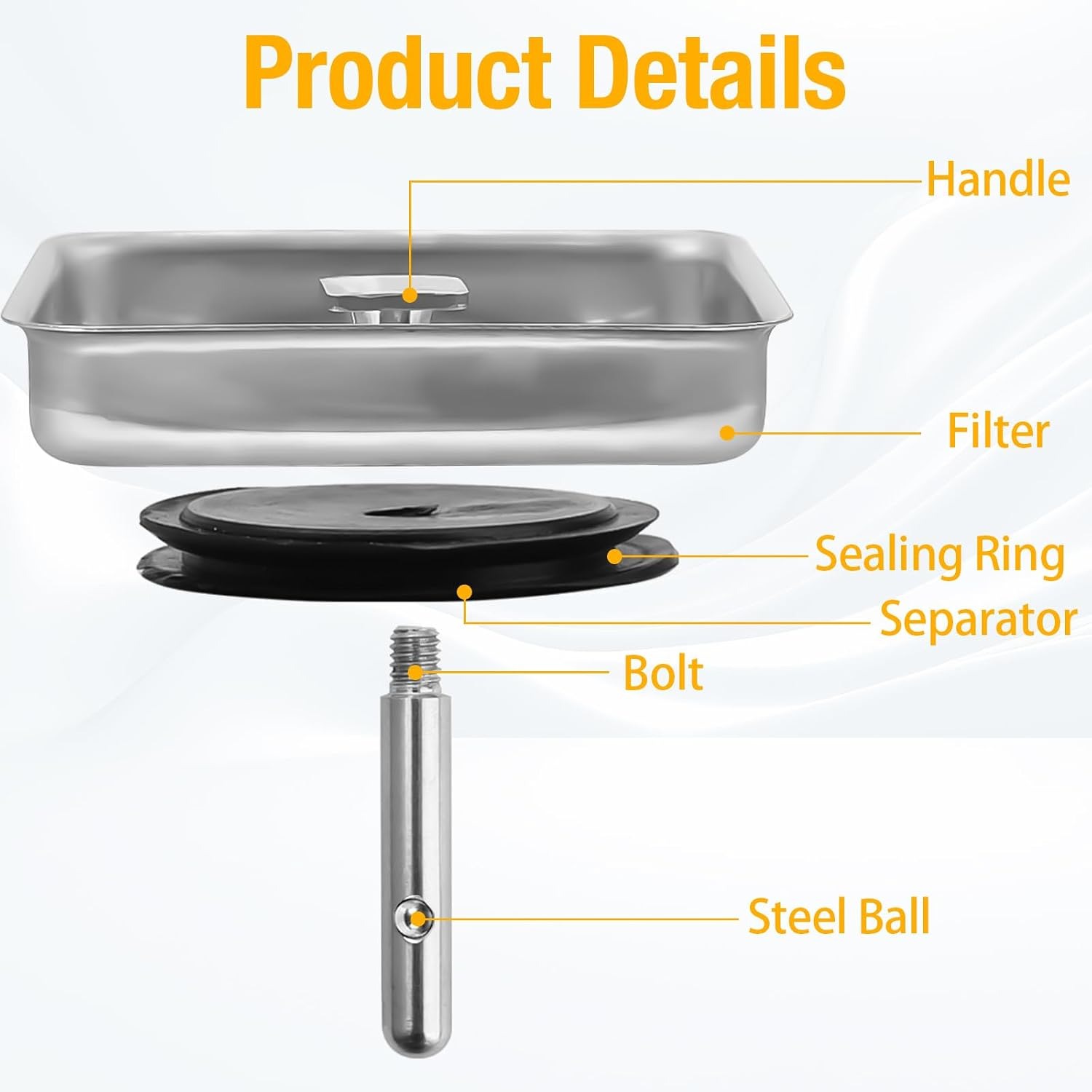
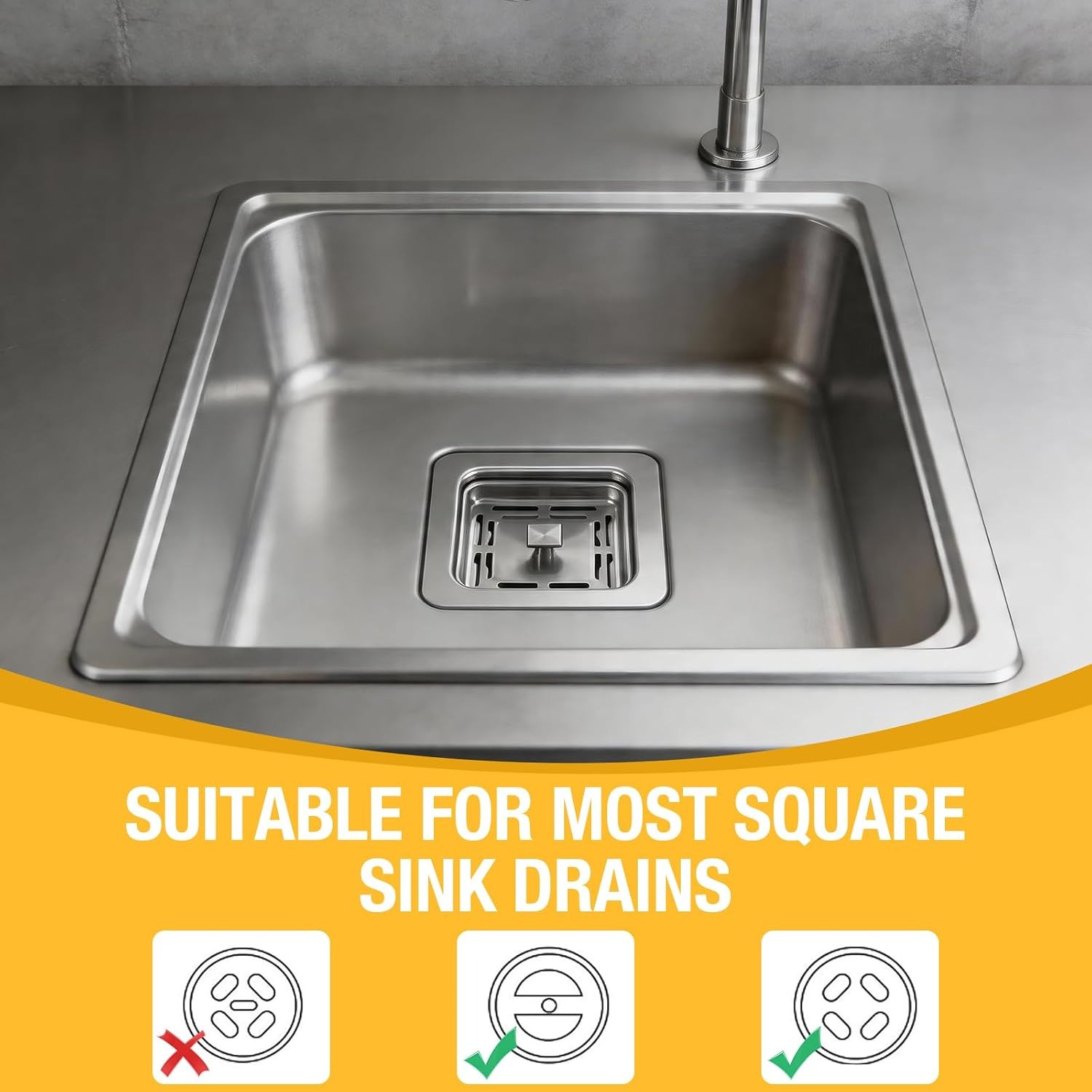
The design here is simple on purpose. A flat stainless steel plate sits in or over the drain opening, with sixteen arc-shaped slots cut into it. Water passes through the slots. Solids stay on top.
The shape of the openings matters more than people expect. A very fine mesh will catch almost everything, including tea dust and tiny crumbs, but it also clogs within minutes of real washing up. You end up with a sink full of grey water waiting to drain, and you clear the screen three times per wash.
Curved slots are a middle path. They let water through at close to full speed, so emptying a full sink feels normal, while still blocking the pieces that cause problems downstream. Grains of rice, vegetable peel, bits of pasta, hair and the small plastic objects that children post into plugholes all stop at the surface.
Material choice is the other half of the equation. Plastic strainers are cheap and they work at first. Then you pour a pot of boiling pasta water over one, and another, and after a year the rim has warped and the plastic has gone cloudy and brittle. Stainless steel does not care about boiling water. It also does not stain from turmeric, beetroot or tomato sauce, which pale plastic absolutely does.
This strainer is listed at 0.08 kg. That is light in absolute terms but it is the right amount of weight for the job. Too light and it lifts and shifts when you run the tap hard. Too heavy and it is awkward to handle one-handed while you are juggling a dripping pan.
Who it suits
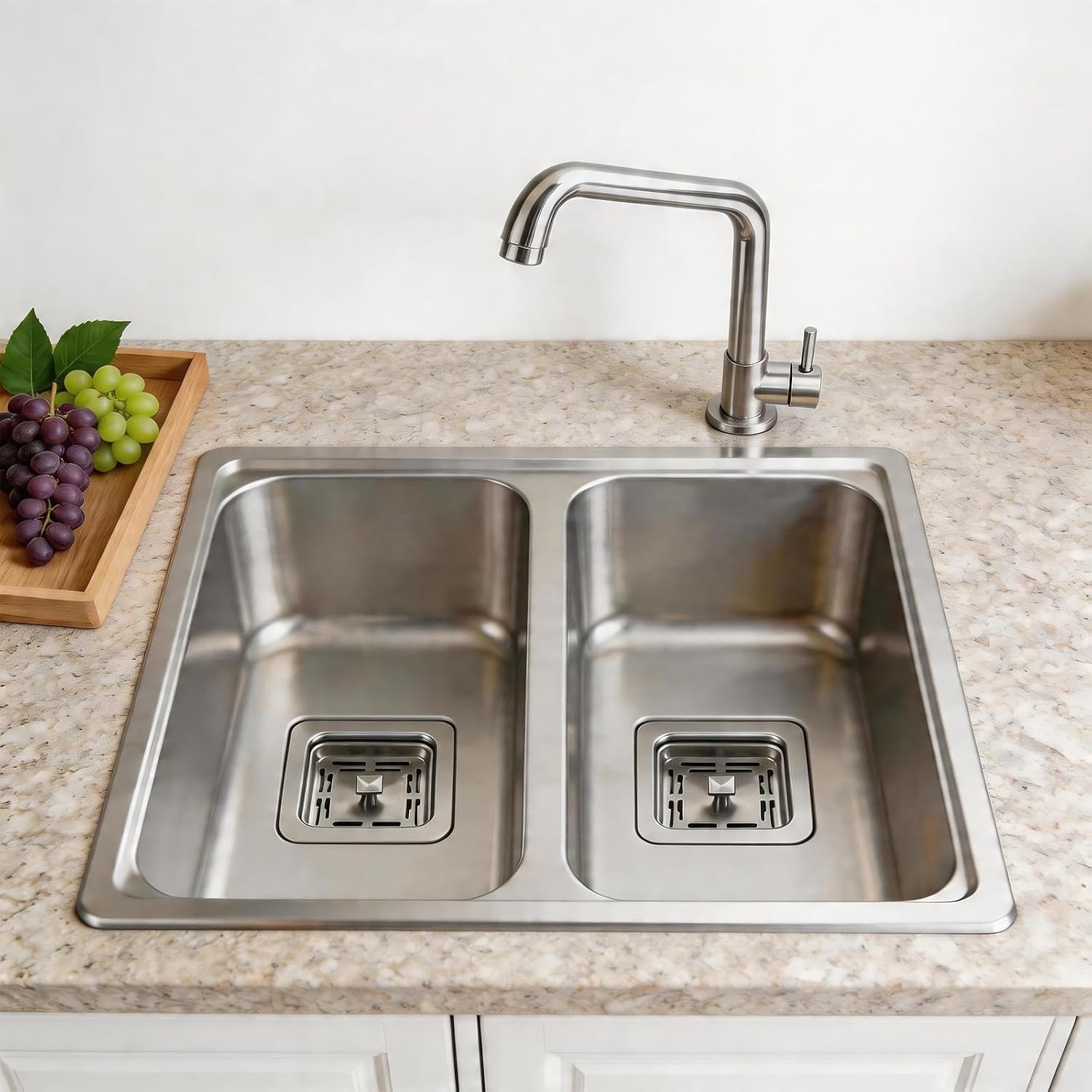
The obvious home is the kitchen sink, and that is where most people put it. If you cook from scratch more than a couple of nights a week, you are generating scraps constantly, and a strainer saves you a genuine amount of hassle.
It also suits anyone in a rental. You usually cannot call a plumber on a whim, and a blocked drain in a shared kitchen becomes everyone's problem fast. A metal screen costs a fraction of a callout and it moves out with you when you go.
Older plumbing benefits more than new plumbing. Pipes that have already narrowed from years of buildup have less tolerance for new debris. If your sink already drains a bit slowly, keeping solids out entirely is worth doing.
Beyond the kitchen, the manufacturer lists bathroom basins, bathtubs, wash basins, floor drains and balcony drain holes as suitable places. In a bathroom you are mostly catching hair, which is the single most common cause of basin and shower blockages. Outdoors, on a balcony drain, stainless steel copes with weather in a way that plastic covers do not.
Households with small children get an extra benefit. Plugholes have a magnetic attraction for lego, hair clips and small coins. A screen across the opening stops a quiet afternoon turning into an expensive one.
How to choose the right one
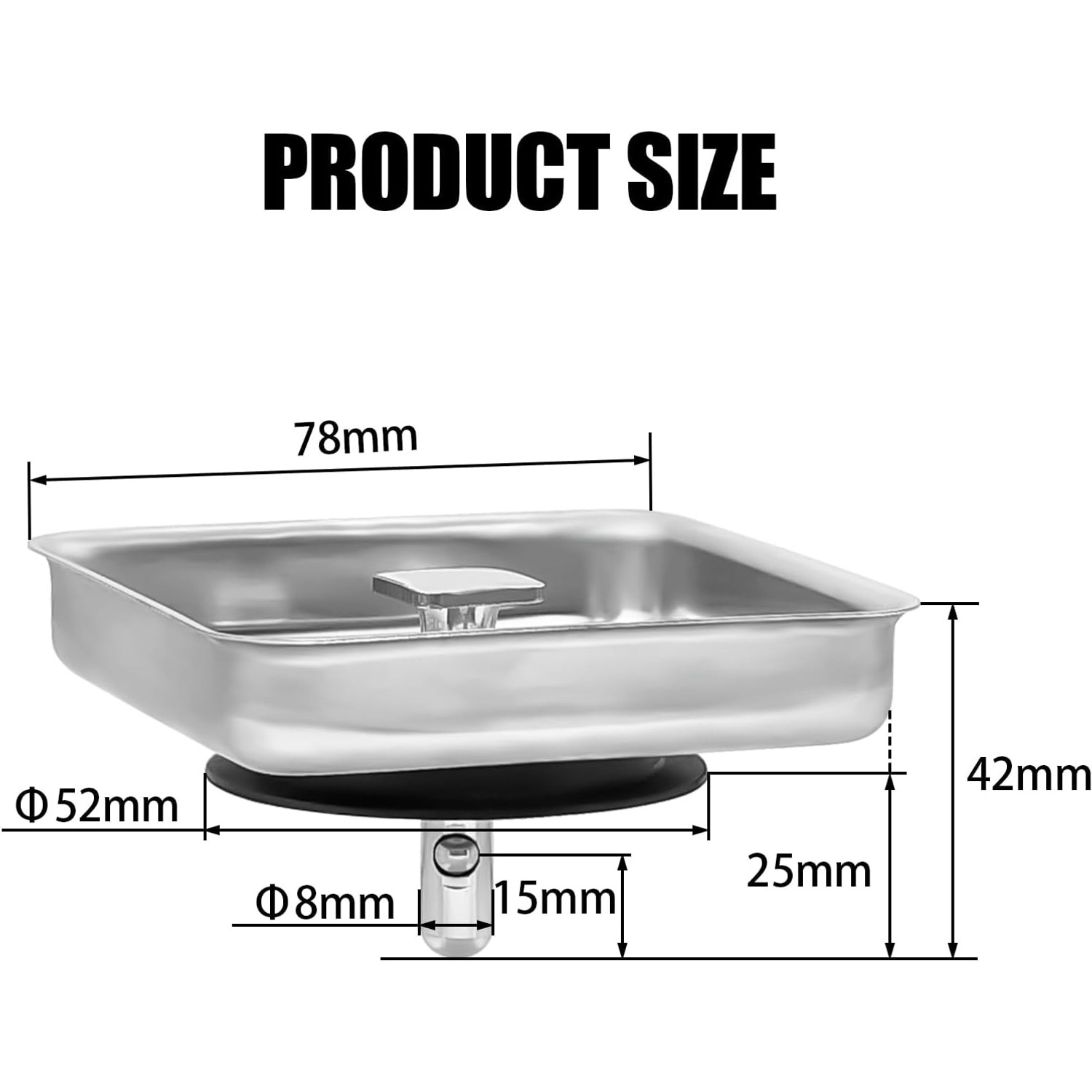
Start with the drain opening. This product is described as 78 x 42mm, with a folded size figure of 100 x 50 x 20 mm in the supplier details. Full verified overall dimensions are not specified by the maker, so measure your own drain opening at its widest point before ordering. A strainer that is slightly too big will sit awkwardly, and one that is too small will let debris slip around the sides.
Shape matters as much as size. This is a rectangular strainer, so it is built for square and rectangular drain openings. If your plughole is round, a round strainer will seat properly and this one will not. Look at your sink rather than assuming.
Think about what you need to catch. A kitchen strainer dealing with food scraps works well with generous slots. If your main concern is fine hair in a bathroom, you may want a finer screen in that location and a slotted one in the kitchen. There is no rule that says every drain in your home needs the same type.
Consider how it feels to handle. You will be picking this thing up with wet, soapy hands several times a day. The edges on this model are passivated, which means the manufacturing burrs have been smoothed off. That sounds like a tiny detail. It is not, because the alternative is catching your fingertip on a raw metal lip every single evening.
Finally, think in terms of quantity. Each pack contains one piece. If you want coverage in the kitchen and the bathroom, you need two. Some people also keep a spare so there is always a clean one ready while the other dries.
Keeping it clean
The maintenance routine is short, which is the only reason people actually stick to it.
After each wash-up, lift the strainer out, tap the scraps into the bin and rinse it under the tap. Ten seconds. The point is to do it while the debris is still wet and loose, because dried-on food is much harder work.
Once or twice a week, give it a proper clean. Warm soapy water and a soft brush or an old toothbrush will clear the greasy film that builds up in the slots. Grease is what turns a fast-draining strainer into a slow one, so getting into the openings is the part that matters. Rinse and dry it before putting it back.
Avoid steel wool and abrasive scouring powder. They will scratch the finish without improving anything. A sponge or a nylon brush is plenty for stainless steel.
If you use a chemical drain cleaner at any point, take the strainer out of the plughole first and flush the drain thoroughly before you put it back. There is no reason to leave metal sitting in caustic liquid.
One habit worth building, especially in a kitchen, is scraping plates into the bin before they reach the sink. The strainer is a safety net, not a substitute. The less that hits it, the less often you are clearing it.
The short version
A square sink strainer is a small piece of stainless steel that does one job and does it reliably. It sits over your drain, lets water through sixteen arc-shaped slots and holds back the food scraps, hair and small objects that would otherwise build up in your pipes.
It is silver stainless steel, weighs 0.08 kg, ships as a single piece and carries the part number WJX-HB01678-BT from tooloflife. It suits kitchen sinks, bathroom basins, bathtubs, floor drains and balcony drain holes where the opening matches.
Measure your drain before ordering, rinse the strainer after each use, scrub the slots weekly, and keep scraping plates into the bin. Do that and the question of whether your sink is draining properly stops being something you think about.