
The complete guide
How to Choose a Shower Drain Hair Catcher That Actually Gets Used
The problem nobody notices until it is too late
A blocked shower drain is a slow-motion event. Every wash sends a few strands down the plughole. They catch on the inside of the pipe, usually right at the first bend, and they stay there. Soap, conditioner and skin oils stick to them. Within a few months there is a soft, grey mat sitting somewhere you cannot see, and the first sign you get is water lapping around your feet while you are still rinsing shampoo out.
By that point your options are not great. Chemical drain cleaner is harsh on pipes and worse for anyone with older plumbing. A drain snake works but is a genuinely unpleasant job. A plumber will fix it properly and send you a bill that makes the whole thing feel avoidable in hindsight, because it was.
The fix is boring and cheap. Stop the hair at the surface. That is all a shower drain hair catcher does, and it is why a small piece of perforated steel saves more hassle than almost anything else you can buy for a bathroom.
How a drain hair catcher works
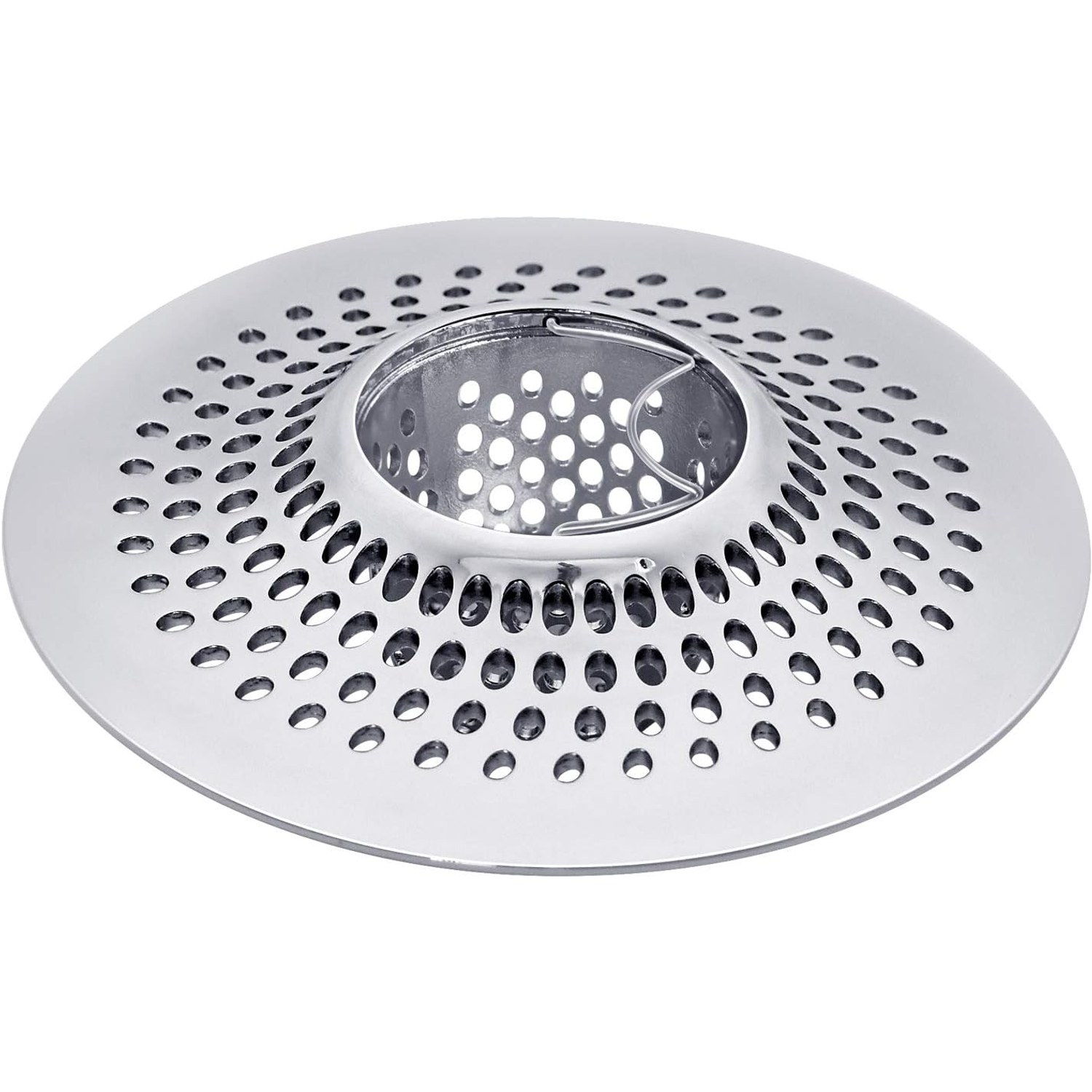
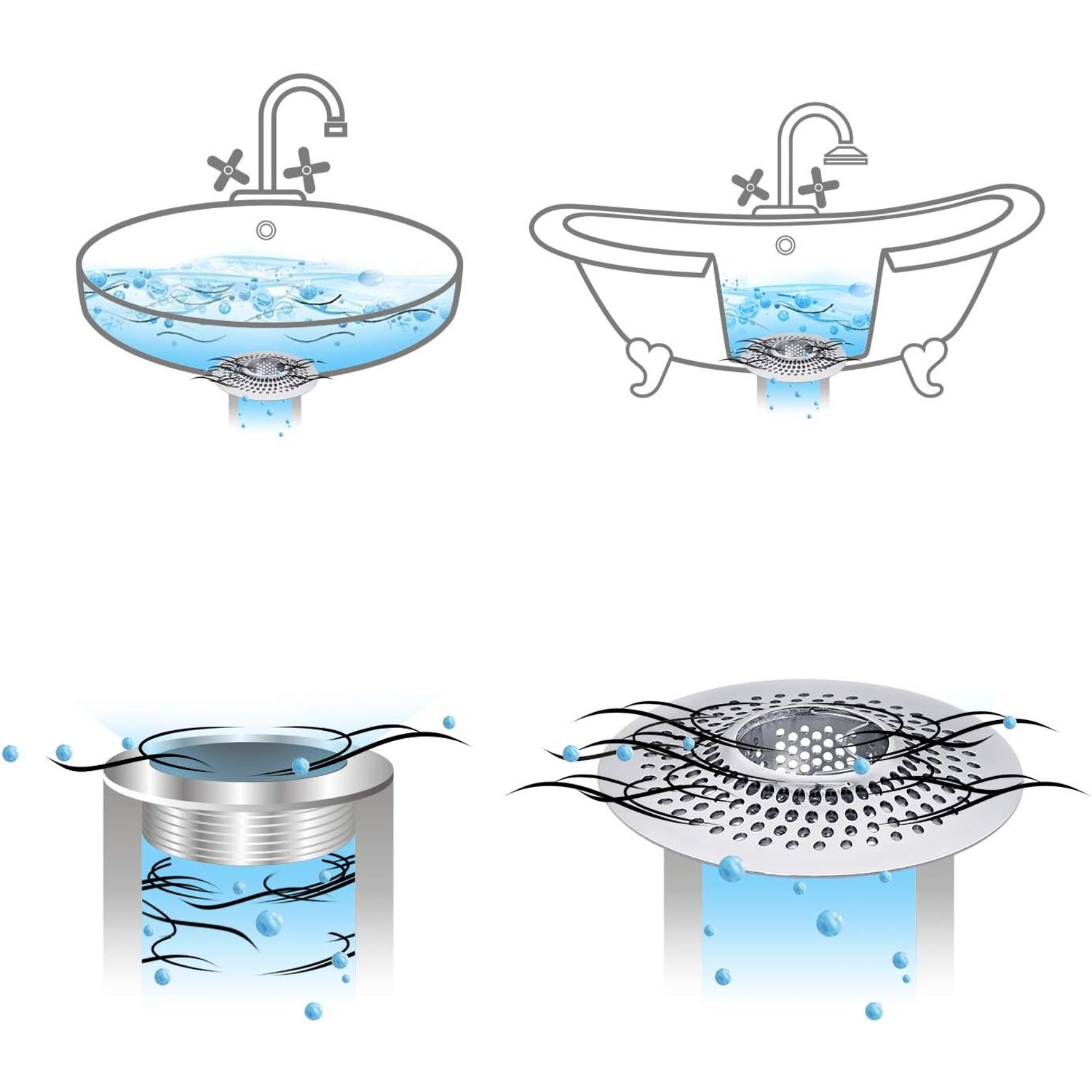
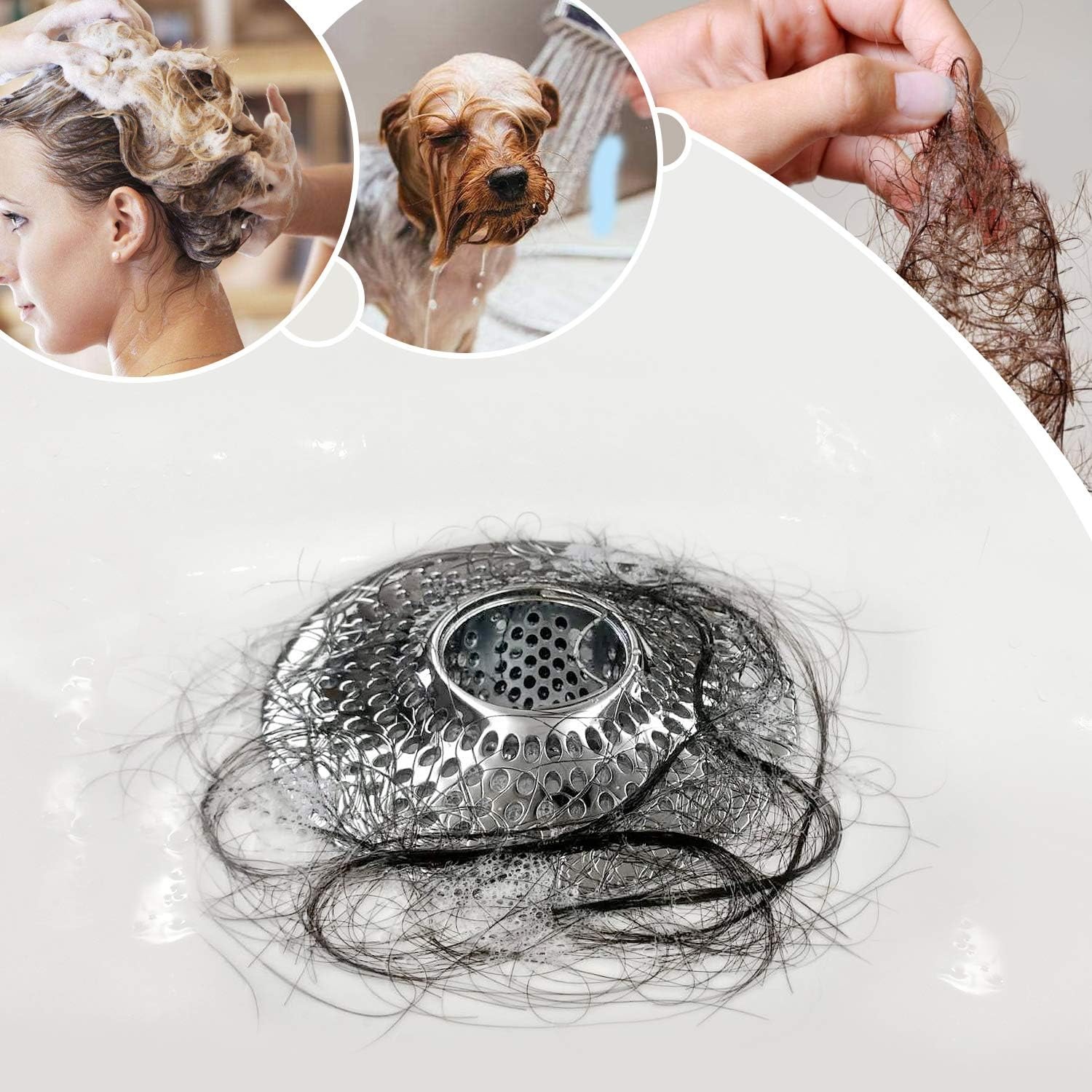
The idea is simple. You place a perforated barrier over the drain opening. Water, which has no trouble finding its way through small holes, keeps draining. Hair, which is long and tangles with itself, lies across the top of the holes instead of slipping through. Lint, soap flakes and the occasional earring do the same.
The trick is getting the hole pattern right. Make the holes too big and fine strands slide straight through, which defeats the point. Make them too small or too few and the water backs up, which is the thing you were trying to avoid. A good catcher spreads lots of small openings across the whole face, so the total open area stays generous even though each individual hole is narrow.
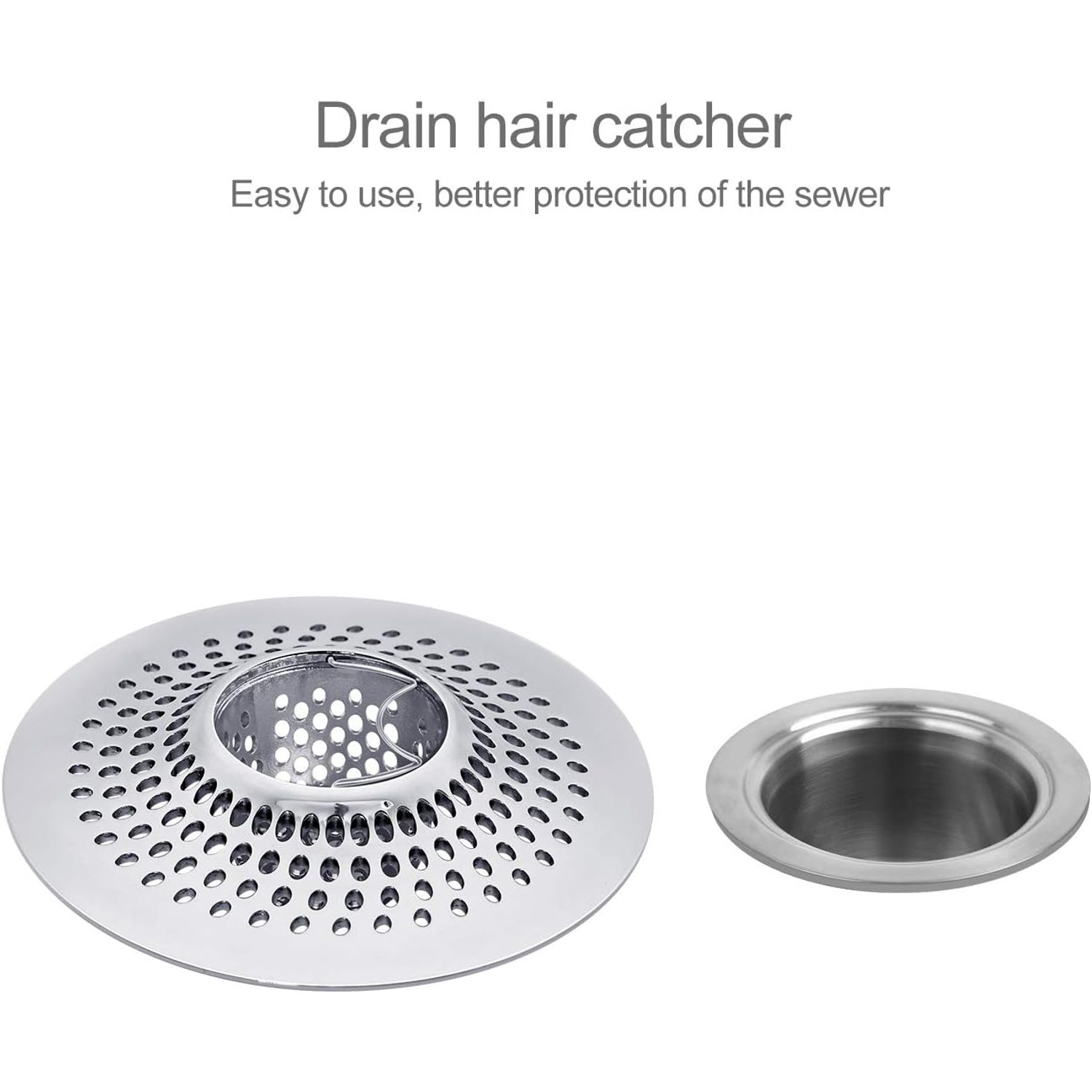
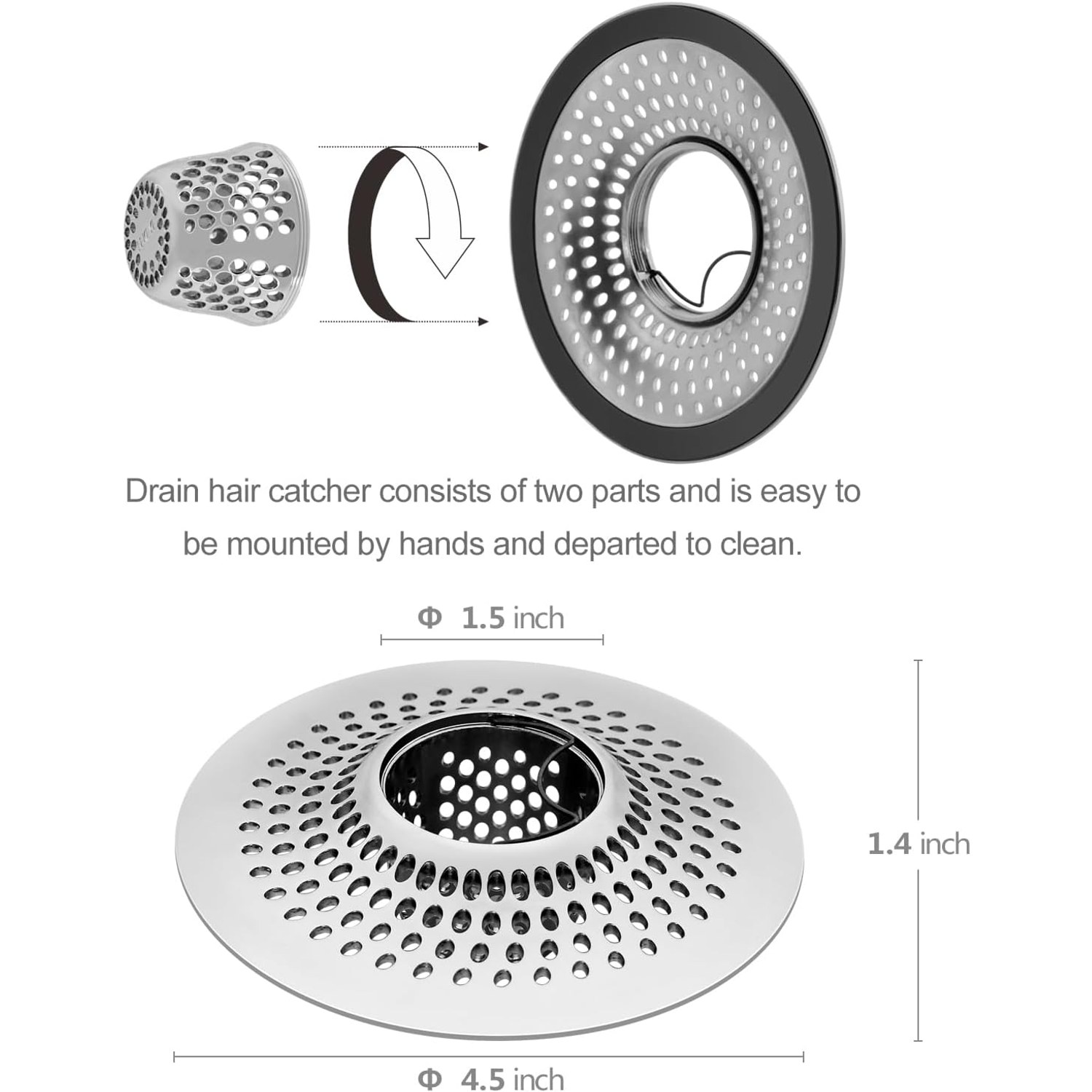
This one is built as two separate parts rather than a single moulded piece. You lift the upper basket out by its handle, tip what has collected into the bin, rinse the piece under the tap and drop it back in. No clips, no tools, no peeling a suction ring off a wet surface. The whole thing takes seconds.
That matters more than it sounds. A drain catcher only works if you empty it. Anything that turns emptying into a fiddly chore ends up clogged and ignored, which is just a blockage in a different location. The best easy clean drain strainer is simply the one you do not mind dealing with.
Why stainless steel instead of plastic
Plenty of drain screens are plastic, and they are cheap for a reason. A shower drain is about the harshest small environment in a house. It is warm, wet most days, splashed with soap and detergent, and then dried out and wetted again on repeat. Plastic responds to that cycle by going brittle, staining in the corners and eventually cracking around the rim where it flexes most.
Stainless steel does not care. It holds its shape when you press it into the opening, it resists rust, and it still looks clean after months of daily use. The finish on this one is a plain silver stainless steel, which sits comfortably alongside chrome and brushed tapware without drawing attention to itself.
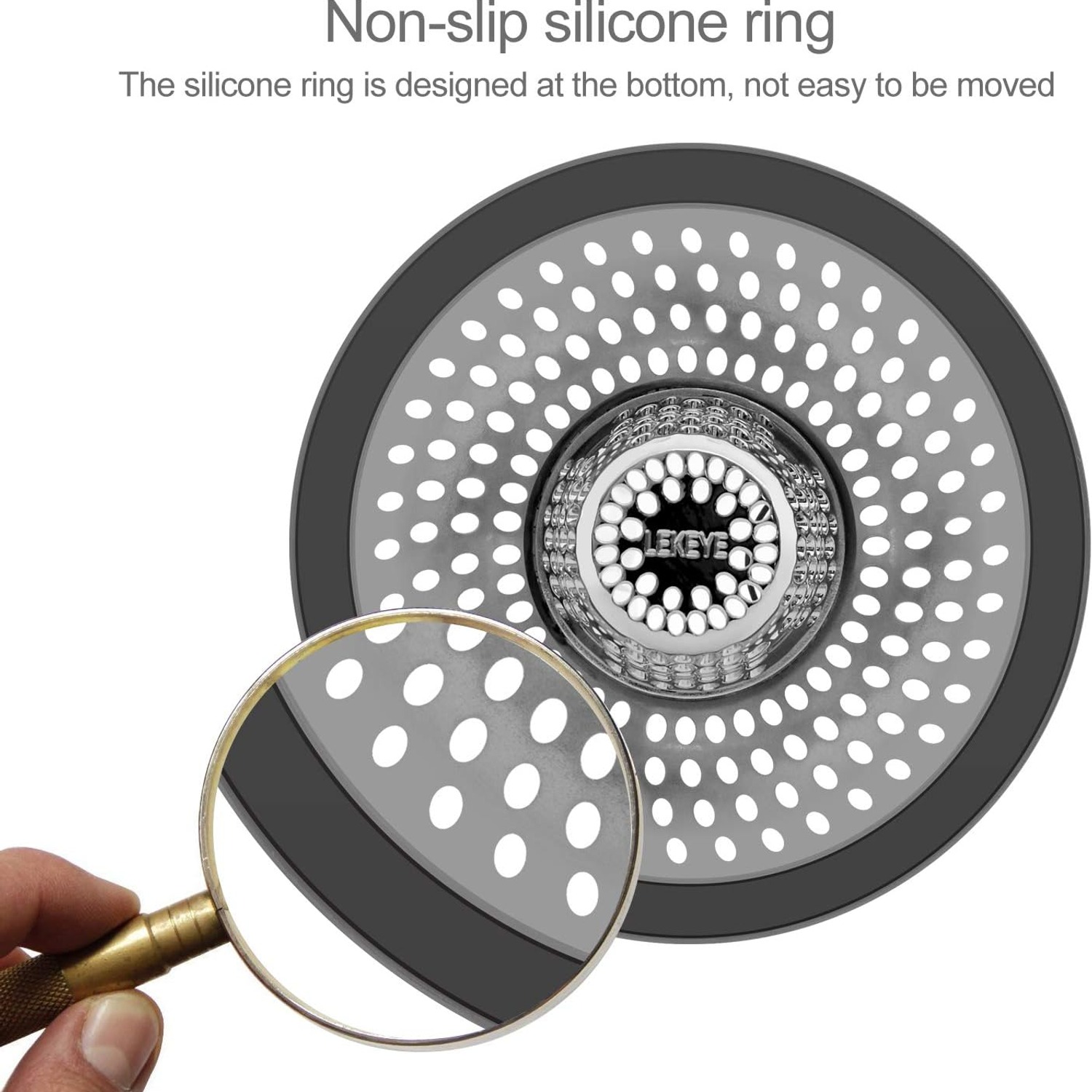
There is also a weight consideration. At 122 g this catcher has enough mass to stay put rather than skating sideways when a strong shower head hits it. Very light plastic screens tend to drift and lift, which lets hair past the edges.
Who it suits
Anyone with long hair in the house is the obvious answer, and the gap between households with long hair and households without is enormous. One person with hair past their shoulders can shed enough in a month to narrow a pipe noticeably.
Shared bathrooms are the next group. Flatshares, family homes, student housing, anywhere several people use one shower in a day. The volume adds up faster than anyone expects and nobody particularly wants to be the one who deals with it later.
Renters are a quiet third group. A blocked drain in a rental turns into a conversation with a property manager, a plumber visit and sometimes a dispute about who caused it. A cheap catcher at the surface sidesteps all of that, and it comes with you when you move.
Pet owners who bathe dogs indoors should also pay attention. Short coat hair sheds in enormous quantity and it binds into felt-like clumps inside pipework. A fine perforated surface catches it well, and the best hair trap for bathtub use tends to be the one with the most open area so a heavy shed does not block the whole thing mid-wash.
How to choose one
Start with the measurement. Get a tape and check the diameter of your drain opening. This catcher is 11.2 cm wide and 3.6 cm high. If your drain opening is wider than the catcher, hair will sneak past the edge. If it is much narrower, the catcher will sit proud of the surface and feel awkward underfoot. A couple of minutes with a tape measure saves a return.
Then look at the depth. Some shower bases have a recessed drain with a few centimetres of room below the surface. Others sit almost flush. The 3.6 cm height tells you how much of the catcher will stand above or sit within your opening, so compare the two.
After that, think about how it cleans. A one-piece screen means lifting the whole thing and picking hair off it, often with your fingers. A two-part design lets you separate the pieces, which gives you better access and a better rinse. It is a small difference that decides whether you keep using it.
Finally, consider material honestly. If you are happy replacing a plastic screen every year or so, that is a valid choice. If you would rather buy once, steel is the sensible option. A rustproof shower strainer sitting in a wet drain for years is doing a job that plastic is simply not built for.
Fitting and living with it
Installation is not really installation. You drop it into the plughole by hand and you are done. The raised handle on the basket doubles as a finger lift, which means you have something to grip when removing it rather than trying to hook a fingernail under a flat disc.
Build the cleaning into something you already do. Many people lift and tip it while the shower is still running, since the water rinses the surface as they go. Others do it when they clean the bathroom. Either works. What does not work is leaving it until the water starts pooling, because at that point hair has started packing into the holes and you need a brush.
For a deeper clean, warm water and a little dish soap will shift the soap film that builds up around the perforations. A soft brush, an old toothbrush is ideal, gets into the holes. Skip the steel wool, skip the bleach soaks and skip abrasive powders, since all three can dull the finish without doing anything useful. Dry the pieces before refitting if you want the steel to stay bright.
One practical note about baths. If your tub uses a stopper that seats inside the drain opening, you will likely need to lift the catcher out to fill the bath, then refit it when you drain. Make that part of the routine and it stops being an annoyance.
What it will not do
Worth being clear. A drain catcher is prevention, not repair. If your shower is already draining slowly, the blockage is downstream and sitting in the pipe. Clear that first, then fit the catcher so you do not have to do it again.
It also will not stop everything. Very fine particles, sand from the beach, grit from the garden, all pass straight through. That is fine, because those things do not form the mats that block pipes. Hair does, and hair is what this handles.
The short version
Hair blocks drains. It happens slowly, it happens out of sight, and it is irritating and sometimes expensive to fix. A perforated steel catcher sitting in the plughole stops the problem at the only point where stopping it is easy.
This one is stainless steel in silver, 11.2 cm wide and 3.6 cm high, weighing 122 g. It comes apart into two pieces for cleaning, refits by hand, and has a raised handle so you are not fishing around in the drain to get it out. Measure your opening, check it against those numbers, and fit it before the next shower. It is a small thing that quietly removes a job from your future.