


The complete guide
The Honest Guide to Choosing a Shower Hair Catcher
The problem nobody talks about
Every shower with a long-haired person in it has the same quiet routine. You lather up, you rinse, and somewhere in the middle a clump of hair comes away in your hand. Then you have a decision to make, and all the options are bad.
Stick it on the wall and it dries into a shape that horrifies the next person in. Drop it on the floor and it heads straight for the drain. Flick it over the edge of the tub and someone finds it later on the bathmat. Most people pick the wall, because it feels like the least offensive choice at the time. The trouble is that wall hair does not stay on the wall. It dries, it loses grip, and a day or two later it falls, slides toward the lowest point in the room and joins whatever is already lurking in the pipe.
That pipe is where the real cost sits. Hair on its own moves through plumbing reasonably well. Hair combined with soap residue, conditioner and skin oils does not. It binds into a mat that catches the next lot of hair, then the next, until the water starts pooling around your feet. By the time you notice, the blockage is usually some way down the line and well past the reach of a quick fix.
How a wall mounted catcher actually works
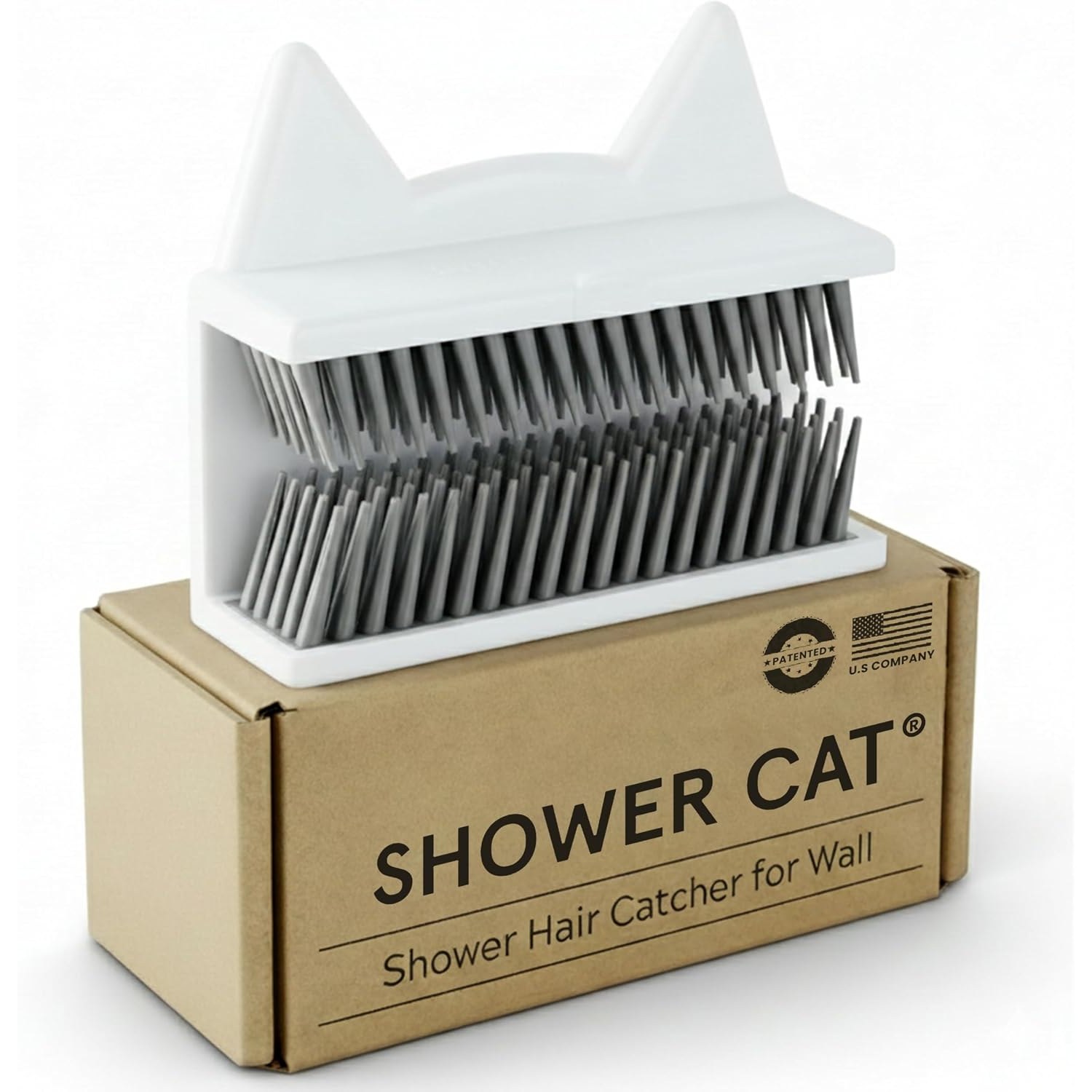
The Shower Cat takes a different angle to most hair products in the bathroom aisle. Instead of sitting in the drain and filtering what has already gone down, it gives you somewhere to put the hair the moment it leaves your head.
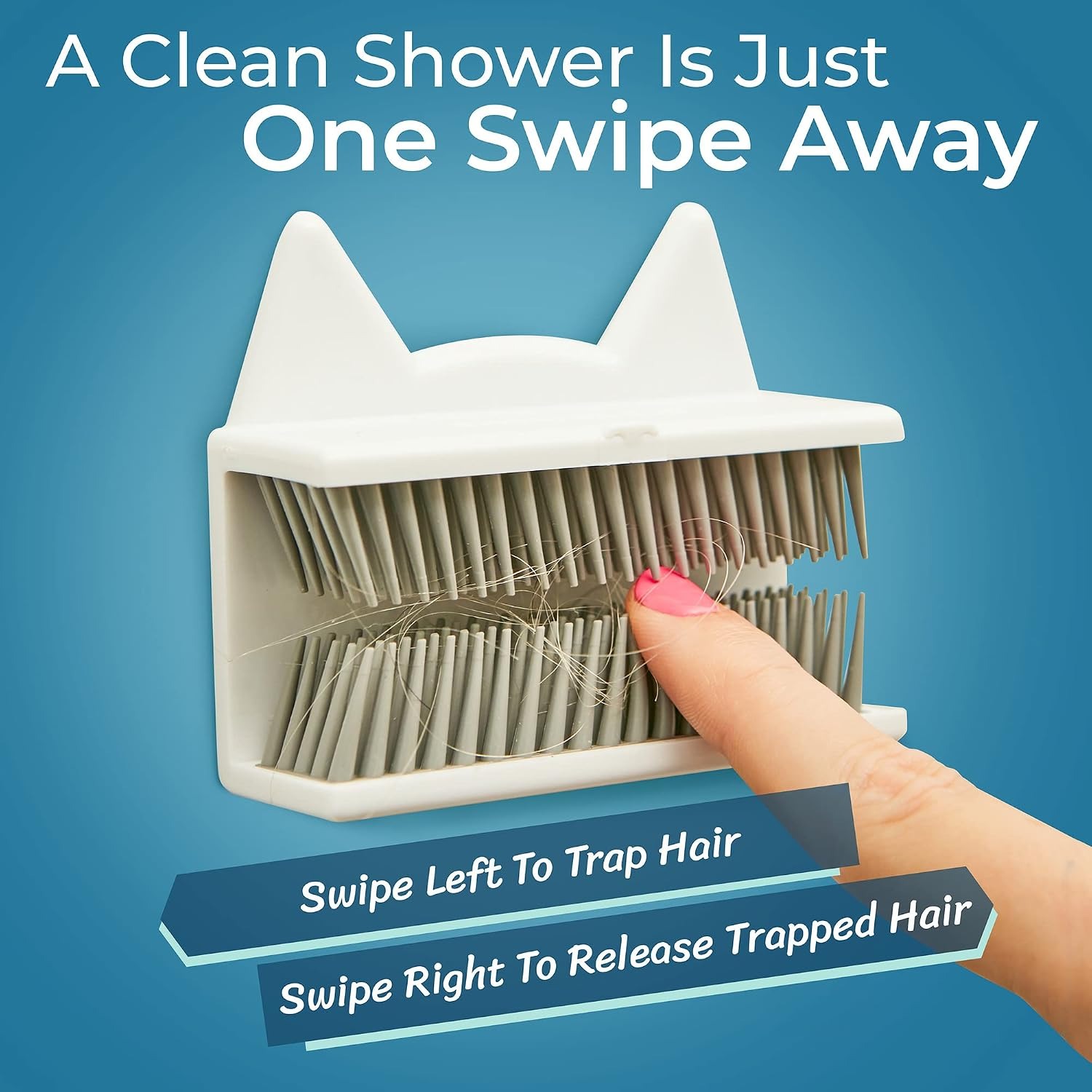
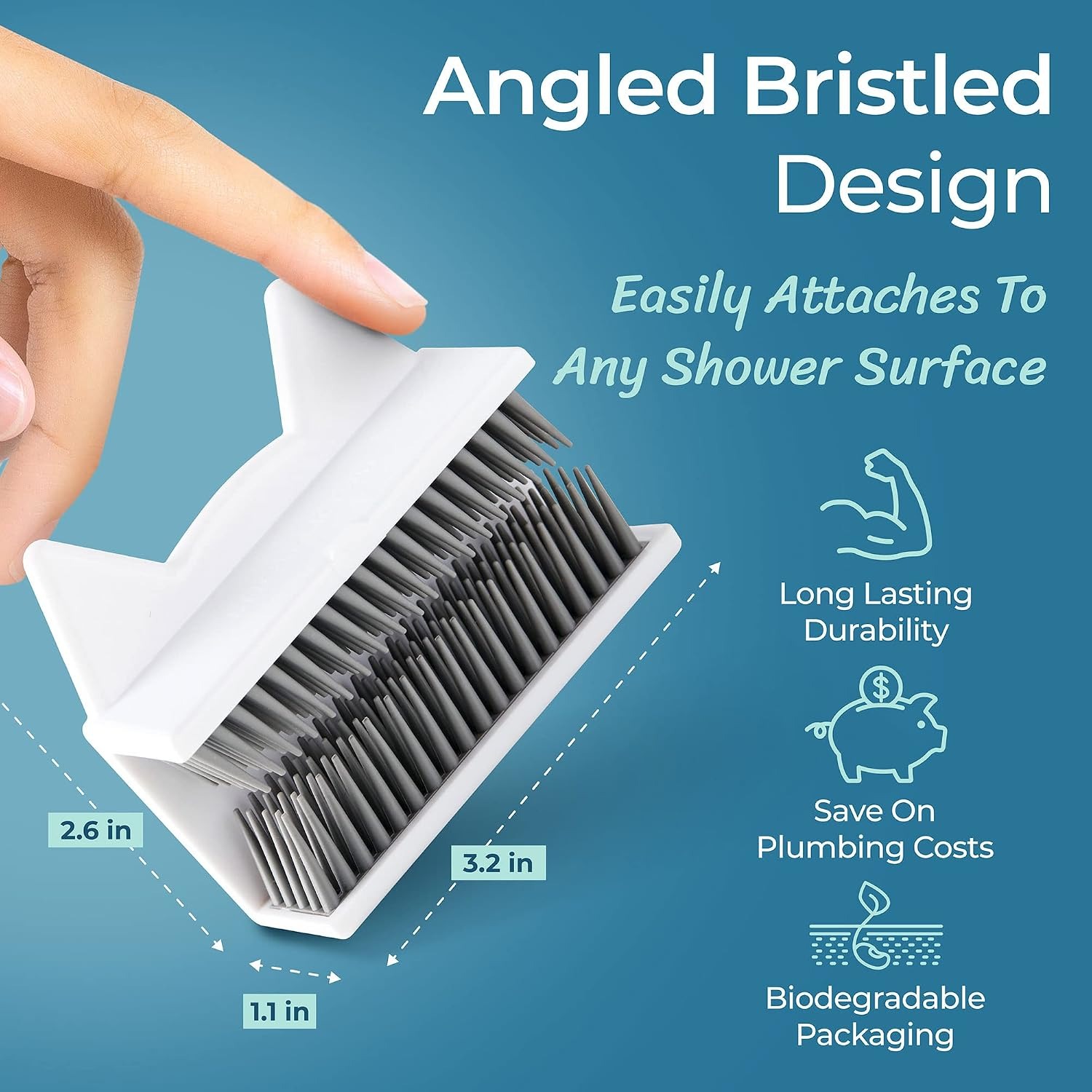
The panel is silicone, 6.6cm wide and 8.1cm high, covered in bristles across the face. The method is simple. Roll the loose strands into a ball, swipe your fingers left through the bristles, and let go. The bristles hold the hair against the panel and it stays there, even with water running over it. When the panel starts to look busy, swipe right and the whole clump lifts off in one go. Into the bin, done.
What makes it work is that it fits the thing you were already doing. You were already collecting hair in your hand mid-shampoo. The only change is where it goes next. There is no basket to lift, no mesh to poke clean, no wet lump to peel off a strainer with your fingertips.
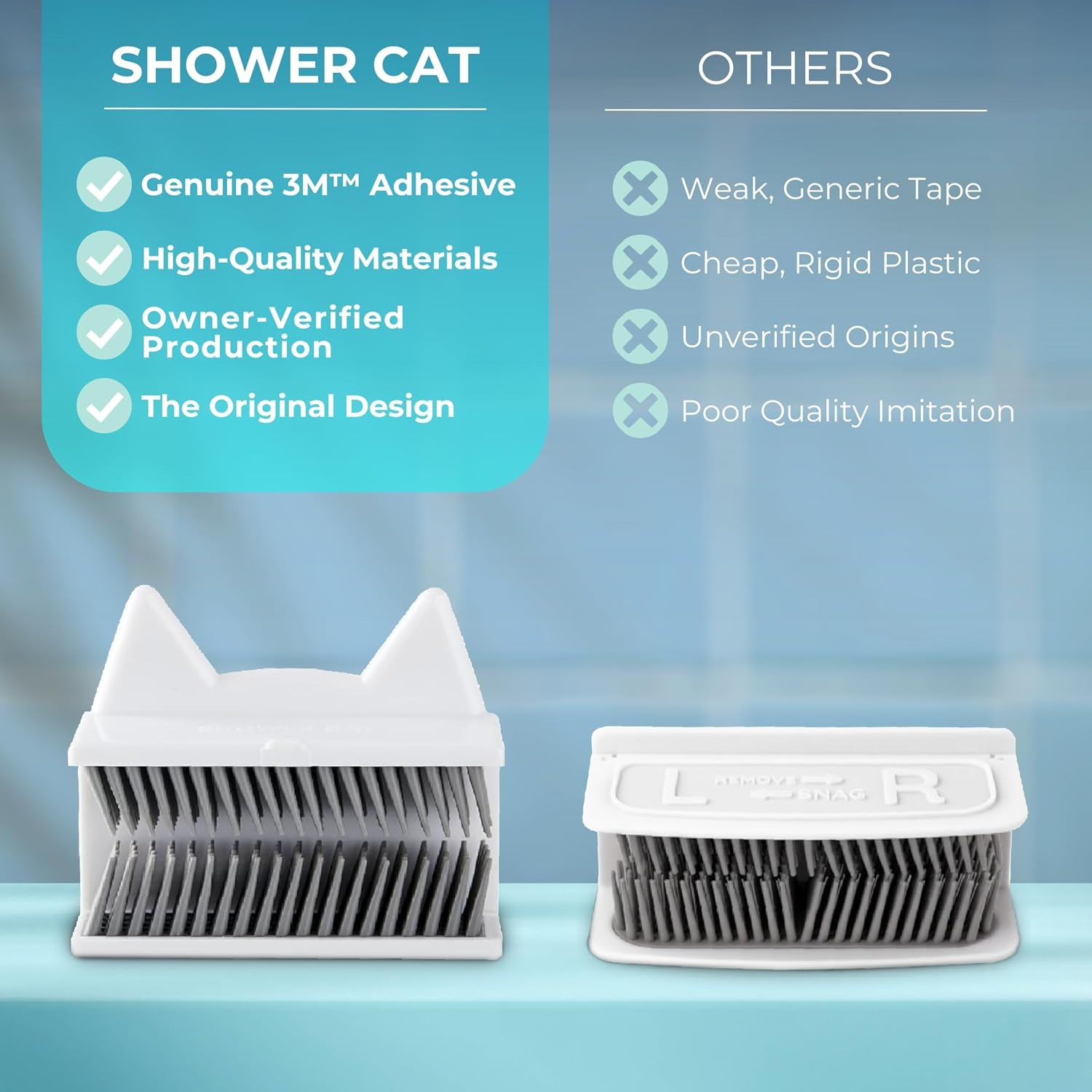
Mounting is a 3M adhesive strip on the back. It is rated for tile, glass, stone, wood, marble, granite, plastic and ceramic, which is essentially every shower surface you are likely to meet. No drilling, no silicone sealant, no tools. That matters a lot if you rent, and it matters if you simply do not want to put holes in good tile.
Who this suits
If you have long hair, this is aimed squarely at you. The product exists because long strands come away in handfuls during washing and there has never been a tidy place to put them.
It also suits households where the shower is shared. Housemate hair on a wall is a genuine source of friction, and a small grey panel that quietly absorbs the problem is cheaper than a conversation about it. Families with teenagers tend to find the same thing.
Renters get particular value from it, because there is no permanent fixing and nothing to make good at the end of a lease. Anyone who has already paid for a drain clearing will understand the maths immediately: one call-out usually costs several times the price of a catcher.
Where it fits less well is short hair. Short hair sheds in small quantities that rarely form a ball in your hand, so there is less to swipe into the bristles. If your drain still clogs with short hair, a drain-level cover is the more direct answer. Plenty of people run both, which is a sensible belt-and-braces approach.
How to choose between catcher types
There are broadly three ways to deal with shower hair, and they are not really competitors so much as different stages of the same journey.
The first is a drain insert. These sit in the plug hole and screen what goes down. They work, but they sit right at the plumbing, which means you are always cleaning something that has already been soaking in dirty water. They can also slow drainage noticeably when they fill.
The second is a flat drain cover or mesh screen. Cheap, easy and effective, but the disposable versions pile up in landfill and the reusable ones still need emptying by hand from the wettest spot in the room.
The third is a wall catcher, which is what this is. It works further upstream. The hair never reaches the drain opening at all, so nothing is soaking, nothing is slowing the flow, and clearing it is a dry-ish, two-second job. Among the best shower wall hair holders, the deciding factors are usually bristle grip, panel size and whether the adhesive holds up in a wet room.
Size is worth a thought. At 6.6cm by 8.1cm, this one is deliberately small. Some people want something larger for very heavy shedding, but bigger panels take up more wall and look more obvious in a compact shower. For most households the compact size holds several showers worth of hair before it needs attention.
Fitting it so it stays put
Adhesive in a bathroom lives or dies on preparation. Clean the spot properly first, which means removing soap scum and any cleaning product residue, then drying it completely. A warm, dry surface bonds far better than a damp one, so fit it on a day the shower has not been used for a few hours.
Choose your position before you commit. Stand where you normally stand, close your eyes, and reach for where your hand naturally goes. That is where the panel should be. Chest or shoulder height on the nearest wall works for most people. Try to keep it slightly out of the direct spray line, which reduces soap build-up and takes some load off the adhesive.
Press firmly for a good while and then leave it alone. Resist the urge to use the shower straight away. Giving the adhesive time to cure before it meets hot water and steam is the single biggest thing you can do to make it last.
Keeping it clean
Maintenance is light. Clear the hair regularly rather than letting it accumulate into a dense mat, because fresh hair swipes off far more easily than hair that has dried onto the bristles. If something has set hard, run warm water over it for a moment and try again.
Every week or two, wipe the panel down with a soft cloth and a mild bathroom cleaner or some diluted dish soap. That lifts the film of soap and conditioner that builds up on everything in a shower. Stay away from scouring pads, abrasive powders and strong solvents, since they can scratch a brushed finish and leave it looking tired.
That is genuinely the whole routine. There is nothing to dismantle and nothing to replace on a schedule.
A note on waste
Disposable drain screens are a small, constant stream of plastic heading for landfill. This product takes the other route. The manufacturer states it is not made from single-use plastics and that the packaging is biodegradable and compostable. If you have been buying throwaway screens by the packet, switching to something reusable removes a recurring purchase as well as the waste.
The short version
Shower hair has to go somewhere, and the three usual destinations (the wall, the floor, the drain) all end badly. A wall-mounted bristle panel gives it a fourth option that actually works.
The Shower Cat is a grey silicone panel, 6.6cm by 8.1cm, with bristles that grab hair when you swipe left and release it when you swipe right. It sticks to almost any shower surface with a 3M strip, needs no tools, and suits rentals as well as owned homes. It is reusable, and the packaging composts.
It is at its best for long hair in a shared or busy bathroom. It is less relevant if your hair is short, though pairing it with a drain cover covers both situations. Clear it often, wipe it down occasionally, and keep it just out of the direct spray.
Mostly, it saves you from the moment you stand in a pool of your own bathwater and realise this is going to involve a plumber. Catching the hair at head height is a much better plan than catching it at pipe level.