
The complete guide
Choosing a Washer Drain Hose Extension That Actually Fits
The problem nobody mentions when you buy a washing machine
Appliance manufacturers design drain hoses for an imaginary laundry. In that laundry, the standpipe is directly behind the machine, the floor is level, and nothing is in the way. Your actual laundry probably looks different. Maybe the tub is on the opposite wall. Maybe you are in a rental where the drain sits at an odd height. Maybe you bought a portable washer and the only drain available is the kitchen sink two steps away.
The factory hose is usually around 1.2 to 1.5 metres. That sounds like plenty until you account for the drop behind the machine, the curve it needs to make, and the height it has to climb to clear the tub rim. By the time you work all that in, you are often half a metre short.
People solve this badly. They shove the machine closer to the wall and crush the hose. They prop the hose end on a chair. They tape two hoses together and hope. All three fail eventually, and the failure usually involves water on the floor.
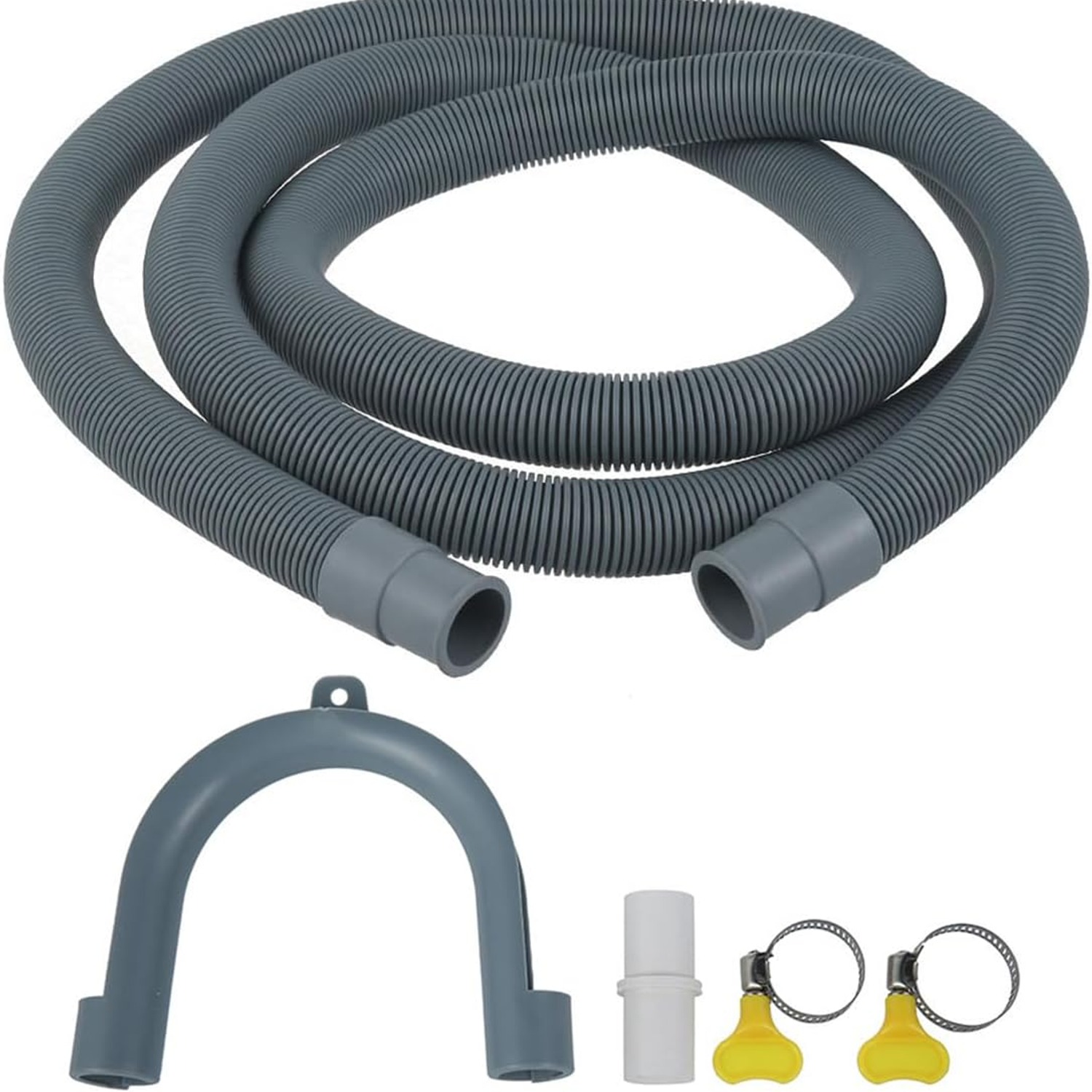
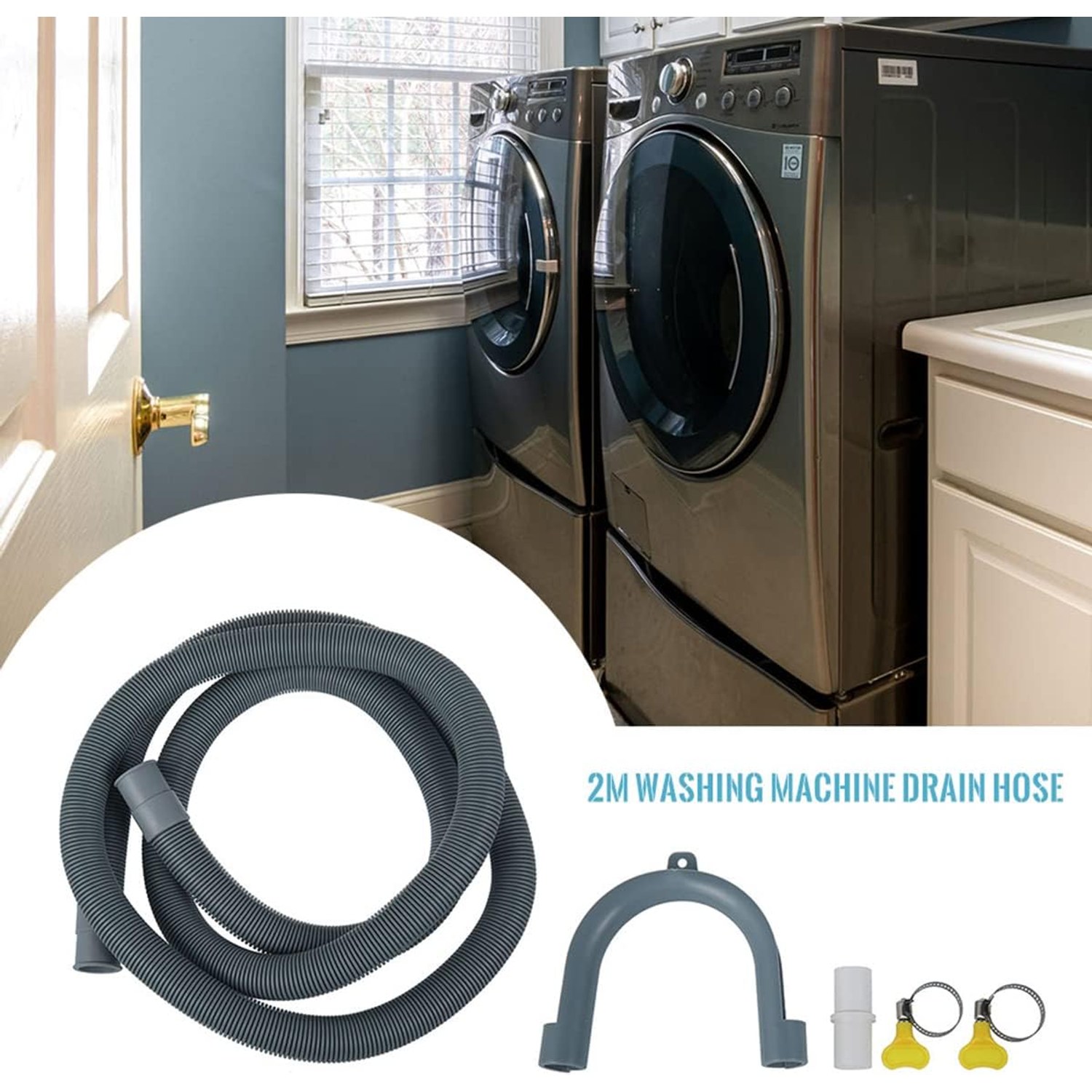
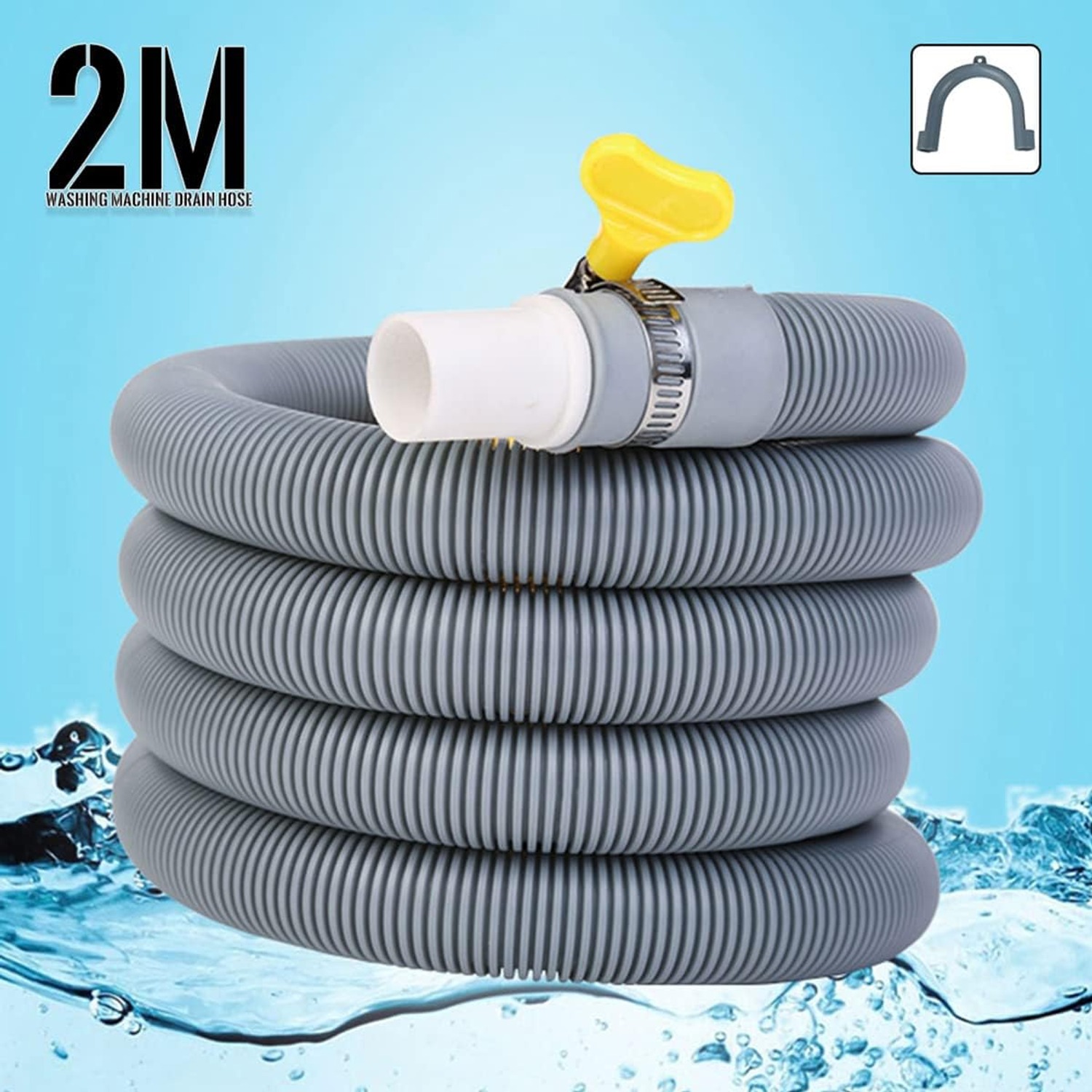
A proper washer drain hose extension fixes it properly. Two metres of flexible hose, clamps that hold, and a hanger that keeps the end where you put it.
How a drain hose extension works
Your washing machine does not rely on gravity to empty. It has a pump. That pump pushes water up and out through the drain hose with real force, which is why the hose end has to be secured and why loose connections spray rather than drip.
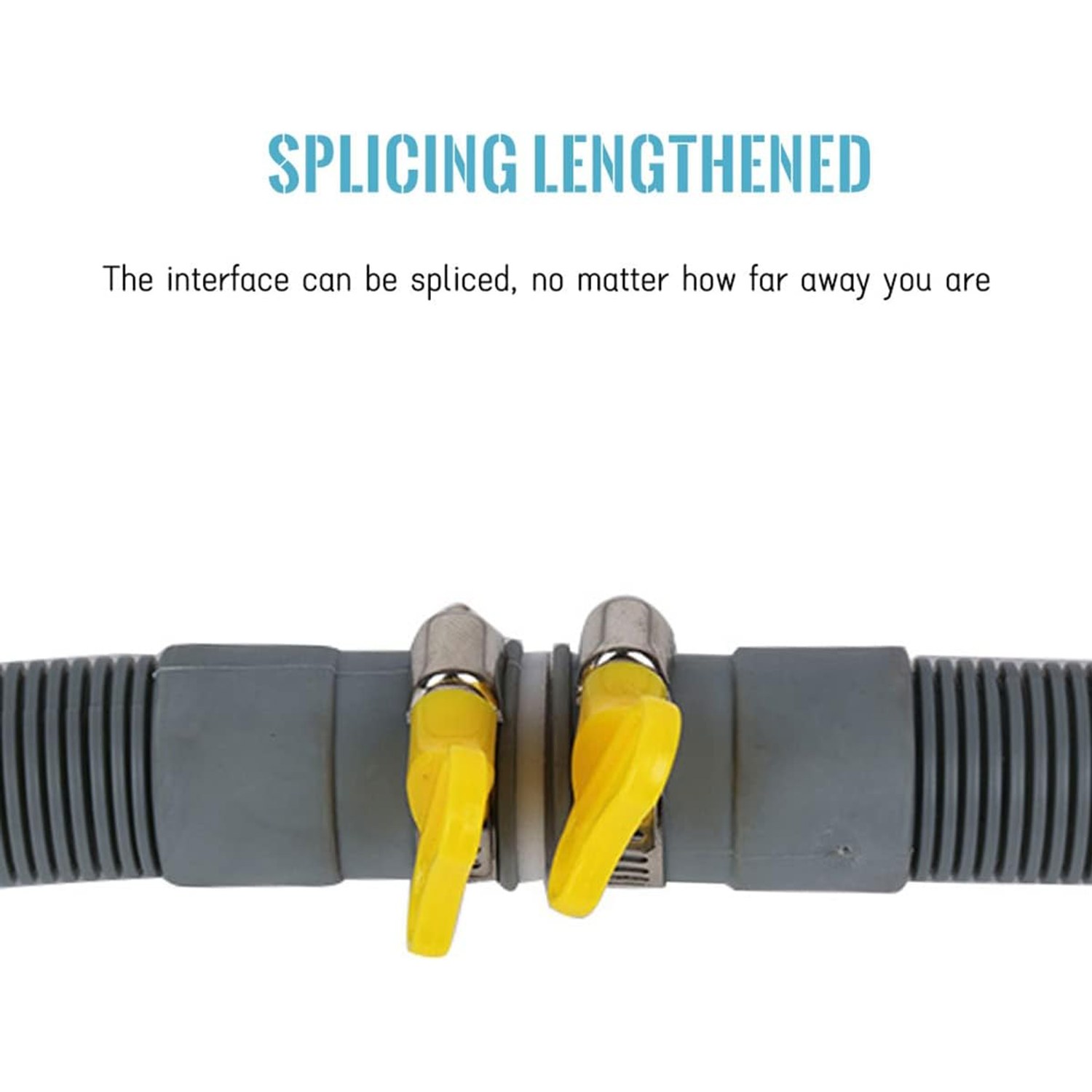
An extension sits between the machine's existing outlet and the drain. You fit it over the outlet, clamp the joint, then run the hose to the standpipe or tub and secure that end too. The water travels further, but the pump is still doing the same work.
That last point matters. A pump has a finite amount of lift and push in it. The longer the hose and the higher the drain, the harder the pump works. Most appliance manuals state a maximum drain hose length and a maximum drain height. Two metres of extension is generally fine. Six metres of chained extensions and a drain up near the ceiling is not, and you will see drain errors or slow emptying as a result.
This set uses polypropylene for the hose. It is flexible enough to curve around a corner without collapsing, and it copes with the warm, slightly soapy water that comes out of a washing machine. The two clamps are 304 stainless steel, which is the grade you want in a room that is damp most of the week.
Who this suits
Renters get the most obvious benefit. You cannot move a standpipe, but you can move the machine, and an extension gives you the slack to put the washer where it fits instead of where the plumbing says.
Portable washer owners are the other big group. Portable units are designed to drain into a sink, and the stock hose is often short and stiff. A 2 metre flexible drain hose with a U-bend hanger turns a wobbly arrangement into something you can actually trust while you walk away.
It also suits anyone who has just rearranged a laundry, anyone fitting a dishwasher where the waste connection is awkward, and anyone running an air conditioner condensate line that needs to reach a drain rather than a tray you have to remember to empty.
It is less suitable if your appliance outlet is a very different size to the 20mm inner bore, or if you need a permanent, built-in waste line. For a permanent installation inside a wall or under a floor, use rigid pipe and a plumber.
How to choose the right one
Three numbers decide whether a drain hose extension works for you.
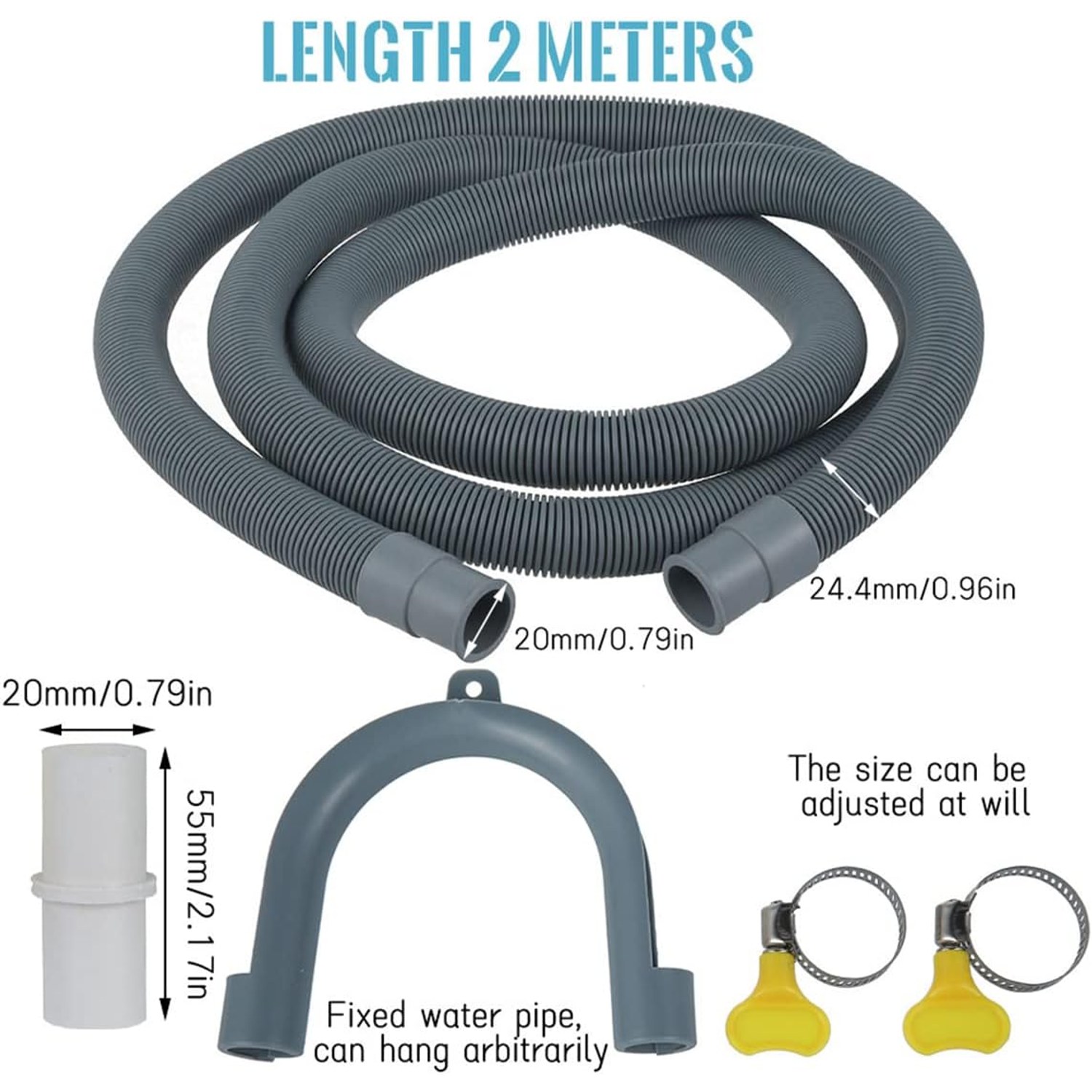
Diameter. Measure the outside of your machine's drain spigot. This hose has a 20mm inner diameter and a 24.4mm outer diameter. If your spigot is around 20mm, you are in the right territory. If it is 32mm, you need a different product or a step adapter. Guessing here is the most common ordering mistake.
Length. Run a tape measure from the back of the machine, down to the floor, across to the drain, and up to the height of the drain entry. Add a bit of slack so the hose is not pulled tight. Then compare that to what your existing hose already covers. Two metres of extension covers most domestic gaps with room to spare.
Drain height. Check your appliance manual for the maximum drain height. If your standpipe or tub rim is above that figure, no hose will fix it. You need to lower the drain or raise the machine.
After those three, look at the hardware. Stainless steel clamps are worth having. So is a hanger of some kind, because the single most common cause of a laundry flood is a drain hose that worked its way out of the tub partway through a spin cycle. This kit includes both, plus a white adapter for joining to the existing outlet.
Fitting it without drama
Unplug the machine and turn off the water before you start. Pull it out far enough to work behind comfortably.
Trim the extension to the length you need, if you need it shorter. Use a sharp blade and make a clean square cut. A ragged, angled cut will not seal under a clamp.
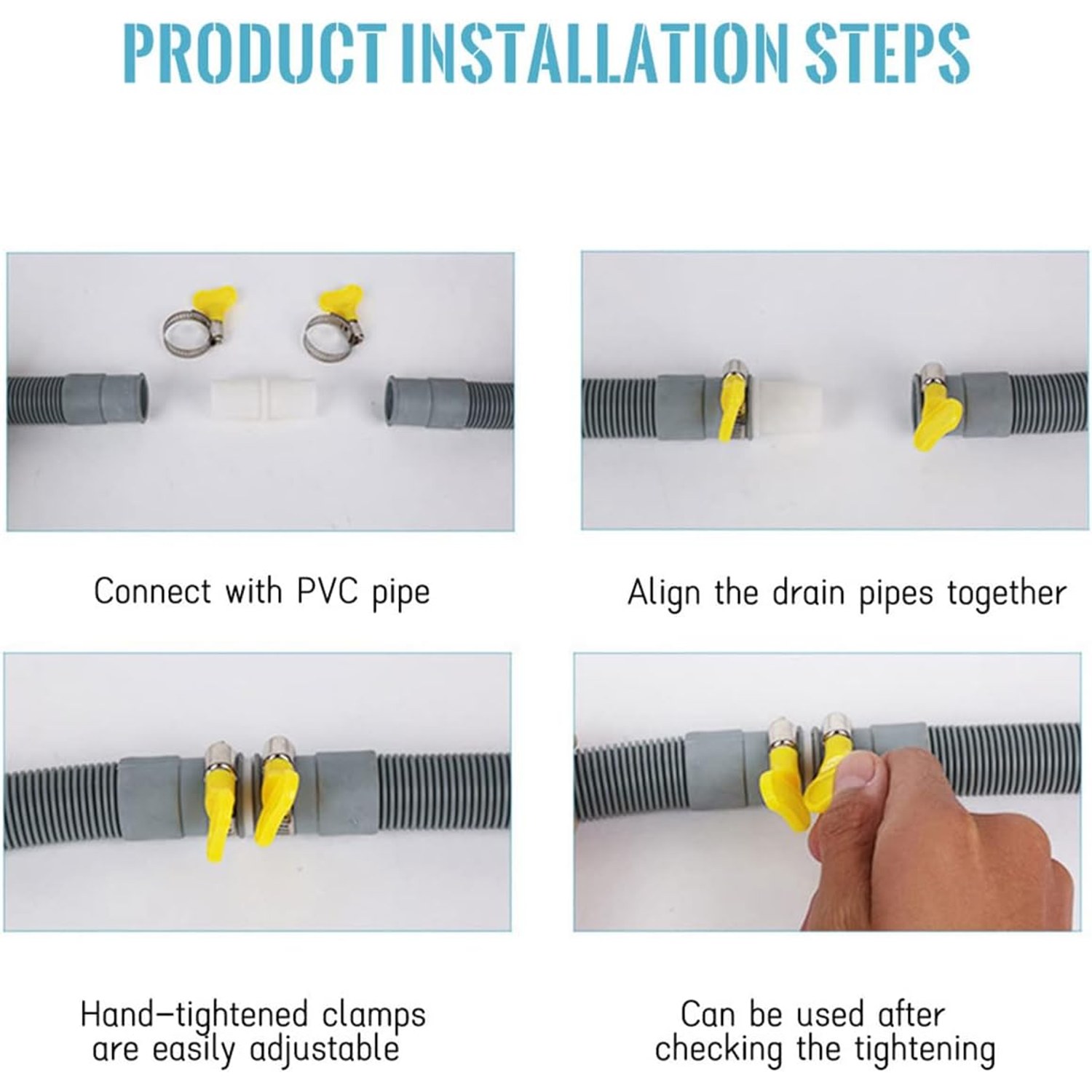
Slide a clamp onto the hose before you push it onto the fitting. Everyone forgets this at least once. Push the hose fully onto the outlet or adapter, slide the clamp over the overlap, and tighten the screw until the band bites into the hose but does not cut it. Snug, not crushed.
At the drain end, fit the U-bend hanger and hook it over the tub rim or into the standpipe. The end of the hose should sit inside the drain but not pushed down so far that it forms a seal. An airtight fit in a standpipe can cause siphoning, where the machine quietly drains itself while it is trying to fill.
Then run a short cycle and watch. Check both joints with a dry hand or a paper towel. If anything is damp, tighten and test again. Only push the machine back once you have seen a full drain cycle with no leaks.
Keeping it working
Drain hoses are low maintenance, but they are not zero maintenance.
Lint builds up inside over time, especially if you wash a lot of towels or pet bedding. Once a year, pull the hose off and flush it with clean water from both ends. You will be surprised what comes out.
Check the clamps occasionally. Plastic relaxes slightly under a clamp over months, and a quarter turn on the screw restores the grip. Stainless steel clamps make this easy because they are not seized with rust.
Watch for kinks. Every time you move the machine, the hose shifts. A hose that has been pinched behind a leg for six months will have a permanent crease, and that crease is where flow slows and blockages start. Keep the bends wide.
If the hose sits unused for a long stretch, drain it and store it loosely coiled somewhere dry and out of direct sun.
The short version
A washing machine drain hose extension is a cheap part that prevents an expensive problem. This set gives you 2 metres of flexible polypropylene hose, two 304 stainless steel clamps, a white adapter and a U-bend hanger, which is the full set of parts you need rather than just the hose.
Before you buy, measure your appliance outlet against the 20mm inner diameter, measure the distance you actually need, and check your manual for the maximum drain height. Get those three right and fitting takes a few minutes.
The same hose covers dishwashers, kitchen sinks, bathtubs and air conditioner condensate, so if you only use half of it on the washer, the rest rarely goes to waste.