
The complete guide
How to Choose a Washing Machine Drain Hose Seal That Actually Stops the Smell
The problem nobody mentions when you buy a washing machine
Washing machines get delivered, levelled and plugged in, and then the outlet hose gets dropped into the floor drain. That is usually where the thinking stops. The hose is maybe 22 to 30 mm across. The floor waste is 45 to 50 mm. So there is a ring of open pipe sitting there permanently, with nothing between your laundry and the drain line underneath.
Two things follow from that gap.
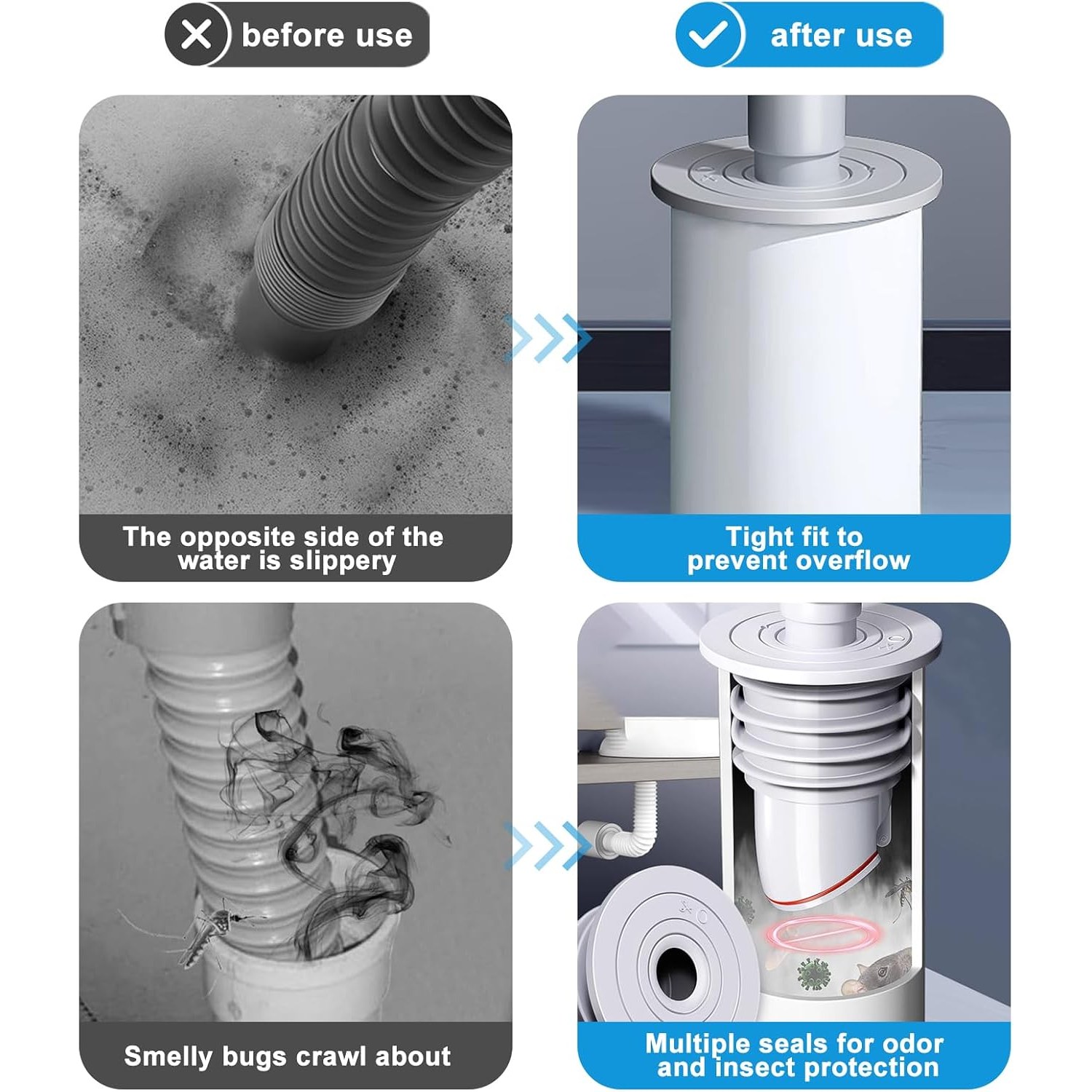
The first is smell. Warm, soapy water leaves a greasy film on the inside of a drain pipe. Lint sticks to it, hair sticks to it, and bacteria get to work. The air that rises off that is not pleasant, and with an open pipe it has a direct route into the room. People scrub the machine, run cleaning cycles, bleach the drum and wonder why the laundry still smells faintly of something sour. Often the machine is innocent. The hole in the floor is the problem.
The second is the hose jumping out. Modern machines pump hard. A hose resting loose in a wide pipe can creep upward over a few cycles, and once the end clears the drain you have water across the floor. It usually happens while you are out.
A washing machine drain hose seal deals with both at once. It is a small silicone part that fills the gap, grips the hose and closes the pipe when nothing is draining.
How the seal works
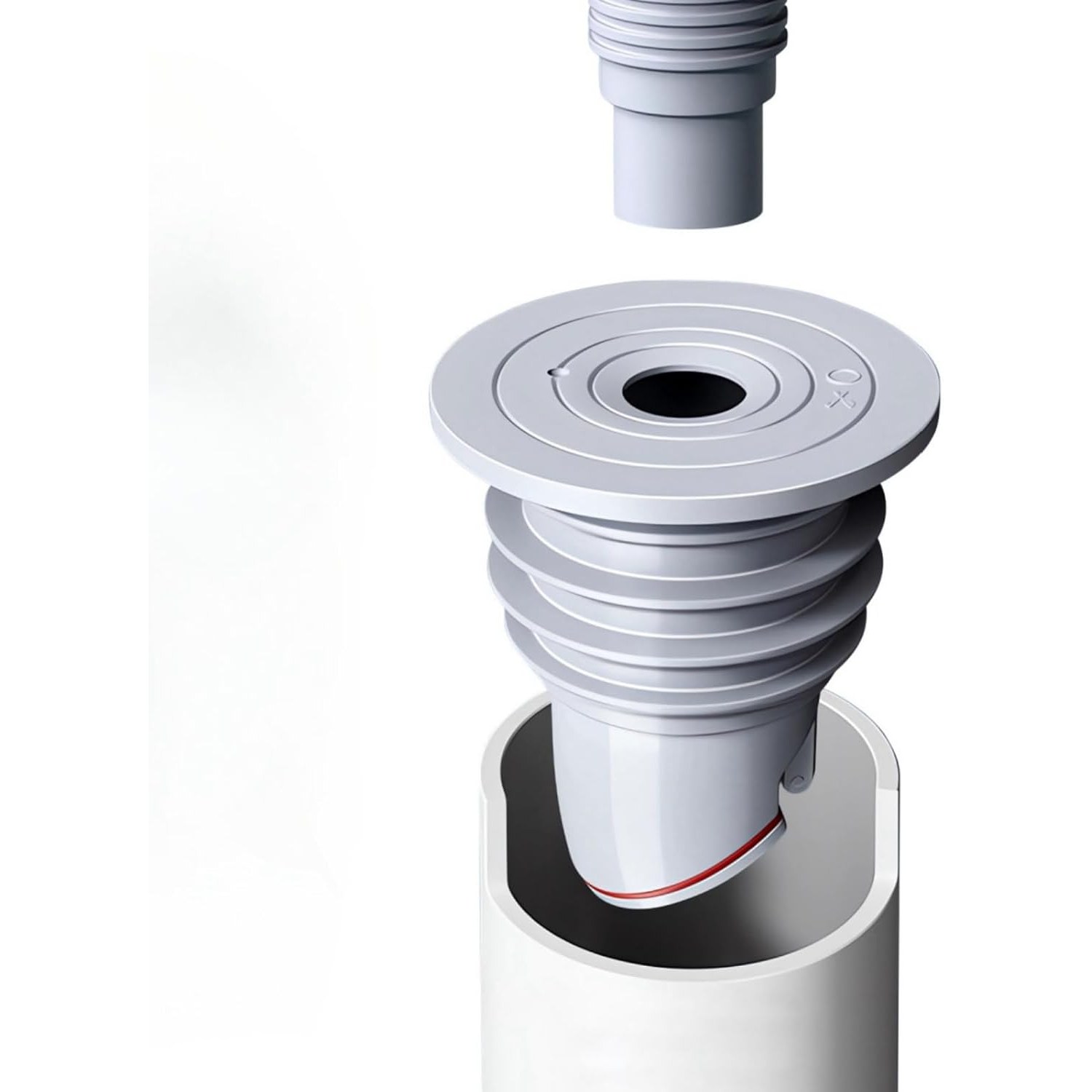
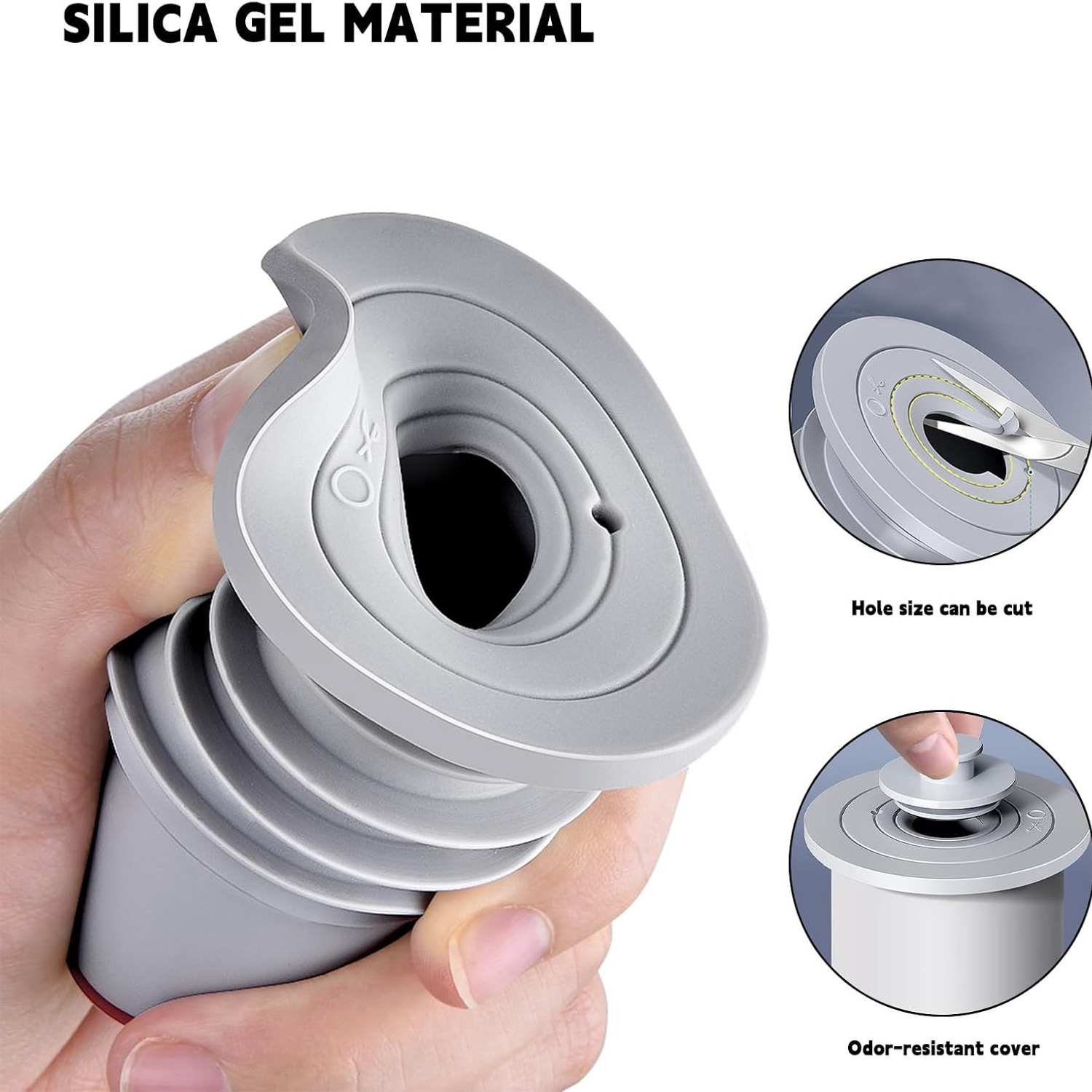
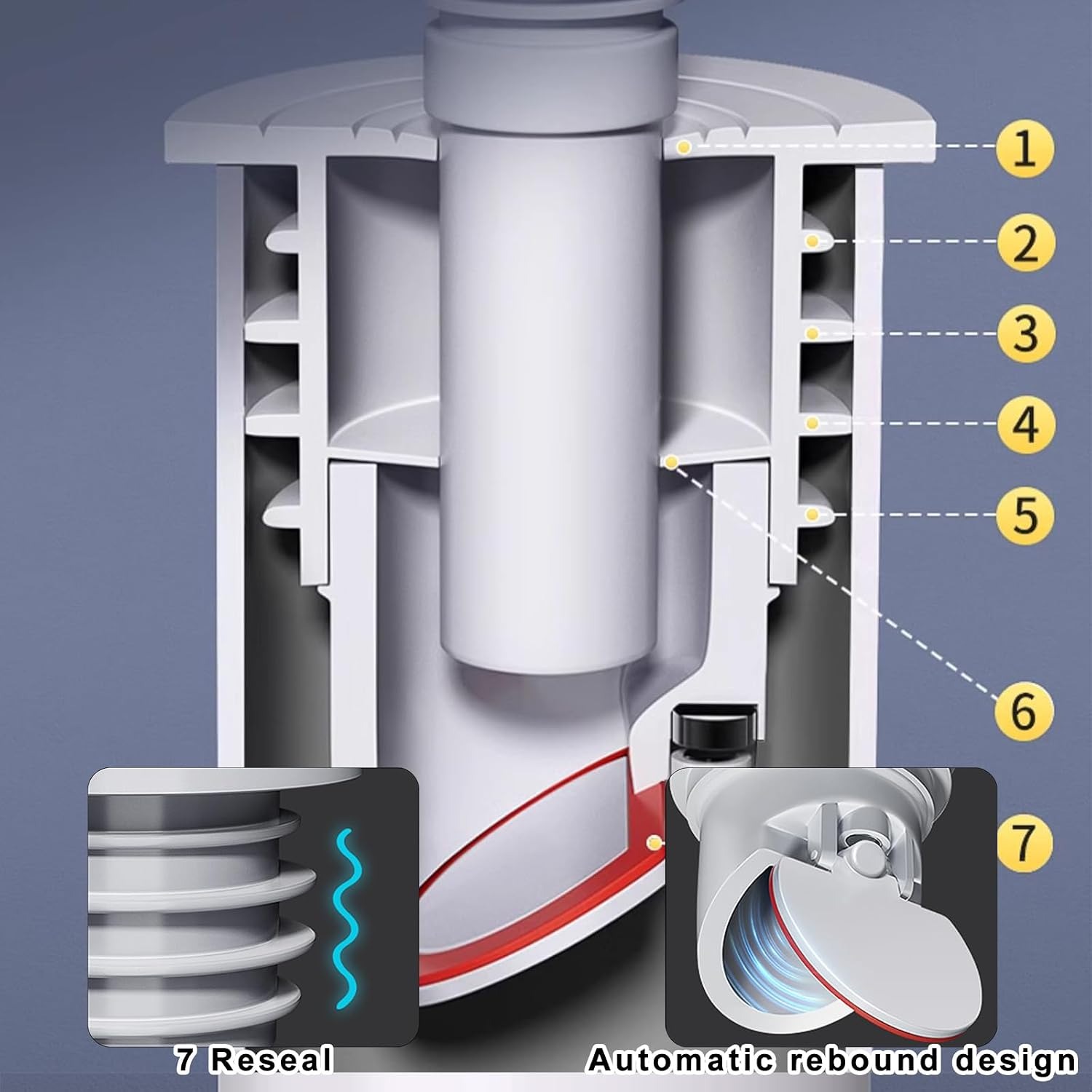
The body is moulded silicone. It is slightly larger than the drain opening, so you compress it to push it in, and then it expands back against the pipe walls. That friction is what holds it. There is no clamping, no screwing and no adhesive, which is exactly what you want in a rented home or a place where you may change machines later.
Through the middle runs a channel for the hose. The silicone closes around the hose and holds it, so it cannot wander up and out during a spin.
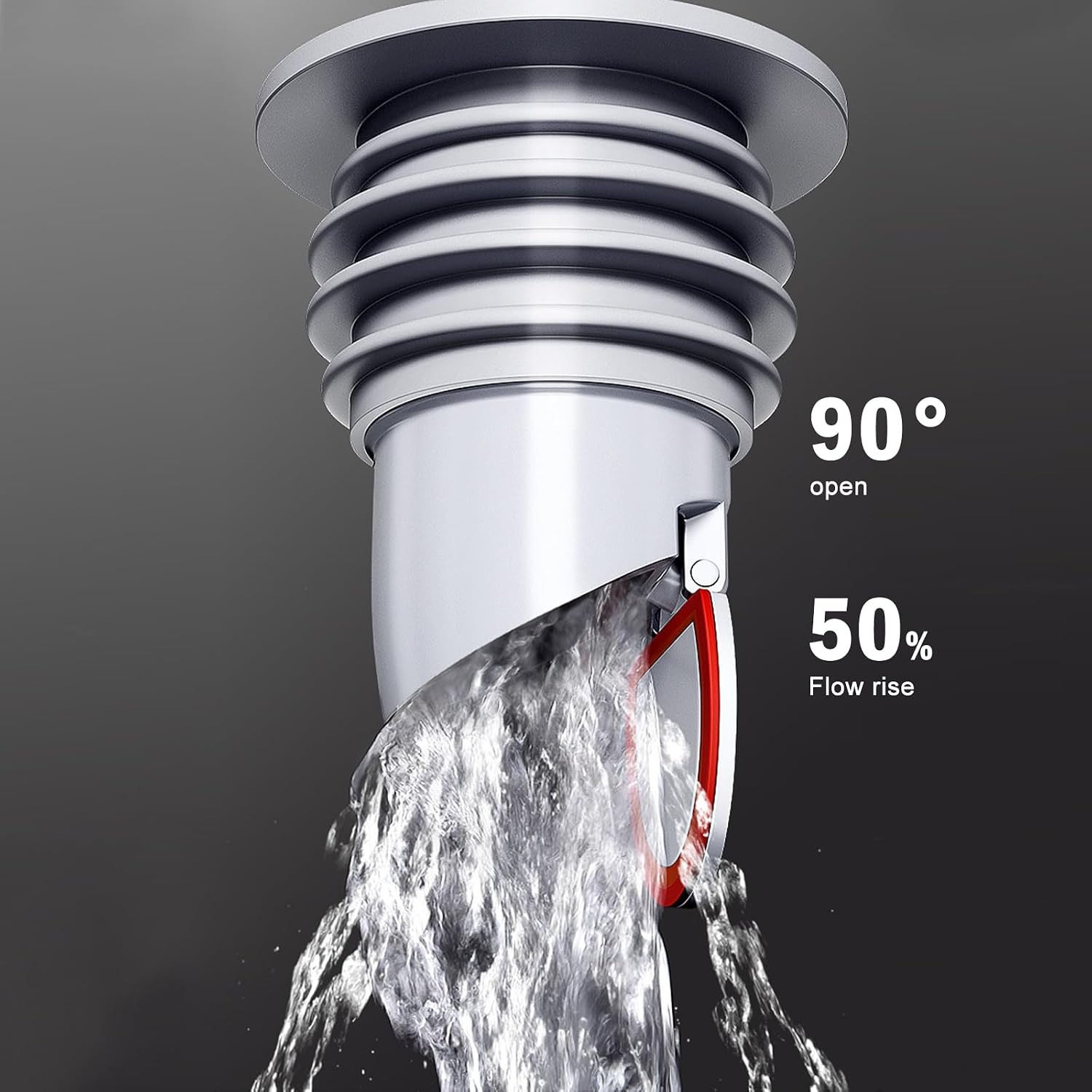
Then there is the part that does the odour work. Inside the body is a sealing core that moves. When your machine pumps out, the pressure of the water pushes the core open and the water runs through to the drain. When the pump stops, the core returns to its closed position and the pipe below is shut off. That means for the roughly 23 hours a day your washer is not running, the drain is sealed rather than open.
This is the difference between a seal and a plain rubber collar. A collar stops the hose moving. It does nothing about the air. If smell is your main complaint, you want something that actually closes.
Who this suits
Renters get the most obvious benefit. You cannot re-plumb a laundry you do not own, and you probably do not want to argue with a landlord about a drain smell. This goes in by hand and comes out by hand, and it leaves nothing behind.
Apartment dwellers are the next group. Shared stacks in apartment buildings move a lot of air, and odour from other units can travel. A closed drain opening makes a real difference in a small laundry or a combined bathroom laundry where there is nowhere for the smell to go.
Anyone with a laundry that doubles as a mud room or pet washing area will know the mop sink problem too. Those drains sit unused for days, the trap can dry out, and the room ends up smelling of drain. The same seal works there.
People with a machine that keeps spitting the hose out are the last group, and for them the grip matters more than the odour function. If you have already mopped the laundry floor once this year because of a loose hose, this is a cheap insurance policy.
Getting the size right
This is the one thing worth slowing down for. Drain sizes are not standard across countries, decades or builders, and a seal that is too small will not grip while one that is too large will not go in.
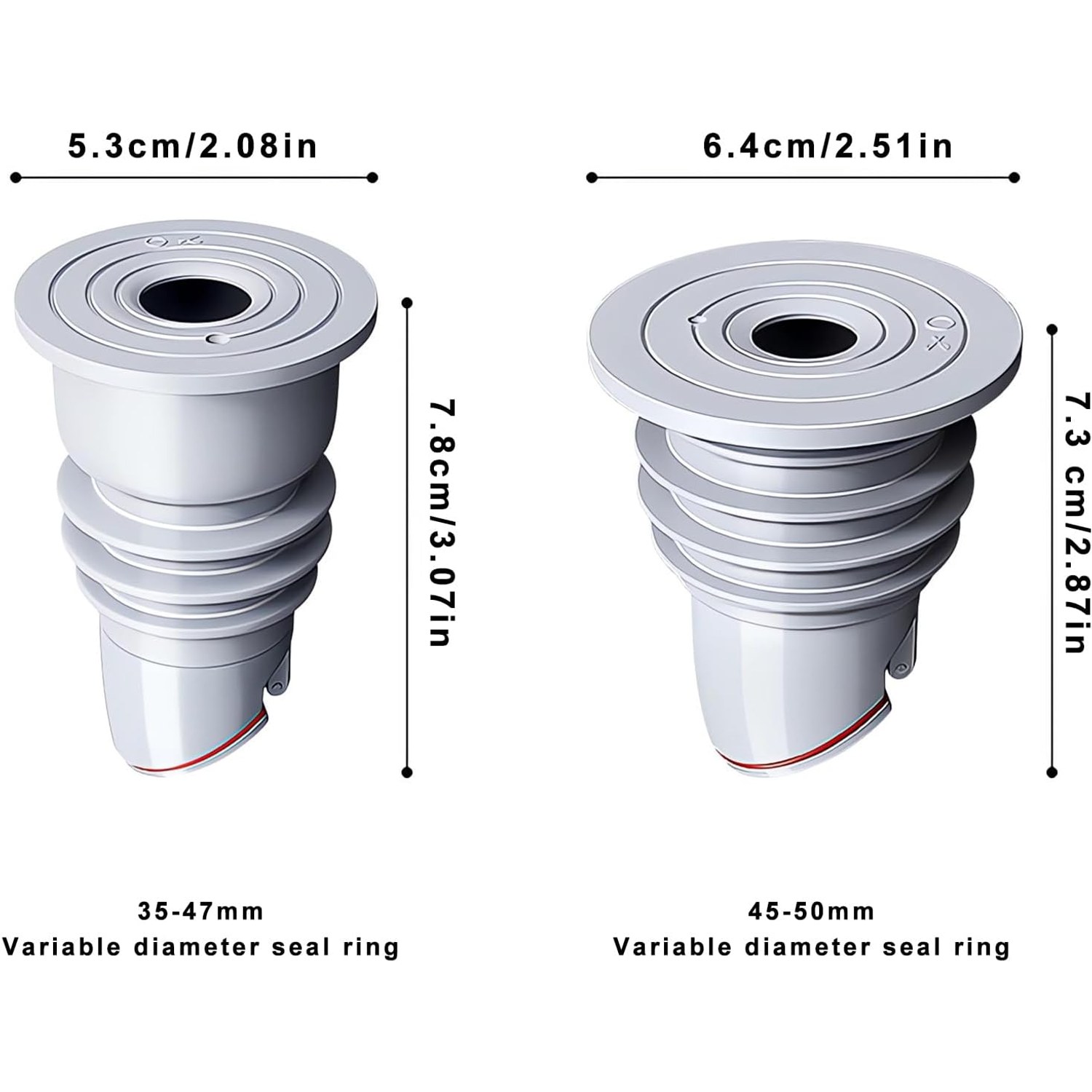
Pull out the grate or plug and measure straight across the inside of the pipe opening with a tape measure. Measure the narrowest point. Ignore the decorative lip at the top, which is often wider than the pipe itself. The number you want is the internal diameter of the pipe.
This version covers the 45 to 50 mm range, which is the common size for laundry floor wastes in a lot of homes. If your measurement comes back at 35 to 40 mm, you need the smaller version instead. If it is well over 50 mm, you are probably looking at a different style of drain and a different product.
Also check the depth below the opening. There needs to be enough clear pipe for the body of the seal to sit in without hitting a bend or a grate frame.
Fitting it in about a minute
Unplug the machine first, or at least make sure it is not mid cycle. Pull the outlet hose out of the drain and set it aside.
Clean the opening. Floor wastes collect a surprising amount of lint, hair and grit around the lip, and that debris will stop the seal sitting flat. A gloved hand and a rinse is usually enough. If there is a solid lint plug further down, deal with that now, because the best floor drain odour plug in the world cannot fix a blocked pipe.
Push the seal in. Squeeze the sides slightly, line it up square to the opening and press down evenly until it seats. It should feel firm when it is in, not loose.
Feed the hose down through the top opening until it sits where your machine's manual recommends. Most manufacturers ask for the hose end to be at a certain minimum height above the floor, so do not shove it all the way down.
Run a short rinse and spin cycle and watch the pump out. Water should disappear cleanly. If you see it pooling around the edge of the seal, stop and check for a blockage below rather than forcing more water through.
Keeping it working
Silicone is easy to live with, but a drain seal lives in the dirtiest spot in the house, so it needs attention occasionally.
Every few weeks, lift the hose out and pull the seal. Rinse it under warm running water. A soft cloth or an old toothbrush will take off the soap film and the ring of lint that builds up around the moving core. That lint ring is the usual reason a seal stops closing fully, so clearing it is most of the maintenance.
Mild dish soap is fine. Avoid soaking it in bleach, avoid solvents, and avoid abrasive scourers. Those shorten the life of silicone for no real benefit.
Let it dry before you refit it, and while it is out, have a quick look down the pipe with a torch. Catching a lint build up early is a lot easier than dealing with a full blockage later.
Two small things people get wrong
The first is expecting a seal to replace a trap. It does not. A trap is part of your fixed plumbing and holds a water barrier in a bend. This sits at the surface and closes the opening. It helps enormously with odour, but if your underlying plumbing is faulty, a seal is a patch rather than a cure.
The second is overfilling the drain. A closed core means water goes through the core and nowhere else. If you dump a full mop bucket down fast, it may not clear as quickly as an open pipe would. Pour at a steady rate and it is fine.
The short version
An open floor waste next to your washing machine is a permanent hole between your laundry and the sewer. That is where most laundry smells come from, and it is why the hose keeps wandering out of the drain.
A silicone seal fixes both for very little money. Measure the inside of your drain opening, check it falls in the 45 to 50 mm range, push the seal in by hand and feed the hose through. Rinse it every few weeks so lint does not jam the closing core.
No tools, nothing permanent, and you get your laundry back.