
The complete guide
How To Choose A Kitchen Sink Strainer That Actually Lasts
The small problem that turns into a plumber's bill
Kitchen drains almost never block all at once. They clog slowly, from a few bits of rice, some coffee grounds, the end of an onion, a tea bag that split. Each of those seems harmless on its own. Together, over a year, they coat the inside of the trap and the pipe behind it until the water in your sink starts to sit instead of swirl away.
A sink drain strainer is the simplest fix there is. It sits in the drain opening, lets water through, and holds everything solid in a shallow basket you can tip into the bin. There is no installation, no tools, no plumbing. For the price of a couple of coffees you remove most of the cause of a slow drain.
The catch is that strainers vary a lot in quality, and the bad ones fail in predictable ways. They bend. They rust. The holes are too big. The edge is sharp. It is worth knowing what to look for.
How a sink strainer works
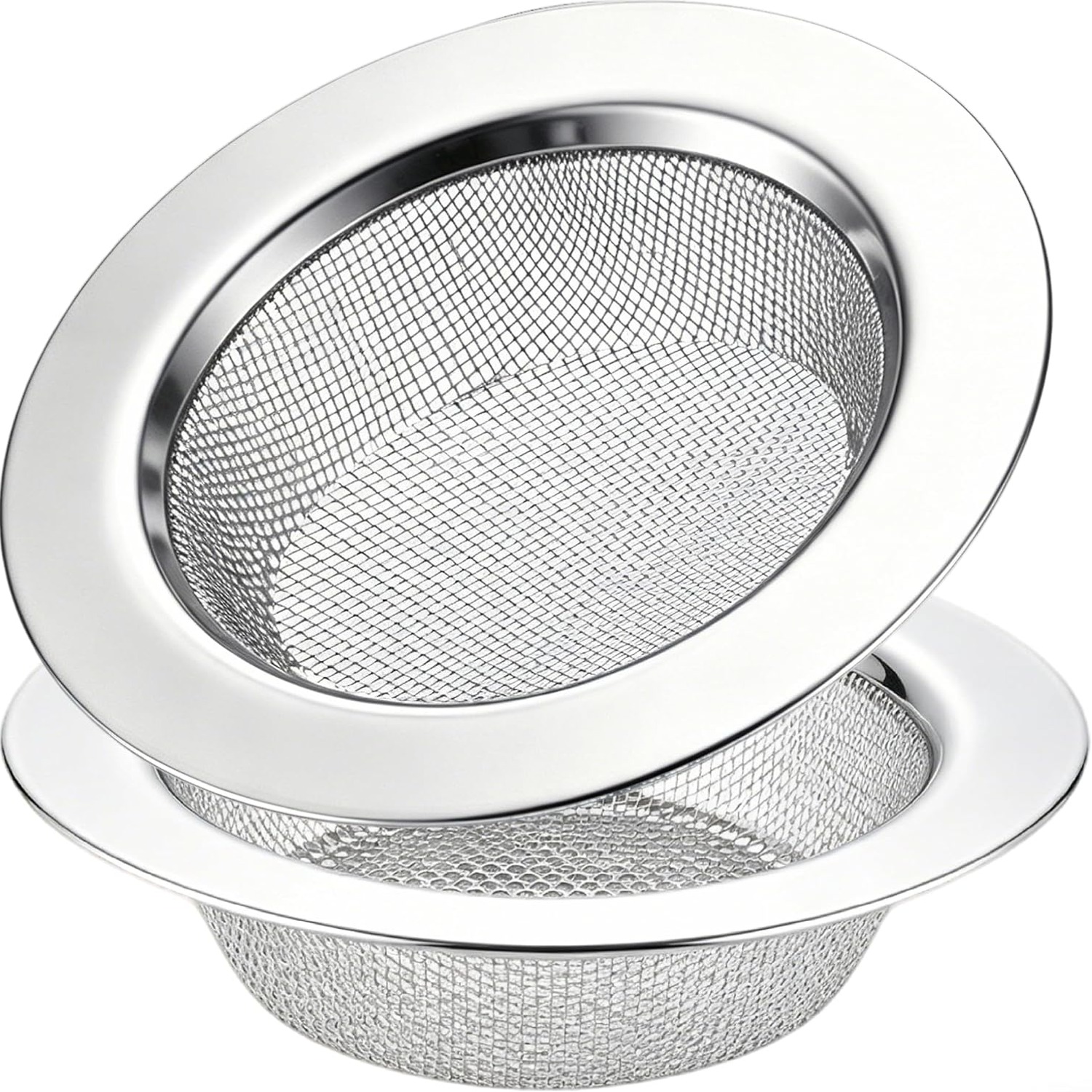
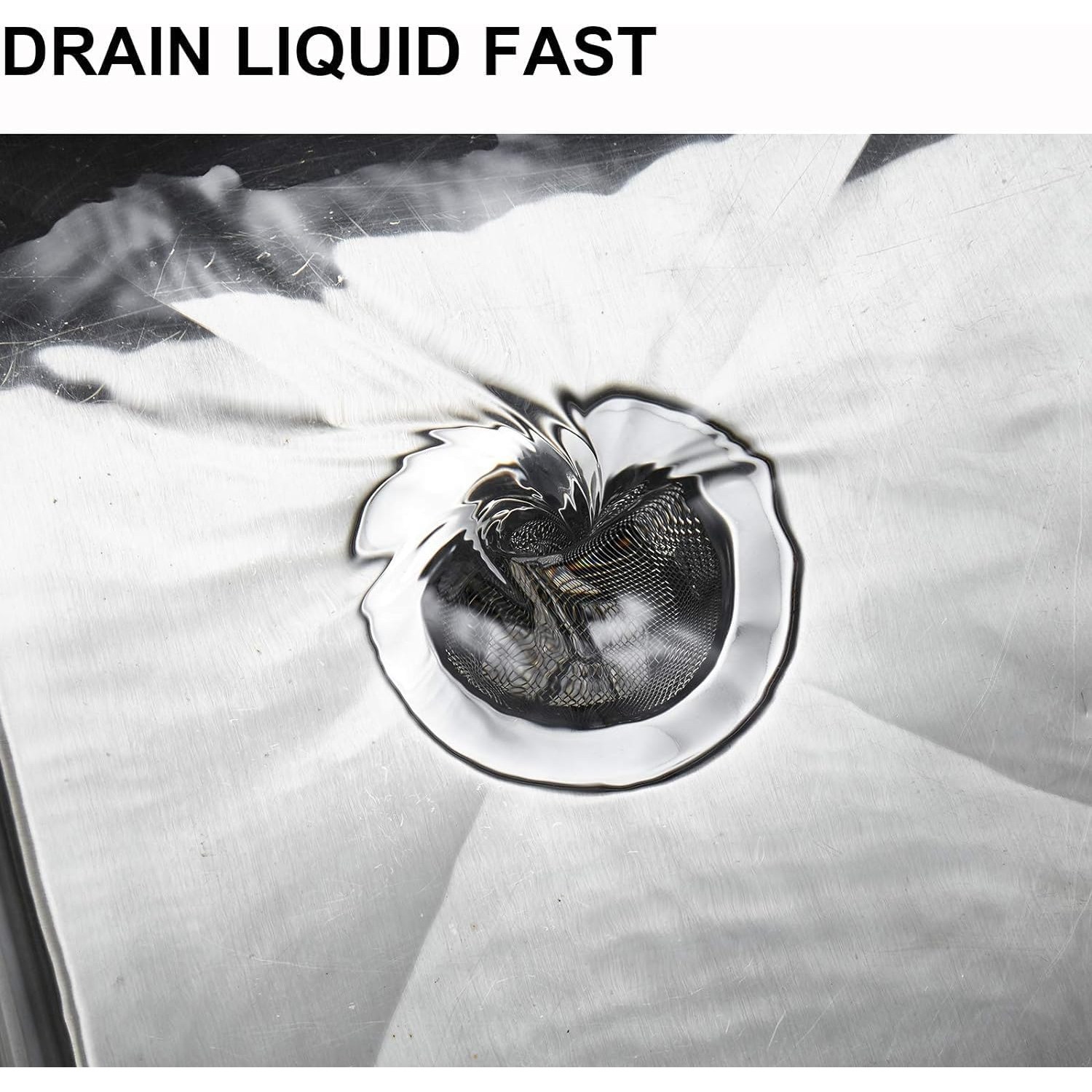
The idea is barely more complicated than a sieve. A perforated steel bowl sits inside the drain opening, with a flat rim resting on the lip of the drain. Water passes through the holes in the base and sides. Anything bigger than those holes stays put.
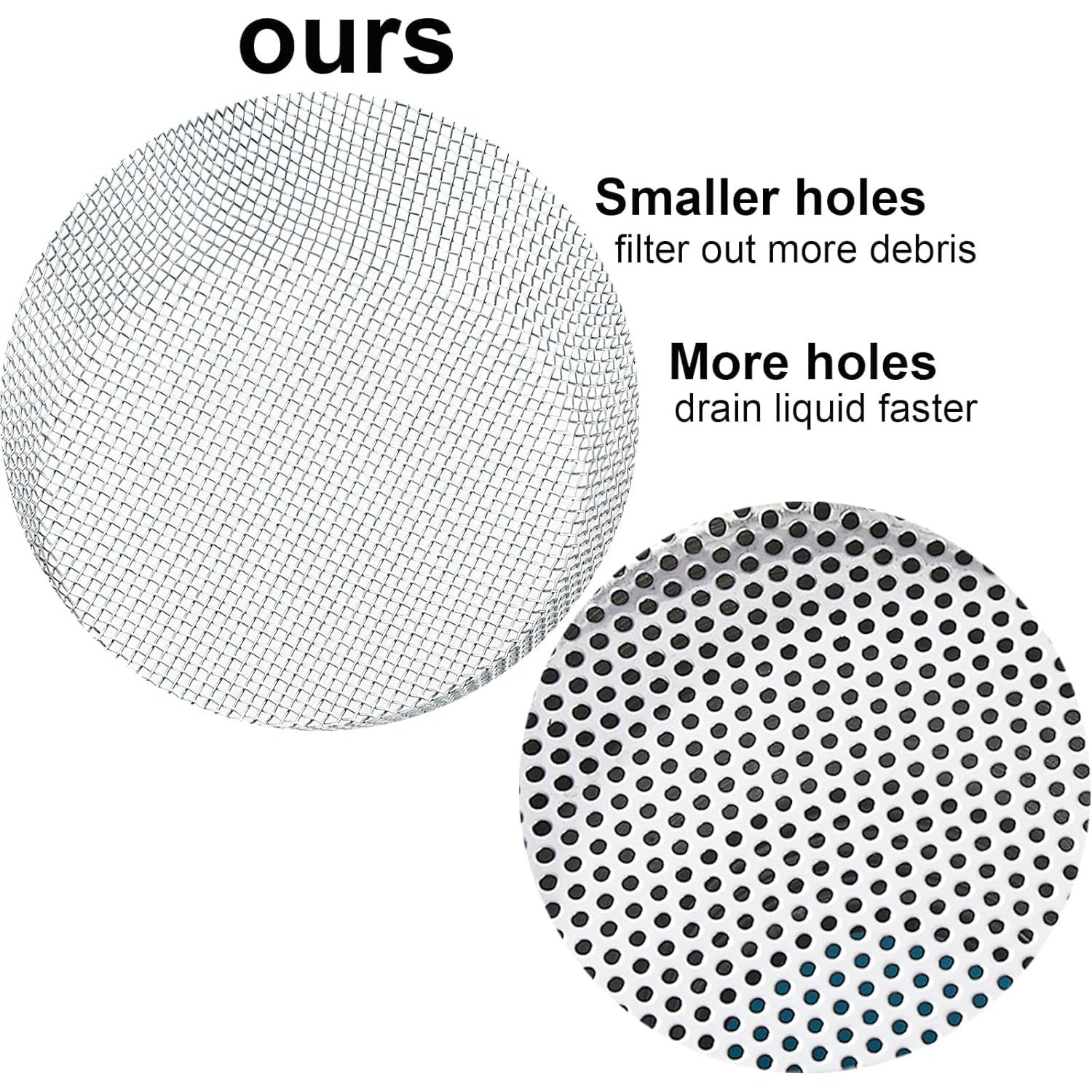
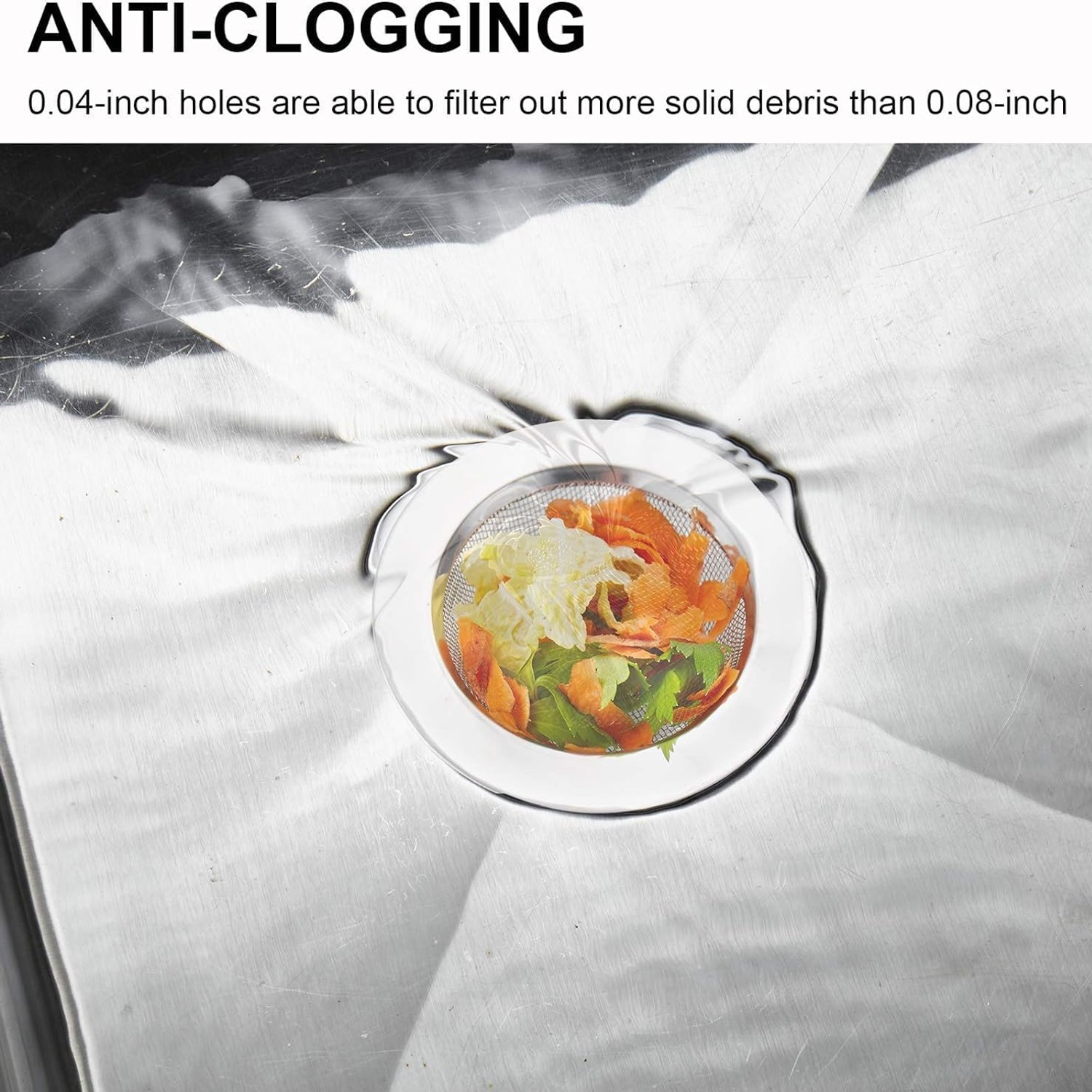
What makes one strainer better than another is mostly in three details. The first is hole size. Big holes drain fast but let small debris straight through, which defeats the point. Fine holes, around 0.04 inches on this model, catch the small stuff that actually causes build-up. The second is the rim. If the rim is thin, it bends the first time a heavy pan lands on it, and a bent rim sits crooked and lets scraps slide down the gap. The third is the material. Plated steel looks fine in the packet and turns orange within months in a wet sink. Solid stainless steel does not.
This two-pack addresses all three. The perforations are fine, the rim is a thickened two-ply flat sheet, and the body is stainless steel with a mirror finish.
Getting the size right
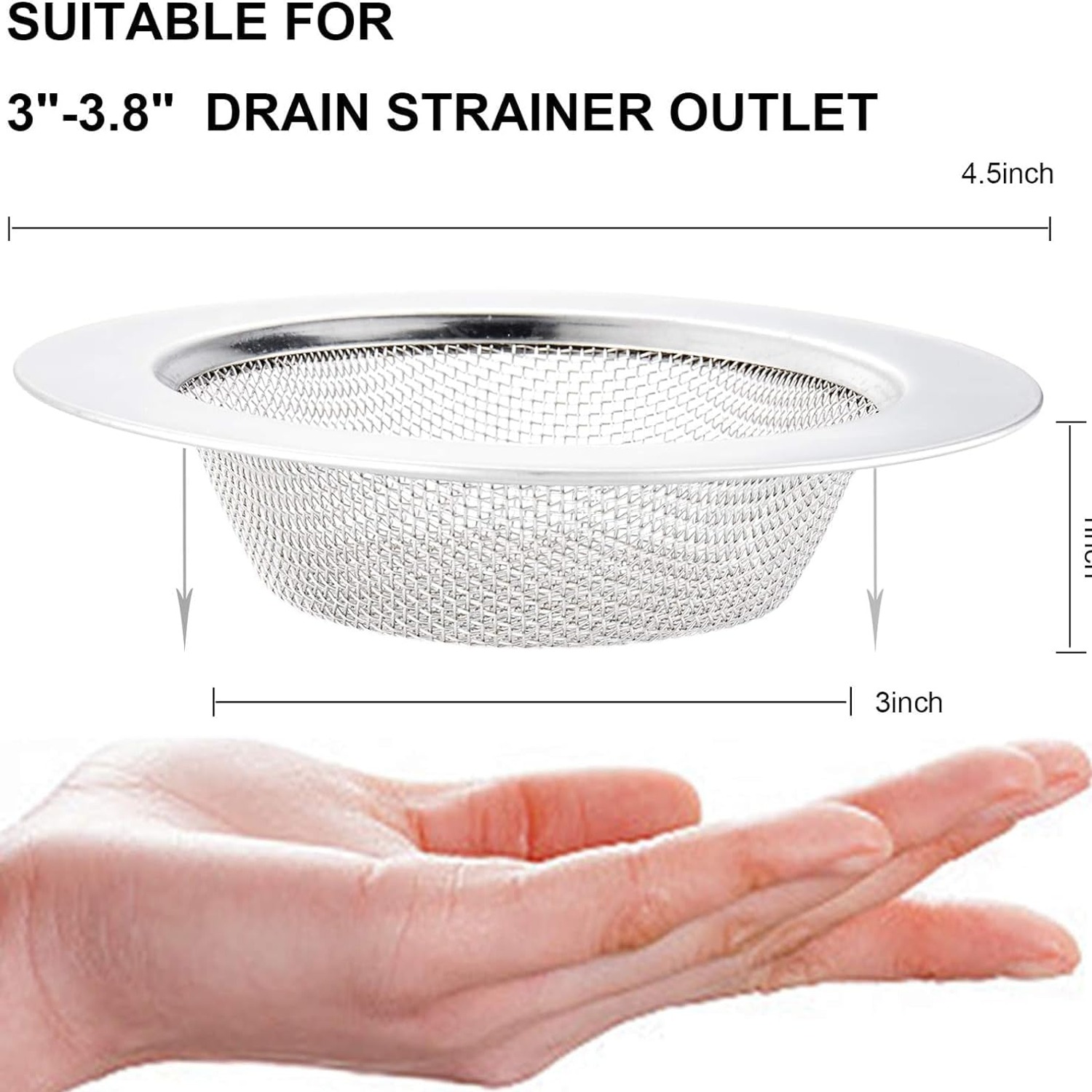
Fit is the one thing people get wrong. A strainer that is too small falls through the drain. One that is too large will not seat and sits proud of the sink, where it gets knocked out every time you wash up.
These strainers are listed for a 3 inch compatible groove diameter with a 1 inch depth. Three inches is the most common kitchen sink drain size, which is why a 3 inch sink strainer covers so many households. Overall the item is 11.4 cm wide and 2.5 cm high.
To check your own sink, take out whatever is in the drain now and measure straight across the inside of the opening, from one inner edge to the other. If that comes to around 3 inches (roughly 7.6 cm), you are in the right range. Note that the strainer's outer rim is wider than the drain opening, by design, because the rim is what rests on the sink and stops the basket dropping through.
If you have a sink waste disposal unit, measure the opening of the flange the same way. Many disposals at this size take a standard strainer, though designs differ between brands. Always lift the strainer out before switching a disposal on.
Who this suits
Renters get the most obvious benefit, because you cannot fix someone else's plumbing but you can stop making it worse. Anyone cooking rice, pasta or anything with a lot of trimmings will fill a strainer regularly and be glad it is there.
Households with a double bowl sink are the reason a two-pack makes sense: one strainer per side, no swapping. Single bowl kitchens tend to keep one in the drain and the other in the drawer, so there is a clean one ready when the first goes in the dishwasher.
It also suits anyone who has already had a blocked kitchen drain and does not want a repeat. A fine mesh sink strainer will not undo an existing clog, but it stops the cycle starting again.
What to look for when comparing
Start with the material line, not the photo. Plenty of cheap strainers photograph like stainless steel and are plated metal underneath. If the maker says stainless steel, as this one does, rust is far less likely to be your problem.
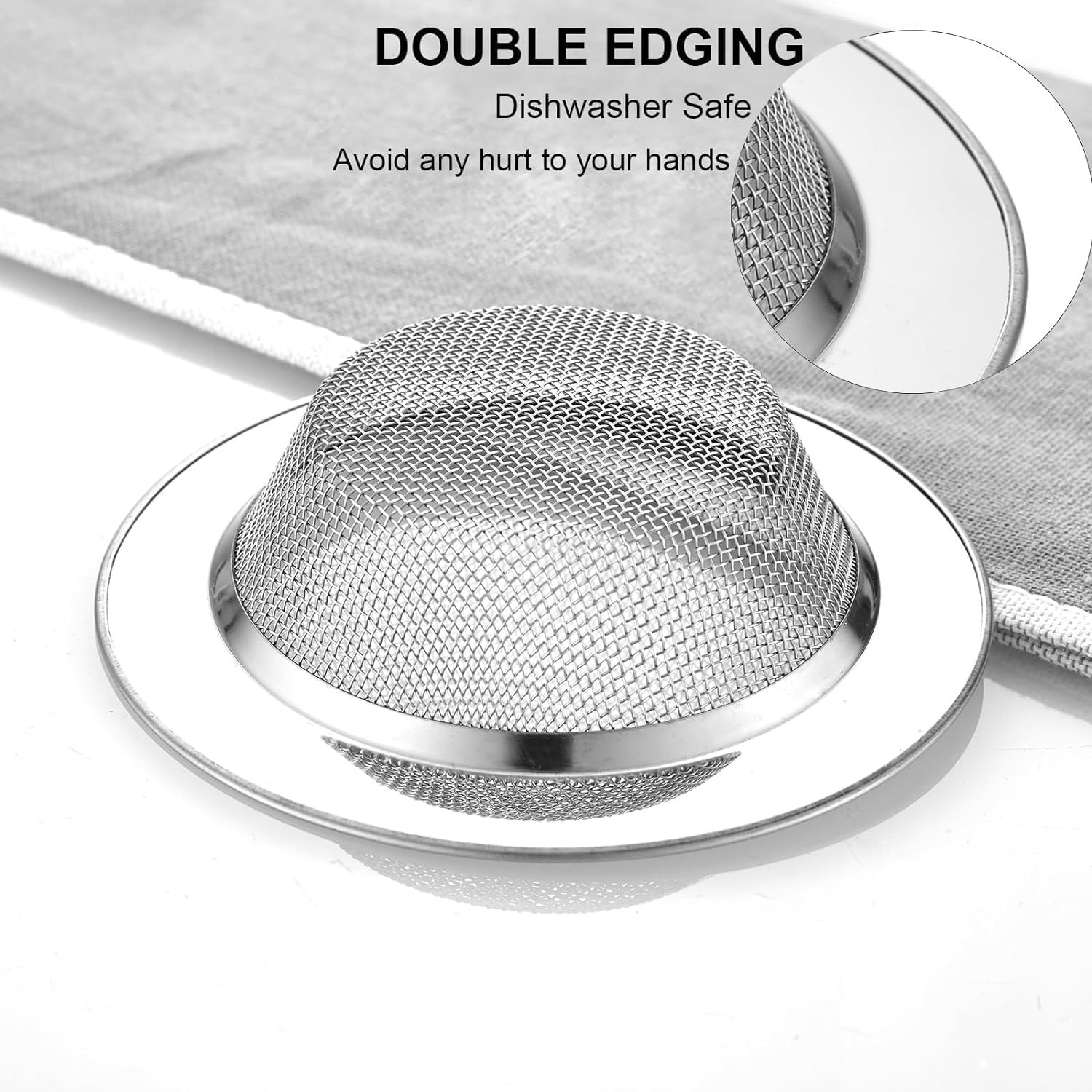
Then look at the edge. A cut metal edge straight off the press is sharp, and you will find that out while fishing around in cloudy dishwater. Hemming, where the edge is folded under and rolled smooth, costs the maker a little more and saves your fingers. It is worth asking about.
Rim thickness is the next thing. A single-layer rim is easy to deform. The two-ply flat rim on this model holds shape under normal kitchen knocks, which keeps the strainer sitting level.
Finally, think about cleaning. A mirror finish sink strainer rinses clean quickly because there is no texture for residue to grip. Dishwasher safe is handy too, since it means the strainer can go in with the rest of the load instead of becoming a separate chore.
Living with it day to day
The routine is short. Before you wash up, glance at the strainer. If there is anything in it, lift it out, knock the contents into the bin, give it a rinse and put it back. Thirty seconds, most days.
Once or twice a week, wash it properly with warm soapy water and a soft sponge, or run it through the dishwasher on the top rack. That stops film building on the perforations and keeps drainage quick.
Two things will shorten its life. One is abrasive cleaning, so leave the steel wool and the scouring powder for the oven. The other is leaving wet scraps sitting in it for days, which can stain the finish and smell. Neither takes much effort to avoid.
One point worth repeating: no strainer stops grease. Oil and fat go through the holes as liquid and then cool and set inside the pipe. Let used oil cool in the pan, pour it into a jar or an empty tin, and bin it. A strainer handles the solids, you handle the fats.
A few honest limits
This is a filter, not a plug, so it will not hold water in the bowl for soaking dishes. It also will not stop a drain that is already partly blocked, because the problem is further down the pipe. And if your drain opening is not close to 3 inches, it will not fit, no matter how good the strainer is.
Country of origin and warranty are not listed for this product. The brand is LASSHSWA and the model is SC001, with a listed weight of 91 grams for the item.
The short version
A kitchen sink strainer is one of those purchases that costs very little and quietly saves you a lot of hassle. The things that matter are fine perforations, a thick flat rim that stays flat, real stainless steel rather than plating, and a smooth hemmed edge you can handle safely.
This two-pack covers those points, fits standard 3 inch drains at 1 inch deep, and washes clean in the dishwasher. Measure your drain, drop one in each bowl, and empty it when you remember. Your pipes will be better for it.